
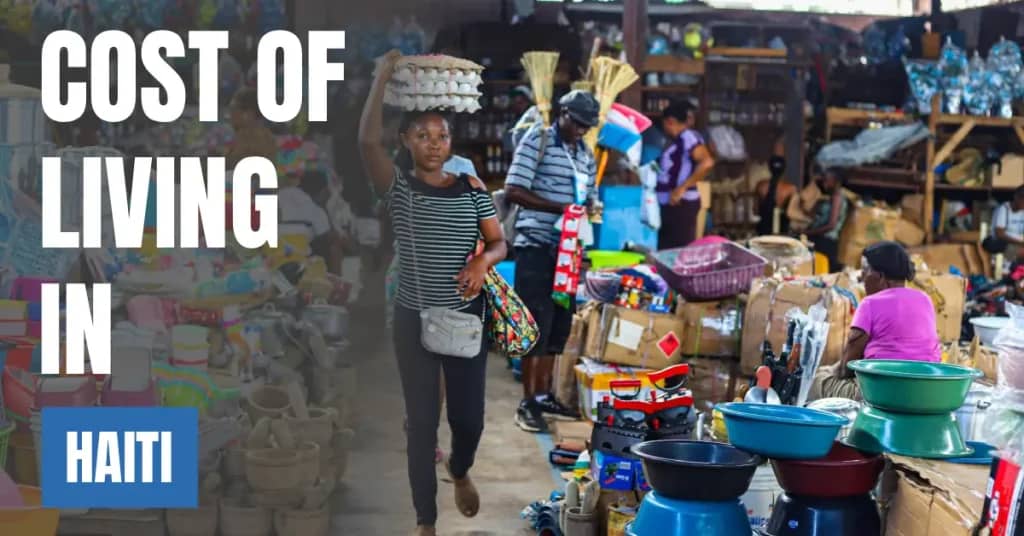
Cost of Living in Haiti in 2026: Rent, Food, Salaries and Monthly Expenses
The cost of living in Haiti in 2026 depends heavily on location, housing security, access to essential services and whether a household earns local wages or receives income from abroad. A single person renting modest accommodation might plan for approximately HTG 90,000 to HTG 180,000 per month, while a household seeking secure private housing, dependable electricity and reliable transport may need considerably more. These are illustrative planning ranges, not representative national averages.
On this pageTable of Content
Haiti uses the Haitian gourde (HTG), although some property and commercial transactions are quoted in US dollars. In September 2026, the official reference exchange rate was approximately HTG 130.5 per US dollar, according to the Banque de la République d'Haïti (BRH). Exchange rates and actual transaction prices can differ.
Haiti's affordability cannot be judged from prices alone. Armed violence, displacement, food insecurity, disrupted transportation and limited healthcare access significantly affect the feasibility and cost of living in many areas. The US Department of State's advisory issued on 10 July 2026 remained at Level 4, Do Not Travel, because of serious security and healthcare risks.
The World Bank's September 2026 economic assessment highlights the country's prolonged economic difficulties. Meanwhile, the World Food Programme reports that approximately 5.8 million people face acute hunger. These conditions mean that expenses and access to goods can change suddenly, and ordinary expatriate budgets do not reflect the financial circumstances of most Haitian households.
Cost of Living in Haiti at a Glance
Monthly living expenses in Haiti range widely. The following figures combine recent market observations with illustrative household budgets. They are intended to help readers evaluate potential expenses rather than provide guaranteed nationwide prices.
| Expense | Estimated Cost in Haitian Gourdes |
|---|---|
| Single person, excluding rent | HTG 45,000 to 90,000 per month |
| Single renter, including modest housing | HTG 90,000 to 180,000 per month |
| Couple, including housing | HTG 150,000 to 300,000 per month |
| Family of four, including housing | HTG 230,000 to 500,000+ per month |
| One-bedroom apartment, city centre | Approximately HTG 199,000 per month, limited-sample average |
| One-bedroom apartment, outside centre | Approximately HTG 166,000 per month, limited-sample average |
| Three-bedroom apartment, city centre | Approximately HTG 304,000 per month, limited-sample average |
| Basic apartment utilities | Approximately HTG 13,000 to 22,000 per month |
| Home broadband | Approximately HTG 22,000 to 30,000 per month in reported premium-service examples |
| Mobile phone plan | Approximately HTG 2,000 to 6,600 per month |
| Inexpensive restaurant meal | Approximately HTG 1,000 to 2,000 |
| One-way local transportation | Approximately HTG 25 to 150 |
| Statutory minimum daily wage | HTG 500 to 1,000, depending on sector, with a separate export production rate |
Recent price observations come from Numbeo's Haiti cost database, updated on 20 August 2026. Its dataset contained only 102 entries from five contributors over the preceding year. These figures have very limited statistical coverage, and reported housing prices may disproportionately represent expensive formal-sector accommodation.
The household budget ranges above are planning assumptions rather than official estimates. Residents using family housing, local markets and informal services may spend substantially less. New arrivals requiring managed properties, private transportation and backup utilities may spend significantly more.
How Much Does It Cost to Live in Haiti Per Month?
A single person may plan for approximately HTG 90,000 to HTG 180,000 per month including modest rent, groceries, transport and basic personal expenses. However, the cost of suitable secure accommodation or reliable backup services can push actual spending far above this range.
Monthly Expenses Excluding Rent
For a single adult, an illustrative budget of HTG 45,000 to HTG 90,000 per month may cover groceries, basic utilities, local transportation, communications and modest personal needs. It assumes access to relatively affordable local services and excludes major private security arrangements, expensive broadband, emergency travel and substantial medical bills.
Monthly Expenses Including Rent
Rent can dominate total expenditure. In the limited 2026 crowd-reported dataset, average one-bedroom rents exceeded HTG 160,000 monthly even outside central areas. Therefore, a person entering that segment of the property market would need a much higher overall budget than a resident living in inexpensive shared or family housing.
This difference is essential: no single national monthly total accurately describes both a low-income local household and an internationally employed professional seeking managed accommodation.
Housing and Rent Prices in Haiti
Rental housing varies significantly by neighbourhood, security conditions, infrastructure, property size and access to basic services. Housing in areas perceived as relatively secure can be expensive and difficult to obtain, particularly where displaced families and businesses have increased demand.
Apartment Rental Prices
| Accommodation | Reported Monthly Average |
|---|---|
| One-bedroom apartment, city centre | HTG 199,072 |
| One-bedroom apartment, outside centre | HTG 166,339 |
| Three-bedroom apartment, city centre | HTG 303,689 |
| Three-bedroom apartment, outside centre | HTG 244,017 |
These are August 2026 Numbeo figures from an extremely small national sample. They should not be presented as verified average rents across Haiti's entire housing market.
The existing VisaBoards guide published in March 2026 cited cheaper one-bedroom rents of approximately US$300 to US$1,000 and three-bedroom rents of US$600 to US$1,800, depending on location. The difference between those ranges and the later crowdsourced observations illustrates the uncertainty in available market data rather than establishing a reliable nationwide increase of any specific percentage.
What Should Renters Check?
Before signing a rental agreement, potential residents should confirm whether the property has functioning electricity, a usable water supply, reliable road access and adequate security arrangements. They should also determine whether rent is quoted in gourdes or US dollars, what exchange rate is used, and whether substantial advance payments are expected.
In some locations, backup power, a generator, fuel, water storage and maintenance may be necessary. A comparatively low rental quotation can become expensive when these services are not included.
Buying Property
Property purchase prices also vary substantially by location and title status. The limited 2026 consumer dataset suggests comparatively high prices for certain formal urban properties, but its sample is too small to establish a reliable national average.
Buyers should obtain independent legal advice, verify title documentation and assess physical access and local security before entering any transaction. Property ownership does not automatically create an immigration entitlement.
Food and Grocery Costs in Haiti
Food spending depends heavily on household income, access to local markets and the balance between domestic produce and imported products. Many households rely on staples such as rice, beans, maize, plantains and seasonal vegetables, but food inflation and interruptions to supply routes can make essentials unaffordable.
The HaitiDocs economic dashboard, using data from the Institut Haïtien de Statistique et d'Informatique (IHSI), reported annual consumer-price inflation of 17.0% in August 2026. Consequently, grocery prices should be checked immediately before budgeting rather than treated as stable throughout the year.
Typical Grocery Prices
| Product | Approximate Reported Price |
|---|---|
| Milk, 1 litre | HTG 293 |
| White bread, approximately 454 g | HTG 299 |
| White rice, approximately 454 g | HTG 166 |
| Eggs, 12 | HTG 520 |
| Chicken fillets, approximately 454 g | HTG 361 |
| Beef, approximately 454 g | HTG 653 |
| Bananas, approximately 454 g | HTG 111 |
| Tomatoes, approximately 454 g | HTG 166 |
| Potatoes, approximately 454 g | HTG 370 |
| Bottled water, approximately 1.5 litres | HTG 139 |
These approximate prices come from limited August 2026 consumer submissions and may not reflect the prices paid in open-air markets or rural communities. Some food items in the source are reported by pound rather than kilogram, so units should be checked before comparing international prices.
Monthly Grocery Budget
A single adult might allocate HTG 25,000 to HTG 45,000 monthly for groceries in an illustrative modest budget. A family of four might allocate HTG 55,000 to HTG 90,000 or more. These estimates assume mostly home-prepared meals and should not be interpreted as the observed national average or the minimum cost of an adequate diet.
The World Food Programme reports that around 5.8 million people are experiencing acute food insecurity, including approximately 1.8 million at emergency levels. This demonstrates that food affordability is a severe national concern even when individual market items appear inexpensive by international standards.
Restaurant and Eating Out Costs
Restaurant prices vary widely between small local establishments and formal restaurants serving professionals, international workers or visitors. A basic meal in the 2026 crowdsourced market data costs approximately HTG 1,000 to HTG 2,000.
| Expense | Approximate Price |
|---|---|
| Inexpensive restaurant meal | HTG 1,000 to 2,000 |
| Mid-range three-course meal for two | Approximately HTG 11,900 |
| Fast-food combination meal | HTG 1,500 to 2,500 |
| Cappuccino | HTG 216 to 500 |
| Soft drink, small bottle | HTG 150 to 400 |
These figures primarily describe reported commercial dining and do not adequately represent all informal food vendors. Access to restaurants may also be restricted by local security conditions and transportation disruptions.
Utilities and Electricity Costs
Electricity, water and household services can represent a significant expense in Haiti, particularly where public infrastructure is unreliable.
Limited consumer observations reported approximately HTG 13,000 to HTG 22,000 monthly for basic utilities in an apartment of around 85 square metres. These quotations should be treated cautiously because service availability and billing arrangements differ substantially by location.
Power Supply and Backup Electricity
Residents may need to use generators, solar systems, batteries or other alternatives when grid electricity is unavailable. These arrangements can create substantial equipment, fuel and maintenance costs.
World Bank development indicators reproduced by HaitiDocs show that approximately 53.9% of Haiti's population had access to electricity in 2024. Access does not necessarily mean uninterrupted service.
Water and Other Household Services
Households may need water storage, purchased drinking water, additional filtration or paid water deliveries. Waste collection and sanitation arrangements also differ from one community to another.
Anyone evaluating a property should therefore request a breakdown of electricity, generator fuel, water supply, waste disposal and shared maintenance costs rather than relying on an advertised rent figure alone.
Internet and Mobile Phone Costs
Reliable internet access may be expensive or difficult to obtain in some locations. The August 2026 crowdsourced dataset listed premium unlimited broadband packages around HTG 21,600 to HTG 30,000 monthly, and mobile plans around HTG 2,000 to HTG 6,600.
These figures do not mean every internet connection in Haiti costs this much. Lower-cost mobile data packages and different connection arrangements may be available, but performance and reliability vary.
Remote workers should confirm service coverage at the exact address and budget for backup connectivity and backup electricity. Internet reliability is especially important when work depends on video calls, cloud services or continuous access to international clients.
Transportation Costs in Haiti
Local shared transportation can be inexpensive, but the actual cost of dependable travel depends on distance, route availability, road conditions and security.
Public Transportation
Tap-taps, shared minibuses and other informal transport services are common forms of local transportation. The August 2026 consumer dataset reported a typical one-way fare around HTG 50, with submitted prices ranging from roughly HTG 26 to HTG 150.
These figures are not regulated nationwide fares. They can change depending on routes, fuel prices and service disruptions.
Is Public Transport Free in Haiti?
No. Public transportation is not generally free, and Haiti does not operate a universal nationwide free-transit programme.
Some price databases display a monthly transport-pass estimate of approximately HTG 2,623, but this should not be interpreted as evidence of a widely available integrated public transport pass. Informal shared services are normally paid for through individual journeys.
Private Vehicles and Transport Risks
Numbeo's August 2026 observations reported gasoline around HTG 157 per litre, with submitted prices ranging from approximately HTG 148 to HTG 186.
Private vehicle ownership adds insurance, repairs, tyres, fuel and potential security-related transportation expenses. Road closures and unsafe routes may prevent otherwise affordable travel.
The US Department of State's July 2026 travel advisory warns of serious crime, kidnapping, unrest and limited emergency assistance. For prospective foreign residents, these considerations may be more important than nominal taxi or fuel prices.
Healthcare Costs and Access in Haiti
Healthcare in Haiti is not universally free or consistently accessible. Public, private, charitable and international humanitarian healthcare services operate under different funding arrangements, and serious disruptions can prevent patients from reaching functioning facilities.
The World Health Organization's 2026 Haiti Health Emergency Appeal estimated that 4.9 million people would require health assistance during the year because of violence, displacement, recurring disease and reduced healthcare capacity.
Public Healthcare
Public healthcare services may involve low or subsidised charges for certain services, but treatment availability depends on the facility, supplies, staffing and ability to travel safely. Patients may still need to pay for medicines, tests or supplies.
WHO reported that only 26% of the country's 268 inpatient healthcare facilities were fully operational in the period covered by its 2026 emergency assessment. In Port-au-Prince, many facilities had also ceased operating or were severely restricted.
Private Healthcare
Private clinics may provide additional options where they remain operational, but consultation charges alone do not represent the full cost of medical care. Hospital treatment, medication, diagnostic procedures, transport and emergency support may generate substantial bills.
The previous VisaBoards article listed ordinary doctor visits at approximately US$10 to US$25 and specialist visits at US$20 to US$40. These are older indicative figures, not verified nationwide 2026 tariffs. Availability and treatment capacity are more important than assuming a consultation can be obtained at a particular price.
Medical Insurance and Evacuation
International workers should carefully verify medical insurance coverage, exclusions for conflict-related events and whether medical evacuation is included. Even comprehensive insurance does not guarantee that a patient can be transported safely to a functioning facility.
Medical and security evacuation arrangements may be especially important for organisations deploying essential personnel, but the existence of such arrangements does not eliminate the risks identified in official advisories.
Education and Childcare Costs
Education costs vary according to the school system, programme, location and household circumstances. Public education is intended to provide access without ordinary private-school tuition, but families may still face costs for uniforms, books, transportation and other supplies.
Public Schools
Families should not assume that all public schools are operating normally. Insecurity and displacement have interrupted education in affected communities, while transport and household financial pressures can limit attendance.
Private Schools
Private schools may charge tuition, registration fees, uniforms and examination expenses. Costs differ widely, and a previous general estimate of US$200 to US$3,000 annually should not be treated as a verified current nationwide fee schedule.
International Schools
International schooling can be considerably more expensive. The limited August 2026 consumer dataset reported an annual international primary-school tuition figure of approximately HTG 918,000 per child. Because the available sample is very small, prospective families should obtain direct quotations from functioning schools.
Childcare
Reported private preschool costs were approximately HTG 13,100 monthly in the same limited dataset. Actual availability, staffing and fees require local confirmation.
Salaries and Minimum Wage in Haiti in 2026
Haiti's statutory minimum wage was revised on 6 May 2026. Unlike countries with a single national monthly minimum salary, Haiti sets minimum daily wages by economic activity.
The government decree published in Le Moniteur, special issue No. 21, replaced the previous February 2022 wage schedule.
Current Minimum Daily Wage by Sector
| Sector | Minimum Daily Wage |
|---|---|
| Segment A, including banking, telecommunications, supermarkets and certain major service businesses | HTG 1,000 |
| Segment B, including construction, wholesale trade and domestic-market manufacturing | HTG 900 |
| Segment C, including agriculture, retail trade and restaurants | HTG 760 |
| Segment E, domestic staff | HTG 500 |
| Segment F, export manufacturing reference wage | HTG 1,000 |
| Segment F, export manufacturing production wage | HTG 1,300 |
| Segment G, private security and fuel distributors | HTG 925 |
| Segment H, certain vocational schools and inpatient private healthcare institutions | HTG 900 |
Each statutory rate applies to an eight-hour working day. The official decree is accessible through HaitiDocs' archive of the May 2026 minimum-wage regulation.
What Does This Mean Per Month?
At 26 paid working days, the reference minimum daily wage of HTG 1,000 produces a hypothetical gross monthly amount of HTG 26,000. At HTG 760 daily, the equivalent is HTG 19,760. For domestic staff at HTG 500 daily, it is HTG 13,000.
These examples are simple calculations, not guaranteed monthly earnings. Actual pay depends on the number of paid days, employment conditions, sector classification and applicable deductions.
Average Salaries and Affordability
Numbeo's August 2026 dataset reported an estimated monthly net salary of approximately HTG 194,099. However, with only five contributors across the entire country, this cannot be considered a reliable national average and is not representative of informal or minimum-wage employment.
There is an enormous gap between statutory minimum earnings and the prices of high-end rental accommodation. Consequently, lower-income households frequently depend on shared housing, informal arrangements, extended family support or remittances rather than the formal rental arrangements described in expatriate-oriented property markets.
Taxes and Everyday Affordability
Personal income tax, payroll obligations and indirect taxes can affect disposable income in Haiti. The applicable treatment depends on employment type, taxable income and current legislation.
Imported goods may also include customs-related charges, transportation expenses and other costs that contribute to retail prices. These can make certain food products, electronics and household supplies relatively expensive.
Because tax rules, exemptions and administrative practices may change, employees and self-employed residents should seek current guidance from the Direction Générale des Impôts and qualified local advisers before calculating expected take-home income.
Realistic Sample Monthly Budgets for Haiti
The following examples demonstrate how recurring costs combine. They are illustrative calculations rather than statistically representative living-cost averages. All figures include housing and assume that the household has identified an accessible location where the listed services are available.
Budget 1: Budget-Conscious Single Person
This assumes inexpensive shared or informal housing, mainly home-cooked meals and basic local transportation, without major private security or backup service expenses.
| Expense | Monthly Cost |
|---|---|
| Shared housing | HTG 35,000 |
| Utilities and water | HTG 7,000 |
| Groceries | HTG 25,000 |
| Transport | HTG 4,000 |
| Mobile and internet contribution | HTG 4,000 |
| Healthcare and personal essentials | HTG 5,000 |
| Dining and miscellaneous | HTG 5,000 |
| Estimated Total | HTG 85,000 |
Accommodation and service assumptions are especially uncertain. This example should not be used as evidence that a newcomer can find safe housing at the stated price.
Budget 2: Moderate Single Person
This example assumes a private apartment with relatively dependable services, ordinary groceries and some additional transportation spending.
| Expense | Monthly Cost |
|---|---|
| Rent | HTG 140,000 |
| Utilities and backup power contribution | HTG 22,000 |
| Groceries | HTG 35,000 |
| Transport | HTG 12,000 |
| Internet and mobile | HTG 20,000 |
| Healthcare and personal essentials | HTG 12,000 |
| Dining and miscellaneous | HTG 15,000 |
| Estimated Total | HTG 256,000 |
This higher-cost example illustrates how formal-sector housing and communications can sharply increase the total. It does not include major security arrangements or evacuation insurance.
Budget 3: Couple
This assumes two adults sharing a private apartment and household expenses.
| Expense | Monthly Cost |
|---|---|
| Rent | HTG 145,000 |
| Utilities and water | HTG 22,000 |
| Groceries | HTG 55,000 |
| Transport | HTG 20,000 |
| Internet and mobile | HTG 22,000 |
| Healthcare and personal essentials | HTG 18,000 |
| Dining and miscellaneous | HTG 20,000 |
| Estimated Total | HTG 302,000 |
Sharing rent reduces the cost per adult, but dependable transport, electricity and healthcare remain important financial considerations.
Budget 4: Family of Four
This example assumes two adults and two children renting a larger formal-sector home, using ordinary private services and allowing for some school expenses. It excludes international school tuition.
| Expense | Monthly Cost |
|---|---|
| Rent | HTG 250,000 |
| Utilities, water and backup electricity | HTG 35,000 |
| Groceries | HTG 85,000 |
| Transport | HTG 35,000 |
| Internet and mobile | HTG 25,000 |
| Healthcare and household essentials | HTG 25,000 |
| School-related expenses | HTG 25,000 |
| Dining and miscellaneous | HTG 25,000 |
| Estimated Total | HTG 505,000 |
Private or international education, specialist healthcare, secure transportation, medical evacuation coverage and household security services could increase this total substantially.
Cost of Living in Different Cities and Regions of Haiti
Living costs vary across Haiti, but reliable current city-by-city datasets are extremely limited. Security, displacement and access to food, fuel and medical services may affect actual expenses more than ordinary differences between central and suburban rents.
Port-au-Prince
The capital has formal businesses, healthcare providers and historically important employment opportunities, but severe insecurity has disrupted ordinary living conditions. Accommodation that includes dependable services may be expensive, and some neighbourhoods are inaccessible or unsafe.
International workers should not assume that access to a property, medical facility or workplace can be maintained simply because it appears in a city listing.
Cap-Haïtien
Cap-Haïtien is a major northern urban centre with commercial and educational activity. Housing and service costs differ by neighbourhood, but security-related population movements and changes in demand can affect availability.
Its northern location should not be interpreted as a guarantee of safety or predictable costs.
Les Cayes
Les Cayes is an important southern commercial centre. Some local living arrangements may be less expensive than premium accommodation in the capital, but transport connections, fuel supplies, natural hazards and access to medical services remain important considerations.
Jacmel
Jacmel has cultural and coastal significance. Its housing market includes local residences and properties aimed at visitors, but dependable current rental statistics are insufficient for a credible citywide price estimate.
Smaller Towns and Rural Communities
Some smaller communities have lower nominal housing costs. However, reliable electricity, healthcare, internet access and transportation may be limited. The need to travel for treatment, education or supplies can offset savings on rent.
How Does Haiti Compare With the Dominican Republic and Jamaica?
Haiti cannot reliably be described as universally cheaper than the Dominican Republic or Jamaica. Some local services may cost less, but imported goods, suitable rental housing, electricity alternatives and dependable transportation can be disproportionately expensive.
The Dominican Republic, which shares the island of Hispaniola with Haiti, has different infrastructure, employment and consumer markets. A fair comparison requires specific cities, similar housing standards and current quotations.
Jamaica also has substantial geographical variation in living costs. Comparing an inexpensive Haitian local market with a premium Jamaican tourist neighbourhood would be misleading.
For relocation decisions, the more important comparison is the cost of maintaining a comparable level of housing, healthcare, transport reliability and personal safety. Haiti's severe security and infrastructure constraints make simple cost-of-living rankings especially unreliable.
Hidden Costs New Residents Often Overlook
New residents should account for substantial costs beyond ordinary rent, food and utilities.
- Backup electricity: Generators, solar equipment, batteries, fuel and maintenance may be necessary.
- Water supply: Storage tanks, filtration, drinking water and deliveries can add expenses.
- Safe transportation: Ordinary public transport may be inappropriate or unavailable for certain journeys.
- Medical insurance: Coverage must account for healthcare limitations and possible exclusions.
- Emergency relocation: Unexpected evacuation or temporary accommodation can require substantial reserves.
- Imported goods: Freight costs, duties and disrupted supply routes may increase prices.
- Housing deposits: Significant advance payments may be required.
- Communication backups: Multiple internet connections or alternative equipment may be needed.
- School interruptions: Families may need additional educational arrangements when services are disrupted.
- Inflation: Rapid price increases can make fixed monthly budgets outdated.
Cost of Living Versus Residency Financial Requirements
Living expenses and immigration requirements are separate questions. Haiti does not have one universal income threshold that applies to every foreign national seeking to live or work there.
Visa, work authorisation and residence documentation depend on nationality, intended activity, period of stay and the applicable administrative route.
A household may have sufficient income to pay its expected expenses without necessarily qualifying for permission to reside or work. Similarly, fulfilling an administrative requirement does not establish that relocating is safe or financially practical.
Prospective applicants should obtain current guidance from the relevant Haitian diplomatic mission and immigration authorities. They should not rely on an unverified fixed monthly income figure.
Is Haiti Affordable for Expats and International Workers?
Affordability depends on income, access to suitable housing and the cost of necessary support services. Haiti may offer inexpensive local products and shared-living arrangements, but the cost of a dependable expatriate-standard lifestyle can be much higher.
International Workers and NGO Personnel
International organisations may provide housing, transport, insurance and emergency arrangements as part of employment packages. Such benefits can substantially change a person's out-of-pocket expenses.
Personnel should follow their employer's security procedures and current official advisories. A monthly budget alone cannot establish whether deployment or residence is appropriate.
Remote Workers
Remote workers need to consider unreliable power, connectivity disruptions, payment arrangements and limited emergency support. Even if accommodation is affordable, the loss of working time from service outages can have a significant financial impact.
Families and Students
Families should give particular attention to healthcare access, schooling continuity, suitable housing and safe transportation. Students should verify whether their intended educational institution is operating normally and whether accommodation and essential services are accessible.
Conclusion: Is Haiti Cheap or Expensive to Live In?
Haiti has some relatively low-cost local goods and services, but it is misleading to describe the country simply as an inexpensive Caribbean destination. Inflation, low local wages, severe food insecurity, infrastructure limitations and security risks create substantial affordability challenges.
Monthly expenses can vary from relatively modest shared-living arrangements to several hundred thousand gourdes for households relying on formal housing and private services. The May 2026 minimum-wage increase improved statutory pay rates, but minimum earnings remain far below the housing prices reported in the limited formal-market dataset.
For anyone considering relocation, the priority should be current safety advice, dependable access to healthcare, housing and transportation, and a realistic assessment of income. A low advertised rent or grocery price should never be treated as sufficient evidence that a location is affordable or suitable for residence.
Sources and Methodology
This article was reviewed on 24 October 2026 using the existing VisaBoards guide, Haitian government and statistical information, international humanitarian organisations and available consumer-price databases.
Official sources were prioritised for exchange rates, inflation, minimum wages and humanitarian conditions. Crowdsourced consumer data was used cautiously for indicative retail prices and formal-market housing observations.
Numbeo's Haiti figures were last updated on 20 August 2026 and included only 102 entries from five contributors in the preceding 12 months. This is insufficient to establish reliable nationwide averages. Consequently, reported apartment rents, salaries, tuition and telecommunications costs may not reflect ordinary Haitian household experiences.
Sample budgets are calculated illustrative scenarios. They do not represent government expenditure surveys, living-wage estimates or guaranteed achievable spending levels. Prices may change rapidly because of inflation, currency movements, disrupted transport and the availability of essential goods.
Sources
- VisaBoards: Cost of Living in Haiti, Original March 2026 Article
- Institut Haïtien de Statistique et d'Informatique
- HaitiDocs: Inflation and Exchange Rate Data
- Government of Haiti: Minimum Wage Decree, 6 May 2026
- Haiti Government Social Assistance Fund: Minimum Wage Announcement
- Numbeo: Consumer Prices and Housing Costs in Haiti
- World Bank: Haiti's Economic Potential, September 2026
- World Food Programme: Haiti Food Security Situation
- World Health Organization: Haiti Health Emergency Appeal 2026
- US Department of State: Haiti Travel Advisory
- Direction Générale des Impôts, Haiti
Frequently Asked Questions
How much does it cost to live in Haiti per month in 2026?
A single person renting modest accommodation might plan for approximately HTG 90,000 to HTG 180,000 per month, including groceries, utilities, transport and basic personal expenses. However, secure private housing and dependable backup services can raise the cost substantially. These are illustrative budgets rather than national averages. Actual expenses depend heavily on location, housing access, inflation and individual circumstances.
Is Haiti expensive to live in?
Haiti has some inexpensive local goods and informal services, but reliable housing, imported products, electricity alternatives and private transportation can be costly. Severe insecurity and disruptions to essential services also create financial burdens not captured by ordinary consumer-price comparisons. For people earning minimum wages, even basic necessities can be difficult to afford, while internationally employed residents may face high formal-sector accommodation costs.
What is the average rent in Haiti?
Reliable nationwide rental averages are unavailable. A small August 2026 crowdsourced dataset reported approximately HTG 199,000 monthly for a central one-bedroom apartment and HTG 166,000 outside central areas. However, these figures were gathered from very few contributors and may disproportionately represent expensive formal housing. Informal, shared and family housing can cost substantially less, while properties with dependable services may cost more.
What is the minimum wage in Haiti in 2026?
Haiti revised its statutory minimum wages on 6 May 2026. Daily rates include HTG 1,000 for certain major service industries and export manufacturing reference wages, HTG 900 for construction and some manufacturing, HTG 760 for restaurants and agriculture, and HTG 500 for domestic staff. Export manufacturing also has a distinct HTG 1,300 production wage. The applicable amount depends on the employee's economic sector.
How much salary is needed to live comfortably in Haiti?
There is no reliable national comfortable-salary figure. A person with low-cost family housing may require much less income than someone renting privately and paying for backup electricity, reliable communications and private transportation. Some illustrative single-person budgets range from HTG 90,000 to HTG 180,000 per month, while formal-market accommodation can push costs considerably higher. Any salary assessment must account for local living arrangements and security-related expenses.
Is healthcare free in Haiti?
Healthcare is not universally free or consistently accessible. Public and humanitarian providers may offer some subsidised services, while private facilities can charge for consultations, treatment and medicines. Access is frequently restricted by insecurity, staff shortages and facility closures. The World Health Organization estimated that 4.9 million people would require health assistance in 2026. Individuals should verify actual healthcare availability rather than relying only on consultation price estimates.
How much does public transportation cost in Haiti?
Local transport fares vary by route and service. Limited August 2026 consumer observations suggested a typical one-way cost near HTG 50, with reported prices between approximately HTG 26 and HTG 150. Tap-taps and shared minibuses are common, but there is no nationwide universal free-transit system. Road conditions, insecurity, fuel shortages and service disruptions can substantially affect the real cost and feasibility of travel.
How much does a family of four need in Haiti?
A family of four might plan for approximately HTG 230,000 to HTG 500,000 or more monthly when renting formal accommodation, although individual needs vary greatly. An illustrative budget including a larger property, groceries, household bills, transport and school-related expenses totals HTG 505,000. International tuition, emergency medical arrangements and private security-related services can increase costs. These figures are planning scenarios, not measured national household expenditure averages.
Is Haiti cheaper than the Dominican Republic?
Haiti may have lower prices for some local services, but it cannot reliably be described as cheaper overall. The Dominican Republic and Haiti have different housing markets, infrastructure and transport conditions. In Haiti, imported goods, dependable electricity, secure accommodation and essential private services can be disproportionately costly. A useful comparison should examine specific cities and similar living arrangements rather than relying on broad national rankings.
Is Haiti safe for expats in 2026?
Haiti faces severe security challenges that materially affect living and working conditions. The US Department of State maintained a Level 4, Do Not Travel advisory in July 2026, citing crime, kidnapping, unrest and limited healthcare. Conditions vary by location and can change rapidly. Anyone considering essential travel or a professional assignment should consult current official guidance and organisational security specialists rather than treating low living costs as evidence of safety.
Join the conversation
Have thoughts on this topic? Share them with others.
Ask questions, share experience, and learn from the Visaboards Community.