Public Holidays in Ecuador 2026 – National & Public Celebrations
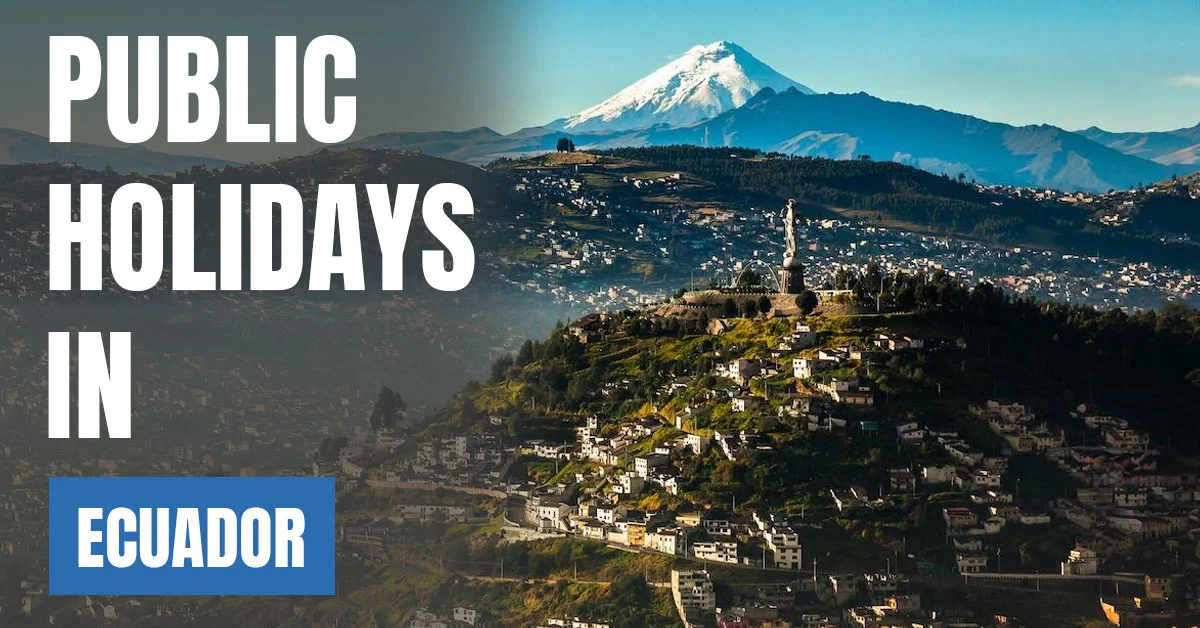
Ecuador observes a mix of national, historical, and religious holidays. These public holidays commemorate independence, battles, religious observances, and cultural traditions. On these days, government offices, banks, and many businesses close, and communities join in ceremonies, masses, parades, or local festivities.
Overview of Public Holidays in Ecuador
Ecuador’s holiday calendar includes fixed-date national observances and movable religious holidays. Catholic traditions play a prominent role, especially during Holy Week and other Christian commemorations. Some holidays are observed on alternate dates if they fall on weekends or to create long weekends.
List of Public Holidays in Ecuador (2026)
| Holiday | Date (2026) | Day / Observed | Significance |
|---|---|---|---|
| New Year’s Day (Año Nuevo) | January 1 | Thursday | Marks start of the Gregorian year. |
| Carnival (Carnaval) | February 16 & 17 | Monday & Tuesday | Festive pre-Lent celebration with parades and street parties. |
| Good Friday (Viernes Santo) | April 3 | Friday | Christian commemoration of Christ’s crucifixion. |
| Labour Day / International Workers’ Day (Día del Trabajo) | May 1 | Friday | Honors labor and workers’ rights. |
| Battle of Pichincha (Batalla de Pichincha) | May 24 | Sunday (observed Monday May 25) | Commemoration of the battle that secured Quito’s liberation (1822). |
| Birthday of Simón Bolívar (Natalicio de Simón Bolívar) | July 24 | Friday | Honors Simón Bolívar, liberator of northern South America. |
| Independence Day of Quito (Primer Grito de Independencia) | August 10 | Monday | Marks Quito’s first declaration of independence (1809). |
| Independence of Guayaquil (Independencia de Guayaquil) | October 9 | Friday | Guayaquil declares independence from Spain (1820). |
| All Souls’ Day (Día de los Difuntos) | November 2 | Monday | Day of remembrance and prayer for the departed. |
| Independence of Cuenca (Independencia de Cuenca) | November 3 | Tuesday | Commemoration of Cuenca’s independence (1820). |
| Christmas Day (Navidad) | December 25 | Friday | Christian holiday celebrating the birth of Jesus Christ. |
List of Public Holidays in Ecuador (2025)
| Holiday | Date (2025) | Day / Observed | Significance |
|---|---|---|---|
| New Year’s Day (Año Nuevo) | January 1 | Wednesday | Marks start of the Gregorian year. |
| Carnival (Carnaval) | March 3 & 4 | Monday & Tuesday | Festive pre-Lent celebration with parades and street parties. |
| Good Friday (Viernes Santo) | April 18 | Friday | Christian commemoration of Christ’s crucifixion. |
| Labour Day / International Workers’ Day (Día del Trabajo) | May 1 | Thursday | Honors labor and workers’ rights. |
| Battle of Pichincha (Batalla de Pichincha) | May 24 | Saturday (observed Friday May 23) | Commemoration of the battle that secured Quito’s liberation (1822). |
| Birthday of Simón Bolívar (Natalicio de Simón Bolívar) | July 24 | Thursday | Honors Simón Bolívar, liberator of much of northern South America. |
| Independence Day of Quito (Primer Grito de Independencia) | August 10 | Sunday (observed Monday Aug 11) | Marks Quito’s first declaration of independence from Spain (1809). |
| Independence of Guayaquil (Independencia de Guayaquil) | October 9 | Thursday (observed Friday Oct 10) | Guayaquil declares independence from Spanish rule (1820). |
| All Souls’ Day (Día de los Difuntos) | November 2 | Sunday (observed Nov 4) | Day of remembrance and prayer for the departed. |
| Independence of Cuenca (Independencia de Cuenca) | November 3 | Monday | Commemoration of Cuenca’s independence (1820). |
| Christmas Day (Navidad) | December 25 | Thursday | Christian holiday celebrating the birth of Jesus Christ. |
Notes: When a holiday falls on a weekend, it may be observed on an adjacent weekday to ensure a working-day holiday.
Religious & Cultural Significance
Catholicism is the dominant religion in Ecuador, so many holidays are tied to Christian observances like Holy Week and Christmas. The observance of All Souls’ Day in Ecuador is marked by traditions such as “guaguas de pan” and “colada morada,” where families visit cemeteries with offerings and special foods. Historical holidays like Battle of Pichincha, Independence Day, and Guayaquil’s Independence celebrate key moments in the nation’s struggle for freedom.
Public Observances & Closures
On public holidays, government offices, schools, and many businesses close nationwide. In cities such as Quito, Guayaquil, and Cuenca, parades, public ceremonies, and religious services are common. Tourist services may operate with reduced schedules during major holidays.
Frequently Asked Questions (FAQs)
How many public holidays are there in Ecuador?
Ecuador observes around 11–12 national public holidays each year, excluding local or regional observances.
Does Ecuador move holidays if they fall on weekends?
Yes. Some holidays are officially observed on adjacent weekdays to maintain long weekends and working-day celebrations.
What are “guaguas de pan” and “colada morada”?
These are traditional foods prepared for All Souls’ Day: bread figurines and a purple fruit-based drink shared with family and ancestors.
Which national holiday commemorates Quito’s first uprising?
Primer Grito de Independencia de Quito on August 10 marks Quito’s first call for independence from Spain in 1809.
Conclusion
Public holidays in Ecuador blend religious devotion, cultural traditions, and historical pride. From Carnival and Holy Week to independence commemorations and Christmas, these observances define Ecuador’s national rhythm and collective memory.
Also Explore: Public Holidays in Dominican Republic