
Thinking Beyond the Gulf? Best Alternatives for Expats, Professionals, Investors & Families in 2026
For millions of expatriates, the Gulf is not simply a place to work for a few years. It can become a highly convenient place to build a career, raise a family, operate a business, save money, and stay connected with several parts of the world.
But there is an important distinction that is often missed when people talk about “leaving the Gulf.”
The Gulf is not one destination. The Gulf Cooperation Council, or GCC, includes six countries: the United Arab Emirates, Saudi Arabia, Qatar, Bahrain, Oman, and Kuwait. Each offers a different mix of employment, taxation, business opportunity, family life, lifestyle, and residence options. Source: GCC Secretariat General.
The UAE is one of the strongest examples of why the region is difficult to replace. Its appeal comes from international communities, strong infrastructure, familiar food and services, business-friendly systems, global connectivity, and a relatively straightforward tax environment. But it is not the whole Gulf. Saudi Arabia, Qatar, Bahrain, Oman, and Kuwait can solve very different career, business, and lifestyle needs.
That changes the decision. Someone living in Dubai may not need to move to Canada or Singapore simply because their priorities have changed. Riyadh, Doha, Manama, Muscat, or Kuwait City may deserve consideration first.
For some people, the better question is: if my circumstances or priorities change, can another Gulf country give me what I need, and if not, which destination outside the Gulf can realistically replace the advantages I value?
A professional may want a larger or faster-growing employment market. A family may prioritize education and long-term settlement. A business owner may need another operating base. Someone already established in the Gulf may simply want geographic diversification rather than relocation.
This guide compares the alternatives from that perspective.
It does not rank Golden Visa programs, compare citizenship by investment, or explain the difference between temporary residence, permanent residence, and citizenship. VisaBoards covers those questions separately in our Golden Visa Complete Comparison Guide and Golden Visa vs CBI vs PR Guide.
Information reviewed: August 2026. Immigration, tax, employment, and residence rules can change. Always verify the latest requirements with the relevant government authority before acting.
Before Looking Beyond the Gulf, Look Across the Gulf
A common mistake is to compare one Gulf city, usually Dubai, directly with destinations such as Toronto, Sydney, Lisbon, Singapore, or London.
That skips an important step.
Before leaving the region, ask whether another Gulf market could solve the problem with less disruption to your career, family, business, travel patterns, and lifestyle.
UAE: International Convenience and Easy Day-to-Day Adjustment

The UAE remains particularly strong for internationally mobile professionals, families, founders, and investors who value connectivity and convenience.
More than 200 nationalities live in the country according to the UAE Government. English is widely used, and large expatriate communities make it relatively easy in major cities to find familiar food, schools, places of worship, professional services, and social networks. Source: UAE Government.
The UAE also combines major aviation hubs with digital government services, multiple company-formation systems, free zones, and a tax environment that can remain attractive to internationally mobile workers and businesses.
Saudi Arabia: Scale, Investment and Expanding Career Opportunities

Saudi Arabia offers a different proposition. Its attraction is increasingly tied to the scale of the domestic economy and the investment being directed into diversification.
The National Investment Strategy describes investment as a central part of Vision 2030, with the aim of expanding private-sector opportunities, improving the business environment, and accelerating diversification across existing and emerging sectors. Source: Invest Saudi.
For professionals whose industries are expanding in the Kingdom, a move from another Gulf country to Riyadh, Jeddah, or another Saudi market may make more sense than immediately looking to Europe, North America, or Australia.
Qatar: A Smaller but Highly International Business Base

Qatar is much smaller than Saudi Arabia, but Doha remains a highly international Gulf business centre with strong aviation connectivity and significant investment activity.
Invest Qatar states that Qatar’s legal framework enables 100% foreign ownership across multiple sectors, subject to applicable laws and sector-specific restrictions. Source: Invest Qatar.
For professionals or companies operating in sectors where Qatar has strong demand, remaining in the Gulf through Doha can preserve regional proximity while creating a very different career or business environment.
Bahrain: A Business-Friendly Gateway to the Wider GCC

Bahrain deserves more attention in Gulf comparisons, particularly for companies and professionals connected to finance, technology, services, and the Saudi market.
The Bahrain Economic Development Board highlights 100% foreign ownership in most sectors and positions Bahrain as a gateway to the wider GCC, with particularly close access to Saudi Arabia. Source: Bahrain EDB.
For some founders and regional businesses, Bahrain can therefore provide a lower-friction Gulf alternative without requiring a complete geographic reset.
Oman: A Different Gulf Lifestyle and Investment Proposition
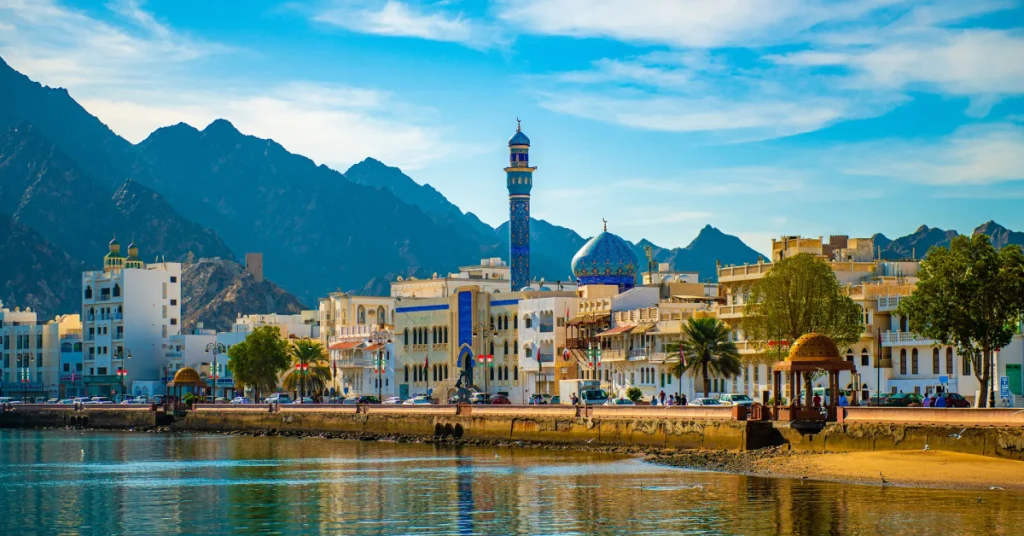
Oman should not be judged by whether it can recreate Dubai or Riyadh. Its proposition is different.
Invest Oman places economic diversification, private-sector participation, logistics, renewable energy, manufacturing, tourism, mining, food security, and the digital economy among the country’s strategic investment priorities under Oman Vision 2040. Source: Invest Oman.
For families, professionals, and investors who want to remain in the Gulf but prefer a different pace or operating environment, Oman deserves consideration before looking much farther away.
Kuwait: An Established Gulf Economy With New Investor Options

Kuwait is another significant Gulf market that is often overlooked when relocation discussions become dominated by Dubai and Riyadh.
The Kuwait Direct Investment Promotion Authority highlights economic diversification, infrastructure development, private-sector involvement, and the ability for qualifying direct-investment structures to have 100% foreign ownership. Source: KDIPA.
In June 2026, KDIPA also announced a framework allowing eligible investors and key executives in KDIPA-licensed companies to obtain residence permits of up to 15 years, subject to significant eligibility conditions. Source: KDIPA.
Kuwait will not suit every professional or entrepreneur, but it reinforces the broader point: the Gulf itself contains several different strategic options.
Best Alternatives to the Gulf at a Glance
There is no single country that replaces the Gulf across income, taxation, convenience, business, family life, and international connectivity.
The better approach is to identify what you are trying to preserve.
| Destination | Particularly Worth Considering For | What It Can Offer | Main Trade-Off Compared With the Gulf |
|---|---|---|---|
| Singapore | High-skilled professionals, founders, executives | Global business environment, infrastructure, safety, Asian access | Higher taxation and selective work-pass rules |
| Malaysia | Families, lifestyle-focused residents, long-term second-base planning | Affordability, cultural diversity, modern cities, regional access | Salaries may not compete with Gulf packages |
| Portugal | Families, entrepreneurs, European-base seekers | European lifestyle, work and business residence routes, long-term planning | Greater tax and administrative complexity |
| Australia | Skilled professionals, healthcare workers, engineers, families | Strong skilled-migration system and long-term settlement potential | Distance, taxation, and higher application complexity |
| Canada | Families and skilled workers focused on permanent settlement | Structured economic immigration and established settlement pathways | Documentation, competition, and living costs in major cities |
| Germany | Engineers, IT professionals, healthcare workers, technical talent | Major industrial economy and skilled-worker pathways | Language and bureaucracy can require significant adjustment |
| United Kingdom | Professionals, founders, academics, internationally mobile families | Deep professional networks, education, and global business connections | High housing costs, taxation, and sponsorship requirements |
| Thailand | Remote professionals, lifestyle seekers, some high-income residents | Asian connectivity, lifestyle flexibility, and long-term residence options for qualifying applicants | Less suitable as a direct replacement for a Gulf salary-based career |
These are not rankings. Someone earning a strong package in Dubai will evaluate these countries very differently from a family whose primary goal is permanent settlement.
Which Destination Fits Your Goal?
If your priority is international business and a highly developed Asian base, Singapore deserves early consideration.
If you want greater affordability while retaining modern infrastructure, diverse food, and relatively easy adaptation, Malaysia may be more relevant.
If your goal is a European base with work, entrepreneurial, or remote-work possibilities, Portugal deserves consideration.
If you are a skilled professional who wants to build a permanent future, Australia and Canada are fundamentally different propositions from the Gulf.
If your profession is concentrated in engineering, manufacturing, technology, research, or technical industries, Germany may be a stronger career alternative than lifestyle-focused destinations.
If your career depends on finance, healthcare, law, education, technology, consulting, or international networks, the UK remains important.
Thailand is more relevant when the goal is lifestyle flexibility or a second base, rather than reproducing a high-income Gulf employment model.
But before comparing any of them, it is worth understanding why the Gulf is so difficult to replace.
Why the Gulf Is Harder to Replace Than Many Comparisons Admit
Comparisons between Gulf cities and destinations such as Singapore, Portugal, Canada, or Australia often focus almost entirely on tax rates, salaries, or visas.
That misses a major part of the Gulf experience.
The Adjustment Barrier Can Be Surprisingly Low
One of the region’s most practical advantages is that several major Gulf cities are built around large international populations.
The UAE is the clearest example. More than 200 nationalities live in the country according to the UAE Government, and English is widely used alongside Arabic. Languages including Urdu, Hindi, Malayalam, Bengali, Farsi, and others are common in everyday life. Source: UAE Government.
Across major expatriate centres in the Gulf, many new arrivals can find familiar groceries, restaurants, places of worship, schools, communities, and services without completely rebuilding their lifestyle.
Food is an underrated part of adjustment. Dubai, Abu Dhabi, Doha, Riyadh, Jeddah, Manama, Muscat, and Kuwait City all have substantial international dining and retail ecosystems. The depth varies by city, but familiar food and established communities can reduce the emotional friction of relocation for many families.
What We Heard From Gulf Residents
In our informal conversations with people who have lived and worked in Gulf countries, a recurring theme was how quickly everyday life can become manageable once the right job, housing, and residence status are in place.
People repeatedly mentioned practical advantages such as familiar food, established expatriate communities, accessible services, regional travel connections, and the ability to continue many parts of their existing lifestyle without an enormous cultural reset.
When we asked whether they would recommend moving to the Gulf for the right opportunity, the responses we encountered were mostly encouraging rather than dismissive.
This was not a scientific survey and should not be treated as one. Experiences can differ significantly by country, city, profession, employer, salary, family circumstances, and nationality.
But the consistency of those conversations reinforced something that statistics alone do not capture: for many internationally mobile people, the practical barrier to settling into a major Gulf city can be relatively low.
Business Setup Can Also Be Relatively Accessible
The business proposition varies considerably across the six GCC countries, so it would be misleading to describe the entire Gulf as having one company-formation system.
The UAE remains particularly strong in this area. The UAE Government allows many company-formation processes to be completed online, while individual emirates and free zones provide digital licensing and incorporation services. Source: UAE Government.
Other Gulf countries are also competing for international businesses. Qatar permits full foreign ownership across multiple sectors under its applicable framework, Bahrain allows 100% foreign ownership in most sectors, Oman is actively promoting investment under Vision 2040, and Kuwait provides qualifying direct investors with ownership and incentive mechanisms through KDIPA.
That does not mean every Gulf business setup is simple. Regulated activities, banking, licensing, local requirements, sector restrictions, and residence categories can all add complexity.
But for an internationally mobile founder, the region provides several business environments designed specifically to attract foreign capital and talent.
The Tax Advantage Is Important, but It Is Not Identical Across the Gulf
Another mistake is to talk about “Gulf tax” as though all six countries have identical rules.
They do not. Personal, corporate, VAT, excise, withholding, and sector-specific tax rules differ by jurisdiction and can change over time.
The UAE is again a useful example. It does not levy personal income tax on individuals. Source: UAE Government.
For businesses, the UAE’s federal corporate-tax framework generally applies a 0% rate to taxable income up to AED 375,000 and 9% to taxable income above that threshold, subject to the rules, exemptions, and specific treatment applicable to the business. Source: UAE Government.
Free-zone businesses can also be subject to specific corporate-tax rules, so “free zone” should never simply be interpreted as “no tax.”
The broader lesson is that anyone comparing the Gulf with Canada, Australia, Germany, Portugal, Singapore, or the UK should calculate the real after-tax household and business outcome rather than relying on the label “tax-free Gulf.”
This Is Why Comparing Visas Alone Does Not Work
A country could offer a clearer path to permanent residency than most Gulf states and still be a poor replacement for someone who values high take-home income, easy regional travel, international food, short adjustment time, strong aviation links, or convenient company formation.
Likewise, another country may be a much better choice for someone whose main priority is establishing a permanent home for the next 30 years.
The question is therefore not:
Which country is better than the Gulf?
It is:
Which country, inside or outside the Gulf, is better for the specific thing I need next?
Why Consider Alternatives If the Gulf Works So Well?
For many people, there is no immediate reason to leave.
The UAE, Saudi Arabia, Qatar, Bahrain, Oman, and Kuwait continue to attract international professionals, businesses, and families, although each market offers a different proposition.
But people can still have legitimate reasons to diversify.
Long-Term Settlement
Some families eventually want a country where immigration status can develop into a more permanent relationship with the country.
This is a fundamentally different objective from having a highly convenient renewable residence in a Gulf state.
If this is your priority, countries such as Australia and Canada may become more relevant even if they cannot reproduce the Gulf’s tax advantages.
Children’s Future
Parents may begin by comparing salaries but eventually think about different questions.
Where will their children attend university? Where will they be able to work as adults? Will the family still be living under the same immigration structure 10 or 20 years from now?
Those questions can completely change the preferred destination.
Career Diversification
The Gulf may be exceptional for certain industries while another country may offer a deeper market for a specific profession.
An engineer may consider Germany. A finance executive may prioritize Singapore or London. A healthcare professional may examine Australia, Canada, Germany, or the UK.
Business Diversification
A company serving the Middle East may benefit enormously from a base in the UAE, Saudi Arabia, Bahrain, Qatar, Oman, or Kuwait while still needing another entity closer to European, North American, or Asian customers.
In that situation, opening another base does not mean the Gulf strategy failed.
It may simply be the next stage of an international business strategy.
Lifestyle or Cost
Some people eventually decide that maximizing salary is less important than lowering household expenses, reducing work pressure, or changing lifestyle.
Malaysia and Thailand can become interesting for precisely this reason.
Do You Actually Need to Leave the Gulf?
This is perhaps the most important question in the entire guide.
Too many relocation articles assume that choosing another country requires rejecting your current Gulf base, or the Gulf altogether.
It does not.
There are three very different strategies.
1. Full Relocation
You move your employment, family, tax position, and primary life to another country.
This makes the most sense when your long-term objective has fundamentally changed.
Someone seeking permanent settlement through a skilled migration system, for example, may eventually need to build their life physically in that country.
2. Keep the Gulf as Your Main Base
For many professionals and entrepreneurs, this remains the most practical option.
You continue earning, operating a business, or raising your family in the Gulf while diversifying investments, education plans, or international business interests elsewhere.
3. Build a Second Base
This is the middle option that deserves more attention.
You may not want to leave Dubai, Abu Dhabi, Riyadh, or Doha at all.
Instead, you may want another country where you have legitimate residence rights, business operations, property, family connections, or an established plan that could be activated if your circumstances change.
This turns migration planning into diversification rather than an emergency exit.
How We Selected These Alternatives
We deliberately did not rank destinations using an artificial numerical score.
The countries were instead assessed around the practical advantages that often attract people to the Gulf in the first place: employment, business environment, international accessibility, family suitability, lifestyle, long-term residence options, and the difficulty of adapting.
Immigration eligibility is important, but it is considered only after determining whether the destination itself makes sense.
That distinction also prevents this guide from becoming another Golden Visa comparison.
Singapore: Best for Global Business and High-Skill Professionals

Singapore is probably the closest alternative on this list for someone who values the Gulf, particularly the UAE, for efficiency, infrastructure, aviation links, and international business.
It is a sophisticated financial and corporate centre with deep connections across Asia.
Singapore’s Employment Pass is designed for foreign professionals, managers, executives, and technicians who meet its eligibility rules. Eligible Employment Pass holders can also obtain passes for qualifying family members. Source: Singapore Ministry of Manpower.
This makes Singapore particularly relevant for finance, technology, consulting, regional management, trade, and other high-value professional roles.
Where Singapore Can Be Stronger
For a business that needs direct exposure to Southeast and East Asian markets, Singapore offers exceptional regional positioning. Its financial, legal, and corporate ecosystem can also be attractive to internationally oriented companies.
Where the Gulf Can Be Stronger
Singapore should not be treated as a simple financial substitute for Dubai, Doha, Riyadh, or another Gulf business centre.
Living costs can be high, the work-pass system is selective, and a foreign professional’s ability to move there depends substantially on employment and eligibility.
For someone already earning a strong tax-advantaged Gulf salary, the financial case for moving needs to be calculated carefully.
Best fit: senior professionals, regional executives, technology talent, financial professionals, and international businesses seeking an Asian hub.
Malaysia: Best for Families Seeking Value and Easier Cultural Adjustment

Malaysia provides a different proposition.
It is not primarily a substitute for Gulf salaries. It can instead be attractive for families and internationally mobile people who value affordability, established urban infrastructure, food diversity, and access to Southeast Asia.
Kuala Lumpur and other major Malaysian cities have large international communities, and English is widely used in professional and urban settings.
For families accustomed to multicultural Gulf cities, this can make Malaysia feel like a relatively gentle transition.
Malaysia also maintains the Malaysia My Second Home, or MM2H, programme. Requirements have changed over time and the Ministry of Tourism, Arts and Culture maintains the current programme conditions and application documentation. Source: Malaysia Ministry of Tourism, Arts and Culture.
This article deliberately does not compare the programme’s financial thresholds because that would turn a destination comparison into an immigration-product comparison.
Where Malaysia Can Be Stronger
Everyday living costs may be easier to manage than in many premium international cities, depending on location and lifestyle. Food diversity, warm weather, and regional connectivity can also appeal to families coming from the Gulf.
Where the Gulf Can Be Stronger
The employment proposition is very different.
A professional should not assume that the salary package available in Dubai, Abu Dhabi, Doha, or Riyadh can simply be recreated in Kuala Lumpur.
Best fit: families, lifestyle-focused residents, people with geographically flexible income, and those seeking an Asian second base.
Portugal: Best for Building a European Base

Portugal belongs in this comparison not because of one particular investment visa but because it offers multiple ways for qualifying foreigners to establish a life in Europe.
Official Portuguese sources maintain residence-visa routes for employment and independent or entrepreneurial activity, while AIMA also maintains residence provisions for qualifying remote workers.
That makes Portugal relevant to several different profiles.
A professional may consider employment. An entrepreneur may examine a business route. A location-independent worker may have another option.
Where Portugal Can Be Stronger
The major attraction is long-term European positioning.
For a family whose goal has shifted from maximizing tax-efficient earnings to establishing a future in Europe, Portugal solves a different problem from the Gulf.
Where the Gulf Can Be Stronger
For some Gulf residents, especially those accustomed to the UAE, day-to-day international living and business administration can feel significantly easier than making a full move into a European system.
Portugal also has a conventional European tax environment, and applicants should evaluate their personal tax circumstances carefully rather than assuming immigration eligibility automatically produces a financial advantage.
If your primary question is specifically about residency through investment, see our Golden Visa Complete Comparison Guide instead.
Best fit: families seeking a European future, entrepreneurs, location-flexible professionals, and people building a second European base.
Australia: Best for Skilled Professionals and Families Seeking a Durable Future

Australia is one of the clearest examples of why the “best alternative” depends on your goal.
It does not replicate the Gulf employment and lifestyle model.
Instead, it provides something structurally different.
Australia operates temporary, provisional, and permanent skilled migration routes. The Department of Home Affairs states that some skilled visas provide pathways to permanent residence, while permanent skilled visas make successful applicants Australian permanent residents. Source: Australian Department of Home Affairs.
For healthcare workers, engineers, technical professionals, educators, and other skilled applicants, that can be extremely important.
Where Australia Can Be Stronger
If your goal is to establish a permanent family future rather than maintain renewable expatriate status, Australia can be considerably more aligned with that objective.
Where the Gulf Can Be Stronger
The application process can involve substantially more evidence, qualification assessment, and planning than many employer-linked Gulf residence processes, particularly the more digitized systems familiar to residents of the UAE.
Taxes are also a major part of the financial equation, and Australia’s geographic distance from Europe, the Middle East, and South Asia can matter to families.
Best fit: skilled professionals and families prioritizing settlement over short-term tax efficiency.
Canada: Best for Families Focused on Permanent Settlement

Canada should also be viewed through the settlement lens rather than as a direct Gulf replacement.
Canada’s Express Entry system manages applications for several economic immigration programs. Its Federal Skilled Worker Program specifically applies to eligible skilled workers with foreign work experience who want to become permanent residents. Source: Government of Canada.
That is a fundamentally different proposition from employment-based expatriate life in much of the Gulf.
Where Canada Can Be Stronger
For applicants who qualify and whose objective is permanent settlement, Canada provides a structured immigration framework designed around that outcome.
Families may also value the ability to make decisions with a much longer time horizon.
Where the Gulf Can Be Stronger
Canadian immigration can be documentation-heavy and competitive.
Applicants may need language testing, education assessments, work-experience evidence, proof of funds, and other documentation depending on their route. Entering an Express Entry pool also does not guarantee an invitation. Source: Government of Canada.
Someone accustomed to a comparatively straightforward Gulf employment and residence process, particularly in the UAE, may notice this difference immediately.
The tax and housing calculations can also look very different from those of a Gulf resident.
Best fit: skilled workers and families whose primary objective is permanent settlement.
Germany: Best for Engineering, Technology and Technical Careers

Germany is not a lifestyle replica of the Gulf.
Its attraction is its economy.
For internationally qualified engineers, IT specialists, researchers, healthcare workers, and other skilled professionals, Germany can provide access to one of Europe’s largest employment markets.
Germany’s official skilled-worker portal currently highlights routes including the Opportunity Card for eligible jobseekers and the EU Blue Card for qualifying professionals with eligible employment. Source: Make it in Germany.
Where Germany Can Be Stronger
The depth of the industrial and technical economy can make Germany more suitable for certain careers than destinations chosen mainly for lifestyle or tax advantages.
There can also be meaningful long-term residence possibilities for qualifying skilled workers.
Where the Gulf Can Be Stronger
Germany typically requires more adaptation.
Language can matter significantly in daily life and in many professions. Administrative processes may also feel more formal and document-heavy than the systems familiar to many Gulf residents, particularly those coming from the UAE.
Best fit: engineers, scientists, IT professionals, healthcare workers, researchers, and technical specialists.
United Kingdom: Best for International Professional Networks

The UK remains difficult to ignore because London and other major British cities remain deeply connected to global finance, technology, medicine, academia, law, media, and professional services.
The Skilled Worker route allows qualifying applicants to work for an approved employer in an eligible job, subject to sponsorship, salary, and other requirements. Source: UK Government.
For professionals whose careers depend heavily on international institutional networks, the UK can therefore remain attractive even when it is not the cheapest option.
Where the UK Can Be Stronger
Professional depth, universities, global recognition, and proximity to European markets are major advantages.
Where the Gulf Can Be Stronger
Taxation, housing costs, and the requirement to satisfy immigration conditions can make the financial comparison less attractive for someone already earning a strong Gulf package.
The weather and lifestyle change may also be larger than people expect.
Best fit: professionals in internationally connected sectors, academics, founders, and families prioritizing education and professional networks.
Thailand: Best for Lifestyle Flexibility and a Second Asian Base

Thailand is a very different alternative.
It should not usually be viewed as a direct substitute for the Gulf employment market.
Instead, it is relevant to people whose income or business structure gives them greater geographical freedom.
Thailand’s Long-Term Resident programme currently includes categories for qualifying highly skilled professionals, work-from-Thailand professionals, wealthy global citizens, and wealthy pensioners, with dependant provisions for qualifying family members. Source: Thailand Board of Investment.
The eligibility conditions are significant, so the existence of the programme does not mean Thailand is an easy long-term residence option for everyone.
Where Thailand Can Be Stronger
Lifestyle, regional travel, and potentially lower everyday expenses can make Thailand attractive to some remote professionals, entrepreneurs, and families.
Where the Gulf Can Be Stronger
For someone dependent on a strong local professional salary, Dubai or another Gulf employment centre can be a much stronger proposition.
Thailand therefore works better as a lifestyle or second-base alternative than as a direct substitute for Gulf career economics.
Best fit: remote professionals, qualifying high-income residents, lifestyle seekers, and people building an Asian second base.
Best Alternatives for Gulf-Based Professionals
Professionals should begin with the employment market, not the visa.
Singapore is particularly relevant for senior business, finance, and technology roles.
Germany is compelling for engineering, industrial, scientific, and technical careers.
Australia and Canada are stronger when career planning is connected to permanent settlement.
The UK remains valuable when international professional networks matter.
This also explains why Malaysia, Thailand, and Portugal cannot simply be ranked above or below these countries. They may solve different problems.
A highly paid Gulf professional considering relocation should calculate net income after tax and housing, not simply compare gross salaries.
Best Alternatives for Families
Families should evaluate a country differently from single professionals.
Salary still matters, but it becomes only one part of the decision.
Education, healthcare, housing, spouse opportunities, immigration status, distance from relatives, and the children’s future can become equally important.
Australia and Canada stand out when permanent settlement is the objective.
Portugal offers a different European proposition.
Malaysia can be attractive when affordability, cultural diversity, and relatively easy day-to-day adjustment matter more.
But the Gulf should not be underestimated in this comparison.
Major Gulf cities can offer international schools, familiar food, expatriate communities, religious facilities, and extensive service networks. The UAE is the strongest example of English-language accessibility and multicultural day-to-day living, but similar adjustment advantages can exist elsewhere in the region depending on the city and family.
A country may therefore offer a stronger permanent-settlement pathway while still being harder to settle into during the first year.
Those are two different measures.
Best Alternatives for Business Owners and Investors
Business owners should avoid beginning with the question, “Where can I get a visa by investing?”
A better first question is:
Where does my business need to be?
Singapore makes sense when Asian market access, finance, and corporate credibility matter.
The UK can be valuable for professional services, capital, and international networks.
Portugal can make sense for an entrepreneur who wants a European operating base.
Malaysia can be relevant for regional operations where costs matter.
But the Gulf remains exceptionally difficult to ignore for many internationally mobile founders. The UAE offers one of the region’s most developed international company-formation ecosystems, while Bahrain, Qatar, Saudi Arabia, Oman, and Kuwait each offer different market-access and investment propositions.
In the UAE, online incorporation systems, free zones, full foreign ownership possibilities in many structures, strong aviation links, and a relatively competitive tax framework create an environment built deliberately around international business. Elsewhere in the Gulf, the commercial case may be driven more by access to a specific domestic market, sector, cost structure, or investment opportunity.
This is why we would not recommend moving a profitable Gulf business simply because another country offers an attractive residence programme.
The commercial case should come first.
If investment-linked residence itself is your objective, read the VisaBoards Golden Visa Complete Comparison Guide.
If you are trying to understand whether you need residence, permanent residence, or citizenship, read Golden Visa vs CBI vs PR.
Those articles answer immigration-mechanism questions. This article answers the destination question.
Gulf vs Alternatives: What Are You Actually Trading?
| What the Gulf Can Do Very Well | Why Someone Might Still Choose an Alternative |
|---|---|
| Low or no personal income tax in several Gulf states | Permanent settlement may matter more than maximizing take-home pay |
| Easy adjustment for many international families | A family may prioritize a long-term national home |
| International food, cultures, and communities | Another country may better suit children’s future plans |
| Strong regional salaries in selected sectors | Another market may have greater depth in a specific profession |
| Efficient company formation | A business may need physical access to Europe, North America, or Asia |
| Excellent aviation connectivity | Someone may prioritize geographic proximity to family |
| Modern services and infrastructure | Lifestyle preferences change over time |
| Renewable residence options | Some people ultimately want a traditional immigration pathway |
The important conclusion is that most alternatives involve a trade.
You are rarely gaining every advantage simultaneously.
How to Choose the Right Alternative
- Identify what you are trying to preserve. Is it income, career growth, family comfort, safety, business, lifestyle, or international mobility?
- Decide whether you actually want to leave. A second base may solve your problem without giving up a successful Gulf life.
- Check whether your profession or business works in the destination. Immigration eligibility is not useful if the economic model does not make sense.
- Calculate real household finances. Compare net salary after tax, housing, schooling, transport, healthcare, and travel to family.
- Consider the adjustment burden. Language, food, community, bureaucracy, and cultural familiarity matter more than most spreadsheets acknowledge.
- Think 10 years ahead. A country that is less financially attractive today may better suit your family’s long-term objective.
- Only then select the immigration route. Employment, skilled migration, entrepreneurship, remote work, family, and investment routes solve different problems.
Questions to Ask Before Moving
Before committing to a destination, ask:
- Does my profession actually have a strong employment market there?
- What salary could I realistically earn?
- What would my income look like after tax?
- What will housing cost?
- Can my spouse work?
- What will schooling cost?
- How does healthcare work?
- Will language create difficulties for my family?
- How easy will it be to find familiar food and communities?
- How often can we realistically visit relatives?
- What happens to my residence status if I lose my job?
- Does the destination still make sense five or ten years from now?
For business owners, add another question:
Would I still choose this country if it offered me no residence benefit at all?
If the answer is no, you may be choosing an immigration product rather than a business location.
Once You Choose the Country, Then Choose the Immigration Route
Destination selection and immigration-route selection should be separate decisions.
A country may allow foreigners to enter through employment, skilled migration, entrepreneurship, remote work, family sponsorship, investment, or other routes.
The right route depends on your own circumstances.
VisaBoards maintains separate guides for this stage.
- If investment-based residency is your priority, see the Golden Visa Complete Comparison Guide.
- If you need to understand the difference between residence, permanent residence, and citizenship strategies, read Golden Visa vs CBI vs PR.
- If you are a skilled professional, see our Countries Offering Skilled & Talent Visas: Global Comparison Guide.
Keeping these questions separate leads to better decisions and prevents an attractive immigration programme from distracting you from whether you would actually want to live in the country.
Final Verdict: Should You Really Look Beyond the Gulf?
Yes, but not because the Gulf has suddenly become a poor choice.
In fact, researching alternatives often makes the region’s strengths more obvious.
The Gulf is unusually difficult to replace because it is not one proposition. The UAE can be exceptionally strong for international convenience, business formation, connectivity, and multicultural day-to-day life. Saudi Arabia offers scale and expanding opportunities tied to economic diversification. Qatar provides a smaller but highly international business environment. Bahrain can work as a regional business gateway, particularly for access to Saudi Arabia. Oman offers a different lifestyle and investment proposition. Kuwait remains an established high-income Gulf economy with evolving investor options.
That means the first alternative to your current Gulf country may be another Gulf country.
Our informal conversations with people who have lived and worked in the region reinforced this. We repeatedly heard that, when the employment and family circumstances are right, everyday adjustment can be surprisingly easy because familiar food, services, communities, travel connections, and expatriate networks are already established.
Those conversations are not survey evidence, and Gulf experiences are not universal. Employer quality, salary, city, nationality, profession, housing, family needs, and immigration status can completely change the outcome.
But they explain why the decision deserves more nuance than “Dubai versus Portugal” or “the Gulf versus Canada.”
Singapore may be better for a particular Asian corporate career.
Malaysia may better suit a family seeking lower living costs and an easier cultural transition.
Australia or Canada may make far more sense for someone determined to establish permanent roots.
Germany may be stronger for a technical specialist.
Portugal may offer the European base someone wants.
Thailand may be better for a location-flexible lifestyle.
And for many people, after comparing everything, remaining in the Gulf, or moving to another Gulf country, may still be the best primary strategy.
The smartest approach may therefore not be to abandon the region.
It may be to keep what is working while creating another option.
That is what thinking beyond the Gulf should mean: first understand what the six Gulf markets can offer, then decide whether your career, family, or business genuinely needs something outside the region.
Frequently Asked Questions
What are the best alternatives to the Gulf for expats?
There is no universal best alternative. Singapore is particularly relevant for international business and high-skilled professionals, Australia and Canada for skilled migrants seeking long-term settlement, Germany for technical careers, Portugal for a European base, Malaysia for families and affordability, the UK for professional networks, and Thailand for certain location-flexible lifestyles.
Should I consider another Gulf country before leaving the region?
Yes. The UAE, Saudi Arabia, Qatar, Bahrain, Oman, and Kuwait offer different employment, business, lifestyle, and investment propositions. If your current problem is career growth, market access, business expansion, or lifestyle rather than permanent settlement, another Gulf country may solve it with less disruption than moving to a different region.
Is there any country that offers everything the Gulf does?
Not realistically. The Gulf combines several advantages across its different markets, including high-income employment in selected sectors, international communities, strong aviation links, business access, modern infrastructure, and relatively easy adaptation for many expatriates. Countries outside the Gulf may outperform it in specific areas, particularly permanent settlement, but usually involve trade-offs.
Why is the Gulf easy for many expat families to adjust to?
Major Gulf cities have large expatriate populations and extensive international service ecosystems. The UAE is the clearest example, with more than 200 nationalities living in the country, widespread use of English, familiar food from many regions, international schools, places of worship, and established expatriate communities.
Is the UAE still the strongest Gulf option for business owners?
The UAE remains one of the Gulf’s most developed international business hubs, but it is not automatically best for every company. Saudi Arabia may be more important for access to its large domestic market, Bahrain can be attractive as a regional gateway, Qatar offers foreign-ownership options across multiple sectors, Oman is promoting strategic investment sectors, and Kuwait has direct-investment incentives for qualifying projects.
Is the Gulf tax-free?
No. Tax rules differ across the six GCC countries, and describing the entire Gulf as tax-free is misleading. The UAE, for example, does not levy personal income tax on individuals, but VAT and corporate tax can apply. Anyone comparing destinations should review the current personal and business tax rules for the specific Gulf country involved.
Is Canada or Australia better than the Gulf for families?
It depends on the family’s objective. Canada and Australia may be more suitable for families prioritizing permanent settlement, while Gulf countries can be stronger for regional proximity, tax-efficient earnings, international convenience, or faster day-to-day adjustment. The correct comparison is not simply which country is better, but which model better matches the family’s long-term plan.
Should I leave the Gulf to obtain residency somewhere else?
Not necessarily. You may be able to maintain your Gulf career, residence, or business while developing another legitimate international option. Whether that is legally and financially appropriate depends on the countries involved, physical-presence rules, residence requirements, and your tax circumstances.
What is the best alternative for Gulf-based professionals?
Singapore, Germany, Australia, Canada, and the UK deserve consideration depending on the profession. But professionals should also compare opportunities elsewhere in the Gulf, particularly Saudi Arabia, Qatar, and the UAE, before assuming an intercontinental move is necessary.
Where should investors look outside the Gulf?
That depends on the investment itself. Singapore may appeal to internationally oriented businesses, the UK to companies seeking professional and financial networks, Portugal to some entrepreneurs seeking a European base, and Malaysia to certain regional operations. Residence benefits should be treated as a secondary consideration rather than the sole reason for investing.