
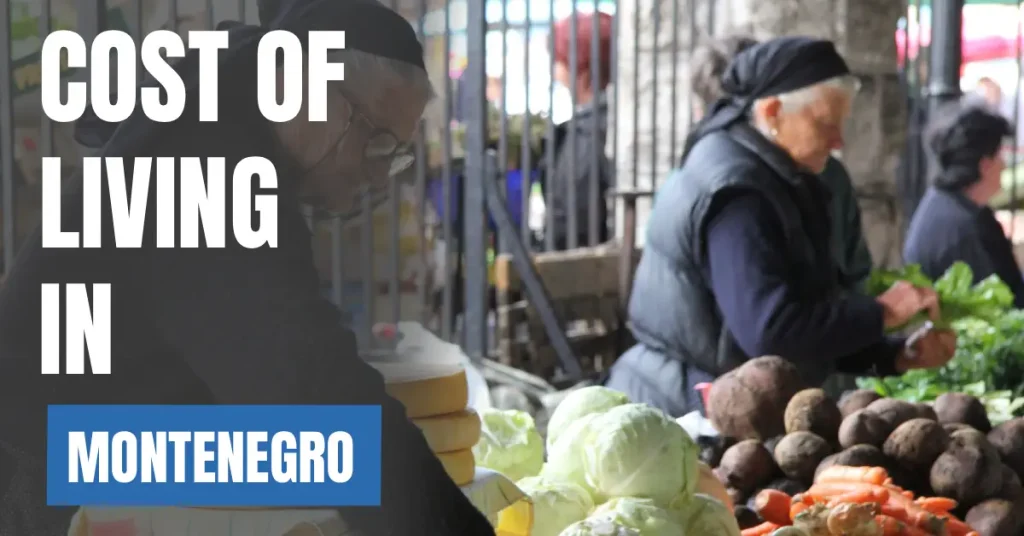
Cost of Living in Montenegro 2026: Rent, Salaries and Monthly Expenses
The cost of living in Montenegro in 2026 is generally lower than in many Western European countries, but housing prices, seasonal tourism and relatively modest local salaries can make independent living expensive. A single person renting an apartment may need approximately €1,000 to €1,600 per month, while a family of four could require €2,500 to €4,000 or more, depending on location, schooling and lifestyle.
On this pageTable of Content
Montenegro is a small Balkan country on the Adriatic Sea, known for its coastal towns, mountains and growing international community. Podgorica, Budva, Kotor, Tivat and Bar offer different lifestyles and price levels. The country uses the euro (EUR), although it is not yet a member of the European Union.
Housing is the biggest variable for many newcomers. Apartments in Podgorica or inland towns may be more affordable than comparable properties in coastal tourist destinations. In Budva and Tivat, summer demand can increase rents and make year-round accommodation harder to secure.
This updated guide covers rent, groceries, restaurants, transportation, utilities, internet, healthcare, education, salaries, minimum wages, taxes and residency costs. It also includes realistic monthly budgets for singles, couples and families, with figures reviewed in November 2026.
Also Explore: Cost of Living in MyanmarCost of Living in Montenegro at a Glance
A single person in Montenegro may spend around €550 to €800 per month excluding rent, while an independent renter should generally plan for approximately €1,000 to €1,600 in total. The following figures combine published market estimates with broader planning allowances.
| Expense | Estimated Cost in EUR | Notes |
|---|---|---|
| Single person, excluding rent | €550 to €800/month | Food, utilities, transport and ordinary personal expenses |
| Single person, including rent | €1,000 to €1,600/month | One-bedroom accommodation and normal spending |
| Couple, including rent | €1,600 to €2,500/month | Shared apartment and household expenses |
| Family of four, including rent | €2,500 to €4,000+/month | Excludes expensive international schooling |
| One-bedroom apartment outside center | €350 to €750/month | Higher in desirable coastal locations |
| One-bedroom apartment in city center | €500 to €900+/month | Location and season affect prices |
| Groceries for one adult | €200 to €350/month | Diet and imported products influence costs |
| Inexpensive restaurant meal | €8 to €12 | Tourist restaurants can charge more |
| Basic household utilities | €80 to €160/month | Heating and cooling may raise expenses |
| Home broadband internet | €20 to €40/month | Depends on provider and package |
| Local transportation | €30 to €150+/month | Public transport versus regular car use |
| Average monthly net salary, September 2026 | €1,043 | Official MONSTAT figure |
| Minimum monthly net salary | €600 or €800 | Depends on job qualification level |
Important: Consumer spending ranges are estimates rather than official national averages. In its September 2026 cost-of-living review, Montenegro Sotheby's International Realty cited Numbeo estimates of approximately €615 monthly for one person and €2,223 for a family of four, both excluding rent. Actual household spending may be higher or lower depending on lifestyle and location.
Montenegro's Statistical Office, MONSTAT, reported annual consumer price inflation of 5.2% in September 2026. This means older price guides may underestimate certain everyday expenses. See the official September 2026 Consumer Price Index report.
How Much Does It Cost to Live in Montenegro Per Month?
A single renter in Montenegro can reasonably plan for €1,000 to €1,600 per month including rent, while a couple may need €1,600 to €2,500. Families renting larger accommodation may spend €2,500 to €4,000 or more, particularly in coastal cities.
These ranges assume normal accommodation, groceries, basic utilities, internet, local transportation and some leisure spending. They exclude major relocation expenses, large medical bills and expensive private school fees.
Someone sharing accommodation in Podgorica, Nikšić or another less expensive location may manage on a smaller budget. However, an expat who wants a furnished apartment in central Budva, Kotor or Tivat may need significantly more than the national average.
Rent is especially important because typical local wages do not always support independent accommodation comfortably. The official average net monthly salary in September 2026 was €1,043, according to MONSTAT. A renter paying €600 monthly would spend nearly 58% of that income on housing alone, before groceries and other expenses.
The government's latest available Household Budget Survey reinforces the importance of everyday essentials. Based on 1,438 surveyed households in 2025, food and non-alcoholic beverages accounted for 30.2% of household personal consumption, housing and utilities for 15.5%, and transportation for 12.4%. These are consumption shares, not a recommended budget for every relocating family.
Housing and Rent Prices in Montenegro
Rent in Montenegro varies considerably by city, neighborhood, property size and season. One-bedroom apartments often cost €450 to €650 in Podgorica, while comparable properties in popular coastal towns may cost €600 to €900 or more.
Average Monthly Rent by City
| City | One Bedroom, Center | One Bedroom, Outside Center | Three Bedrooms, Center |
|---|---|---|---|
| Podgorica | €575 | €443 | €1,158 |
| Budva | €744 | €535 | €1,333 |
| Kotor | €600 | €583 | €1,200 |
| Tivat | €790 | €716 | €1,745 |
These are approximate 2026 crowdsourced rental estimates compiled from Numbeo and published in the Montenegro Sotheby's International Realty cost-of-living guide, updated September 29, 2026. They are not official registered rental transaction averages. Some city datasets contain relatively few observations.
Podgorica generally provides a broader range of year-round residential accommodation than resort-focused coastal areas. Bar and inland towns can also offer lower rents, although individual properties and neighborhoods should be compared rather than assuming the whole city is inexpensive.
Why Are Coastal Rents More Expensive?
Tourism has a major effect on Montenegro's housing market, especially in Budva, Kotor and Tivat. Property owners may prefer short-term summer rentals because holiday visitors can generate higher income than year-round tenants.
Prospective residents should check whether an advertised lease covers the entire year, whether rent changes during the summer, and whether the landlord intends to use the apartment for tourist accommodation.
A cheaper winter rental is not necessarily an affordable long-term solution if tenants must leave before the main tourist season.
Buying Property in Montenegro
Property prices vary from less expensive inland neighborhoods to premium coastal developments. June 2026 Numbeo data indicated an average apartment purchase price of approximately €2,769 per square meter in central urban locations and €2,014 outside city centers, although these figures have limited sampling coverage.
Buyers should also consider property transfer taxes, notary costs, registration and ongoing maintenance. Montenegro's property transfer tax rules introduced progressive rates from January 2024, beginning at 3% for applicable property values up to €150,000 and higher marginal rates above that threshold.
Foreign property ownership does not automatically guarantee immigration status. Montenegro's government announced changes in November 2025 proposing a €200,000 minimum property value for residence based on ownership, alongside other restrictions. Because legislative and implementation status can change, buyers should verify the law currently in force before using property acquisition as a residency strategy.
Food and Grocery Costs in Montenegro
One person may spend approximately €200 to €350 monthly on groceries in Montenegro, while a family of four may spend €600 to €900 or more. Shopping habits, food preferences and location have a considerable effect on the total.
Fresh produce, bread, locally available meat and regional products can be relatively affordable. Imported branded products, specialty foods and convenience items generally increase grocery bills.
Typical Supermarket Prices
| Grocery Item | Indicative Price |
|---|---|
| Milk, 1 liter | €0.90 to €1.50 |
| Fresh bread, loaf | €0.70 to €1.50 |
| Rice, 1 kilogram | €1.50 to €3.00 |
| Eggs, 12 | €2.00 to €3.50 |
| Chicken fillets, 1 kilogram | €5.00 to €9.00 |
| Beef, 1 kilogram | €8.00 to €13.00 |
| Apples, 1 kilogram | €1.00 to €2.50 |
| Tomatoes, 1 kilogram | €1.20 to €3.00 |
| Bottled water, 1.5 liters | €0.50 to €1.00 |
These are rounded consumer-price planning ranges based on the previous Visaboards guide and available market-price references. They should not be treated as verified November 2026 shelf prices. Some product prices rise during tourist peaks or vary between smaller neighborhood shops and larger supermarkets.
For a more economical household budget, comparing supermarkets, purchasing seasonal produce and cooking at home can be effective. The official 2025 Household Budget Survey found that food and non-alcoholic beverages accounted for the largest share of reported household consumption, underlining their importance in affordability planning.
Restaurants and Eating Out in Montenegro
An inexpensive restaurant meal in Montenegro generally costs around €8 to €12, while dinner for two at a mid-range restaurant may cost approximately €35 to €55. Premium waterfront restaurants can be considerably more expensive.
| Dining Expense | Estimated Price |
|---|---|
| Inexpensive restaurant meal | €8 to €12 |
| Three-course meal for two, mid-range | €35 to €55 |
| Fast-food combination meal | €6 to €9 |
| Cappuccino | €1.80 to €3.00 |
| Soft drink | €1.50 to €3.00 |
| Casual lunch or bakery meal | €4 to €8 |
The September 2026 Numbeo-based country estimate cited by Montenegro Sotheby's placed an inexpensive meal near €10 and a mid-range dinner for two near €45.
Podgorica offers restaurants aimed at local workers and residents, while Budva, Kotor and Tivat have more tourist-oriented dining options. Choosing restaurants outside prime waterfront areas can help keep spending manageable.
Someone eating out several times a week should budget separately for restaurant spending, since regular dining can add €100 to €250 or more to monthly expenses.
Electricity, Water and Utility Costs
Basic household utilities in Montenegro often cost approximately €80 to €160 per month for an apartment, although winter heating and summer air-conditioning can push bills higher.
Montenegro Sotheby's September 2026 market summary cited around €110 monthly for electricity, heating, water and related basic services in an 85-square-meter apartment. Individual expenses differ with insulation, appliance use, household size and heating type.
Estimated Monthly Utility Costs
| Expense | Illustrative Monthly Allowance |
|---|---|
| Electricity | €35 to €90 |
| Water and waste services | €15 to €35 |
| Additional heating or cooling allowance | €20 to €60 |
| Combined basic utilities | €80 to €160+, depending on use |
The individual lines are budgeting allowances and should not simply be added to the combined range, because electricity and heating may overlap.
Coastal homes can experience higher cooling costs in summer, while inland and northern properties may require more heating in winter. Poor insulation, electric heaters and older air-conditioning systems may materially affect electricity bills.
Before signing a lease, request recent utility bills and clarify which expenses are included in the rent.
Internet and Mobile Phone Costs
Home broadband internet in Montenegro typically costs around €20 to €40 per month, while many mobile plans can be budgeted at approximately €10 to €20 monthly, depending on data allowances and contract conditions.
Market comparisons published in 2026 include fixed broadband packages from providers such as ONE and m:tel, with entry and mid-tier offers varying by speed, promotional terms and bundled services.
| Service | Estimated Monthly Cost |
|---|---|
| Basic home broadband | €20 to €30 |
| Faster or bundled home internet | €30 to €45+ |
| Mobile phone and data | €10 to €20+ |
| Internet and mobile combined | €30 to €60+ |
These are planning estimates, not guaranteed provider offers. Prices may change with promotions, installation charges and contract length.
Internet connections are generally more convenient in larger cities and established residential areas. People working remotely should check the address-specific availability of fiber or other fixed broadband, along with upload speeds and network stability.
Transportation Costs in Montenegro
Montenegro has buses, taxis and some passenger rail services, but transportation convenience varies significantly by location. A resident using local buses may spend only €30 to €60 monthly, while regular driving can cost considerably more.
Typical Transportation Expenses
| Transport Expense | Estimated Price |
|---|---|
| Local bus journey | €1 to €2 |
| Monthly local transport allowance | €25 to €50 |
| Taxi, per kilometer | €0.70 to €1.50, plus any starting charge |
| Petrol, per liter | Approximately €1.40 to €1.70 |
| Regular private vehicle use | €100 to €250+ monthly |
These are broad price references rather than a single nationwide fare schedule. Intercity fares, local routes, discounts and fuel prices differ. Petrol prices change regularly, and the approximately €1.52-per-liter reference in September 2026 consumer comparisons should not be treated as a permanent rate.
Public Transport Versus Owning a Car
Public buses can be useful within cities and between major destinations. Montenegro also has rail services, including connections involving Podgorica and Bar, but the railway does not serve every coastal resort.
Residents living outside urban centers or commuting between towns may find private transport more practical. Vehicle owners need to allow for registration, insurance, servicing, parking and fuel.
Summer traffic can be particularly heavy around Budva, Kotor and Tivat. A cheaper rental outside the center may not deliver substantial savings if commuting becomes expensive and time-consuming.
Healthcare Costs and Insurance in Montenegro
Montenegro has a publicly financed healthcare system covering eligible residents, but healthcare is not automatically free for every foreign visitor or newcomer. Insurance eligibility, patient charges and access to public facilities depend on residency status and the services required.
According to the European Observatory on Health Systems and Policies' 2024 Montenegro health system review, Montenegro provides near-universal population coverage through compulsory health insurance arrangements, with residency being a principal eligibility requirement.
The health system moved from a contribution-funded structure toward tax financing under reforms implemented during 2022 to 2024. However, this has not eliminated out-of-pocket spending.
The same European Observatory review noted that patient spending on pharmaceuticals and dental care remains important. It estimated that approximately 38% of health expenditure in 2021 came from out-of-pocket payments. This historical figure should not be interpreted as the precise patient-spending share in 2026, but it highlights a continuing affordability issue.
Public Healthcare
Residents who qualify for public coverage can access services through public health centers and hospitals, subject to referral and insurance rules. Covered services may be free at the point of use or require limited patient payments, depending on the treatment.
Foreign workers should verify when their insurance registration becomes active. Holding a temporary residence permit alone should not be assumed to establish immediate coverage for every medical service.
Private Healthcare
Private clinics and specialists are available, particularly in larger cities. Charges vary with the provider and treatment. Older guides frequently quote inexpensive consultation fees but may exclude tests, scans, prescriptions, dental procedures and follow-up appointments.
Private health insurance costs are highly dependent on age, medical history, coverage limits and insurer. It would be misleading to present a single monthly premium as sufficient for all expats.
New residents should verify coverage for emergencies, specialist treatment, hospitalization and any planned international travel.
Education and Childcare Costs in Montenegro
Public primary education in Montenegro is compulsory and free, while private and international schools generally charge tuition fees. Childcare costs depend on the type of institution, municipality and available places.
The Government of Montenegro's education overview confirms that primary education lasts nine years and is compulsory and free. Public and private preschool institutions are also part of the education system.
Public Schools
Eligible children can attend public primary schools without tuition fees. Families should still budget for school supplies, meals, transport and extracurricular activities where applicable.
Teaching language and curriculum suitability are important considerations for foreign families. Children who do not speak the language of instruction may require additional educational support.
Private and International Schools
| Education Expense | Indicative Cost |
|---|---|
| Public primary school tuition | Free |
| Private full-day preschool | Approximately €150 to €450/month |
| International primary school | Approximately €5,000 to €15,000/year |
| Additional school supplies and activities | Varies by school and child |
Childcare and international school figures are based on June 2026 Numbeo market estimates. Actual 2026/27 fees at individual international schools may fall outside these ranges, particularly at higher-cost institutions.
A family selecting an international school should obtain a complete annual fee schedule, including registration, materials, transport, meals and additional services.
Average Salaries in Montenegro in 2026
Montenegro's average monthly net salary was €1,043 in September 2026, while the average gross salary was €1,245, according to the national Statistical Office, MONSTAT.
| Salary Indicator | Amount | Reference Period |
|---|---|---|
| Average net monthly salary | €1,043 | September 2026 |
| Average gross monthly salary | €1,245 | September 2026 |
| Minimum net salary, lower qualification category | €600 | 2026 |
| Minimum net salary, higher qualification category | €800 | 2026 |
MONSTAT reported that the average net salary rose by 2.7% compared with September 2025. However, monthly inflation was 0.5% between August and September 2026, while the average net salary increased by only 0.3%, producing a 0.2% decline in real monthly earnings.
This illustrates an important affordability challenge: nominal wage increases do not necessarily improve purchasing power when living expenses rise more quickly.
Actual earnings depend on occupation, experience, employer and location. Tourism, hospitality, retail, construction, information technology and professional services have different wage structures. Salaries from foreign employers may also differ substantially from domestic market pay.
What Is the Minimum Wage in Montenegro in 2026?
The minimum monthly net salary in Montenegro in 2026 is generally €600 for positions up to qualification level V and €800 for positions at qualification level VI and above, for full-time work under the applicable rules.
The wage structure was introduced under the government's Europe Now 2 reforms. The Government of Montenegro's official announcement explains the policy of increasing minimum wages to €600 and €800.
These are net monthly amounts, not hourly gross wage figures, and the applicable category depends on the position's formal qualification requirements.
Proposed Minimum Wage Changes for 2027
On September 17, 2026, the government announced a proposed new wage structure for January 2027. The announced levels were €1,000 for certain lower-qualified positions, €1,250 for secondary-education positions and €1,400 for higher-education positions.
The proposal should not be confused with the minimum wage currently applicable in November 2026. The September announcement concerned a future reform, and its final legislative status and implementation details should be checked before using those amounts in employment contracts or forecasts.
See the government's September 17, 2026 announcement.
What Salary Is Needed to Live Comfortably in Montenegro?
A single person renting independently may target approximately €1,300 to €1,800 in monthly take-home income for a moderate lifestyle. A couple may need €1,900 to €2,700 in combined income, while a family of four may require €3,000 to €4,500 or more.
These are affordability planning targets rather than official salary recommendations. They assume that the household pays market rent and wants enough flexibility for ordinary dining, transport, utilities and unexpected expenses.
A €1,043 average net monthly salary may cover a modest individual lifestyle in lower-cost accommodation, especially with shared housing. However, a €700 rental would consume approximately two-thirds of that income before other expenses.
Residents receiving accommodation from an employer, living with family or sharing rent may need considerably less disposable income.
Taxes and Their Effect on Everyday Affordability
Montenegro applies progressive personal income tax rates to employment income. In 2026, the basic salary income tax bands are 0%, 9% and 15%, with additional local surtaxes and applicable payroll contributions affecting the final amount received.
| Monthly Gross Salary Band | Income Tax Rate |
|---|---|
| Up to €700 | 0% |
| €700.01 to €1,000 | 9% |
| Above €1,000 | 15% |
These rates are documented in PwC's Montenegro individual taxation summary, reviewed in August 2026.
A municipal surtax generally applies to the personal income tax liability, at 13% in most municipalities and 15% in Podgorica and Cetinje, according to the same source. These percentages should not be confused with a flat tax on the employee's entire gross salary.
Payroll contributions and employment-specific rules can further affect net pay. Employees should calculate actual take-home income using current payroll rules rather than simply subtracting one headline tax percentage.
Montenegro also has value-added tax on many purchases. Tax-inclusive retail prices should be used when creating a household budget. Foreign retirees, digital nomads and self-employed individuals should seek advice on tax residence and potentially taxable foreign income.
Realistic Monthly Budgets in Montenegro
The following examples demonstrate how everyday expenses add up for different household types. They are constructed budget scenarios, not official average spending figures. All totals include rent, utilities, groceries, transport, connectivity, routine healthcare allowances and leisure.
| Monthly Expense | Budget Single | Moderate Single | Couple | Family of Four |
|---|---|---|---|---|
| Rent | €400 | €650 | €750 | €1,100 |
| Electricity, water and utilities | €90 | €120 | €140 | €180 |
| Groceries | €220 | €300 | €500 | €800 |
| Transportation | €40 | €90 | €130 | €250 |
| Internet and mobile | €35 | €45 | €60 | €75 |
| Healthcare allowance | €30 | €60 | €80 | €140 |
| Dining and entertainment | €60 | €150 | €200 | €280 |
| Clothing and miscellaneous | €75 | €125 | €160 | €250 |
| Total Including Rent | €950 | €1,540 | €2,020 | €3,075 |
| Total Excluding Rent | €550 | €890 | €1,270 | €1,975 |
Budget assumptions: The budget single rents a modest apartment in a lower-cost location. The moderate single has a better-located rental and greater leisure spending. The couple shares accommodation and household expenses. The family of four uses public schooling and does not pay international school tuition. Healthcare amounts are emergency or routine spending allowances, not insurance quotations.
Budget-Conscious Single Person: €950 Per Month
This example assumes a modest €400 rental, regular home cooking, limited transport and relatively low leisure spending. It may be achievable with a suitable long-term apartment outside an expensive tourist center, but it leaves little room for major emergencies or savings.
Moderate Single Person: €1,540 Per Month
A monthly budget of €1,540 provides more flexibility for independent housing, occasional restaurant meals, transport and personal spending. Coastal locations may still require additional money if rental costs increase seasonally.
Couple: €2,020 Per Month
A couple sharing housing costs can reduce per-person expenses. This budget assumes a €750 apartment, moderate food expenditure and occasional leisure activities. Owning a car or renting in Tivat may increase monthly requirements.
Family of Four: €3,075 Per Month
This scenario includes larger accommodation, higher food consumption and transport allowances. It assumes public education rather than private international schooling. Families choosing an international school may need several thousand additional euros annually per child.
Student Budget
A student sharing accommodation may spend approximately €550 to €950 per month, depending on location, rent and eligibility for subsidized services. A student living alone in a central apartment may spend considerably more.
Tuition is separate from this living-expense estimate. International students should check their institution's fees, admission requirements, insurance obligations and residence-permit conditions.
Cost of Living by City and Region
Podgorica, Budva, Kotor, Tivat, Bar and northern Montenegro have different housing markets and living conditions. The main distinction is between expensive tourism-oriented coastal neighborhoods and locations with more year-round residential accommodation.
Podgorica
Podgorica is Montenegro's capital and offers government offices, educational institutions, healthcare facilities and year-round employment opportunities. Its rental market is generally more accessible than the most expensive coastal neighborhoods.
A single independent renter may plan for approximately €950 to €1,500 monthly, depending on apartment size and lifestyle.
Budva
Budva is a major coastal tourism destination where property demand changes throughout the year. A single renter may need around €1,200 to €1,900 or more monthly, particularly when accommodation is close to the beach or leased through peak season.
Year-round rental contracts are especially important for residents who do not want to relocate before the summer.
Kotor
Kotor offers historic surroundings and access to the Bay of Kotor, but its desirable central and waterfront housing can be expensive. Limited space, tourism demand and seasonal availability influence rents.
A single renter may budget around €1,150 to €1,850 monthly, with higher spending possible for premium accommodation.
Tivat
Tivat has a higher-end residential and tourism segment, partly associated with waterfront developments and international visitors. Published 2026 rental comparisons place central one-bedroom accommodation around €790 monthly on average.
A single person renting independently may need approximately €1,300 to €2,000 or more for a moderate lifestyle.
Bar
Bar may offer a more economical alternative to Montenegro's premium coastal markets. A single renter might plan for approximately €900 to €1,450 monthly, depending on the home, neighborhood and transport arrangements.
Its residential character and access to services can make it worth considering for people who want coastal living without premium resort pricing.
Nikšić and Northern Towns
Nikšić and some northern towns may have lower rental costs than coastal tourism centers, although job availability, transport and heating requirements need attention.
Winter energy costs and the need for a car may partly offset cheaper accommodation. The published data are not sufficient to guarantee a specific percentage saving in every northern location.
All city budget ranges above are illustrative planning estimates, not separately measured official city averages.
Montenegro Compared With Croatia, Serbia and Albania
Montenegro's general consumer price level is lower than Croatia's, but comparing it with Serbia or Albania requires more attention to individual categories, accommodation markets and exchange rates.
According to a 2024 Eurostat-based price-level comparison reported by MONSTAT and cited in 2026 property-market research, consumer price levels were approximately 63% of the EU average in Montenegro, compared with 76% in Croatia, 67% in Serbia and 70% in Albania.
| Country | 2024 Consumer Price Level, EU=100 | Interpretation |
|---|---|---|
| Montenegro | 63 | Below EU average |
| Croatia | 76 | Higher overall price level |
| Serbia | 67 | Somewhat higher overall price level |
| Albania | 70 | Higher overall price level in this comparison |
These figures refer to the 2024 comparative consumer price level, not 2026 household budgets or rental costs. They do not establish that every product or apartment is cheaper in Montenegro.
Montenegro's desirable coastal properties can cost more than housing in some cities elsewhere in the Balkans. Likewise, residents earning local salaries may experience affordability differently from remote workers receiving income from abroad.
Hidden Costs New Residents Often Overlook
Moving to Montenegro involves expenses that basic cost-of-living estimates frequently leave out.
- Rental deposits: Landlords may request advance rent and a security deposit.
- Seasonal housing changes: Tourist demand can raise prices or restrict long-term leases.
- Winter heating: Older or poorly insulated buildings may generate higher utility bills.
- Summer cooling: Air-conditioning can increase electricity costs in warmer coastal areas.
- Residence applications: Permit fees, document translations, certification and administrative expenses.
- Healthcare: Private treatment, prescriptions, dental services and insurance costs.
- Transport: Car purchase, servicing, fuel, registration, parking and insurance.
- Education: International tuition, uniforms, transport and childcare.
- Relocation: Flights, shipping, household furnishings and initial setup costs.
- Property ownership: Transfer taxes, annual property taxes, maintenance and legal fees.
- Foreign income and taxes: Cross-border banking charges, currency conversion and professional tax advice.
A sensible relocation plan should include an emergency fund in addition to ordinary monthly spending. People with uncertain rental contracts or irregular freelance income may need larger reserves.
Cost of Living Versus Residency Financial Requirements
Being able to afford living in Montenegro does not automatically make a foreigner eligible for long-term residency. Temporary residence applications have separate legal requirements involving financial support, accommodation, health insurance and the purpose of the stay.
The Government of Montenegro's temporary residence guidance identifies grounds including employment, study, family reunification and qualifying property interests. It also explains that applicants must generally demonstrate sufficient means of subsistence, accommodation and health insurance.
Temporary Residence and Employment
Foreign employees may need a combined temporary residence and work permit, depending on their nationality and circumstances. The government's employment guidance explains that employment permits are connected to the permitted job and employer and are subject to registration requirements.
Government information describes an initial employment residence-and-work permit validity of one year, with extensions possible under the applicable rules.
Digital Nomad Residence
Montenegro operates a temporary residence framework for qualifying digital nomads working electronically for a foreign employer or a business not registered in Montenegro.
The official Digital Nomads Montenegro portal describes permits lasting up to two years, with a potential extension for up to another two years. It also describes family reunification possibilities.
Applicants must provide appropriate employment or business documentation and satisfy applicable residence conditions. These legal requirements should not be confused with the monthly amount required for a comfortable lifestyle.
Property-Based Residence
Montenegro announced tighter residence policies in November 2025, including a proposed €200,000 minimum value for property-based temporary residence. The government also announced additional company-related employment conditions.
The official announcement is available through the Government of Montenegro. Applicants should confirm the final enacted legislation, applicable transitional rules and their specific eligibility before purchasing property.
A universal 2026 bank-balance threshold applicable to every residence category cannot be established from the reviewed official guidance. Requirements vary by permit type and personal circumstances.
Is Montenegro Affordable for Expats, Retirees and Remote Workers?
Montenegro can be affordable for someone earning a stable foreign income, but its cost advantages are less straightforward for residents relying on local minimum wages or renting in expensive coastal areas.
Expats and Remote Workers
People earning €2,000 to €3,000 monthly may have more financial flexibility than workers receiving typical local salaries, particularly when renting modest accommodation outside premium resort neighborhoods.
Remote workers should consider internet reliability, healthcare arrangements, taxation and residency permission rather than deciding based solely on rent.
Retirees
Retirees may find Montenegro attractive because of its coastal scenery, manageable urban scale and lower consumer prices compared with many Western European locations.
However, retirement budgets should include healthcare access, prescription medication, transport, housing maintenance and potential support needs as residents age. Eligibility for public healthcare should be checked before relocating.
Families
Families may benefit from relatively affordable public schooling and access to outdoor recreation. However, larger rental properties, international schools and private healthcare can make family living substantially more expensive than basic national averages suggest.
The best location depends on employment, school availability, language requirements, medical needs and transport access.
Final Verdict: Is Montenegro Expensive to Live In?
Montenegro is generally less expensive than many Western European countries, but it is not uniformly cheap. Rent in desirable coastal towns can be substantial, and the average local salary may leave limited disposable income after independent housing expenses.
For 2026, a single person renting independently should consider approximately €1,000 to €1,600 monthly, including rent and ordinary living expenses. A couple may need €1,600 to €2,500, while a family of four may require €2,500 to €4,000 or more.
For people relocating, the most important steps are to obtain a reliable year-round rental quotation, compare actual grocery and utility expenses, calculate net employment income and verify healthcare and immigration arrangements.
Podgorica, Bar and inland locations may provide better value for some households, while Budva, Kotor and Tivat often require a higher accommodation budget. The right decision depends on income, lifestyle and the specific home rather than national averages alone.
Sources and Methodology
This article was reviewed on November 3, 2026. Information was compared across official Montenegrin statistical releases, government announcements, healthcare and education authorities, international policy sources, tax references and current consumer-price databases.
Official MONSTAT releases were prioritized for salaries, inflation and household expenditure patterns. Government sources were used for residency, employment, education and announced minimum-wage policies. Healthcare information was checked against the European Observatory on Health Systems and Policies.
Rental estimates, supermarket prices and some other household costs are drawn from crowdsourced databases and published market studies. Such estimates may contain limited samples, outdated listings or differences in geographic coverage. They should not be interpreted as official nationwide transaction prices.
Sample budgets were constructed from stated monthly spending assumptions. They are planning illustrations, not government statistics. Actual rent, utilities, groceries, insurance premiums and consumer prices can change, particularly in tourist destinations.
References
- MONSTAT, Average Earnings, September 2026
- MONSTAT, Consumer Price Indices, September 2026
- MONSTAT, Household Budget Survey 2025, Published September 2026
- Government of Montenegro, Europe Now 2 Minimum Wage Reforms
- Government of Montenegro, Proposed 2027 Euro Model, September 2026
- PwC, Montenegro Individual Income Tax Summary, August 2026
- European Observatory on Health Systems and Policies, Montenegro Health Systems in Action
- Government of Montenegro, Educational Levels
- Government of Montenegro, Temporary Residence
- Government of Montenegro, Labour and Employment
- Digital Nomads Montenegro, Legal Status and Residence Permits
- Government of Montenegro, Proposed Changes to Foreigners' Residence Rules, November 2025
- Montenegro Investment Agency, Tourism Sector and Real Estate Tax Information
- Numbeo, Cost of Living in Montenegro, June 2026 Dataset
- Numbeo, Cost of Living in Podgorica
- Montenegro Sotheby's International Realty, Cost of Living Guide, September 2026
- D.H. Realting, Montenegro 2026 Cost-of-Living Review
- Visaboards, Original Montenegro Cost of Living Guide, March 2026
Frequently Asked Questions
How much does it cost to live in Montenegro per month?
A single person renting independently may need approximately €1,000 to €1,600 per month in Montenegro, including rent, groceries, utilities and ordinary personal expenses. Excluding rent, a typical planning allowance may be around €550 to €800. The amount depends on the city, rental arrangement and lifestyle, with coastal tourist areas often costing more than inland locations.
Is Montenegro expensive to live in in 2026?
Montenegro is generally less expensive than many Western European countries, but it is not uniformly cheap. Housing in Budva, Kotor and Tivat can be expensive, especially during tourist season. Groceries and services may be relatively affordable, while local salaries remain modest compared with many EU countries. The overall affordability depends strongly on income and housing costs.
How much is rent in Montenegro?
One-bedroom apartments commonly cost around €450 to €650 monthly in Podgorica, while popular coastal locations may cost €600 to €900 or more. Larger apartments can exceed €1,000 monthly. Prices depend on location, property condition, furnishing and lease duration. Coastal summer demand can also increase rents or restrict year-round rental availability.
What is the average salary in Montenegro in 2026?
Montenegro's average net monthly salary was €1,043 in September 2026, according to the national Statistical Office, MONSTAT. The average gross salary was €1,245. Individual salaries vary by occupation, employer and experience. The national average is not necessarily enough for a comfortable lifestyle when renting independently in a high-cost coastal neighborhood.
What is the minimum wage in Montenegro in 2026?
Montenegro's minimum monthly net wage is generally €600 for jobs in lower qualification categories and €800 for qualifying higher-level positions. These rates reflect the Europe Now 2 reforms. The government announced proposals for higher minimum wages beginning in 2027, but those future proposals should not be confused with the rules applicable in November 2026.
Is healthcare free in Montenegro for foreigners?
Healthcare is publicly financed for eligible insured residents, but it is not automatically free for all foreign nationals. Eligibility depends on insurance registration and residency circumstances. Some services and medicines may require patient payments, while private consultations are charged separately. Foreigners relocating to Montenegro should verify their public insurance rights or arrange appropriate private coverage.
How much does a family of four need in Montenegro?
A family of four renting accommodation may need approximately €2,500 to €4,000 or more per month. An illustrative household budget of €3,075 includes rent, groceries, utilities, transport and routine expenses. Families choosing international schools, premium coastal housing or private healthcare may spend substantially more. Public education can help reduce recurring expenses for eligible children.
Which city in Montenegro is cheapest to live in?
Less tourism-oriented locations, including some inland towns and parts of Bar or Nikšić, may offer lower housing costs than Budva and Tivat. However, no single city is guaranteed to be the cheapest for every household. Employment opportunities, heating, transport and apartment availability all influence total costs. Direct rental comparisons are more useful than broad rankings.
Is Montenegro cheaper than Croatia and Serbia?
Eurostat-based 2024 consumer price comparisons placed Montenegro below Croatia and slightly below Serbia overall. However, these averages do not mean every individual expense is lower. Premium coastal rents in Montenegro may exceed prices in some Croatian or Serbian locations. A meaningful comparison should account for rent, groceries, wages and the specific cities being considered.
Can digital nomads live in Montenegro?
Montenegro offers a temporary residence route for qualifying digital nomads working remotely for foreign businesses. Official guidance describes permits lasting up to two years, potentially extendable for another two years. Applicants must meet immigration requirements, including documentation supporting remote work and relevant accommodation and financial conditions. A comfortable monthly budget alone does not establish residence eligibility.
Does buying property in Montenegro guarantee residency?
No. Property ownership does not automatically guarantee residency. Montenegro has a residence framework involving qualifying property interests, but the government announced tighter rules in November 2025, including a proposed €200,000 minimum property value. Buyers should confirm the current enacted law, eligibility conditions, documentation and any transitional arrangements before making a purchase for immigration purposes.
Join the conversation
Have thoughts on this topic? Share them with others.
Ask questions, share experience, and learn from the Visaboards Community.