
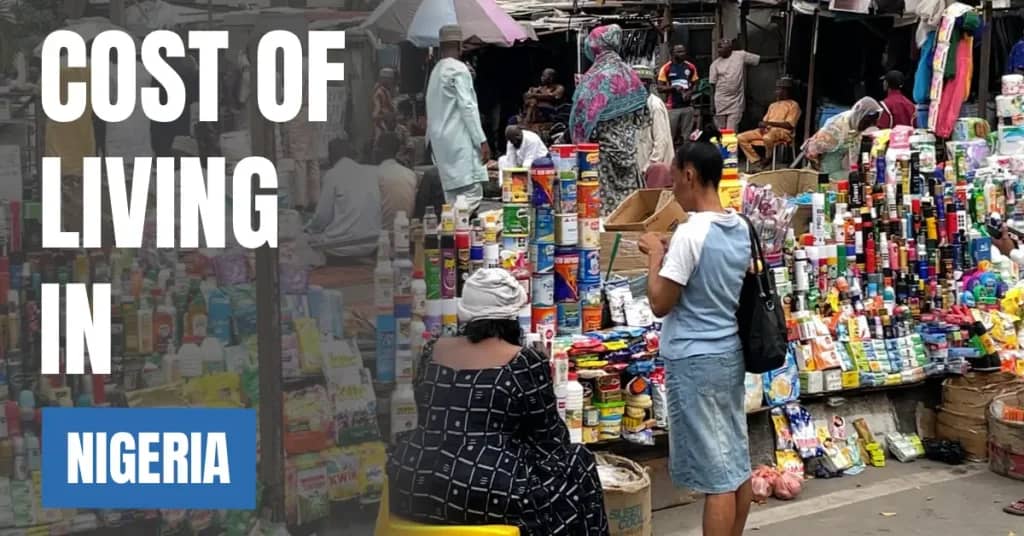
Nigeria, the most populous country in Africa, is known for its rich culture, economic influence, and vibrant cities such as Lagos, Abuja, Port Harcourt, and Kano. With a fast-growing economy and diverse lifestyle opportunities, Nigeria attracts expats, professionals, students, and entrepreneurs. The cost of living varies widely depending on the city, with Lagos and Abuja being more expensive compared to other regions.
On this pageTable of Content
To learn more about the country, visit the Nigeria country guide.
Cost of Living in Nigeria: Summary Table
| Category | Cost (USD) | Cost (NGN) |
|---|---|---|
| Average Monthly Cost (Single Person) | $500 – $900 | NGN 750,000 – NGN 1,350,000 |
| Average Monthly Cost (Family of Four) | $1,200 – $2,400 | NGN 1,800,000 – NGN 3,600,000 |
| Rent Range | $200 – $1,800 | NGN 300,000 – NGN 2,700,000 |
| Food Cost (Monthly) | $150 – $300 | NGN 225,000 – NGN 450,000 |
| Transport Cost | $20 – $80 | NGN 30,000 – NGN 120,000 |
| Utilities | $50 – $200 | NGN 75,000 – NGN 300,000 |
| Healthcare | $10 – $40 per visit | NGN 15,000 – NGN 60,000 per visit |
| Education | $50 – $500 | NGN 75,000 – NGN 750,000 |
| Miscellaneous Expenses | $40 – $120 | NGN 60,000 – NGN 180,000 |
Housing & Rent Prices in Nigeria
Apartment Rent (Monthly)
- 1-bedroom in city center: $400 – $1,200 (NGN 600,000 – NGN 1,800,000)
- 1-bedroom outside center: $200 – $600 (NGN 300,000 – NGN 900,000)
- 3-bedroom in city center: $900 – $1,800 (NGN 1,350,000 – NGN 2,700,000)
- 3-bedroom outside center: $400 – $1,000 (NGN 600,000 – NGN 1,500,000)
Buying Property
- Price per sq meter (city center): $800 – $2,000
- Price per sq meter (outside center): $400 – $1,200
Food & Grocery Costs
- Milk (1 liter): $1.20 – $2.00 (NGN 1,800 – NGN 3,000)
- Bread (loaf): $0.80 – $1.50 (NGN 1,200 – NGN 2,300)
- Rice (1 kg): $1.00 – $2.00 (NGN 1,500 – NGN 3,000)
- Eggs (12): $1.50 – $3.00 (NGN 2,300 – NGN 4,500)
- Chicken (1 kg): $3 – $5 (NGN 4,500 – NGN 7,500)
- Beef (1 kg): $4 – $6 (NGN 6,000 – NGN 9,000)
- Tomatoes (1 kg): $1 – $2 (NGN 1,500 – NGN 3,000)
- Potatoes (1 kg): $1 – $2 (NGN 1,500 – NGN 3,000)
- Water (1.5L): $0.50 – $1 (NGN 750 – NGN 1,500)
- Soft drink (can): $0.60 – $1.20 (NGN 900 – NGN 1,800)
Restaurant & Dining Costs
- Inexpensive meal: $2 – $5 (NGN 3,000 – NGN 7,500)
- Mid-range meal for 2: $15 – $40 (NGN 22,000 – NGN 60,000)
- Fast food combo: $3 – $6 (NGN 4,500 – NGN 9,000)
- Coffee: $1.50 – $3 (NGN 2,300 – NGN 4,500)
- Tea: $1 – $2 (NGN 1,500 – NGN 3,000)
Transportation Costs
- One-way public transport ticket: $0.20 – $0.60 (NGN 300 – NGN 900)
- Monthly transport pass: $10 – $25 (NGN 15,000 – NGN 37,500)
- Taxi (per km): $0.50 – $1.20 (NGN 750 – NGN 1,800)
- Fuel (per liter): $1 – $1.50 (NGN 1,500 – NGN 2,300)
Utility Costs
- Electricity (monthly): $40 – $120 (NGN 60,000 – NGN 180,000)
- Water (monthly): $5 – $15 (NGN 7,500 – NGN 22,500)
- Internet (unlimited): $25 – $60 (NGN 37,500 – NGN 90,000)
- Mobile plan: $3 – $10 (NGN 4,500 – NGN 15,000)
Healthcare Costs
- Doctor consultation: $10 – $20 (NGN 15,000 – NGN 30,000)
- Specialist visit: $20 – $40 (NGN 30,000 – NGN 60,000)
- Health insurance (individual): $20 – $60 (NGN 30,000 – NGN 90,000)
- Health insurance (family): $40 – $120 (NGN 60,000 – NGN 180,000)
Education Costs
- Public schools: Minimal fees
- Private schools: $20 – $100 (NGN 30,000 – NGN 150,000)
- International schools: $2,000 – $10,000 yearly (NGN 3,000,000 – NGN 15,000,000)
Entertainment & Lifestyle Expenses
- Gym membership: $10 – $40 (NGN 15,000 – NGN 60,000)
- Movie ticket: $2 – $5 (NGN 3,000 – NGN 7,500)
- Sports activities: $5 – $20 (NGN 7,500 – NGN 30,000)
- Nightlife/outings: $10 – $30 (NGN 15,000 – NGN 45,000)
Cost of Living for Different Groups
For Singles
Singles benefit from affordable shared accommodations and local food options, especially outside major cities.
For Couples
Couples can live comfortably with moderate expenses, especially by choosing mid-range housing.
For Families
Family expenses depend greatly on schooling choices; international schools raise costs significantly.
For Students
Students find Nigeria budget-friendly, particularly when living in university housing or shared apartments.
For Expats
Expats enjoy city life in Lagos and Abuja but must prepare for higher rent, utilities, and transportation costs.
Comparison With Other Countries
- Nigeria vs Ghana – Ghana is more expensive overall.
- Nigeria vs Kenya – Kenya has similar costs but better-developed infrastructure.
- Nigeria vs South Africa – South Africa offers higher living standards at slightly higher costs.
Pros & Cons of Living in Nigeria
Pros
- Affordable local food and housing
- Vibrant culture and entertainment
- Strong business opportunities
- Diverse cities and communities
Cons
- Traffic congestion in major cities
- Power instability (generators often required)
- Higher costs in Lagos/Abuja
- Safety varies by region
Final Summary
Nigeria offers an affordable lifestyle with a strong cultural foundation and bustling urban centers. While costs vary widely between cities, most people can live comfortably with moderate budgets. The country is well-suited for expats, entrepreneurs, students, and families who adapt to local conditions and infrastructure.
FAQs
Is Nigeria expensive to live in?
Nigeria is moderately priced, with Lagos and Abuja being the most expensive cities.
How much salary is enough to live comfortably in Nigeria?
Most individuals need NGN 750,000 – NGN 1,350,000 monthly, while families need NGN 1,800,000 – NGN 3,600,000.
What is the average rent in Nigeria?
Rent ranges from NGN 300,000 – NGN 2,700,000 depending on location and apartment size.
Is Nigeria safe for expats?
Yes, especially in expat areas of Lagos and Abuja, though safety varies by region.
Is Nigeria cheaper than Ghana?
Yes, Nigeria is generally cheaper than Ghana.
Join the conversation
Have thoughts on this topic? Share them with others.
Ask questions, share experience, and learn from the Visaboards Community.