
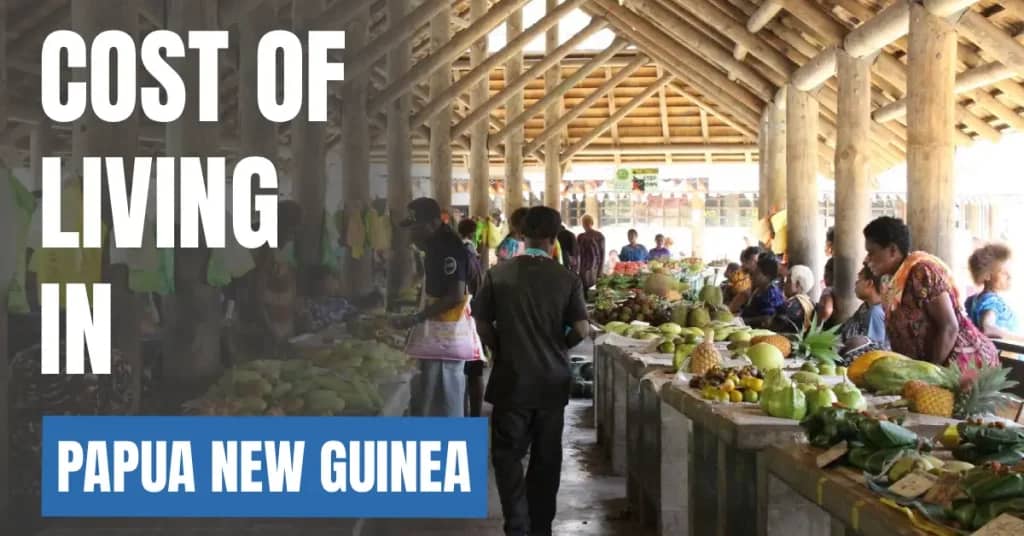
Papua New Guinea (PNG), located in the southwestern Pacific Ocean, is known for its rich cultural diversity, lush rainforests, unique tribal traditions, and stunning natural landscapes. While the country offers an adventurous lifestyle, the cost of living can be relatively high—especially in Port Moresby—due to limited local manufacturing and dependency on imported goods. PNG appeals to expatriates, NGO workers, students, and professionals seeking unique cultural and environmental experiences.
On this pageTable of Content
To learn more about the country, visit the Papua New Guinea country page.
Cost of Living in Papua New Guinea: Summary Table
| Category | Cost (USD) | Cost (PGK) |
|---|---|---|
| Average Monthly Cost (Single Person) | $1,000 – $1,800 | PGK 3,700 – PGK 6,600 |
| Average Monthly Cost (Family of Four) | $2,800 – $4,800 | PGK 10,500 – PGK 18,000 |
| Rent Range | $500 – $2,000 | PGK 1,850 – PGK 7,400 |
| Food Cost (Monthly) | $250 – $500 | PGK 900 – PGK 1,850 |
| Transport Cost | $40 – $120 | PGK 150 – PGK 450 |
| Utilities | $120 – $250 | PGK 450 – PGK 900 |
| Healthcare | $10 – $50 per visit | PGK 40 – PGK 185 per visit |
| Education | $50 – $600 | PGK 185 – PGK 2,200 |
| Miscellaneous Expenses | $100 – $250 | PGK 370 – PGK 925 |
Housing & Rent Prices in Papua New Guinea
Apartment Rent (Monthly)
- 1-bedroom in city center: $800 – $1,500 (PGK 3,000 – PGK 5,500)
- 1-bedroom outside center: $500 – $900 (PGK 1,850 – PGK 3,300)
- 3-bedroom in city center: $1,500 – $2,000 (PGK 5,500 – PGK 7,400)
- 3-bedroom outside center: $900 – $1,400 (PGK 3,300 – PGK 5,200)
Buying Property
- Price per sq meter (city center): $1,500 – $3,000
- Price per sq meter (outside center): $800 – $1,500
Food & Grocery Costs
- Milk (1 liter): $1.20 – $2.50 (PGK 4.50 – PGK 9)
- Bread (loaf): $1.50 – $3 (PGK 5.50 – PGK 11)
- Rice (1 kg): $1.30 – $2 (PGK 5 – PGK 7)
- Eggs (12): $2 – $4 (PGK 7.50 – PGK 15)
- Chicken (1 kg): $3 – $6 (PGK 11 – PGK 22)
- Beef (1 kg): $8 – $15 (PGK 30 – PGK 55)
- Apples (1 kg): $3 – $5 (PGK 11 – PGK 18)
- Bananas (1 kg): $1 – $2 (PGK 3.50 – PGK 7)
- Water (1.5L): $1 – $2 (PGK 3.50 – PGK 7)
- Soft drink (can): $1 – $2 (PGK 3.50 – PGK 7)
Restaurant & Dining Costs
- Inexpensive meal: $8 – $15 (PGK 30 – PGK 55)
- Mid-range meal for 2: $25 – $50 (PGK 90 – PGK 185)
- Fast food combo: $7 – $10 (PGK 25 – PGK 37)
- Coffee: $2 – $4 (PGK 7 – PGK 15)
- Tea: $1 – $2 (PGK 3.50 – PGK 7)
Transportation Costs
- One-way bus ticket: $0.50 – $1.50 (PGK 2 – PGK 6)
- Taxi (per km): $1 – $2 (PGK 4 – PGK 7)
- Fuel (per liter): $1 – $1.50 (PGK 3.70 – PGK 5.50)
Utility Costs
- Electricity (monthly): $70 – $150 (PGK 260 – PGK 550)
- Water (monthly): $10 – $20 (PGK 35 – PGK 75)
- Internet (unlimited): $60 – $120 (PGK 220 – PGK 440)
- Mobile plans: $5 – $15 (PGK 18 – PGK 55)
Healthcare Costs
- Doctor consultation: $10 – $20 (PGK 40 – PGK 75)
- Specialist visit: $25 – $50 (PGK 90 – PGK 185)
- Health insurance (individual): $20 – $60 (PGK 75 – PGK 220)
- Health insurance (family): $50 – $150 (PGK 185 – PGK 550)
Education Costs
- Public schools: Low-cost
- Private schools: $50 – $300 (PGK 185 – PGK 1,100)
- International schools: $3,000 – $10,000 yearly
Entertainment & Lifestyle Expenses
- Gym membership: $30 – $60 (PGK 110 – PGK 220)
- Movie ticket: $6 – $10 (PGK 22 – PGK 37)
- Outdoor activities: $15 – $40 (PGK 55 – PGK 150)
- Domestic flights (common): Moderate to expensive
Cost of Living for Different Groups
For Singles
Singles can live comfortably by choosing housing outside premium areas of Port Moresby. Food and utilities can be higher than regional averages.
For Couples
Couples benefit from shared rent and transportation, reducing overall monthly costs.
For Families
Families often face higher costs due to international schooling and secure housing requirements.
For Students
PNG offers affordable living but limited educational infrastructure compared to developed countries.
For Expats
Expats typically live in secure housing compounds, which can increase overall living expenses.
Comparison With Other Countries
- Papua New Guinea vs Fiji – PNG is generally more expensive.
- Papua New Guinea vs Philippines – Philippines is significantly cheaper.
- Papua New Guinea vs Australia – Australia has higher salaries but similar or higher costs.
Pros & Cons of Living in Papua New Guinea
Pros
- Unique cultural and environmental experiences
- Warm and friendly communities
- Beautiful natural surroundings
- Fresh local produce is affordable
Cons
- High cost of imported goods
- Security concerns in certain areas
- Limited transport infrastructure
- Higher rent in urban centers
Final Summary
Papua New Guinea offers a distinct cultural experience, natural beauty, and a peaceful lifestyle in many areas. The cost of living can be high compared to other Pacific and Southeast Asian countries, largely due to limited local production and reliance on imports. PNG is best suited for expats, NGO workers, researchers, and professionals seeking adventure, natural beauty, and a unique living environment.
FAQs
Is Papua New Guinea expensive to live in?
Yes, PNG has a relatively high cost of living due to imported goods and limited local manufacturing.
How much salary is enough to live comfortably in Papua New Guinea?
A single person needs PGK 3,700 – 6,600 monthly, while a family needs PGK 10,500 – 18,000.
What is the average rent in Papua New Guinea?
Rent ranges from PGK 1,850 – 7,400 depending on the area and apartment size.
Is Papua New Guinea good for expats?
Yes, especially for NGO workers, mining professionals, and researchers seeking unique cultural experiences.
Is Papua New Guinea cheaper than Fiji?
No, Fiji is generally cheaper than Papua New Guinea.
Join the conversation
Have thoughts on this topic? Share them with others.
Ask questions, share experience, and learn from the Visaboards Community.