
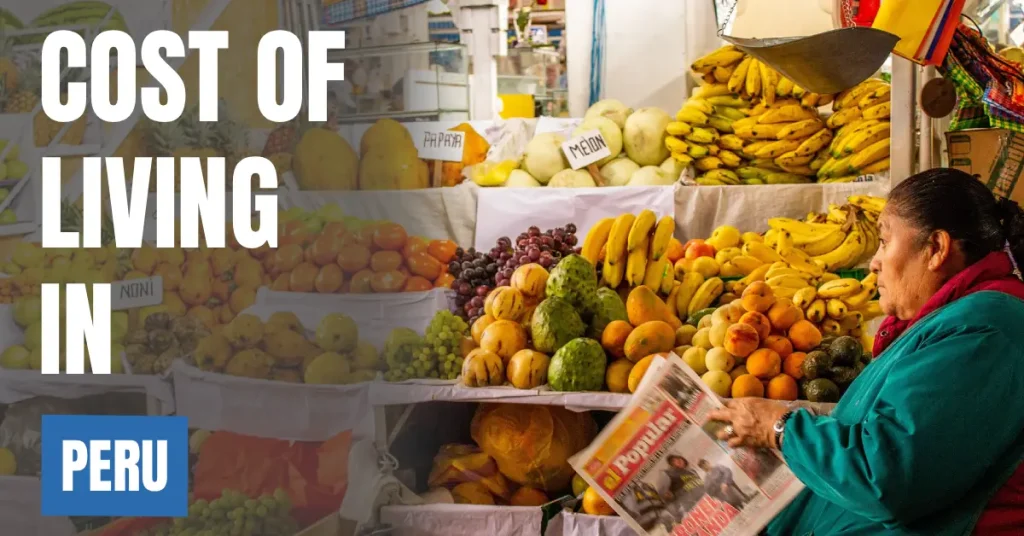
Cost of Living in Peru 2026: Rent, Salaries and Monthly Expenses
The cost of living in Peru in 2026 remains relatively affordable for many international residents, particularly those earning in a stronger foreign currency. However, living expenses vary significantly between Lima, Arequipa, Cusco and smaller cities. Housing, private healthcare, schooling and transportation are among the biggest factors affecting monthly budgets.
On this pageTable of Content
A single person renting independently may need approximately S/2,500 to S/4,500 per month for a modest to comfortable lifestyle, while a family of four may spend S/6,500 to S/12,000 or more, depending on location, accommodation and education choices. These are planning estimates including rent, not official nationwide averages.
Peru uses the Peruvian sol (PEN), represented by S/. Prices in this guide are expressed primarily in soles to avoid misleading comparisons caused by changing exchange rates.
An important change for 2026 is the national minimum wage increase from S/1,130 to S/1,230 per month, effective October 1, 2026. A further increase to S/1,300 is planned for the first half of 2027, subject to the required government decree. This change makes older salary information inaccurate. Source: El Peruano, October 1, 2026.
Also Explore: Cost of Living in PhilippinesCost of Living in Peru at a Glance
A single renter in Peru may budget S/2,500 to S/4,500 per month including accommodation, while couples and families can save by sharing housing and household expenses. Lima's desirable districts generally cost more than comparable accommodation in many regional cities.
| Expense Category | Estimated Cost (PEN) | Frequency |
|---|---|---|
| Single person, excluding rent | S/1,500 to S/2,500 | Monthly planning allowance |
| Single person, including rent | S/2,500 to S/4,500 | Monthly planning allowance |
| Couple, including rent | S/3,800 to S/6,500 | Monthly planning allowance |
| Family of four, including rent | S/6,500 to S/12,000+ | Monthly planning allowance |
| One-bedroom apartment, national centre average | Approximately S/1,701 | Monthly rent |
| One-bedroom apartment, national outside-centre average | Approximately S/834 | Monthly rent |
| Groceries, one adult | S/500 to S/900 | Monthly planning allowance |
| Basic utilities | S/120 to S/350 | Monthly planning allowance |
| Home internet | S/70 to S/150 | Monthly market range |
| Inexpensive restaurant meal | S/10 to S/30 | Per meal |
| Lima public transport, ordinary one-way trip | Approximately S/2 to S/3.50 | Per trip, service dependent |
| Minimum wage | S/1,230 | Monthly, effective October 1, 2026 |
Housing averages come from Numbeo's June 2026 Peru dataset. Other household budget ranges are editorial illustrations based on available consumer-price observations. They are not guaranteed spending amounts.
How Much Does It Cost to Live in Peru Per Month?
A person living alone in Peru can reasonably plan around S/2,500 to S/4,500 monthly including rent. A lower budget may be possible with shared housing, limited restaurant spending and public transportation. Premium accommodation in Lima can push expenses well above this range.
For a person who does not pay rent, an illustrative monthly spending allowance is S/1,500 to S/2,500 for groceries, utilities, internet, transportation, healthcare and ordinary personal expenses.
Families face a wider range because schooling and childcare expenses vary greatly. A family using public education may spend considerably less than one paying international school fees.
The difference between average local wages and comfortable expatriate budgets is important. Someone earning the statutory minimum wage cannot assume that a lifestyle costing S/3,000 to S/4,000 per month is affordable without additional household income, shared accommodation or substantial employer benefits.
Housing and Rent Prices in Peru
Rent is one of the largest living expenses in Peru. National crowdsourced data from June 2026 suggests an average one-bedroom apartment costs approximately S/1,701 monthly in central locations and S/834 outside central areas. These figures conceal substantial differences between cities and neighbourhoods.
Average Monthly Apartment Rent
| Apartment Type | National Average | Observed Range |
|---|---|---|
| One bedroom, city centre | S/1,701 | S/700 to S/3,000 |
| One bedroom, outside centre | S/834 | S/450 to S/1,700 |
| Three bedrooms, city centre | S/2,987 | S/1,600 to S/5,060 |
| Three bedrooms, outside centre | S/1,518 | S/1,100 to S/2,800 |
Source: Numbeo, Peru, June 2026. These figures reflect contributed market observations rather than a complete national rental census.
Rent in Lima
Lima is generally more expensive than smaller Peruvian cities, especially in sought-after districts such as Miraflores, San Isidro and Barranco.
Numbeo's June 2026 Lima observations indicate a typical one-bedroom city-centre apartment costs around S/2,569 monthly, compared with S/1,212 outside the centre. Three-bedroom properties average around S/4,308 centrally and S/2,148 outside central districts.
For expatriates, location should be selected based on commuting requirements, nearby healthcare, transport access and personal safety as well as rent.
Rent in Arequipa
Arequipa can provide lower housing costs than central Lima. Numbeo's May 2026 observations suggest a one-bedroom apartment averages about S/1,218 in central locations and S/812 outside the centre.
A three-bedroom apartment averages approximately S/2,488 centrally and S/1,440 outside the centre. However, Arequipa's dataset has fewer contributors than Lima's, making the estimates less robust.
Rent in Cusco and Other Cities
Cusco's rental market is influenced by tourism, furnished short-term accommodation and demand in popular neighbourhoods. Long-term residents may find lower prices outside tourist-heavy districts, but reliable 2026 rental averages for every area are not available.
Trujillo, Chiclayo and other regional cities may offer less expensive accommodation than premium Lima districts. Nevertheless, neighbourhood-level differences, property condition and actual rental availability matter more than broad city rankings.
Additional Housing Expenses
New tenants should budget for deposits, possible advance rent, building maintenance fees, utilities and furnishing costs. Many apartment buildings charge a separate monthly maintenance fee, sometimes called mantenimiento.
Ask whether rent includes water, security, building administration and parking. A cheaper apartment can become more expensive if these services are charged separately or commuting requires frequent taxi journeys.
Buying Property in Peru
Numbeo's June 2026 data indicates average apartment purchase prices near S/7,417 per square metre in central areas and S/4,122 outside city centres.
These are national market observations, not property valuations. Foreign buyers should obtain legal guidance about title verification, transaction taxes, ownership restrictions in applicable border areas and registration before purchasing property.
Food and Grocery Prices in Peru
Groceries in Peru are comparatively affordable for households that regularly purchase local produce, rice, potatoes, seasonal fruit and locally available ingredients. One adult may plan approximately S/500 to S/900 per month for groceries, depending on diet and shopping location.
Supermarkets are convenient, but municipal markets can offer different prices and a wider selection of locally produced foods. Imported packaged products, specialty ingredients and premium meat can increase grocery spending significantly.
Typical Grocery Prices
| Product | Indicative Lima Price (PEN) |
|---|---|
| Milk, 1 litre | S/5.42 |
| White bread, 500 g | S/8.79 |
| Rice, 1 kg | S/4.62 |
| Eggs, 12 | S/10.13 |
| Chicken fillets, 1 kg | S/22.48 |
| Beef, 1 kg | S/34.12 |
| Apples, 1 kg | S/6.61 |
| Bananas, 1 kg | S/3.50 |
| Potatoes, 1 kg | S/3.09 |
| Tomatoes, 1 kg | S/4.67 |
| Bottled water, 1.5 litres | S/3.10 |
Source: Numbeo, Lima, June 2026. Prices are rounded from user-contributed observations and can vary by retailer, season and location.
For a family of four, an illustrative grocery allowance of S/1,400 to S/2,200 per month may be suitable for home cooking. Households regularly buying imported products or large quantities of meat may need considerably more.
Restaurant and Eating Out Costs in Peru
Dining in Peru can be affordable, particularly at local restaurants and markets, although tourist areas and premium restaurants charge more.
An inexpensive restaurant meal in Lima averages about S/15, with a reported range of S/10 to S/30. A three-course mid-range meal for two averages approximately S/120.
| Restaurant Item | Indicative Cost (PEN) |
|---|---|
| Inexpensive restaurant meal | S/10 to S/30 |
| Mid-range dinner for two | S/60 to S/175 |
| Fast-food combination meal | S/20 to S/29 |
| Cappuccino | S/8 to S/15 |
| Soft drink, 330 ml | S/3 to S/5 |
Peru's traditional dishes, including ceviche, lomo saltado, ají de gallina and pollo a la brasa, are widely available, but prices depend on restaurant type and location.
Someone purchasing a S/20 weekday lunch on 22 working days would spend S/440 monthly on lunch alone. Regular delivery orders, cafes and international restaurants can increase food expenses substantially.
Utilities: Electricity, Water and Gas
A household in Peru may budget around S/120 to S/350 per month for basic utilities, depending on property size, location, consumption and included services.
Electricity use is influenced by appliances, heating or cooling needs and whether hot water is provided electrically or through gas. Lima's coastal climate differs from high-altitude locations such as Cusco, where colder evenings may increase heating requirements.
Water supply reliability and pressure can vary by neighbourhood and building. Some properties use storage tanks or additional water systems, creating costs that may not appear in ordinary utility comparisons.
When evaluating accommodation, request recent utility bills rather than assuming an average will apply to every household. Ask whether cooking gas, communal electricity, rubbish collection and building maintenance are included in the rent.
Internet and Mobile Phone Costs in Peru
Home internet in urban Peru is commonly available through fibre, cable or other broadband connections. Crowdsourced Lima observations indicate that broadband plans with speeds of at least 60 Mbps generally cost around S/70 to S/150 per month.
Mobile plans with calls and substantial data allowances commonly appear within a range of approximately S/29 to S/99 monthly in the same dataset.
| Service | Indicative Monthly Cost |
|---|---|
| Home broadband | S/70 to S/150 |
| Mobile plan, calls and 10 GB or more data | S/29 to S/99 |
| Combined internet and mobile allowance | Approximately S/100 to S/250 |
Coverage and actual speeds depend on the provider and address. Residents working remotely should confirm the specific building's internet connection, installation requirements and upload speeds rather than relying only on advertised download speeds.
Rural and mountainous areas may have fewer reliable broadband options than central Lima or Arequipa.
Transportation Costs in Peru
Public transportation in Peru is relatively affordable, but fares vary by city, transport operator and route. Lima offers the Metropolitano bus rapid transit system, Metro Line 1, regulated complementary corridors, conventional buses, taxis and app-based rides.
Public Transport in Lima
According to the Lima and Callao Urban Transport Authority (ATU), eligible short trips on complementary bus corridors can cost S/1 or S/1.50 under promotional fare arrangements.
The Metropolitano trunk service has a published general fare of S/3.20, while certain integrated feeder and trunk journeys cost S/3.50. The authority confirmed an S/3.50 integrated journey on additional feeder routes from May 2, 2026.
Public transport is therefore not universally free, and a single national fare does not apply to every route.
Monthly Commuting Budget
A passenger taking two S/3.20 journeys on 22 working days would spend approximately S/140.80 per month. Someone traveling shorter routes, using eligible promotional fares or receiving student discounts may spend less.
An illustrative monthly allowance of S/100 to S/250 is reasonable for public transport users, while regular taxi journeys can increase costs significantly.
Taxis and Car Ownership
Taxi prices vary by distance, congestion and booking method. Agree on a fare or confirm the app price before travel.
Vehicle ownership adds fuel, insurance, maintenance, parking and possible road tolls. Lima traffic congestion can also create significant commuting delays, so proximity to work or an efficient transit route may justify higher housing costs.
Healthcare Costs and Health Insurance in Peru
Healthcare in Peru is not uniformly free for every resident or visitor. Access and out-of-pocket costs depend on insurance eligibility, employment status and whether treatment is received through a public or private provider.
Peru operates several healthcare arrangements, including Seguro Integral de Salud (SIS), the employment-linked EsSalud system and private insurance.
Is Public Healthcare Free in Peru?
Eligible residents can access publicly financed healthcare through SIS. The SIS Para Todos programme allows people living in Peru without other health insurance to apply for coverage regardless of socioeconomic classification, subject to eligibility and enrolment requirements.
The programme states that enrolment does not require a monthly payment and that covered care is available through Ministry of Health and regional government facilities.
SIS Gratuito is specifically intended for eligible groups, including people classified as living in poverty or extreme poverty, with additional categories provided by law.
Foreign residents should confirm the documentation requirements, including a valid Carné de Extranjería where applicable. Tourists should not assume that eligibility for resident healthcare automatically extends to them.
EsSalud for Employees
Formally employed workers may receive healthcare through EsSalud. Under the standard employment arrangement, the employer pays an amount equal to 9% of the employee's remuneration to EsSalud.
This is generally an employer contribution rather than a 9% deduction from the employee's salary. Source: SUNAT, EsSalud Contribution Rules.
Private Healthcare
Private hospitals and clinics can provide alternatives for people seeking particular specialists, shorter appointments or services outside public coverage. Consultation costs and insurance premiums vary widely with provider, age, medical history and policy coverage.
Older simplified estimates of S/38 to S/150 per doctor visit do not establish a reliable nationwide private consultation tariff for 2026.
New residents should obtain actual insurance quotations and check coverage for hospitalization, prescription medicines, chronic conditions and emergency evacuation where relevant.
Education and Childcare Costs in Peru
Public school enrolment in Peru is free. The Ministry of Education confirmed that 2026 public school registration cannot be made conditional on payments, donations, school supplies or similar charges.
Private schools, preschools and international institutions charge their own fees, which can create a substantial difference between family budgets.
Public Schools
The Ministry of Education's school registration guidance explains that public school admission is available through the national enrolment process and that enrolment itself is free.
Families may still need to budget for transport, meals, clothing and personal educational supplies. Foreign families should confirm available places, relevant identity documentation and any specific enrolment procedures.
Private Schools and International Education
Numbeo's June 2026 national consumer-price dataset indicates private full-day preschool or kindergarten fees averaging approximately S/503 monthly per child, with observations between S/300 and S/1,200.
International primary school tuition averages approximately S/39,745 annually per child in the national dataset. Lima's reported average is higher, near S/45,748 per year.
| Education Expense | Indicative Cost |
|---|---|
| Public school enrolment | Free |
| Private preschool, national average | Approximately S/503/month |
| Private preschool, Lima average | Approximately S/628/month |
| International primary school, national average | Approximately S/39,745/year |
| International primary school, Lima average | Approximately S/45,748/year |
These are crowdsourced observations, not official school fee schedules. Parents should also ask about registration fees, transport, meals, uniforms and annual fee increases.
Average Salaries and Minimum Wage in Peru
Peru's statutory minimum wage for workers covered by the general private-sector minimum wage rules is S/1,230 per month as of November 2026. This is an increase from S/1,130, effective October 1, 2026.
The increase was established through Supreme Decree No. 015-2026-TR, published September 28, 2026. A further S/70 increase, taking the minimum to S/1,300, is planned for the first half of 2027 through a subsequent decree.
Minimum Wage History
| Effective Date | Monthly Minimum Wage |
|---|---|
| Before January 2025 | S/1,025 |
| January 1, 2025 | S/1,130 |
| October 1, 2026 | S/1,230 |
| First half of 2027, planned | S/1,300, subject to implementing decree |
Source: Diario Oficial El Peruano.
What Is the Average Salary in Peru?
Numbeo's June 2026 dataset reports an indicative average net salary of approximately S/1,969 per month nationally and S/2,166 in Lima.
These figures are crowdsourced estimates, not official labour-market averages. They should not be applied uniformly to every occupation or city.
Professional salaries depend on qualifications, industry, employment arrangements and location. Employees in specialized technology, engineering or multinational business roles may earn substantially more than workers in lower-paid service occupations.
Can You Live on Minimum Wage in Peru?
Living independently in a central Lima apartment is difficult on S/1,230 gross monthly income because typical central rent can exceed the entire minimum wage.
A minimum-wage worker may need to live with family, share accommodation, choose a less expensive district or rely on a household with multiple earners.
This distinction matters because Peru can be affordable for some foreign-income earners while remaining financially challenging for lower-income local workers.
Taxes and Salary Deductions in Peru
Peru's personal income tax system depends on tax domicile, income source and applicable deductions. Domiciled workers generally face progressive taxation on qualifying labour income, while non-domiciled employees may be subject to different rules.
Income Tax
For 2026, Peru's tax unit, known as the Unidad Impositiva Tributaria (UIT), is S/5,500. The standard labour-income deduction is seven UITs, equivalent to S/38,500 annually.
Taxable income above the applicable deduction is generally taxed using progressive brackets of 8%, 14%, 17%, 20% and 30%.
| Taxable Income Bracket | Rate |
|---|---|
| First 5 UIT | 8% |
| Next 15 UIT | 14% |
| Next 15 UIT | 17% |
| Next 10 UIT | 20% |
| Above 45 UIT | 30% |
These brackets apply to taxable labour income after the appropriate deductions, not directly to every sol of gross wages. Eligible taxpayers may also qualify for additional deductions subject to legal requirements.
Non-domiciled employees can be subject to a flat 30% tax on Peruvian-source employment income, with no ordinary personal deduction. Source: PwC Peru Individual Income Tax Summary, reviewed July 2026.
Pension Contributions
Employees may contribute to Peru's public pension system, ONP, or a private pension fund, AFP, depending on their registration and employment circumstances.
The standard ONP employee contribution is 13% of qualifying remuneration. AFP deductions vary by fund arrangements and applicable insurance and commission charges.
Workers should compare their actual net salary with living expenses, rather than budgeting from gross wages alone.
Sales Tax
Peru's combined general sales tax burden on taxable goods and services remains 18% in 2026, comprising 15.5% IGV and 2.5% Municipal Promotion Tax.
Consumer prices commonly include applicable tax. The composition is scheduled to change in subsequent years, but the combined 18% rate is maintained under the published transition schedule.
Source: SUNAT, Impuesto General a las Ventas.
Realistic Monthly Budgets for Living in Peru
The following examples show four different household spending profiles. Every total includes rent, groceries, utilities, transportation, internet, healthcare allowances and ordinary personal expenses. They are constructed monthly budgets rather than official statistical averages.
| Monthly Expense | Budget Single | Moderate Single | Couple | Family of Four |
|---|---|---|---|---|
| Rent | S/800 | S/1,600 | S/1,800 | S/2,600 |
| Utilities | S/140 | S/220 | S/260 | S/350 |
| Groceries | S/500 | S/750 | S/1,100 | S/1,800 |
| Transport | S/120 | S/220 | S/350 | S/500 |
| Internet and mobile | S/110 | S/160 | S/200 | S/240 |
| Healthcare and insurance reserve | S/100 | S/250 | S/400 | S/700 |
| Dining, leisure and miscellaneous | S/300 | S/550 | S/700 | S/1,000 |
| Childcare and education | S/0 | S/0 | S/0 | S/700 |
| Estimated Monthly Total | S/2,070 | S/3,750 | S/4,810 | S/7,890 |
Budget-Conscious Single Person: S/2,070 Per Month
This budget assumes a modest property or shared housing arrangement costing S/800, frequent home cooking and public transportation. It is more plausible outside premium Lima districts and does not provide a large allowance for emergencies or travel.
Moderate Single Person: S/3,750 Per Month
This example provides S/1,600 for accommodation, S/750 for groceries, S/220 for transportation and modest allowances for healthcare, dining and leisure.
It may suit a professional renting independently in a reasonably priced area. A premium Lima apartment could increase the monthly total significantly.
Couple: S/4,810 Per Month
A couple sharing housing and utilities may manage a moderate lifestyle at approximately S/4,810 under the assumptions shown. Two separate commutes, private insurance or frequent restaurant visits could increase expenses.
Family of Four: S/7,890 Per Month
This illustration assumes a three-bedroom rental costing S/2,600, groceries of S/1,800 and relatively moderate education expenses of S/700 monthly.
It is not designed for a family paying high international school tuition. A single international primary school place can add thousands of soles to monthly spending when annual tuition is spread across 12 months.
Cost of Living by City in Peru
Location has a major impact on monthly spending. Peru's capital offers the widest range of jobs, hospitals, international schools and professional services, while many regional cities have lower typical rents.
| City | Housing and Cost Considerations |
|---|---|
| Lima | Higher central rents, more private healthcare and school choices, significant commuting costs |
| Arequipa | Generally lower observed rents than Lima, with a substantial regional services market |
| Cusco | Tourism affects furnished rental prices, with substantial neighbourhood differences |
| Trujillo | Potentially lower rents than premium Lima districts, depending on area |
| Chiclayo | Regional housing alternatives, with less comprehensive comparable price data |
The Lima and Arequipa comparisons are supported by city-level Numbeo observations. For other cities, limited comparable data prevents reliable fixed percentage claims.
Residents considering Cusco should account for higher-altitude living conditions, heating needs and access to suitable healthcare. People choosing Lima should consider traffic and daily commuting time when selecting housing.
Is Peru Cheaper Than Chile, Brazil or the United States?
Peru generally offers lower consumer and housing costs than many locations in the United States, and can be more affordable than major Chilean cities. However, differences vary by city, household size and spending habits.
A comparison between central Lima and a smaller Brazilian or Chilean city may give a different result from comparing national averages.
Lower consumer prices also need to be considered alongside local salaries. Peru may appear relatively inexpensive to someone earning US dollars, but that does not mean its median or lower-paid workers enjoy the same purchasing power.
Reliable matched November 2026 household baskets were not established for every comparison, so exact percentage differences are not presented as facts.
Hidden Expenses When Moving to Peru
New residents should budget for one-time and irregular expenses that ordinary cost-of-living indexes may overlook.
- Rental deposits and advance rent: Moving into an apartment may require substantial cash before the first month begins.
- Building maintenance: Apartment administration, security and communal services may be billed separately.
- Private healthcare: Insurance premiums, exclusions and specialist treatment can exceed basic healthcare estimates.
- School registration and supplies: Private school fees, transport and materials can considerably increase family expenses.
- International payments: Currency conversion charges and overseas bank transfers may affect foreign-income households.
- Transportation: Long commutes, taxis and traffic-related expenses can offset rental savings.
- Immigration documentation: Government applications, document translations, legalization and professional assistance can create relocation costs.
- Regional travel: Domestic flights, long-distance buses and visits to family abroad require separate budgeting.
- Emergency savings: Medical expenses, temporary unemployment and unexpected household repairs should be considered.
Cost of Living Versus Residency Financial Requirements
Monthly living costs and immigration financial requirements are not the same. A person may be able to cover ordinary expenses with a particular budget but still fail to meet the eligibility requirements for a specific residence category.
For example, Peru's official rentista resident immigration procedure requires applicants relying on permanent foreign-source income to document at least US$1,000 in net permanent monthly income, alongside the other applicable conditions.
This amount is an immigration requirement for that category, not a government estimate of the cost of living in Peru.
Other residence categories, including employment, family and investment arrangements, follow different rules. Applicants should check the current requirements of the Superintendencia Nacional de Migraciones before making relocation decisions.
Is Peru Affordable for Expats, Students and Retirees?
For Expatriate Professionals
Peru may provide good value for professionals earning sufficient income, particularly outside premium Lima districts. The affordability of any job offer depends on take-home pay, housing, health insurance and commuting arrangements.
For International Students
Students sharing accommodation and using public transportation may spend considerably less than independent renters. Tuition, university location and private health coverage need to be added separately.
For Retirees
Retirees receiving stable foreign pensions may find attractive living options in cities such as Lima and Arequipa. However, access to suitable medical services and the requirements of the rentista residence category are important considerations.
For Families
Families can manage costs through public education and shared household spending, but private schooling can dramatically change the budget. A family considering international education should calculate tuition separately before deciding whether Peru is affordable.
Conclusion: Is Living in Peru Expensive in 2026?
Peru remains a potentially affordable destination for international residents, but comfortable living costs are significantly above the country's statutory minimum wage.
A practical planning range for a single renter is around S/2,500 to S/4,500 monthly including rent. Couples and families should consider housing size, healthcare, school choices and transport before selecting a budget.
The most significant developments for 2026 include the increase in minimum wage to S/1,230, the 2026 tax unit of S/5,500, updated official transport fares and clearer distinctions between public healthcare schemes.
To make a reliable relocation plan, compare current accommodation offers, request an after-tax salary calculation and verify healthcare and immigration eligibility. This is more useful than relying on older dollar-denominated cost estimates alone.
Sources and Methodology
This guide was reviewed on November 5, 2026. It combines information from Peru's official government authorities, transport agencies, tax and healthcare administrators, and available consumer-price databases.
Official sources were prioritized for minimum wage, public transport policy, taxes, public education, healthcare and immigration. Numbeo's June 2026 datasets were used for indicative accommodation and consumer prices. These figures are contributed by users and are not official nationwide retail surveys.
The sample budgets were calculated as practical planning illustrations and include clearly specified expenses. Actual costs vary by city, household structure, personal preferences and market conditions. Some regional datasets have limited samples and should be interpreted cautiously.
- VisaBoards: Original Cost of Living in Peru Guide
- Numbeo: Cost of Living in Peru
- Numbeo: Cost of Living in Lima
- Numbeo: Cost of Living in Arequipa
- El Peruano: Minimum Wage Increase, October 2026
- Ministry of Economy and Finance: 2026 UIT
- PwC: Peru Personal Income Tax
- SUNAT: General Sales Tax
- SUNAT: EsSalud Contribution Rate
- Seguro Integral de Salud: SIS Para Todos
- Seguro Integral de Salud: SIS Gratuito
- ATU: Public Transport Fare Options
- ATU: Integrated Metropolitano Fares, May 2026
- Ministry of Education: Public School Enrolment
- Migraciones: Rentista Residence Requirements
Frequently Asked Questions
How much does it cost to live in Peru per month?
A single person renting independently in Peru may need approximately S/2,500 to S/4,500 per month including rent. A couple may spend S/3,800 to S/6,500, while a family of four could require S/6,500 to S/12,000 or more. These figures are planning estimates rather than official national averages. Rent, private healthcare, school choices and location are the main variables.
Is Peru expensive to live in?
Peru can be relatively affordable compared with many major North American cities, especially for people earning in a stronger foreign currency. However, expensive Lima neighbourhoods, private schooling and specialist healthcare can increase monthly spending. Affordability also depends on local income, since the national minimum wage of S/1,230 per month is substantially below the illustrative budget for a single independent renter.
What is the average rent in Peru in 2026?
Numbeo's June 2026 dataset indicates average monthly rent of approximately S/1,701 for a central one-bedroom apartment and S/834 outside city centres. In Lima, corresponding averages are higher, around S/2,569 and S/1,212. Actual prices depend on neighbourhood, property quality and availability. The national figures combine observations from different cities and should not be treated as guaranteed rental offers.
What is the minimum wage in Peru in November 2026?
Peru's standard monthly minimum wage is S/1,230, effective October 1, 2026. It increased from S/1,130 under Supreme Decree No. 015-2026-TR. A further increase to S/1,300 is planned for the first half of 2027, subject to a subsequent government decree. Workers should distinguish their gross contractual wage from take-home pay after applicable pension and tax deductions.
What salary is needed to live comfortably in Peru?
A single renter may aim for approximately S/3,500 to S/4,500 per month in available spending funds for a moderate lifestyle, depending on location. Couples can share housing costs, while families may require S/7,000 or more. These are illustrative spending targets, not official salary standards. Gross salaries need to be higher where deductions apply, and international school fees can significantly increase household requirements.
Is healthcare free in Peru for foreign residents?
Eligible foreign residents may access publicly funded healthcare through Peru's SIS programmes, subject to enrolment and documentation requirements. SIS Para Todos serves eligible residents without other health insurance and has no monthly premium. Formally employed workers may instead receive EsSalud coverage through employer contributions. Tourists and new arrivals should verify their eligibility rather than assume all public or private treatment is free.
How much does public transportation cost in Lima?
Public transportation fares vary by route and service. Lima's Metropolitano trunk service has a published fare of S/3.20, while eligible integrated feeder and trunk journeys can cost S/3.50. Certain short trips on complementary corridors have promotional fares of S/1 or S/1.50. A regular commuter may spend approximately S/100 to S/250 monthly depending on journey frequency and eligible fare arrangements.
How much does a family of four need in Peru?
A family of four may need approximately S/6,500 to S/12,000 or more per month including rent. One moderate example totals S/7,890, covering housing, groceries, utilities, transportation, communications, healthcare reserves and modest education expenses. Families using international schools or premium Lima accommodation may need significantly more. Public school enrolment is free, which can reduce education costs for eligible families.
Is education free in Peru?
Enrolment in Peru's public schools is free and cannot be conditional on donations, compulsory purchases or unauthorized charges. Private and international schools set their own tuition fees. Crowdsourced 2026 data places average private preschool costs around S/503 monthly nationally, while international primary school tuition can average nearly S/40,000 annually. Families should request actual fee schedules and confirm school availability.
Is Peru cheaper than Chile or the United States?
Peru generally offers lower living costs than many US cities and can be less expensive than major urban areas in Chile. However, comparisons change depending on the cities, neighbourhoods and household requirements involved. Imported goods, international schooling and private healthcare can narrow the difference. A matched comparison of rental prices, groceries, transportation and after-tax income is more reliable than one national percentage estimate.
Can you live in Peru on US$1,000 per month?
US$1,000 per month may support a modest single-person lifestyle in some parts of Peru, depending on the exchange rate, rent and medical expenses. It may be insufficient for premium accommodation in Lima or a family with private school fees. The official US$1,000 minimum permanent foreign income required for certain rentista applications should not be confused with a guarantee of comfortable living.
Does Peru have a minimum income requirement for residency?
Requirements depend on the immigration category. Peru's official rentista resident procedure requires applicants relying on permanent foreign-source income to document at least US$1,000 net per month, along with other conditions. Employment, family and other residence categories follow different requirements. A personal living-cost budget does not establish immigration eligibility, so applicants should verify the latest rules with Migraciones.
Join the conversation
Have thoughts on this topic? Share them with others.
Ask questions, share experience, and learn from the Visaboards Community.