
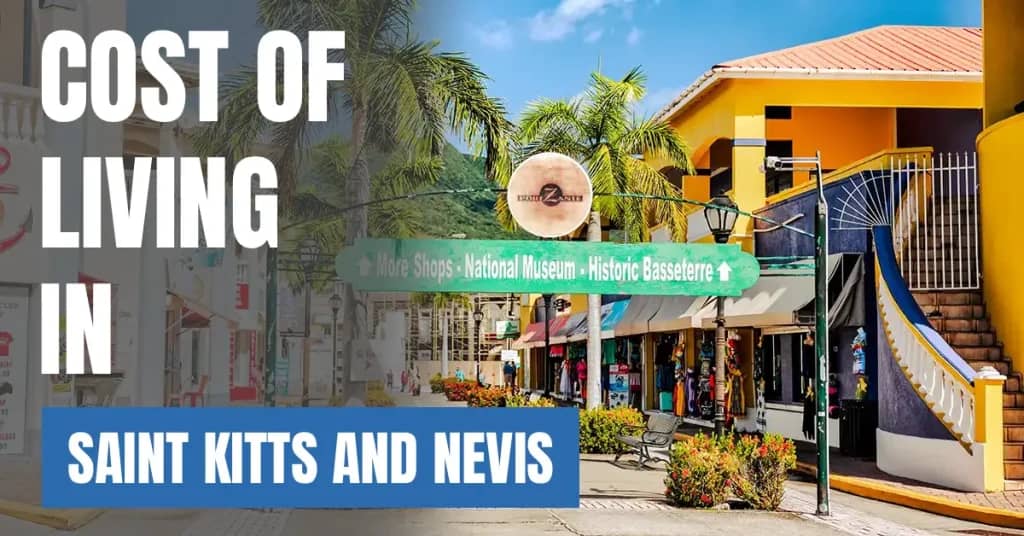
Saint Kitts and Nevis, a twin-island nation in the Caribbean, is known for its tropical climate, Caribbean beaches, laid-back island lifestyle, and relatively small population. The islands attract expats, retirees, digital nomads, and people looking for a relaxed island lifestyle, often balanced with tax advantages and natural beauty. While some items must be imported — which can increase costs — a mix of local produce, moderate housing (outside luxury areas), and island charm make it a unique place to live.
On this pageTable of Content
Learn more about the country on the Saint Kitts and Nevis country page.
Cost of Living in Saint Kitts and Nevis: Summary Table
| Category | Cost (USD) | Cost (XCD) |
|---|---|---|
| Average Monthly Cost (Single Person) | $1,100 – $2,000 | ~EC$3,000 – EC$5,400 |
| Average Monthly Cost (Family of Four) | $2,800 – $4,000 | ~EC$7,600 – EC$10,800 |
| Rent Range (1-bedroom) | $600 – $1,500 | ~EC$1,620 – EC$4,050 |
| Food Cost (Monthly, groceries + basic consumption) | $300 – $600 | ~EC$810 – EC$1,620 |
| Transport Cost | $20 – $50 | ~EC$55 – EC$135 |
| Utilities (electricity, water, internet) | $100 – $250 | ~EC$270 – EC$675 |
| Healthcare (private / insurance – variable) | $50 – $150 per visit / insurance/monthly | ~EC$135 – EC$405 |
| Education (private/international – optional) | $200 – $1,200+ per month depending on school type | ~EC$540 – EC$3,240+ |
| Miscellaneous / Leisure / Other | $100 – $300 | ~EC$270 – EC$810 |
Housing & Rent Prices in Saint Kitts and Nevis
Apartment Rent (Monthly)
- 1-bedroom in city centre (Basseterre / Frigate Bay): $800 – $1,500
- 1-bedroom outside centre: $600 – $900
- 3-bedroom family home: $1,200 – $2,000+
Buying Property
Properties in prime or resort areas (villas, condos) tend to be expensive, while land or standard homes are more affordable. The real estate market is diverse, ranging from modest homes to luxury beachfront villas.
Food & Grocery Costs
- Milk (1 liter): ~$3.30
- Bread (500g): ~$4.00
- Rice (1 kg): $2.90 – $3.50
- Eggs (12): ~$5.70
- Chicken (1 kg): $10 – $12
Local fruits and vegetables are reasonably priced, while imported or processed foods are more expensive.
Restaurant & Dining Costs
- Inexpensive meal: $20 – $25
- Mid-range meal for 2: $70 – $100
- Fast food: $10 – $15
- Coffee: $3 – $5
Transportation Costs
- Public bus: ~$1 – $1.40
- Taxi (short ride): $10 – $20
Car ownership is relatively expensive due to import costs, so many residents rely on public transport or walking.
Utility Costs
- Electricity, water, garbage: $100 – $200/month
- Internet: $60 – $120
- Mobile plan: $20 – $40
Costs can increase with heavy air-conditioning use.
Healthcare Costs
- Private clinic visit: $50 – $150
- Health insurance: varies (often higher for expats)
While public healthcare is available, many residents prefer private services.
Education Costs
- Public schools: low-cost or subsidized
- Private/international schools: $200 – $1,200+ per month
Entertainment & Lifestyle
- Gym membership: $30 – $60/month
- Cinema ticket: $8 – $12
- Leisure activities: moderate to high depending on lifestyle
Dining out and nightlife can be more expensive in tourist areas.
Cost of Living by Lifestyle
Singles
A single person can live comfortably on $1,100 – $2,000 per month with a modest lifestyle.
Couples
Couples benefit from shared expenses, making it easier to manage costs.
Families
A comfortable family lifestyle may cost $2,800 – $4,000 per month, depending on housing and schooling.
Expats / Digital Nomads
Expats often balance higher import costs with lifestyle benefits such as climate, beaches, and tax advantages.
Comparison With Other Countries
- Vs Dominican Republic / Jamaica: Higher cost of living
- Vs USA / UK: Generally more affordable overall
- Vs Cayman Islands / Bermuda: More affordable, but still relatively expensive
Pros & Cons
Pros
- Tropical climate and beaches
- Relaxed lifestyle
- English-speaking population
- Safe and small community
- Affordable local produce
Cons
- Expensive imported goods
- High housing costs in prime areas
- Limited public services
- Expensive healthcare and private education
- Utility and fuel costs can be high
Final Summary
Saint Kitts and Nevis offers a blend of Caribbean beauty, relaxed living, and manageable costs—especially for those who adapt to local habits. While imported goods and luxury services can be expensive, it remains a strong choice for individuals and families seeking island life without extreme costs.
FAQs
Is Saint Kitts and Nevis expensive to live in?
Saint Kitts and Nevis is more expensive than many developing countries, especially due to imported goods and expensive housing in prime areas — but many locals and expats live affordably by choosing local goods and modest homes.
How much salary is enough to live comfortably in Saint Kitts and Nevis?
A single person typically needs about $1,100 – $2,000 per month, while a family of four may need $2,800 – $4,000, depending on lifestyle and housing choices.
What is the average rent in Saint Kitts and Nevis?
Rent for a 1-bedroom apartment ranges from around $600 (outside centre) to $1,500 (city centre / resort areas), depending on location and amenities.
Is Saint Kitts and Nevis good for expats or retirees?
Yes — its tropical climate, relaxed pace, English-speaking population, and lifestyle appeal make it a good choice for expats and retirees, especially if they adapt to local consumption habits.
Are groceries expensive in Saint Kitts and Nevis?
Imported groceries and goods tend to be expensive, but local produce — fruits, vegetables, local meats — can be reasonably priced, helping reduce monthly food expenses.
Join the conversation
Have thoughts on this topic? Share them with others.
Ask questions, share experience, and learn from the Visaboards Community.