
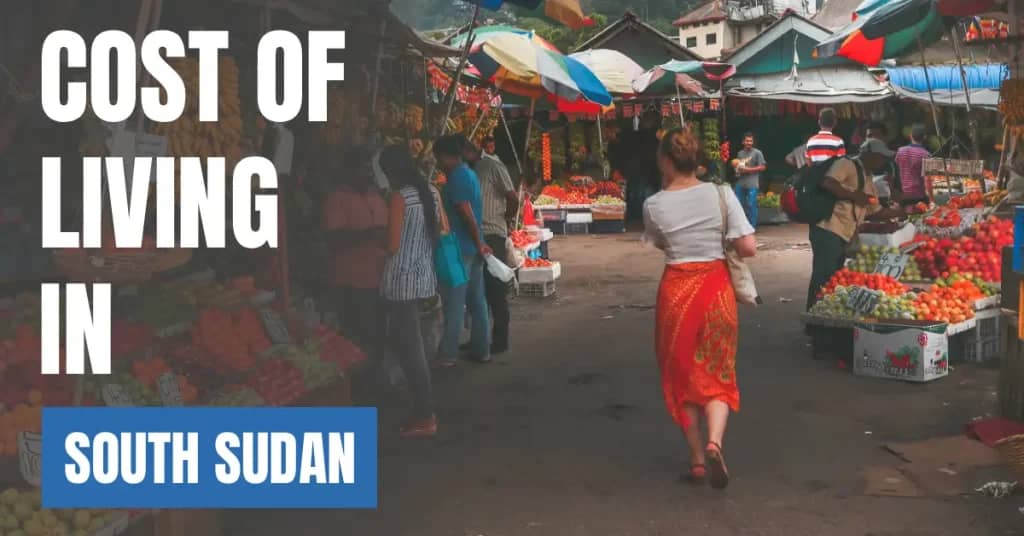
South Sudan, the world’s newest country, is located in East-Central Africa and is known for its rich cultural diversity and natural landscapes. The country is still developing, and much of its economy relies on imports and humanitarian support. As a result, the cost of living—especially in cities like Juba—can be significantly higher than in neighboring countries. Expats, aid workers, NGO professionals, and government employees form a large portion of the urban population.
On this pageTable of Content
Learn more about the country on the South Sudan country page.
Cost of Living in South Sudan: Summary Table
| Category | Cost (USD) | Cost (SSP) |
|---|---|---|
| Average Monthly Cost (Single Person) | $900 – $1,600 | 1,080,000 – 1,920,000 SSP |
| Average Monthly Cost (Family of Four) | $2,200 – $4,200 | 2,640,000 – 5,040,000 SSP |
| Rent Range | $400 – $1,500 | 480,000 – 1,800,000 SSP |
| Food Cost (Monthly) | $200 – $450 | 240,000 – 540,000 SSP |
| Transport Cost | $20 – $60 | 24,000 – 72,000 SSP |
| Utilities | $80 – $200 | 96,000 – 240,000 SSP |
| Healthcare | $10 – $30 per visit | 12,000 – 36,000 SSP |
| Education | $100 – $500 | 120,000 – 600,000 SSP |
| Miscellaneous Expenses | $60 – $150 | 72,000 – 180,000 SSP |
Housing & Rent Prices in South Sudan
Apartment Rent (Monthly)
- 1-bedroom in city center (Juba): $900 – $1,500 (1,080,000 – 1,800,000 SSP)
- 1-bedroom outside center: $400 – $700 (480,000 – 840,000 SSP)
- 3-bedroom in city center: $1,400 – $2,500 (1,680,000 – 3,000,000 SSP)
- 3-bedroom outside center: $800 – $1,600 (960,000 – 1,920,000 SSP)
Food & Grocery Costs
- Milk (1 liter): $1.50 – $2.50 (18,000 – 30,000 SSP)
- Bread (loaf): $0.80 – $1.50 (9,600 – 18,000 SSP)
- Rice (1 kg): $1.50 – $3 (18,000 – 36,000 SSP)
- Eggs (12): $2 – $4 (24,000 – 48,000 SSP)
- Chicken (1 kg): $4 – $7 (48,000 – 84,000 SSP)
- Beef (1 kg): $6 – $10 (72,000 – 120,000 SSP)
- Bananas (1 kg): $1 – $2 (12,000 – 24,000 SSP)
- Apples (1 kg): $3 – $5 (36,000 – 60,000 SSP)
- Water (1.5L): $1 – $1.50 (12,000 – 18,000 SSP)
- Soft drink (can): $0.80 – $1.20 (9,600 – 14,400 SSP)
Restaurant & Dining Costs
- Inexpensive restaurant meal: $4 – $8 (48,000 – 96,000 SSP)
- Mid-range meal for two: $20 – $40 (240,000 – 480,000 SSP)
- Fast-food combo: $6 – $10 (72,000 – 120,000 SSP)
- Coffee: $2 – $4 (24,000 – 48,000 SSP)
- Tea: $1 – $2 (12,000 – 24,000 SSP)
Transportation Costs
- Motorbike taxi (boda): $0.50 – $1.50 (6,000 – 18,000 SSP)
- Taxi (per km): $1 – $2 (12,000 – 24,000 SSP)
- Gasoline (per liter): $1 – $1.60 (12,000 – 19,200 SSP)
- Monthly transport budget: $20 – $60 (24,000 – 72,000 SSP)
Utility Costs
- Electricity (monthly): $60 – $120 (72,000 – 144,000 SSP)
- Water: $10 – $20 (12,000 – 24,000 SSP)
- Internet (unlimited): $30 – $80 (36,000 – 96,000 SSP)
- Mobile plan: $5 – $10 (6,000 – 12,000 SSP)
Healthcare Costs
- General doctor visit: $10 – $20 (12,000 – 24,000 SSP)
- Specialist visit: $20 – $30 (24,000 – 36,000 SSP)
- Health insurance (individual): $30 – $80 (36,000 – 96,000 SSP)
- Health insurance (family): $80 – $200 (96,000 – 240,000 SSP)
Education Costs
- Public schools: Minimal cost
- Private schools: $40 – $150 (48,000 – 180,000 SSP) per month
- International schools: $3,000 – $10,000 yearly
Entertainment & Lifestyle Expenses
- Gym membership: $20 – $40 (24,000 – 48,000 SSP)
- Movie ticket: $3 – $6 (36,000 – 72,000 SSP)
- Nightlife outing: $10 – $25 (120,000 – 300,000 SSP)
- Outdoor activities: $5 – $20 (60,000 – 240,000 SSP)
Cost of Living for Different Groups
For Singles
Singles face moderate to high costs, especially in Juba where rent and food are expensive.
For Couples
Couples can reduce expenses by sharing accommodation and transport costs.
For Families
Families should budget for higher education, healthcare, and security-related expenses.
For Students
There are limited higher education institutions, and student living costs depend largely on accommodation choices.
For Expats
Most expats are employed by NGOs or international agencies; living standards are higher due to secure housing and imported goods.
Comparison With Other Countries
- South Sudan vs Kenya – Kenya offers lower costs and better infrastructure.
- South Sudan vs Uganda – Uganda is significantly cheaper in housing and food.
- South Sudan vs Ethiopia – Ethiopia has a much lower cost of living.
Pros & Cons of Living in South Sudan
Pros
- Warm and welcoming communities
- Growing economic opportunities
- Low competition in certain business sectors
- Strong expat and NGO presence
Cons
- High cost of imported goods
- Limited infrastructure
- Security concerns in some regions
- Expensive housing in Juba
Final Summary
South Sudan offers a unique living experience, with strong community culture and evolving opportunities, especially for expats and humanitarian workers. While living costs—particularly for housing and food—can be high due to import dependence, everyday services and transport remain affordable. It is best suited for professionals, NGO staff, and families prepared for a developing infrastructure and varying security conditions.
FAQs
Is South Sudan expensive to live in?
Yes, especially in Juba where rent, food, and imported goods are costly.
How much salary is enough to live comfortably in South Sudan?
Singles typically need $900–$1,600 monthly, while families require $2,200–$4,200.
What is the average rent in South Sudan?
Rent ranges from $400 to $1,500 depending on location and housing type.
Is South Sudan safe for expats?
Safety varies by region; most expats live in secure, designated areas.
Is South Sudan cheaper than Kenya?
No, South Sudan is generally more expensive due to import reliance and limited infrastructure.
Join the conversation
Have thoughts on this topic? Share them with others.
Ask questions, share experience, and learn from the Visaboards Community.