
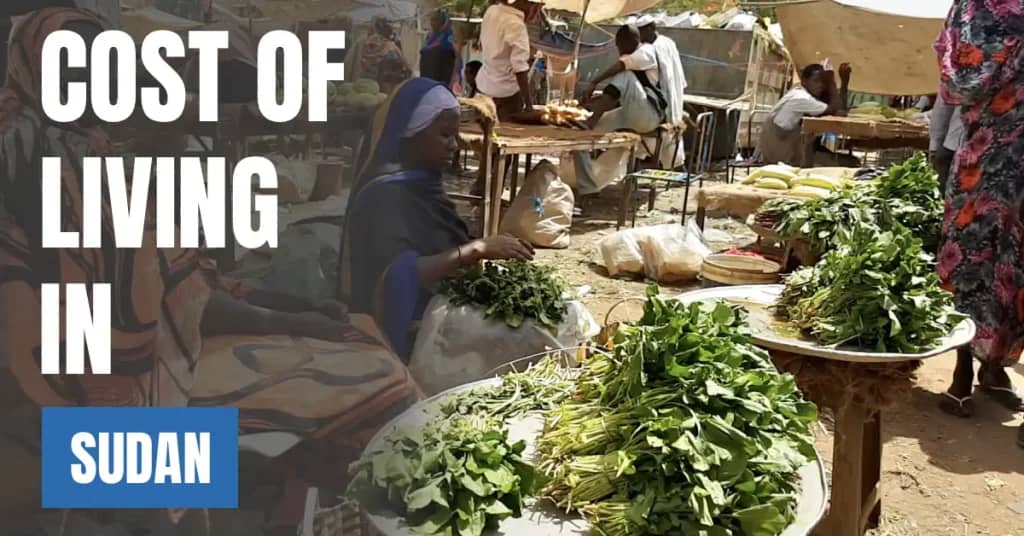
Sudan, located in Northeast Africa, is known for its diverse cultures, ancient history, and the Nile River running through its center. The cost of living in Sudan is generally low compared to many African and Middle Eastern countries. However, economic instability and regional variations can affect prices, especially in major cities like Khartoum, Omdurman, and Port Sudan.
On this pageTable of Content
Learn more about the country on the Sudan country page.
Cost of Living in Sudan: Summary Table
| Category | Cost (USD) | Cost (SDG) |
|---|---|---|
| Average Monthly Cost (Single Person) | $250 – $450 | 150,000 – 270,000 SDG |
| Average Monthly Cost (Family of Four) | $600 – $1,200 | 360,000 – 720,000 SDG |
| Rent Range | $100 – $400 | 60,000 – 240,000 SDG |
| Food Cost (Monthly) | $80 – $150 | 48,000 – 90,000 SDG |
| Transport Cost | $10 – $30 | 6,000 – 18,000 SDG |
| Utilities | $20 – $50 | 12,000 – 30,000 SDG |
| Healthcare | $3 – $10 per visit | 1,800 – 6,000 SDG |
| Education | $10 – $100 | 6,000 – 60,000 SDG |
| Miscellaneous Expenses | $20 – $60 | 12,000 – 36,000 SDG |
Housing & Rent Prices in Sudan
Apartment Rent (Monthly)
- 1-bedroom in city center: $200 – $350 (120,000 – 210,000 SDG)
- 1-bedroom outside center: $100 – $200 (60,000 – 120,000 SDG)
- 3-bedroom in city center: $300 – $500 (180,000 – 300,000 SDG)
- 3-bedroom outside center: $200 – $350 (120,000 – 210,000 SDG)
Buying Property
- Price per sq meter (city center): $500 – $900 (300,000 – 540,000 SDG)
- Price per sq meter (outside center): $300 – $600 (180,000 – 360,000 SDG)
Food & Grocery Costs
- Milk (1 liter): $0.80 – $1.20 (48,000 – 72,000 SDG)
- Bread (loaf): $0.20 – $0.40 (12,000 – 24,000 SDG)
- Rice (1 kg): $0.50 – $1 (30,000 – 60,000 SDG)
- Eggs (12): $0.80 – $1.50 (48,000 – 90,000 SDG)
- Chicken (1 kg): $2 – $4 (120,000 – 240,000 SDG)
- Beef (1 kg): $3 – $6 (180,000 – 360,000 SDG)
- Bananas (1 kg): $0.30 – $0.70 (18,000 – 42,000 SDG)
- Apples (1 kg): $1 – $2 (60,000 – 120,000 SDG)
- Water (1.5L): $0.25 – $0.60 (15,000 – 36,000 SDG)
- Soft drink (can): $0.40 – $0.80 (24,000 – 48,000 SDG)
Restaurant & Dining Costs
- Inexpensive restaurant meal: $2 – $4 (120,000 – 240,000 SDG)
- Mid-range meal for two: $10 – $20 (600,000 – 1,200,000 SDG)
- Fast-food combo: $3 – $5 (180,000 – 300,000 SDG)
- Coffee: $1 – $2 (60,000 – 120,000 SDG)
- Tea: $0.20 – $0.40 (12,000 – 24,000 SDG)
Transportation Costs
- One-way bus ticket: $0.10 – $0.20 (6,000 – 12,000 SDG)
- Monthly public transport pass: $5 – $10 (300,000 – 600,000 SDG)
- Taxi (per km): $0.30 – $0.60 (18,000 – 36,000 SDG)
- Gasoline (per liter): $0.70 – $1.20 (42,000 – 72,000 SDG)
Utility Costs
- Electricity (monthly): $10 – $30 (600,000 – 1,800,000 SDG)
- Water: $5 – $10 (300,000 – 600,000 SDG)
- Internet (unlimited): $10 – $25 (600,000 – 1,500,000 SDG)
- Mobile plan: $2 – $5 (120,000 – 300,000 SDG)
Healthcare Costs
- General doctor visit: $3 – $6 (180,000 – 360,000 SDG)
- Specialist visit: $5 – $10 (300,000 – 600,000 SDG)
- Individual health insurance: $15 – $40 (900,000 – 2,400,000 SDG)
- Family health insurance: $40 – $100 (2,400,000 – 6,000,000 SDG)
Education Costs
- Public schools: Low or nominal fees
- Private schools: $10 – $50 (600,000 – 3,000,000 SDG) per month
- International schools: $1,500 – $6,000 yearly
Entertainment & Lifestyle Expenses
- Gym membership: $5 – $15 (300,000 – 900,000 SDG)
- Movie ticket: $2 – $4 (120,000 – 240,000 SDG)
- Nightlife outing: $5 – $15 (300,000 – 900,000 SDG)
- Local events: $1 – $5 (60,000 – 300,000 SDG)
Cost of Living for Different Groups
For Singles
Sudan is highly affordable for singles, especially those living outside the capital. Basic food and transportation remain inexpensive.
For Couples
Couples enjoy significant savings through shared rent and dining costs, making Sudan a budget-friendly choice.
For Families
Families face higher expenses for private schooling and healthcare but can still live comfortably on a modest income.
For Students
Students benefit from very low transportation and food costs, though housing varies depending on location.
For Expats
Expats often live in premium housing, raising costs, but local markets and services remain affordable.
Comparison With Other Countries
- Sudan vs Egypt – Egypt is slightly more expensive but more modernized.
- Sudan vs Ethiopia – Ethiopia is similar in cost, with minor price differences by region.
- Sudan vs Kenya – Kenya is significantly more expensive, especially in Nairobi.
Pros & Cons of Living in Sudan
Pros
- Very low cost of living
- Affordable food and transportation
- Friendly community and hospitality
- Strong cultural identity
Cons
- Political and economic instability
- Limited access to high-end healthcare
- Electricity interruptions in some regions
- Import-dependent economy
Final Summary
Sudan is one of the most affordable countries to live in, with low daily expenses, cheap transportation, and modest housing costs. While economic challenges exist, Sudan remains a viable option for individuals seeking a budget-friendly lifestyle, especially expats, aid workers, students, and families who adjust well to local conditions.
FAQs
Is Sudan expensive to live in?
No, Sudan is considered very affordable, especially for food and transportation.
How much salary is enough to live comfortably in Sudan?
A single person needs $250–$450, while families require $600–$1,200 monthly.
What is the average rent in Sudan?
Rent typically ranges from $100 to $400, depending on the location and housing type.
Is Sudan safe for expats?
Some regions are stable, but others face political or security challenges. Expats typically use secured housing setups.
Is Sudan cheaper than Egypt?
Yes, Sudan is generally cheaper, especially in food, rent, and transportation.
Join the conversation
Have thoughts on this topic? Share them with others.
Ask questions, share experience, and learn from the Visaboards Community.