
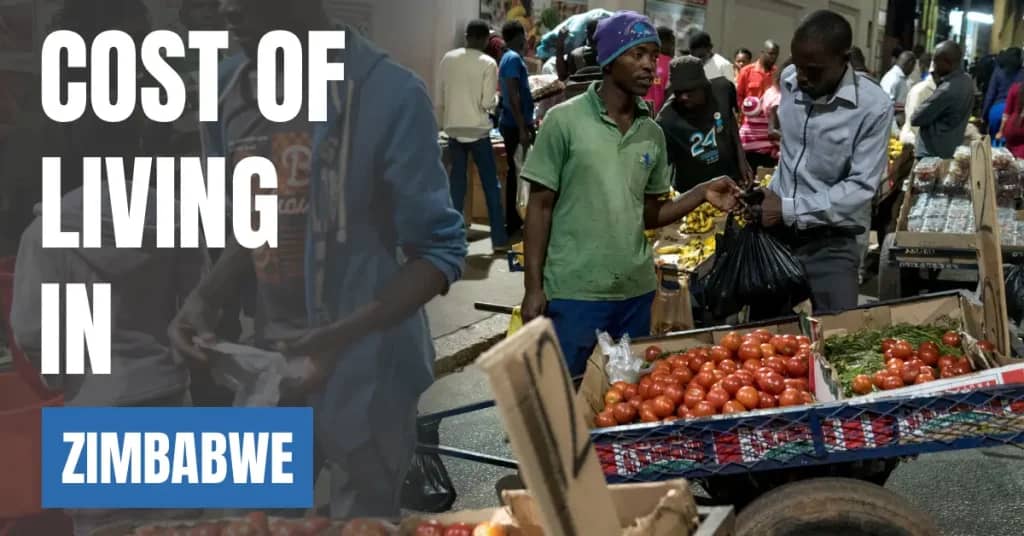
Zimbabwe is a landlocked nation in Southern Africa known for its dramatic landscapes, diverse wildlife, and cultural heritage. Major cities like Harare and Bulawayo serve as economic hubs, while destinations such as Victoria Falls attract international visitors. The cost of living in Zimbabwe varies significantly due to economic fluctuations, currency challenges, and differences between urban and rural areas. Understanding expenses is essential for expats, aid workers, students, families, and returning residents planning long-term stays.
On this pageTable of Content
To explore more about the nation, visit the Zimbabwe country page.
Cost of Living in Zimbabwe: Summary Table
| Category | Cost (USD) | Cost (ZWL) |
|---|---|---|
| Average Monthly Cost (Single Person) | $500 – $900 | ZWL 40,000 – 72,000 |
| Average Monthly Cost (Family of Four) | $1,500 – $2,800 | ZWL 120,000 – 224,000 |
| Rent Range | $300 – $1,200 | ZWL 24,000 – 96,000 |
| Food Cost (Monthly) | $200 – $350 | ZWL 16,000 – 28,000 |
| Transport Cost | $25 – $60 | ZWL 2,000 – 4,800 |
| Utilities | $40 – $90 | ZWL 3,200 – 7,200 |
| Healthcare | $30 – $80 | ZWL 2,400 – 6,400 |
| Education | $100 – $600 | ZWL 8,000 – 48,000 |
Housing & Rent Prices in Zimbabwe
Apartment Rent (Monthly)
- 1-bedroom in city center: $400 – $700 (ZWL 32,000 – 56,000)
- 1-bedroom outside center: $250 – $450 (ZWL 20,000 – 36,000)
- 3-bedroom city center: $900 – $1,500 (ZWL 72,000 – 120,000)
- 3-bedroom outside center: $600 – $1,000 (ZWL 48,000 – 80,000)
Buying Property
- City center: $1,000 – $2,500 per sq meter
- Outside center: $600 – $1,500 per sq meter
Food & Grocery Costs
- Milk (1 liter): $1.50 – $2.50 (ZWL 120 – 200)
- Bread (loaf): $1 – $1.50 (ZWL 80 – 120)
- Rice (1 kg): $1.50 – $2.20 (ZWL 120 – 176)
- Eggs (12): $2 – $3 (ZWL 160 – 240)
- Chicken (1 kg): $3 – $6 (ZWL 240 – 480)
- Beef (1 kg): $6 – $10 (ZWL 480 – 800)
- Potatoes (1 kg): $1 – $2 (ZWL 80 – 160)
- Apples (1 kg): $2 – $3.50 (ZWL 160 – 280)
- Water (1.5L): $0.60 – $1.20 (ZWL 48 – 96)
- Soft drink (can): $0.80 – $1.50 (ZWL 64 – 120)
Restaurant & Dining Costs
- Local inexpensive meal: $3 – $6 (ZWL 240 – 480)
- Mid-range restaurant for two: $25 – $50 (ZWL 2,000 – 4,000)
- Fast food combo: $4 – $7 (ZWL 320 – 560)
- Coffee: $2 – $3.50 (ZWL 160 – 280)
Transportation Costs
- One-way bus/minibus: $0.50 – $1 (ZWL 40 – 80)
- Monthly public transport: $20 – $40 (ZWL 1,600 – 3,200)
- Taxi (per km): $0.60 – $1.20 (ZWL 48 – 96)
- Fuel per liter: $1.30 – $1.60 (ZWL 104 – 128)
Utility Costs
- Electricity, water, garbage: $30 – $70 (ZWL 2,400 – 5,600)
- Internet (home): $20 – $50 (ZWL 1,600 – 4,000)
- Mobile plan: $5 – $10 (ZWL 400 – 800)
Healthcare Costs
- Doctor visit: $10 – $25 (ZWL 800 – 2,000)
- Specialist visit: $20 – $50 (ZWL 1,600 – 4,000)
- Private insurance: $20 – $80 monthly
- Basic medicines: $2 – $10 (ZWL 160 – 800)
Education Costs
- Public school: Low cost
- Private school: $50 – $200 per month (ZWL 4,000 – 16,000)
- International school: $300 – $1,000 per month
Entertainment & Lifestyle Expenses
- Gym membership: $20 – $40 (ZWL 1,600 – 3,200)
- Movie ticket: $4 – $7 (ZWL 320 – 560)
- Local activities/tours: $20 – $60 (ZWL 1,600 – 4,800)
- Night out (per person): $10 – $30 (ZWL 800 – 2,400)
Cost of Living for Different Groups
For Singles
The cost of living for singles varies based on lifestyle. Urban areas like Harare are more expensive, while smaller towns are more affordable.
For Couples
Couples can reduce costs significantly through shared rent and utilities.
For Families
Families benefit from reasonably priced groceries but may face higher schooling costs, especially for international schools.
For Students
Students find Zimbabwe moderately affordable, with low food and sharing accommodation options.
For Expats
Zimbabwe attracts expats working in NGOs, mining, agriculture, and tourism. Many prefer being paid in USD due to currency volatility.
Comparison With Other Countries
- Zimbabwe vs South Africa – South Africa has higher rent but better infrastructure.
- Zimbabwe vs Zambia – Zambia is more stable and slightly more affordable.
- Zimbabwe vs Kenya – Kenya is generally more expensive for housing and transport.
Pros & Cons of Living in Zimbabwe
Pros
- Friendly and welcoming people
- Beautiful landscapes and wildlife
- Affordable groceries and local goods
- Strong expat and NGO presence
Cons
- Currency instability
- Frequent power outages
- Higher rent in main cities
- Imported goods can be expensive
Final Summary
Zimbabwe offers a moderate cost of living with affordable food and local goods but higher costs for rent, fuel, and imported products. It is suitable for expats, aid workers, students, and families who appreciate a peaceful environment and rich cultural lifestyle. While economic fluctuations can affect pricing, overall living expenses remain manageable for many residents.
FAQs
Is Zimbabwe expensive to live in?
Zimbabwe can be moderately expensive depending on the city and lifestyle, but groceries and local transport remain affordable.
How much salary is enough to live comfortably in Zimbabwe?
A single person needs around $500–$900 per month, while families require $1,500–$2,800.
What is the average rent in Zimbabwe?
Rent typically ranges from $300 to $1,200 monthly depending on the area and housing type.
Is Zimbabwe good for expats?
Yes, Zimbabwe is popular among expats in NGOs, mining, tourism, and agriculture.
Is Zimbabwe cheaper than South Africa?
Yes, Zimbabwe is generally cheaper, especially for groceries and transportation.
Join the conversation
Have thoughts on this topic? Share them with others.
Ask questions, share experience, and learn from the Visaboards Community.