
Cost of Living in Antigua and Barbuda 2026: Rent, Prices and Monthly Budgets
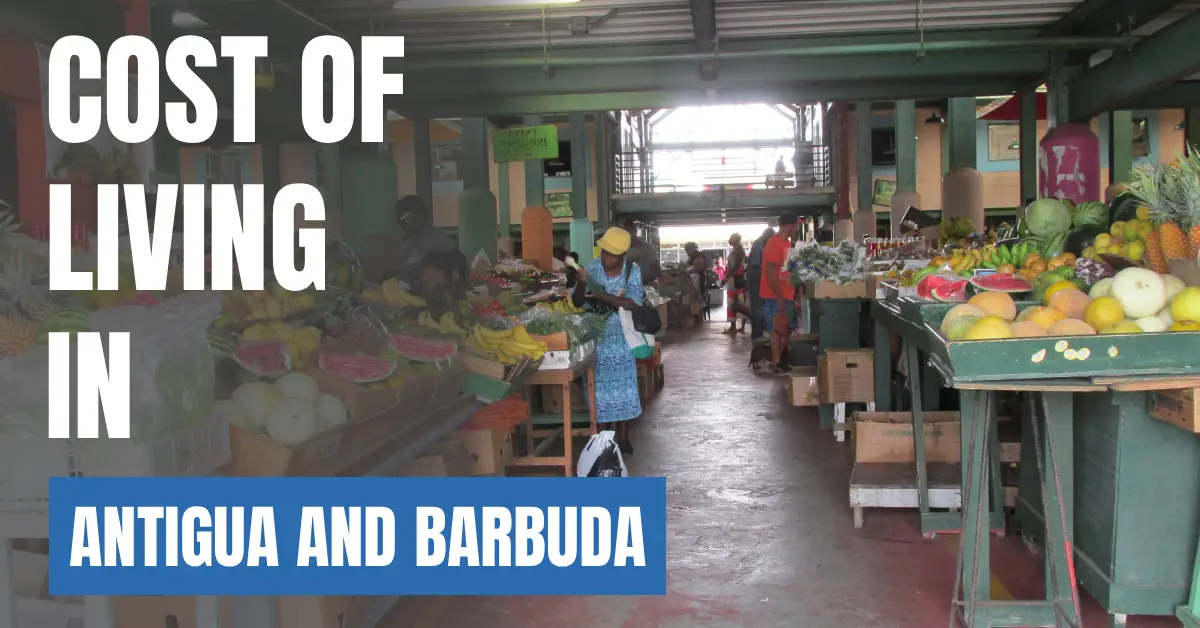
The cost of living in Antigua and Barbuda in 2026 is shaped mainly by housing, electricity, imported goods, and transport choices. A budget-conscious single renter may need around EC$3,400 per month, while a more moderate single-person budget can approach EC$5,700. A couple may spend around EC$7,850, and a family of four may need about EC$10,950 before private-school tuition or paid childcare.
Antigua and Barbuda uses the Eastern Caribbean dollar, shown as EC$ or XCD. The currency is fixed at EC$2.70 to US$1, so EC$2,700 is approximately US$1,000. This guide uses EC dollars as the primary currency.
Housing and electricity deserve particular attention. Official consumer-price data for June 2026 showed annual inflation of 3.7%, but electricity prices rose much faster, with the electricity index up 42.9% year on year. Actual rents were 3.1% higher and transport services 10.3% higher.
Also Explore: Cost of Living in AngolaCost of Living in Antigua and Barbuda at a Glance
| Expense | Typical 2026 Planning Range |
|---|---|
| Single person, excluding rent | EC$1,700 to EC$3,300 per month |
| Single renter, including rent | EC$3,200 to EC$6,500 per month |
| Couple, including rent | EC$6,500 to EC$9,000 per month |
| Family of four, including rent | EC$8,500 to EC$12,500+ per month |
| One-bedroom apartment | About EC$1,400 to EC$4,000+ |
| Three-bedroom home or apartment | About EC$3,000 to EC$6,000+ |
| Basic utilities | About EC$350 to EC$700+ per month |
| Groceries for one adult | About EC$650 to EC$1,000 per month |
| Home internet | About EC$115 to EC$210+ per month |
| Mobile service | About EC$50 to EC$160 per month |
| Local minibus fare | Roughly EC$2.25 to EC$5 per journey |
| Inexpensive restaurant meal | Roughly EC$25 to EC$45 |
| National minimum wage | EC$11.50 per hour from 1 April 2026 |
These are practical planning ranges rather than official household budgets. Antigua and Barbuda is a small market, and online price databases have limited samples. Current rental listings, official utility tariffs, government statistics and market databases therefore need to be considered together rather than treating one figure as definitive.
How Much Does It Cost to Live in Antigua and Barbuda Per Month?
A single renter should generally plan for approximately EC$3,200 to EC$6,500 per month including rent. Someone sharing accommodation, living inland and using minibuses may spend toward the lower end. A person renting a furnished apartment in a popular coastal area, running air conditioning frequently, eating out and relying on taxis or a car can spend considerably more.
Excluding rent, a practical single-person budget is approximately EC$1,700 to EC$3,300 per month. This can cover groceries, utilities, phone, internet, local transport, basic healthcare or insurance provision, and some discretionary spending.
As a cross-check, Expatistan estimated a single person’s monthly living costs at about EC$5,958 and a family of four at about EC$12,367 in September 2026. However, the database explicitly warns that its Antigua and Barbuda estimates are based on only a few data points and should be treated as a best guess rather than an authoritative national average.
Housing and Rent in Antigua and Barbuda
Rent is usually the largest monthly expense. A one-bedroom property can cost approximately EC$1,400 to EC$4,000 or more depending on location, condition, furnishings, utilities included and proximity to beaches or commercial areas. Three-bedroom properties often fall around EC$3,000 to EC$6,000+, with premium villas substantially above this range.
Numbeo’s St John’s data, last updated in December 2025, placed a one-bedroom apartment at about EC$2,833 in the city centre and EC$1,833 outside the centre. Three-bedroom averages were approximately EC$4,500 in central locations and EC$4,000 outside. These figures came from a small contributor base, so they are more useful as market indicators than precise averages.
Current 2026 listings show how individual properties vary. A one-bedroom Marble Hill apartment was listed at EC$2,565 per month, while a one-bedroom property on Old Parham Road was advertised at US$1,200, approximately EC$3,240, with water, cooking gas, internet and cable included but electricity excluded.
Which Areas Are More or Less Expensive?
St John’s and inland residential communities can provide more modest long-term options, particularly for older or unfurnished properties. Coastal and tourism-oriented areas such as Dickenson Bay, Jolly Harbour, English Harbour and other premium waterfront communities commonly command higher rents, especially for furnished accommodation.
Barbuda should be budgeted separately. Its housing supply, transport options and availability of everyday services differ from Antigua, and reliable current consumer-price datasets for Barbuda are limited.
Groceries and Food Costs
A single adult who cooks most meals at home may spend roughly EC$650 to EC$1,000 per month on groceries. A family of four may need around EC$2,000 to EC$2,800 or more depending on imported foods, meat, snacks, beverages and household supplies.
| Grocery Item | Indicative Price |
|---|---|
| Milk, 1 litre | About EC$6 |
| Fresh bread, 500 g | About EC$7.50 |
| Rice, 1 kg | About EC$5 |
| 12 eggs | About EC$14.50 |
| Chicken, 1 kg | About EC$22 |
| Local cheese, 1 kg | About EC$22 |
| Bottled water, 1.5 litres | About EC$4.50 |
These individual prices come from crowdsourced St John’s data and can change significantly between supermarkets, local markets and imported brands. Antigua and Barbuda maintained ABST zero-rating on selected essential food items in its 2026 fiscal measures, helping reduce the tax burden on basic groceries.
Restaurants and Eating Out
An inexpensive restaurant meal typically costs around EC$25 to EC$45, although the observed range can be wider. A mid-range meal for two can approach EC$200 to EC$250, while a fast-food combination meal is around EC$25 to EC$30 in current market datasets.
Frequent dining in resorts, beach restaurants and tourism districts can raise a monthly budget quickly. Residents trying to control costs can usually save substantially by cooking at home and treating restaurant spending as a separate leisure allowance.
Utilities and Electricity Costs
Utilities can cost approximately EC$350 to EC$700+ per month for a typical household, but heavy air-conditioning use can push the figure higher. Electricity is one of the most important variable costs to monitor in 2026.
APUA’s domestic electricity tariff includes a minimum charge of EC$25, an energy charge of EC$0.40 per kWh for the first 300 kWh and EC$0.38 per kWh above 300 kWh. In June 2026, the fuel variation charge was EC$0.80 per kWh. At 250 kWh of monthly consumption, the energy and fuel components alone would total about EC$300 before any other applicable charges.
Domestic water carries a minimum charge of EC$21 plus an EC$1 meter fee, with EC$21 charged for each 1,000 gallons or part thereof for the first 4,000 gallons. APUA reported continuing pressure from high fuel costs during 2026, so electricity budgets should include a buffer rather than assuming one fixed monthly bill.
Internet and Mobile Costs
Home internet generally costs about EC$115 to EC$210+ per month depending on provider and package. APUA offers data-only home broadband from approximately EC$115 per month, while packages bundled with a landline can start lower. Digicel home internet packages can start around EC$172.
Mobile spending can range from roughly EC$50 to EC$160 per month. For example, a 30-day Digicel prepaid plan offering 20 GB of data with unlimited local calls and texts was priced at EC$132 including tax.
Transportation Costs
Public transport is inexpensive but is not free. Antigua relies mainly on privately operated minibuses, with typical fares around EC$2.25 to EC$5 per trip depending on the route. Services generally operate from hubs around St John’s and may leave when sufficiently full rather than following the kind of fixed timetable common in larger cities. Barbuda does not have the same public bus network.
As of August 2026, bus operators were seeking fare increases of around EC$0.50 to EC$0.75, but reporting at that time indicated the proposed increase had not yet become the established fare schedule. Residents should therefore check current fares locally rather than relying on old monthly-pass estimates.
Taxis are considerably more expensive than buses. Official Transport Board fare schedules list fixed fares for many common destinations, including routes between St John’s, the airport and tourism areas. Anyone relying regularly on taxis should create a separate transport allowance.
Owning a vehicle adds fuel, insurance, registration, maintenance and potentially expensive imported replacement parts. For households outside convenient bus routes, these costs can materially change the monthly budget.
Healthcare Costs and Eligibility
Healthcare is not simply free for every person living in Antigua and Barbuda. The public system provides important subsidised and free services, but eligibility differs between citizens, registered beneficiaries and other residents.
The Ministry of Health states that public health centres provide free ambulatory care for Antigua and Barbuda’s citizenry. The country also operates community clinics and public hospital services. In April 2026, extended weekday opening hours were introduced at Gray’s Farm and Clare Hall health centres for general consultations, minor urgent care, wound care and chronic-condition support.
The Medical Benefits Scheme is contribution-based and has eligibility rules for registered beneficiaries. New foreign residents should not assume they receive every publicly funded benefit immediately. Private health or international medical insurance should therefore be considered until individual eligibility and coverage are confirmed.
Crowdsourced estimates place a short private-doctor consultation around EC$150, but actual private healthcare fees depend on the provider and treatment. Emergency care, specialist services, prescriptions, dental care and overseas medical treatment can create much larger expenses.
Education and Childcare
Public education has historically been provided without tuition fees, while private schools charge fees. Government documentation also describes compulsory school attendance for children from ages 5 to 16. New residents should verify current admission eligibility, documentation requirements and incidental expenses directly with the Ministry of Education because access rules can depend on immigration and residency status.
The 2026 government budget continued school-support measures including school uniforms and school meals. Private and international school tuition, however, can materially increase a family’s monthly budget. Current nationwide fee data are too limited to provide one reliable private-school average, so families should obtain quotations from the specific schools they are considering.
Childcare costs also vary significantly by provider and age group. Paid daycare or full-time childcare is not included in the family sample budget below.
Salaries and Minimum Wage in Antigua and Barbuda
The national minimum wage is EC$11.50 per hour from 1 April 2026. The government increased it from EC$9.00 per hour as part of a phased path toward a target of EC$13.00 per hour.
At 40 hours per week, EC$11.50 per hour equals approximately EC$1,993 gross per month before applicable employee contributions. This is well below the typical cost of independently renting a market-rate one-bedroom property and covering normal living expenses, so minimum-wage affordability often depends on shared housing, family housing, multiple earners or unusually low rent.
What Salary Is Needed to Live Comfortably?
A single renter may want net household income of roughly EC$4,500 to EC$6,000+ per month for a reasonable buffer, depending mainly on rent. A couple may target combined monthly income around EC$7,000 to EC$9,000+, while a family may need EC$10,000+ if paying market rent. These are budgeting targets, not legal salary thresholds or official government recommendations.
Numbeo reported average monthly net salary of roughly EC$3,700 in St John’s in late 2025, but the salary figure was based on a limited sample. It should not be treated as an official wage statistic.
Taxes and Everyday Affordability
Antigua and Barbuda abolished personal income tax effective in April 2016. That does not make day-to-day living tax-free. Consumption taxes, statutory employee contributions and other taxes or levies can still affect household finances.
The standard Antigua and Barbuda Sales Tax rate was increased from 15% to 17% from 2024. The government maintained zero-rating for selected essential food items in 2026 and has also used temporary tax-relief measures on specific shopping dates. Consumers should therefore distinguish permanently or currently zero-rated essentials from ordinary goods and services that remain subject to ABST.
Realistic Monthly Budgets for Antigua and Barbuda
The following examples use market rent and practical spending allowances. They are designed for planning rather than as official averages. The family example assumes public schooling and excludes private-school tuition and paid childcare.
| Expense | Budget Single | Moderate Single | Couple | Family of Four |
|---|---|---|---|---|
| Rent | EC$1,500 | EC$2,600 | EC$3,300 | EC$4,500 |
| Utilities | EC$350 | EC$500 | EC$650 | EC$850 |
| Groceries | EC$700 | EC$900 | EC$1,500 | EC$2,600 |
| Transport | EC$150 | EC$350 | EC$500 | EC$700 |
| Internet and mobile | EC$200 | EC$300 | EC$350 | EC$400 |
| Healthcare or insurance provision | EC$250 | EC$450 | EC$650 | EC$900 |
| Dining and leisure | EC$250 | EC$600 | EC$900 | EC$1,000 |
| Private school or paid childcare | Not included | Not included | Not included | Not included |
| Estimated Total | EC$3,400 | EC$5,700 | EC$7,850 | EC$10,950 |
The budget-conscious single-person example assumes relatively inexpensive accommodation and careful discretionary spending. The moderate single-person example assumes a better-positioned one-bedroom rental and more room for dining, transport and healthcare. The couple and family budgets assume market-rate housing but no car loan, private-school tuition or full-time childcare.
Costs New Residents Often Overlook
- Electricity and air conditioning: Fuel-related electricity charges can change, and intensive air-conditioning use can add hundreds of EC dollars to a monthly bill.
- What rent includes: Some properties include water, internet, gas or cable, while others exclude all utilities. Compare total occupancy cost, not rent alone.
- Transport outside bus routes: Regular taxis or a private car can be substantially more expensive than local minibuses.
- Insurance: Private medical, vehicle, home contents and other insurance may be necessary depending on the household.
- Imported goods: Furniture, electronics, specialised foods and vehicle parts can cost more in a small island economy.
- Moving and deposits: Initial housing costs may include a security deposit, advance rent, utility setup and household purchases.
- Private education and childcare: These are not included in the family budget and can become major additional expenses.
Is Antigua and Barbuda More Expensive Than Nearby Countries?
There is not enough consistent 2026 evidence to say that Antigua and Barbuda is always cheaper or more expensive than every nearby Caribbean country. Costs vary by category, housing market and lifestyle.
For example, recent Numbeo comparison data showed some restaurant categories in Antigua and Barbuda below equivalent prices in Barbados, but Antigua’s sample is small and other categories do not necessarily follow the same pattern. Country comparisons should therefore be made expense by expense rather than using one general percentage.
Cost of Living Versus Residency Financial Requirements
A monthly living budget is not the same thing as an immigration financial requirement. Antigua and Barbuda’s former Nomad Digital Residence programme used a US$50,000 annual income criterion, but that programme ended on 15 November 2025. The old US$50,000 figure should not be presented as a current digital-nomad or general residency requirement.
Current residency eligibility depends on the immigration category and the applicant’s circumstances. The Immigration Department describes resident-permit routes connected with periods of lawful residence, marriage and other qualifying categories. Applicants should use the latest Immigration Department requirements for their specific route rather than treating a cost-of-living estimate as proof of immigration eligibility.
Is Antigua and Barbuda Affordable for Expats and New Residents?
Antigua and Barbuda can be manageable for foreign residents with stable professional, business, pension or overseas income, particularly because the EC dollar is fixed to the US dollar. It is more challenging for households relying on low local wages while also paying full market rent.
The biggest opportunity to reduce costs is usually housing. Choosing an inland long-term rental, checking which utilities are included and limiting electricity use can have more impact than reducing small discretionary purchases. Households that need a car, private healthcare, private school or premium coastal accommodation should budget materially above basic cost-of-living estimates.
Conclusion
A realistic 2026 budget for Antigua and Barbuda starts around EC$3,400 per month for a careful single renter and can rise to EC$5,700 or more for a moderate single-person lifestyle. A couple may spend around EC$7,850, while a family of four can approach EC$10,950 before private education, childcare or major vehicle costs.
Rent and electricity are the two expenses most likely to change the picture. The April 2026 minimum-wage increase improves earnings at the bottom of the labour market, but a full-time minimum-wage income remains insufficient for a typical solo renter paying current market rent without other support. Anyone relocating should compare actual rental listings, current APUA tariffs, immigration status, healthcare eligibility and transport needs before fixing a final monthly budget.
Sources and Methodology
This guide was reviewed on 7 September 2026. Priority was given to Antigua and Barbuda government departments, the Statistics Division, APUA, the Eastern Caribbean Central Bank, the Immigration Department and other official sources. Current property listings and crowdsourced databases were used only where official consumer-market data were unavailable.
Rental and consumer prices can change quickly. Numbeo and Expatistan provide useful market signals but have particularly small samples for Antigua and Barbuda, so their figures should be treated as estimates rather than national averages. Current listings and official tariffs were cross-checked where practical. The latest official CPI release identified during this review covered June 2026.
- Government of Antigua and Barbuda, minimum wage announcement, March 2026.
- Antigua and Barbuda Statistics Division, Consumer Price Index, June 2026.
- Eastern Caribbean Central Bank, EC dollar exchange-rate framework.
- Antigua Public Utilities Authority, electricity and water tariffs.
- Antigua Public Utilities Authority and Digicel, current internet and mobile packages.
- Ministry of Health and Medical Benefits Scheme, public healthcare and eligibility information.
- Antigua and Barbuda Immigration Department, resident-permit information.
- Government of Antigua and Barbuda, end of the Nomad Digital Residence programme.
- Numbeo, St John’s consumer and rental data, last updated December 2025.
- Expatistan, Antigua and Barbuda cost estimates, September 2026, used with its stated sample limitations.
- Current 2026 long-term property listings used to cross-check rental ranges.
Frequently Asked Questions
How much does it cost to live in Antigua and Barbuda per month?
A single renter should generally budget about EC$3,200 to EC$6,500 per month including rent. A careful renter using inexpensive housing and local transport may spend less, while furnished coastal accommodation, air conditioning, taxis, a car and frequent dining can push spending higher. Excluding rent, approximately EC$1,700 to EC$3,300 is a useful single-person planning range.
How much is rent in Antigua and Barbuda in 2026?
A one-bedroom apartment can cost roughly EC$1,400 to EC$4,000+ per month, while a three-bedroom property commonly costs around EC$3,000 to EC$6,000+. Location and furnishings make a major difference. Inland or older properties can be cheaper, while furnished homes in coastal and tourism-oriented districts frequently command higher prices. Always check which utilities are included.
Is Antigua and Barbuda expensive to live in?
Antigua and Barbuda can be expensive relative to local wages, especially when paying market rent and high electricity bills. Imported goods, private transport and premium coastal housing also raise costs. Residents with affordable housing and access to minibuses can reduce expenses substantially. Housing and electricity usually matter more to affordability than small differences in grocery or restaurant spending.
What salary is needed to live comfortably in Antigua and Barbuda?
A single renter may want net income around EC$4,500 to EC$6,000+ per month for a moderate lifestyle with some financial buffer. A couple may target combined income of roughly EC$7,000 to EC$9,000+, while a family may need EC$10,000+ depending on housing, transport and schooling. These figures are planning estimates, not official salary requirements.
What is the minimum wage in Antigua and Barbuda in 2026?
The national minimum wage is EC$11.50 per hour from 1 April 2026, increased from EC$9.00. At 40 working hours per week, this is approximately EC$1,993 gross per month before applicable contributions. That amount is below the typical cost of independently renting a market-rate one-bedroom property and meeting normal living expenses without shared housing or other household income.
Is healthcare free in Antigua and Barbuda?
Some public healthcare services are free or subsidised, but healthcare should not be described as universally free for everyone. The Ministry of Health states that public health centres provide free ambulatory care for citizens. Medical Benefits Scheme coverage has registration and contribution rules. Foreign residents should confirm their eligibility and consider private medical insurance for services not covered publicly.
Is public transport free in Antigua and Barbuda?
No. Public transport in Antigua mainly consists of privately operated minibuses, with fares commonly around EC$2.25 to EC$5 per journey. It is inexpensive compared with regular taxi use, but services may not follow strict fixed timetables. Barbuda does not have the same bus network, so residents there need different transport arrangements.
How much does a family of four need per month in Antigua and Barbuda?
A family of four paying market rent may need roughly EC$8,500 to EC$12,500+ per month. A representative moderate budget in this guide totals about EC$10,950, including rent, utilities, groceries, transport, communications, healthcare provision and leisure. Private-school tuition, full-time childcare, car finance and unusually high medical costs are not included and can raise the total significantly.
Is Antigua and Barbuda cheaper than Barbados?
There is not enough consistent evidence to say Antigua and Barbuda is always cheaper than Barbados. Recent crowdsourced comparisons show some restaurant prices lower in Antigua, but differences vary by category and Antigua has a small sample. Anyone comparing relocation costs should examine housing, utilities, groceries and transport separately rather than relying on one overall percentage comparison.
Is the US$50,000 digital nomad income requirement still active?
No. The US$50,000 annual income figure belonged to Antigua and Barbuda’s former Nomad Digital Residence programme. The government discontinued that programme on 15 November 2025. It should not be treated as a current general residency requirement. Current resident-permit eligibility depends on the relevant immigration category, so applicants should check the Immigration Department’s current rules for their circumstances.