
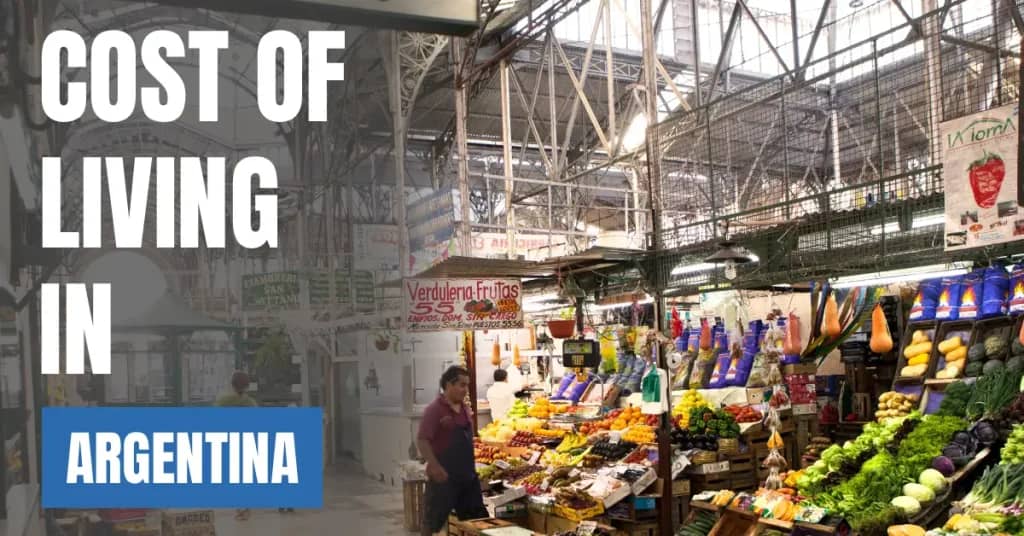
The cost of living in Argentina in 2026 varies sharply by city, housing choice, healthcare needs and family size. Buenos Aires is considerably more expensive than cities such as Córdoba, and rent is now one of the largest pressures on household budgets. For a single renter in Buenos Aires, a practical monthly budget is roughly ARS 1.8 million to ARS 2.4 million including rent. A family of four may need around ARS 4.0 million to ARS 5.0 million per month before private or international school fees.
On this pageTable of Content
Argentina also remains a fast-changing price environment. The latest official Consumer Price Index available when this guide was reviewed, July 2026, showed a 2.1% monthly increase. INDEC is scheduled to publish August 2026 inflation on September 10, so later figures should not be treated as available yet.
All monetary figures below are in Argentine pesos, ARS, unless another currency is specifically stated. Market prices should be treated as current estimates rather than fixed nationwide prices.
Also Explore: Cost of Living in Antigua and BarbudaCost of Living in Argentina at a Glance
| Cost | Current Estimate or Reference |
|---|---|
| Single person in Buenos Aires, including rent | About ARS 1,800,000 to ARS 2,400,000 per month |
| Single person in Córdoba, including rent | About ARS 1,200,000 to ARS 1,600,000 per month |
| Family of four in Buenos Aires, including rent but excluding private school | About ARS 4,000,000 to ARS 5,000,000 per month |
| CABA studio asking rent | ARS 761,268 average |
| CABA 1-bedroom asking rent | ARS 873,668 average |
| CABA 2-bedroom asking rent | ARS 1,177,672 average |
| Groceries for one person | About ARS 250,000 to ARS 400,000 per month |
| Public transport | About ARS 40,000 to ARS 90,000 per month for a regular commuter |
| Basic utilities for a small Buenos Aires apartment | About ARS 90,000 to ARS 150,000 per month |
| Private healthcare plan for a younger adult | Roughly ARS 100,000 to ARS 300,000+ per month, depending on plan, age and location |
| Minimum wage, September 2026 | ARS 383,800 per month |
| Rentista residency income requirement | At least 5 minimum wages, currently ARS 1,919,000 per month |
The monthly estimates above combine current market data from Buenos Aires and Córdoba with realistic household budgeting assumptions. Expatistan’s September 2026 estimates are ARS 2,052,971 for one person and ARS 4,718,464 for a family of four in Buenos Aires. Its Córdoba estimates are ARS 1,341,099 for one person and ARS 3,247,554 for a family of four. These are crowdsourced estimates, so they are useful for planning but should not be treated as official household expenditure statistics.
How Much Does It Cost to Live in Argentina Per Month?
A single renter can realistically spend about ARS 1.2 million to ARS 2.4 million per month including rent, with the lower end more achievable outside Buenos Aires. In Buenos Aires, around ARS 1.8 million to ARS 2.4 million is a more realistic range for an independent renter with private healthcare and moderate leisure spending.
For a Buenos Aires renter, expenses excluding rent can easily reach approximately ARS 1.1 million to ARS 1.5 million per month once groceries, utilities, transport, communications, healthcare and personal spending are included. Housing can then add another ARS 600,000 to more than ARS 1.4 million depending on apartment size, location and furnishing. Current Buenos Aires crowdsourced data put a furnished 45 m² studio in a normal area at about ARS 636,593 and an 85 m² furnished apartment in a normal area at about ARS 971,206.
These amounts are substantially higher than several older dollar-based cost estimates for Argentina. Rapid changes in peso prices mean that current ARS figures are more useful for residents than a static USD budget.
Housing and Rent in Argentina
How Much Is Rent in Buenos Aires?
In July 2026, average advertised rents in CABA were approximately ARS 761,268 for a studio, ARS 873,668 for a two-room apartment, commonly equivalent to a 1-bedroom unit, and ARS 1,177,672 for a three-room apartment. These are asking prices, so individual signed contracts may differ. CABA asking rents increased 1.6% during July and 30.7% year over year.
| Buenos Aires Rental Reference | Monthly Cost |
|---|---|
| Studio, CABA average asking rent | ARS 761,268 |
| Two-room apartment, CABA average asking rent | ARS 873,668 |
| Three-room apartment, CABA average asking rent | ARS 1,177,672 |
| 45 m² furnished studio, normal Buenos Aires area | ARS 636,593 |
| 85 m² furnished apartment, normal Buenos Aires area | ARS 971,206 |
| 85 m² furnished apartment, expensive Buenos Aires area | ARS 1,404,840 |
The difference between these figures reflects different property samples and methodologies. Zonaprop-based figures track asking rents in CABA, while Expatistan relies on user-submitted market prices and specifically includes furnished-apartment examples.
What Do Tenants Pay When Moving In?
New renters should budget for more than the first month’s rent. Under the current rental framework, the amount and currency of the security deposit can be agreed freely between the parties. A landlord may also require the first month in advance, costs connected with a personal guarantee and, where agreed, signature certification.
In CABA, residential tenants should not be charged real-estate commissions, professional fees or management fees for property reports under City Law 5,859. Outside CABA, local rules and normal market practices may differ. Contracts may set rent in pesos or foreign currency, and the parties can agree on the adjustment mechanism.
Tenants should also check whether ordinary building expenses, known as expensas, water, electricity and other services are included. Current rules leave many of these allocations to the contract, although ordinary building expenses are commonly assigned to the tenant and extraordinary expenses to the owner.
Groceries and Food Costs
A practical grocery budget is around ARS 250,000 to ARS 400,000 per month for one adult who cooks regularly. A family of four may spend around ARS 800,000 to ARS 1,100,000 depending on diet, city, supermarket choice and how much food is purchased outside the home.
INDEC’s July 2026 Basic Food Basket for Gran Buenos Aires was ARS 229,131 for one adult equivalent and ARS 708,016 for its reference family of four. The broader Basic Total Basket, which also incorporates non-food necessities, was ARS 506,381 for one adult equivalent and ARS 1,564,716 for the reference family. These are poverty and indigence measurement benchmarks, not recommended expat or middle-class living budgets.
| Buenos Aires Grocery Item | September 2026 Market Estimate |
|---|---|
| Milk, 1 litre | ARS 1,781 |
| 12 large eggs | ARS 3,781 |
| Chicken breast, 500 g | ARS 7,653 |
| Local cheese, 500 g | ARS 7,865 |
| Tomatoes, 1 kg | ARS 3,570 |
| Apples, 1 kg | ARS 3,898 |
| Potatoes, 1 kg | ARS 1,542 |
These Buenos Aires food prices were updated on September 6, 2026 and come from a crowdsourced database. Córdoba examples are generally lower, including about ARS 4,539 for 500 g of chicken and ARS 2,718 for 1 kg of tomatoes.
Restaurants and Eating Out
Eating out can add significantly to a monthly budget. In September 2026, a business-district lunch in Buenos Aires was estimated at about ARS 26,125, while a fast-food combo was around ARS 18,598. A normal dinner for two at a neighbourhood restaurant was approximately ARS 56,356, while a cappuccino in an expensive part of the city averaged around ARS 7,076.
| Dining Expense | Buenos Aires Estimate |
|---|---|
| Business-district lunch with drink | ARS 26,125 |
| Fast-food combo | ARS 18,598 |
| Neighbourhood restaurant dinner for two | ARS 56,356 |
| Italian dinner for two in an expensive area | ARS 77,609 |
| Cappuccino | ARS 7,076 |
Someone eating out several times each week can therefore spend hundreds of thousands of pesos more each month than someone cooking most meals at home.
Utilities
For a small Buenos Aires apartment, a reasonable starting budget for electricity, gas and water is around ARS 90,000 to ARS 150,000 per month. Larger households may spend ARS 150,000 to ARS 300,000 or more, particularly during periods of heavy heating or air-conditioning use.
September 2026 Buenos Aires estimates put basic utilities for one person in a 45 m² studio at ARS 96,650 and utilities for two people in an 85 m² apartment at ARS 153,235. In Córdoba, comparable estimates were approximately ARS 62,251 and ARS 85,435 respectively.
Actual bills depend on consumption, property size, tariff category and any applicable subsidies, so utility figures should be treated as budgeting ranges rather than fixed charges.
Internet and Mobile Costs
A household should generally reserve around ARS 60,000 to ARS 100,000 per month for home internet plus one mobile line, with additional mobile users increasing the total. Expatistan’s September Buenos Aires benchmark for its 8 Mbps internet category was ARS 41,551 per month, compared with ARS 23,830 in Córdoba.
Internet packages vary substantially by speed, promotion and neighbourhood. Promotional introductory prices can also increase after the initial contract period.
Transportation Costs
Is Public Transport Free in Argentina?
No. Public transport is not generally free. In the Buenos Aires metropolitan area, September 2026 fares depend on the service, distance and whether the SUBE card is registered. A short CABA bus journey costs ARS 887.99 with a registered SUBE, while national bus services start at ARS 742.81. Train fares start at ARS 450 for a registered card.
Buenos Aires Subte fares begin at ARS 1,753 for the first 20 trips in a calendar month with a registered SUBE. Per-trip discounts apply after users pass monthly journey thresholds. Unregistered SUBE fares are higher, making card registration important for regular commuters.
| Buenos Aires Transport | September 2026 Registered SUBE Fare |
|---|---|
| CABA bus, 0 to 3 km | ARS 887.99 |
| National bus, 0 to 3 km | ARS 742.81 |
| Train, first fare section | ARS 450 |
| Subte, first 20 monthly trips | ARS 1,753 per trip |
A commuter using public transport for approximately 40 to 50 journeys per month can reasonably budget around ARS 40,000 to ARS 90,000 depending on the transport mix. Current crowdsourced Buenos Aires data estimate a monthly public-transport budget at about ARS 58,598.
Healthcare Costs and Rules for Foreign Residents
Is Healthcare Free for Foreigners in Argentina?
Not in every situation. Emergency treatment cannot be denied to a foreigner because of immigration status. Permanent foreign residents can access the public health system on the same conditions as Argentine citizens. However, for routine treatment in healthcare establishments administered by the national government, foreigners who cannot prove permanent residence must show adequate health insurance or pay the applicable fee before receiving non-emergency care.
The Ministry of Health’s Resolution 1066/2026 took effect in August 2026 and established the operational procedure for nationally administered health establishments. Emergency assessment and immediate treatment remain exempt from the insurance or prepayment rule. Because Argentina’s health system is decentralized, procedures at provincial or city-run facilities can differ from those applying to national institutions.
How Much Does Private Healthcare Cost?
A short private doctor consultation in Buenos Aires is currently estimated at around ARS 54,220. Private prepaid medical plans vary much more widely. September 2026 market comparisons for a 30-year-old show entry plans beginning around ARS 100,000 per month, while many mid-level options reach ARS 200,000 to ARS 300,000 or more. Age, geographic area, provider network and copayments can materially change the price.
New residents who do not yet hold permanent residence should therefore treat health coverage as a core monthly expense rather than assuming that all routine public treatment will be free.
Education and Childcare Costs
Are Public Schools Free for Foreign Children?
Access to initial, primary and secondary education is protected for foreign children even when their immigration status is irregular. Migrants without an Argentine DNI must also be given access and conditions for remaining in initial, primary and secondary education using documentation from their country of origin.
Is Public University Free for Foreign Students?
State-run undergraduate higher education is tuition-free for Argentine citizens and foreigners with permanent residence. Since the 2025 legal change, state higher-education institutions may charge students who do not fall within those categories. Universities can decide whether to impose such charges, and non-permanent residents may still qualify for scholarships under institutional rules or agreements.
Private education can be a major family expense. As one current Buenos Aires example, Colegio Pestalozzi lists August 2026 monthly fees of ARS 650,900 for its initial level, ARS 1,046,500 for primary school and ARS 1,246,600 for secondary school, payable in 11 monthly instalments. This is one private-school example rather than a market-wide average, but it shows why schooling choice can transform a family’s monthly budget.
Families using private preschool, bilingual education, school transport, extracurricular programmes or international schools should calculate these costs separately rather than relying on a generic family cost-of-living estimate.
Salaries in Argentina
What Salary Is Needed to Live Comfortably in Argentina?
A single renter in Buenos Aires should generally target disposable monthly income of at least around ARS 2.2 million to ARS 2.8 million for a moderate lifestyle with some savings buffer. Outside Buenos Aires, particularly in Córdoba, an income around ARS 1.5 million to ARS 2.0 million can provide considerably more room, depending on housing and healthcare choices.
These are practical affordability estimates, not official salary thresholds. Argentina’s official RIPTE indicator, which measures taxable remuneration for stable registered jobs meeting specific methodology requirements, was ARS 1,915,878 in June 2026. RIPTE is not an average wage for every Argentine worker, so it should not be presented as the country’s universal salary.
INDEC reported average per-capita income of ARS 728,008 and a median of ARS 500,000 across the population covered by its 31 urban agglomerates in the first quarter of 2026. These figures measure income per person rather than the salary required by an independent renter.
What Is the Minimum Wage in Argentina in 2026?
The national Minimum, Vital and Mobile Wage is ARS 383,800 per month from September 1, 2026 for eligible full-time monthly workers, or ARS 1,919 per hour for hourly workers. The official schedule increases it to ARS 391,200 in October, ARS 398,800 in November and ARS 406,400 in December 2026.
The September minimum wage is far below typical independent-renter costs in Buenos Aires. The July 2026 average CABA studio asking rent of ARS 761,268 alone is almost twice the September minimum wage, before food, transport, utilities or healthcare are paid.
Taxes and Everyday Affordability
Argentina’s general VAT rate is 21%, although reduced or special rates apply to certain goods, services and transactions. Residents who earn taxable income can also face income-tax and social-security obligations depending on their employment status, income level and deductions.
For an expat or remote worker, tax residence and foreign-source income can create issues that are separate from normal living expenses. Someone planning a long-term move should therefore evaluate personal tax obligations separately from the monthly household budget.
Realistic Sample Monthly Budgets
The following budgets are planning examples for September 2026. They combine current housing, consumer and healthcare market evidence with rounded allowances for categories that vary by household. They are not official government baskets. Private or international school tuition is excluded from the family example.
| Expense | Budget Single, Córdoba | Moderate Single, Buenos Aires | Couple, Buenos Aires | Family of Four, Buenos Aires |
|---|---|---|---|---|
| Rent | ARS 425,000 | ARS 800,000 | ARS 970,000 | ARS 1,200,000 |
| Utilities | ARS 65,000 | ARS 100,000 | ARS 155,000 | ARS 220,000 |
| Groceries | ARS 300,000 | ARS 350,000 | ARS 600,000 | ARS 900,000 |
| Transport | ARS 60,000 | ARS 80,000 | ARS 140,000 | ARS 250,000 |
| Internet and mobile | ARS 60,000 | ARS 80,000 | ARS 110,000 | ARS 160,000 |
| Healthcare or insurance | ARS 140,000 | ARS 220,000 | ARS 400,000 | ARS 650,000 |
| Dining and leisure | ARS 150,000 | ARS 250,000 | ARS 300,000 | ARS 400,000 |
| Household, clothing and miscellaneous | ARS 100,000 | ARS 150,000 | ARS 200,000 | ARS 450,000 |
| Estimated Total Including Rent | ARS 1,300,000 | ARS 2,030,000 | ARS 2,875,000 | ARS 4,230,000 |
The Córdoba single-person example assumes a normal-area studio and restrained discretionary spending. The moderate Buenos Aires budget assumes a studio or small apartment, private health coverage and some restaurant spending. The family budget assumes public schooling. One or two private-school places can add hundreds of thousands or more than ARS 1 million per child each month depending on the institution. Current city estimates broadly support totals around ARS 2.05 million for one person and ARS 4.72 million for four people in Buenos Aires, and around ARS 1.34 million and ARS 3.25 million respectively in Córdoba.
Buenos Aires vs Córdoba: How Much Does Location Matter?
Location can change the budget by hundreds of thousands of pesos per month. September 2026 crowdsourced data estimate Córdoba to be about 28% cheaper overall than Buenos Aires, although the comparison contains some sparse or inconsistent observations and should be treated as directional.
| Expense | Buenos Aires | Córdoba |
|---|---|---|
| Estimated single-person monthly cost | ARS 2,052,971 | ARS 1,341,099 |
| Estimated family-of-four monthly cost | ARS 4,718,464 | ARS 3,247,554 |
| Normal-area furnished studio | ARS 636,593 | ARS 424,787 |
| Normal-area furnished 85 m² apartment | ARS 971,206 | ARS 514,399 |
| Utilities for one-person studio | ARS 96,650 | ARS 62,251 |
The main difference is housing. Someone choosing Córdoba or another less expensive city can potentially save more through rent than through small differences in grocery or transport prices.
Is Argentina Cheaper Than Nearby Countries?
Argentina is not uniformly one of South America’s cheapest countries in 2026. Numbeo’s 2026 country index places Argentina below Uruguay for overall cost of living, but above Chile, Brazil and Paraguay. Because Numbeo is crowdsourced, the index is best used for relative comparison rather than as an official price measure.
| Country | 2026 Cost of Living Index | Cost of Living Plus Rent Index |
|---|---|---|
| Uruguay | 55.6 | 37.3 |
| Argentina | 41.3 | 28.3 |
| Chile | 39.0 | 26.8 |
| Brazil | 30.1 | 20.5 |
| Paraguay | 28.5 | 20.3 |
This means broad claims that Argentina is automatically cheaper than Brazil or Chile are not supported by this 2026 comparison. Housing choices, exchange rates and city selection can still produce very different experiences for individual residents.
Costs New Residents Often Overlook
- Security deposit and first rent payment: moving into a rental can require multiple large payments at once.
- Expensas: apartment-building expenses can sit outside the advertised rent.
- Guarantee costs: newcomers without a local property guarantee may need alternative guarantee arrangements.
- Furnishing and appliances: an unfurnished home can require significant initial spending.
- Private healthcare: non-permanent foreign residents should not assume routine treatment will always be free.
- School costs: private or bilingual education can add a major recurring expense.
- Seasonal energy use: air conditioning and heating can move utility bills materially.
- Imported products: electronics, branded clothing and imported goods can be disproportionately expensive.
- Banking and currency conversion: foreign earners should account for transfer fees and exchange-rate movements.
- Transport registration: an unregistered SUBE can mean higher fares.
Cost of Living vs Residency Financial Requirements
Argentina’s immigration financial thresholds should not be confused with the amount required to live comfortably. For temporary residence under the rentista category, the applicant must prove qualifying income equal to at least five Minimum, Vital and Mobile Wages. With the September 2026 minimum wage at ARS 383,800, that equals ARS 1,919,000 per month.
The rentista category applies to qualifying income generated from assets or other permitted external sources. Remuneration from personal work is specifically excluded from this category, and the funds must meet the immigration authority’s documentation and transfer requirements. The current temporary residence is granted for one year and is renewable.
ARS 1,919,000 is therefore an immigration eligibility threshold, not a promise that every applicant can live comfortably on that amount. It is close to a moderate single-person Buenos Aires budget, but it would not normally cover the realistic monthly costs of a family of four.
Is Argentina Affordable for Expats and New Residents?
Argentina can still offer attractive living costs for someone with strong foreign-currency income or a salary substantially above local minimum-wage levels, especially outside Buenos Aires. However, describing Argentina simply as a very cheap destination is increasingly misleading in 2026.
Rent in CABA can exceed two minimum wages for even a relatively small apartment, private healthcare can cost hundreds of thousands of pesos per month, and private schooling can exceed ARS 1 million monthly at some institutions. At the same time, moving to Córdoba or choosing a lower-cost neighbourhood can reduce housing expenses considerably.
The safest approach for a new resident is to build a budget in pesos, add at least a 10% to 15% buffer for price changes and irregular expenses, and recheck rents, healthcare and service prices immediately before moving.
Conclusion
A realistic cost of living in Argentina in 2026 is considerably higher than many older online estimates suggest. A single renter in Buenos Aires should plan around ARS 1.8 million to ARS 2.4 million per month including rent, while a family of four may need roughly ARS 4.0 million to ARS 5.0 million before private education. Córdoba can reduce these totals substantially, particularly through lower housing costs.
Housing is the biggest variable, followed by healthcare, food and education for families. The September 2026 minimum wage of ARS 383,800 is not sufficient for an independent Buenos Aires lifestyle, while the ARS 1,919,000 rentista residency threshold is a legal immigration requirement rather than a universal comfort budget. Anyone planning a move should update these figures close to their arrival date because Argentine prices continue to change month by month.
Sources and Methodology
This guide was reviewed on September 7, 2026. Official government and statistical sources were prioritized for inflation, wages, immigration, healthcare, education, transport and tax rules. Current rental and consumer prices were cross-checked against recent market and crowdsourced sources. Rental prices and consumer costs can change rapidly, and crowdsourced databases should be treated as estimates rather than absolute facts. The methodology also distinguishes totals including rent from those excluding rent and avoids presenting modeled budgets as official statistics.
At the review date, July 2026 was the latest officially published national CPI period. INDEC’s publication calendar schedules August CPI and basic-basket data for September 10, 2026.
- INDEC, Consumer Price Index and official publication calendar.
- INDEC, income distribution for the first quarter of 2026.
- Argentina Ministry of Human Capital, Minimum, Vital and Mobile Wage and RIPTE.
- Dirección Nacional de Migraciones, temporary rentista residence requirements.
- Argentina Ministry of Health, Resolution 1066/2026 on healthcare for foreign nationals.
- Argentina migration, national education and higher-education legislation.
- Buenos Aires City Government, September public-transport fares and rental guidance.
- Argentina national transport authority, September 2026 AMBA fares.
- Current CABA rental-market data based on Zonaprop reporting.
- Expatistan, September 2026 Buenos Aires and Córdoba cost data.
- Numbeo, 2026 South America cost-of-living comparison.
- Colegio Pestalozzi, published August 2026 school fees.
- Argentina VAT legislation, general 21% rate.
Frequently Asked Questions
How much does it cost to live in Argentina per month in 2026?
A single renter can realistically need around ARS 1.2 million to ARS 2.4 million per month including rent, depending mainly on city and lifestyle. In Buenos Aires, around ARS 1.8 million to ARS 2.4 million is a practical range, while Córdoba can be substantially cheaper. A family of four in Buenos Aires may need roughly ARS 4.0 million to ARS 5.0 million before private-school fees.
How much is rent in Buenos Aires in 2026?
Average CABA asking rents in July 2026 were approximately ARS 761,268 for a studio, ARS 873,668 for a two-room apartment and ARS 1,177,672 for a three-room apartment. Location, furnishing and building expenses can push the actual monthly housing cost higher. These figures represent advertised rents rather than a guarantee of the price paid under every signed contract.
What salary do you need to live comfortably in Argentina?
A single Buenos Aires renter should generally target around ARS 2.2 million to ARS 2.8 million in disposable monthly income for a moderate lifestyle and some financial buffer. In a cheaper city such as Córdoba, around ARS 1.5 million to ARS 2.0 million may provide more flexibility. These are practical budget estimates, not government-defined salary requirements.
What is the minimum wage in Argentina in September 2026?
Argentina’s Minimum, Vital and Mobile Wage is ARS 383,800 per month from September 1, 2026 for covered full-time monthly workers, with an hourly rate of ARS 1,919. The official schedule raises the monthly minimum to ARS 391,200 in October, ARS 398,800 in November and ARS 406,400 in December 2026.
Is healthcare free for foreigners in Argentina?
Emergency healthcare cannot be denied because of immigration status, and permanent foreign residents can use the public system on the same conditions as Argentine citizens. For routine care in nationally administered health establishments, foreigners without permanent residence must generally show sufficient health insurance or pay the applicable charge in advance. Provincial and city-run systems may have different procedures.
Is public transport free in Argentina?
No. Public transport is not generally free. In September 2026, registered SUBE users in Buenos Aires pay from ARS 742.81 on national buses, ARS 887.99 on short CABA bus routes and ARS 450 on the lowest train fare section. The Subte starts at ARS 1,753 per trip, with discounts after certain monthly journey thresholds.
How much does a family of four need in Buenos Aires?
A family of four should realistically plan around ARS 4.0 million to ARS 5.0 million per month including rent if children use public education. A September 2026 crowdsourced estimate places the figure at about ARS 4.72 million. Private healthcare, a larger home, childcare or private and international schools can raise the total by hundreds of thousands or several million pesos.
Are public schools and universities free for foreigners in Argentina?
Initial, primary and secondary education remains accessible to foreign children regardless of immigration status. State-run undergraduate higher education is tuition-free for Argentine citizens and foreigners with permanent residence. State institutions may charge foreign students who do not have permanent residence, although individual universities can decide whether to do so and scholarships may still be available.
Is Argentina cheaper than Uruguay, Chile and Brazil?
Argentina is cheaper than Uruguay in Numbeo’s 2026 country index, but it is more expensive than Chile and Brazil on the same measure. Argentina’s cost-of-living index is 41.3, compared with 55.6 for Uruguay, 39.0 for Chile and 30.1 for Brazil. These are crowdsourced comparison indices rather than official national household-spending statistics.
How much income is required for Argentina’s rentista residency?
The temporary rentista residence requires qualifying monthly income equal to at least five Minimum, Vital and Mobile Wages. At the September 2026 minimum wage, this equals ARS 1,919,000 per month. The qualifying income must meet immigration rules for external or asset-derived income, and remuneration from personal work is specifically excluded from the rentista category.
Join the conversation
Have thoughts on this topic? Share them with others.
Ask questions, share experience, and learn from the Visaboards Community.