
INFORMATION
Cost of Living in Bolivia 2026: Rent, Salaries and Monthly Expenses
Post Date · Modified · Country · Bolivia
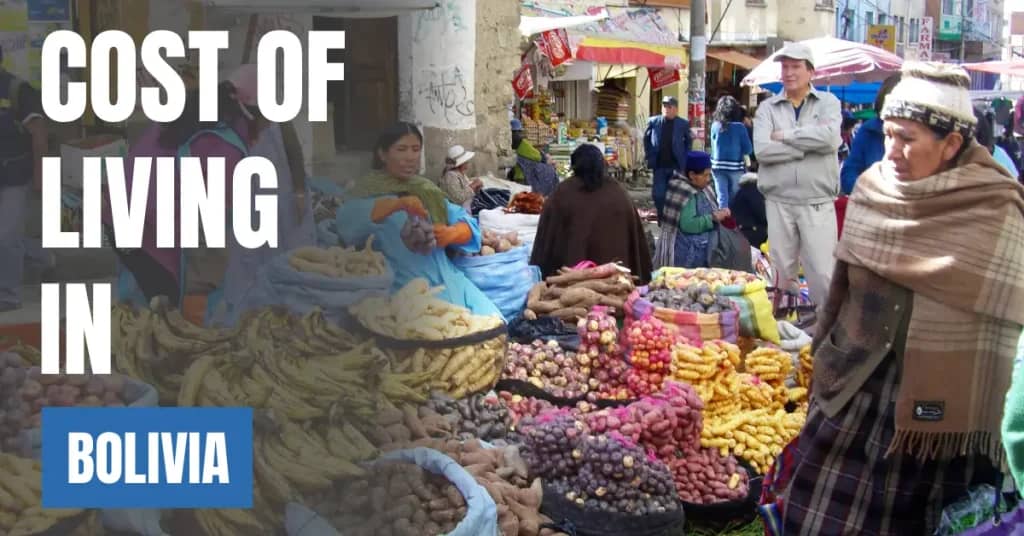
The cost of living in Bolivia remains relatively low by South American standards, but budgeting in 2026 requires more care than older guides suggest. Housing can still be inexpensive, especially outside central districts, yet food, transport, imported goods and other household expenses have been affected by recent inflation, fuel pressures and major exchange-rate changes.
On this pageTable of Content
One of the biggest changes in 2026 is Bolivia’s currency environment. The country ended its long-standing fixed exchange-rate system in June 2026. The Banco Central de Bolivia reported an official exchange rate of Bs 12.06 per US dollar effective on 23 September 2026, compared with the former Bs 6.86 to Bs 6.96 range. Because the rate can now move substantially, this guide uses the Boliviano, BOB or Bs, as the primary currency rather than relying on USD conversions that may quickly become outdated.
Cost of Living in Bolivia at a Glance
A single person renting independently will generally need around Bs 3,500 to Bs 6,000 per month including rent, depending heavily on city, apartment choice and lifestyle. A couple may need roughly Bs 6,500 to Bs 9,000, while a family of four can easily spend Bs 10,000 to Bs 15,000 or more before expensive private or international schooling.
| Expense | Typical 2026 Cost |
|---|---|
| 1-bedroom apartment outside central areas | About Bs 1,200 to Bs 2,200 per month |
| 1-bedroom apartment in central areas | About Bs 1,900 to Bs 3,100+ per month |
| Basic utilities | About Bs 250 to Bs 500 per month |
| Home internet | About Bs 180 to Bs 400 per month |
| Mobile plan | About Bs 100 to Bs 250 per month |
| Local public transport trip | About Bs 2.40 to Bs 3.00 in major cities |
| Inexpensive restaurant meal | About Bs 20 to Bs 25 |
| Monthly groceries, one person | Roughly Bs 800 to Bs 1,300 depending on diet |
| 2026 national minimum wage | Bs 3,300 per month |
These are planning ranges rather than fixed national prices. Bolivia has large differences between cities, neighborhoods and housing types, and crowdsourced market databases have limited samples. La Paz, Santa Cruz and Cochabamba data should therefore be treated as useful reference points rather than official nationwide averages.
How Much Does It Cost to Live in Bolivia Per Month?
A renter living modestly may need approximately Bs 3,500 to Bs 4,500 per month, while a more comfortable single-person budget is closer to Bs 5,000 to Bs 6,000. Couples and families need more, particularly when renting larger properties, using private healthcare or enrolling children in private schools.
Rent is normally the largest individual expense. Local food and public transport can still be inexpensive, but imported products, electronics, private schooling and international-standard housing can raise spending considerably.
Price conditions have also been volatile. Bolivia’s official CPI rose 1.10% in August 2026, bringing cumulative inflation for January through August to 3.01% and 12-month inflation to 5.02%. This followed much stronger inflation earlier in the year, including a 19.64% year-on-year reading in January.
Housing and Rent in Bolivia
Rent in Bolivia can be affordable compared with many South American capitals, but there is no single national rent figure. City, neighborhood, property condition, furnishings, security, building amenities and lease terms all matter.
Rent in La Paz
September 2026 crowdsourced data for La Paz placed a one-bedroom apartment at roughly Bs 3,006 in the city centre and Bs 2,000 outside the centre. A three-bedroom apartment averaged about Bs 4,617 centrally and Bs 3,550 outside central districts.
Rent in Santa Cruz
Santa Cruz data showed approximately Bs 3,028 for a central one-bedroom apartment and Bs 2,111 outside the centre. Large apartments have much wider reported ranges, which is one reason renters should compare actual listings rather than rely solely on a citywide average.
Rent in Cochabamba
Cochabamba was cheaper in the available data. A one-bedroom apartment averaged around Bs 1,880 in the centre and Bs 1,200 outside the centre. Three-bedroom averages were approximately Bs 3,675 centrally and Bs 2,700 outside central areas.
| City | 1 Bedroom, Centre | 1 Bedroom, Outside Centre |
|---|---|---|
| La Paz | About Bs 3,006 | About Bs 2,000 |
| Santa Cruz | About Bs 3,028 | About Bs 2,111 |
| Cochabamba | About Bs 1,880 | About Bs 1,200 |
Renters should also budget for deposits, possible agency charges, furniture, household equipment and building fees. These costs are easy to overlook when comparing only monthly rent.
Groceries and Food Costs
Local staples, produce and food bought from neighborhood markets can keep grocery costs relatively low. Imported packaged foods, premium products and international brands are usually more expensive.
In La Paz, September data showed milk at about Bs 8.50 per litre, 12 eggs around Bs 14.57 and chicken fillets around Bs 18.49 per pound. In Santa Cruz, milk averaged Bs 8.81 per litre and 12 eggs about Bs 12.67. Cochabamba reported milk around Bs 7 and 12 eggs around Bs 12.60.
A single adult who cooks primarily with local ingredients may spend around Bs 800 to Bs 1,300 per month on groceries. A family of four may require approximately Bs 2,500 to Bs 4,000, depending on meat consumption, imported foods, children’s needs and shopping habits.
Food budgets should include a buffer. Road blockades and supply disruptions have produced noticeable short-term price swings. INE reported that August 2026 inflation was influenced in particular by chicken prices following disruptions to poultry production and transport.
Restaurants and Eating Out
Eating out can be inexpensive when choosing local restaurants. Current city data places a basic restaurant meal at roughly Bs 20 to Bs 25 in Cochabamba, La Paz and Santa Cruz.
| Restaurant Expense | La Paz | Santa Cruz | Cochabamba |
|---|---|---|---|
| Inexpensive meal | About Bs 25 | About Bs 25 | About Bs 20 |
| Meal for two, mid-range | About Bs 110 | About Bs 200 | About Bs 120 |
| Cappuccino | About Bs 20 | About Bs 21 | About Bs 18 |
Higher-end restaurants, imported food and dining in expatriate or premium districts can cost much more than these averages.
Utilities
Basic household utilities are generally manageable, but usage, climate and apartment size matter. Reported monthly basic utilities for an apartment of roughly 85 square metres were about Bs 275 in La Paz, Bs 403 in Santa Cruz and Bs 377 in Cochabamba.
A practical household budget of Bs 250 to Bs 500 per month is reasonable for electricity, water and related basic services, although larger households or unusually high consumption can exceed this range.
Internet and Mobile Costs
Home broadband commonly costs around Bs 180 to Bs 400 per month, depending on provider and connection speed. Current city averages were roughly Bs 220 in La Paz, Bs 227 in Santa Cruz and Bs 273 in Cochabamba.
Mobile plans with calls and significant data usage generally fall around Bs 100 to Bs 250 per month. Users relying mainly on prepaid service may spend less.
Transportation Costs in Bolivia
Public transport remains one of the less expensive everyday expenses. Crowdsourced city data in 2026 placed a standard local journey at approximately Bs 2.40 in La Paz and around Bs 3 in Santa Cruz and Cochabamba.
A regular commuter using public transport can reasonably budget around Bs 150 to Bs 300 per month. Taxi and ride-hailing use can increase this substantially.
Vehicle ownership is more exposed to fuel-policy changes. Bolivia’s National Hydrocarbons Agency listed Special Gasoline Plus at Bs 6.96 per litre and ULS diesel at Bs 10.60 per litre for August 2026. Fuel prices and supply conditions should therefore be checked again before preparing a vehicle budget.
Healthcare in Bolivia
Public healthcare can be free for eligible people enrolled in Bolivia’s Sistema Único de Salud, but private healthcare remains an important expense for residents who want faster access, specific specialists or private facilities.
Bolivia’s Ministry of Health reported in July 2025 that more than 8.28 million people were registered with the Sistema Único de Salud, or SUS. The ministry describes SUS as providing universal and free health services, while other residents may receive coverage through short-term social-security health funds.
The Constitution also establishes health as a right and describes the unified health system as universal and free. However, newcomers should confirm their own enrollment eligibility and administrative requirements rather than assuming every private consultation, medicine or treatment will be free.
People who prefer private clinics should maintain a separate healthcare budget or insurance. Private specialist care, diagnostics, medicines and hospital treatment can create expenses far above the cost of a routine consultation.
Education and Childcare
Public education is constitutionally free, while private and international education can become one of the largest expenses for families.
Bolivia’s Constitution states that education is universal and free and that public education is free through higher education. It also recognizes public, private and agreement-based educational institutions.
Private childcare and international-school prices vary sharply. Current market data reported private preschool at around Bs 1,475 per month in La Paz, Bs 1,467 in Santa Cruz and Bs 1,300 in Cochabamba. Reported annual international primary-school tuition ranged from around Bs 15,533 in La Paz to Bs 35,500 in Santa Cruz and Bs 40,400 in Cochabamba, although individual schools may charge much more or less.
Salaries in Bolivia
Typical Bolivian earnings are relatively low compared with the budgets of many foreign residents who rent independently and maintain an international lifestyle.
Bolivia’s 2025 Household Survey, published by the Instituto Nacional de Estadística, reported average total monthly labour income of approximately Bs 3,624 among people with recorded labour income. The Continuous Employment Survey reported an average of about Bs 3,000 per month in the fourth quarter of 2025. Different surveys measure income differently, so these figures should not be treated as identical salary measures.
City-level crowdsourced salary figures also vary. Recent reported net salaries were approximately Bs 2,975 in La Paz, Bs 3,294 in Santa Cruz and Bs 4,503 in Cochabamba, but these samples are small and are not official labour statistics.
What Is the Minimum Wage in Bolivia in 2026?
Bolivia’s national minimum wage is Bs 3,300 per month in 2026. The Ministry of Labour confirmed the amount under Decreto Supremo No. 5516 and stated that it applies retroactively from 1 January 2026.
This has important affordability implications. A person earning exactly the minimum wage would find it difficult to rent a central one-bedroom apartment alone while also covering food, transport, utilities and other household expenses. Sharing accommodation, living with family or choosing lower-cost areas can therefore be important for lower-income workers.
Taxes and Everyday Affordability
Taxes are often already reflected in consumer prices. Bolivia’s tax authority stated in February 2026 that VAT had historically been incorporated into the final price and discussed a reform intended to make the effective 13% VAT more transparent on invoices. Consumers should therefore focus primarily on the final price they pay rather than adding another 13% automatically to every listed retail price.
Tax obligations for employees, self-employed residents and businesses can differ substantially. Anyone moving to Bolivia for work or operating a business should obtain current professional tax advice rather than relying on a general cost-of-living estimate.
Realistic Monthly Budgets for Bolivia
The following budgets are planning examples based on 2026 urban prices. They are not official minimum-living standards. They assume long-term accommodation rather than hotels and exclude major one-time relocation costs.
Budget-Conscious Single Person
| Expense | Estimated Monthly Cost |
|---|---|
| Rent | Bs 1,400 |
| Utilities | Bs 250 |
| Groceries | Bs 850 |
| Transport | Bs 180 |
| Internet and mobile | Bs 300 |
| Healthcare | Bs 150 |
| Dining and leisure | Bs 350 |
| Estimated Total | Bs 3,480 |
This budget assumes an inexpensive apartment or shared housing outside premium districts, mostly local groceries and frequent use of public transport.
Moderate Single Person
| Expense | Estimated Monthly Cost |
|---|---|
| Rent | Bs 2,500 |
| Utilities | Bs 300 |
| Groceries | Bs 1,150 |
| Transport | Bs 250 |
| Internet and mobile | Bs 350 |
| Healthcare | Bs 250 |
| Dining and leisure | Bs 700 |
| Estimated Total | Bs 5,500 |
Couple
| Expense | Estimated Monthly Cost |
|---|---|
| Rent | Bs 3,200 |
| Utilities | Bs 400 |
| Groceries | Bs 1,900 |
| Transport | Bs 450 |
| Internet and mobile | Bs 450 |
| Healthcare | Bs 500 |
| Dining and leisure | Bs 1,000 |
| Estimated Total | Bs 7,900 |
Family of Four
| Expense | Estimated Monthly Cost |
|---|---|
| Rent | Bs 5,000 |
| Utilities | Bs 600 |
| Groceries | Bs 3,500 |
| Transport | Bs 800 |
| Internet and mobile | Bs 650 |
| Healthcare | Bs 900 |
| Dining and leisure | Bs 1,200 |
| Estimated Total | Bs 12,650 |
This family budget excludes international-school tuition and full-time private childcare. Families using either service may need several thousand additional bolivianos each month.
Which Cities Are Cheapest in Bolivia?
Cochabamba can offer lower housing costs than La Paz or Santa Cruz based on the available 2026 rental data. For example, a one-bedroom apartment outside the centre was reported around Bs 1,200 in Cochabamba, compared with Bs 2,000 in La Paz and about Bs 2,111 in Santa Cruz.
However, the cheapest city for an individual depends on employment, neighborhood, transportation needs and housing availability. Smaller cities can have lower rents but may offer fewer specialized services or employment opportunities.
How Does Bolivia Compare With Nearby Countries?
Bolivia remains among the lower-cost countries in South America according to Numbeo’s 2026 index. Its cost-of-living-plus-rent index was 19.0, compared with 20.3 for Paraguay, 20.5 for Brazil and 23.6 for Peru. These are comparative crowdsourced indices rather than official government statistics, but they support the general conclusion that Bolivia remains comparatively inexpensive within the region.
Costs New Residents Often Overlook
- Rental deposits and furnishing: an inexpensive monthly rent does not include the cash required to establish a household.
- Currency movement: people paid in foreign currency may see their local purchasing power change rapidly.
- Private healthcare: private doctors, diagnostics and medicines can add significant costs.
- Private education: international schooling can cost far more than ordinary household expenses.
- Imported goods: electronics, international brands and imported food can be disproportionately expensive.
- Transport disruption: blockades and fuel problems can affect both travel costs and food prices.
- Administrative costs: visa, residency, document legalization, translation and identity-document costs should be separated from normal monthly living expenses.
Cost of Living Versus Residency Financial Requirements
A realistic living budget is not the same thing as the financial-solvency requirement used for immigration.
Bolivia’s Ministry of Foreign Affairs states that certain visa categories require proof of economic solvency through documents such as bank statements or credit cards. Visa de Objeto Determinado applicants may also need to demonstrate economic solvency, subject to exemptions for particular categories. Official guidance does not provide one universal monthly income figure that should be treated as the country’s minimum cost of living.
Applicants should therefore check the exact visa or residence category with Bolivian authorities before applying. A household budget of Bs 5,000 per month does not automatically prove that an immigration application meets its legal financial requirements.
Is Bolivia Affordable for Expats and New Residents?
Bolivia can still be affordable for people earning well above local wages or receiving income from abroad, but affordability is more challenging for people relying on minimum-wage or low local salaries.
A moderate single-person budget of around Bs 5,500 is already well above the 2026 national minimum wage of Bs 3,300. Housing alone can consume most of a low local salary in desirable urban neighborhoods. The gap is smaller for households that own property, share accommodation or live outside expensive districts.
Foreign-currency earners should also avoid assuming that Bolivia’s historical exchange rate will return. The exchange-rate regime changed substantially in 2026, and BCB data shows large movements since June. Budgets should be maintained in bolivianos and reviewed regularly.
Conclusion
Bolivia remains one of the more affordable countries in South America, particularly for housing, local food, public transport and everyday services. A budget-conscious single renter may manage on roughly Bs 3,500 to Bs 4,500 per month, while around Bs 5,000 to Bs 6,000 provides more flexibility. Couples should consider roughly Bs 6,500 to Bs 9,000, and a family of four may need Bs 10,000 to Bs 15,000 or more.
The most important 2026 budgeting issue is uncertainty. Exchange-rate reform, fuel pressures, supply disruptions and changing prices mean old USD-based estimates can become misleading quickly. Anyone planning a move should compare current rental listings, maintain a contingency fund and calculate expenses directly in bolivianos.
Sources and Methodology
This guide was reviewed in September 2026. Official government and institutional sources were prioritized for minimum wage, inflation, healthcare, education, taxation, fuel prices, immigration requirements and exchange rates. Current consumer and rental estimates were supplemented with crowdsourced city data from Numbeo.
Rental and consumer prices change frequently, and Numbeo data relies on contributor samples that can be small. For example, recent La Paz, Santa Cruz and Cochabamba pages contained different numbers of contributors and update dates. The figures in this article should therefore be treated as planning estimates rather than guaranteed market prices. Multiple cities and official datasets were compared where practical.
- Banco Central de Bolivia, official exchange-rate and inflation data.
- Instituto Nacional de Estadística, Consumer Price Index and household income statistics.
- Ministerio de Trabajo, Empleo y Previsión Social, 2026 national minimum wage.
- Ministerio de Salud y Deportes, Sistema Único de Salud.
- Bolivian constitutional provisions on healthcare and education.
- Agencia Nacional de Hidrocarburos, 2026 fuel prices.
- Servicio de Impuestos Nacionales, VAT information.
- Bolivian Ministry of Foreign Affairs, visa and financial-solvency requirements.
- Numbeo, La Paz, Santa Cruz, Cochabamba and South America 2026 cost data.
Frequently Asked Questions
How much does it cost to live in Bolivia per month?
A budget-conscious single renter may need about Bs 3,500 to Bs 4,500 per month including rent, while a more moderate lifestyle can cost around Bs 5,000 to Bs 6,000. Couples may spend roughly Bs 6,500 to Bs 9,000, and families can require Bs 10,000 to Bs 15,000 or more.
How much is rent in Bolivia?
A one-bedroom apartment can cost roughly Bs 1,200 to Bs 2,200 outside central areas and approximately Bs 1,900 to Bs 3,100 or more in central districts. Cochabamba tends to show lower rents in current data, while desirable areas of La Paz and Santa Cruz can be considerably more expensive.
What is a comfortable salary in Bolivia?
For a single person renting independently, around Bs 5,000 to Bs 6,000 per month provides a more realistic moderate budget than the national minimum wage. A higher income may be required in premium neighborhoods or for frequent dining, private healthcare, imported goods, vehicle ownership or regular travel.
What is the minimum wage in Bolivia in 2026?
The national minimum wage is Bs 3,300 per month in 2026, effective retroactively from 1 January 2026. At this income level, renting a central one-bedroom apartment alone can be difficult once utilities, food, transportation and other household costs are included.
Is healthcare free in Bolivia?
Bolivia operates the Sistema Único de Salud, which provides free public healthcare for eligible enrolled residents. Social-security health funds cover other workers. Private clinics, private insurance, certain medicines and services outside public coverage can still generate substantial out-of-pocket costs.
Is public transport expensive in Bolivia?
No. Public transport remains relatively inexpensive. Current data places ordinary urban journeys at around Bs 2.40 to Bs 3 in major cities. A regular commuter may budget approximately Bs 150 to Bs 300 per month, although taxis and private vehicles cost considerably more.
How much does a family of four need in Bolivia?
A family of four may need approximately Bs 10,000 to Bs 15,000 per month including rent, utilities, groceries, transport and normal household spending. Private childcare or international schooling can raise this budget substantially and may add several thousand bolivianos each month.
Which Bolivian city has cheaper rent?
Among the major cities reviewed, Cochabamba showed lower 2026 apartment rents than La Paz and Santa Cruz. A one-bedroom apartment outside central Cochabamba averaged about Bs 1,200 in the available data, although actual prices depend on neighborhood, condition, furnishing and lease terms.
Is Bolivia cheaper than Peru?
Bolivia generally ranks as less expensive than Peru in 2026 crowdsourced comparisons. Numbeo’s cost-of-living-plus-rent index placed Bolivia at about 19.0 compared with 23.6 for Peru. These indices are useful for broad comparison but should not replace current local rental and consumer-price research.
Does Bolivia require a specific monthly income for residency?
There is no single cost-of-living figure that automatically satisfies every Bolivian residency or visa category. Some immigration procedures require proof of economic solvency through documents such as bank statements, but requirements depend on the visa or residence type. Applicants should verify their exact category with Bolivian authorities.
Still exploring?
Still not satisfied with the answer? Let’s discuss your future.
Ask follow-up questions, share your case, and get perspectives from others in the Visaboards Community.