
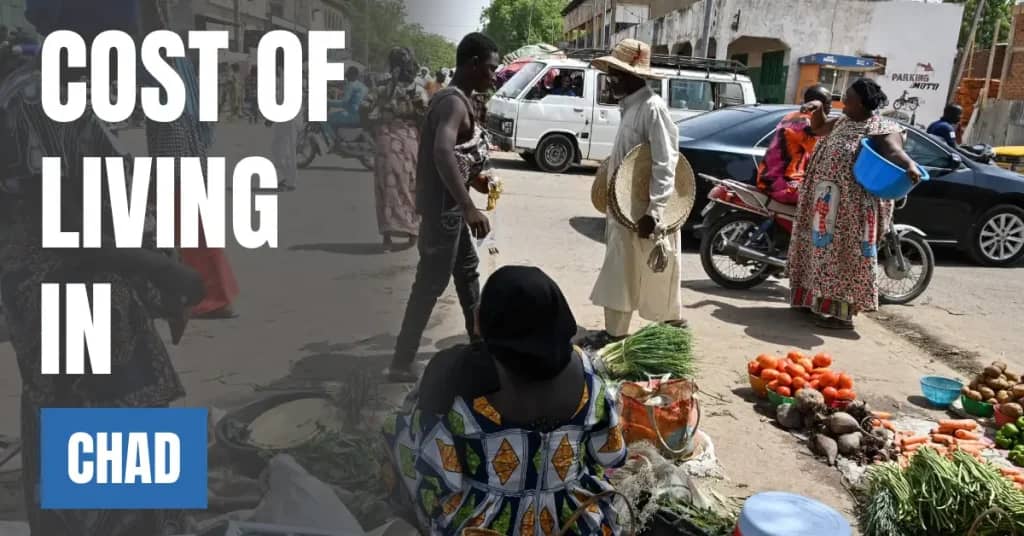
Cost of Living in Chad 2026: Rent, Food, Salaries and Monthly Expenses
The cost of living in Chad in 2026 depends heavily on where you live, whether you rent locally or require expatriate-standard accommodation, and how much you spend on imported goods and private services. N'Djamena, the capital, generally offers more housing and services than smaller cities, but can also be more expensive for newcomers.
On this pageTable of Content
Chad uses the Central African CFA franc (XAF), which is fixed to the euro at XAF 655.957 per €1. This guide uses XAF as the primary currency and provides estimated monthly budgets for individuals, couples and families.
Reliable consumer price information for Chad is limited. Published estimates differ significantly, especially for rent, utilities and household spending. The figures below should therefore be treated as planning estimates, not guaranteed prices or official national averages.
Cost of Living in Chad at a Glance
A single person renting in Chad may plan approximately XAF 250,000 to 600,000 per month for a modest to moderate lifestyle, including rent. Expatriate-standard housing, dependable electricity and private services can increase this substantially.
| Expense | Estimated Cost (XAF) | Period or Basis |
|---|---|---|
| Single person, excluding rent | 150,000–350,000 | Monthly |
| Single person, including rent | 250,000–600,000 | Monthly |
| Couple, including rent | 400,000–850,000 | Monthly |
| Family of four, including rent | 650,000–1,400,000 | Monthly, excluding private school tuition |
| Modest one-bedroom accommodation | 100,000–250,000 | Monthly rent |
| Higher-standard accommodation | 250,000–600,000+ | Monthly rent |
| Single-person groceries | 70,000–150,000 | Monthly |
| Utilities and household energy | 25,000–90,000+ | Monthly |
| Internet and mobile | 15,000–50,000+ | Monthly |
| Local transportation | 15,000–60,000 | Monthly |
Important: These are illustrative household planning ranges assembled from available cost databases and the expenses discussed in this guide. They are not statistically representative 2026 prices. Actual quotations can fall outside these ranges, particularly for secure or furnished accommodation, generator fuel, international schooling and employer-supported expatriate housing.
For context, Livingcost estimated approximately US$524 per month including rent for one person in N'Djamena in June 2026, while CityCost's October 2026 estimate was approximately US$1,079. The difference illustrates how strongly calculation methods, accommodation assumptions and data quality affect published figures.
How Much Does It Cost to Live in Chad Per Month?
A single renter planning an ordinary urban lifestyle may use XAF 250,000 to 600,000 per month including accommodation as an initial budgeting range. A household seeking higher-standard housing, air conditioning, frequent private transport or imported groceries should budget more.
Monthly expenses generally include:
- Rent and any building or security charges.
- Electricity, cooking fuel, water and possible generator costs.
- Groceries, drinking water and household supplies.
- Mobile data, internet and communications.
- Taxis, shared transport or private vehicle expenses.
- Healthcare, medication and insurance.
- Dining, clothing, household maintenance and unexpected costs.
Living costs excluding rent should not be confused with total monthly spending. A person living with relatives may have much lower housing costs than a newcomer renting independently, while employees receiving housing and transport allowances may have substantially different out-of-pocket expenses.
Housing and Rent Prices in Chad
Rent is one of the most important variables in Chad's cost of living. Accommodation in N'Djamena varies from basic locally rented rooms and apartments to larger furnished homes with security arrangements, reliable water storage and backup electricity.
How Much Is Rent in Chad?
A preliminary budget of XAF 100,000 to 250,000 per month may be useful when searching for a modest one-bedroom rental, but verified current listings should determine the actual budget. Higher-standard properties can cost XAF 250,000 to 600,000 per month or more.
| Accommodation Type | Illustrative Monthly Budget |
|---|---|
| Basic room or shared accommodation | XAF 40,000–100,000 |
| Modest one-bedroom accommodation | XAF 100,000–250,000 |
| Two- or three-bedroom local apartment | XAF 180,000–450,000 |
| Furnished or higher-standard accommodation | XAF 250,000–600,000+ |
These ranges are suggested search budgets, not verified asking-rent averages. In smaller towns, basic accommodation may be cheaper, but suitable furnished rentals and dependable utilities can be harder to find.
Additional Housing Expenses
Tenants should check whether the quoted rent includes electricity, water, waste collection, security, air conditioning and maintenance. Confirm the required deposit, any advance rent and who pays for repairs before signing a lease.
Reliable electricity and water can matter more than the advertised apartment size. Backup power, water tanks, pumps, filtration and maintenance may turn an apparently inexpensive rental into a costly one.
Property buyers should independently verify ownership documentation, land rights, title registration, permitted use and any transaction costs with a qualified local professional.
Food and Grocery Costs in Chad
Local staples and seasonal produce can help control grocery spending. However, imported packaged food, specialist ingredients and refrigerated products may cost considerably more, particularly where supply and transport are difficult.
A practical starting allowance is XAF 70,000 to 150,000 per month for one adult purchasing mainly local foods and preparing meals at home. Larger households need higher allowances, depending on dietary preferences and household size.
| Grocery Item | Indicative Price Range (XAF) |
|---|---|
| Rice, 1 kg | 750–1,500 |
| Bread, one loaf | 450–1,000 |
| Milk, 1 litre | 700–1,300 |
| Eggs, 12 | 900–1,700 |
| Chicken, 1 kg | 2,000–4,000 |
| Beef, 1 kg | 2,300–4,500 |
| Tomatoes, 1 kg | 550–1,200 |
| Bottled water, 1.5 litres | 450–850 |
These indicative figures broadly adapt the older consumer-price ranges on the existing Visaboards Chad guide into XAF, with rounding. They have not been independently verified as October 2026 market prices and should not be presented as a live grocery-price survey.
Food prices can vary by season, market, import availability and location. The World Bank's April 2026 Chad economic update reported that lower food and transport prices helped bring inflation below zero in 2025. This does not mean that food is universally inexpensive or that all households experienced the same reductions.
Restaurant and Eating Out Costs
Eating at basic local restaurants can be comparatively inexpensive, while international restaurants and hotels in N'Djamena may charge significantly more.
| Meal or Drink | Indicative Price (XAF) |
|---|---|
| Simple local meal | 1,200–3,000 |
| Casual restaurant meal | 3,000–7,000 |
| Mid-range meal for two | 8,000–20,000+ |
| Coffee or soft drink | 500–1,700 |
These are broad spending allowances informed by published cost estimates, not confirmed current menu prices. An individual eating out occasionally might set aside XAF 15,000 to 50,000 monthly, while frequent restaurant dining requires a larger allowance.
Utilities: Electricity, Water and Cooking Gas
Basic household utility spending may be around XAF 25,000 to 90,000 per month, but households using substantial air conditioning, generators or private water delivery could spend much more.
Chad's hot climate can make cooling a meaningful household expense. Electricity availability and service reliability also affect the true cost of accommodation.
| Expense | Illustrative Monthly Allowance |
|---|---|
| Electricity | XAF 15,000–50,000+ |
| Water | XAF 3,000–15,000+ |
| Cooking gas or alternative cooking fuel | XAF 5,000–20,000 |
| Additional backup power | Variable |
These figures are budget estimates rather than verified utility tariffs. Before renting, ask about power outages, meter arrangements, generator fuel, water storage and any shared maintenance charges.
Internet and Mobile Phone Costs
Budget approximately XAF 15,000 to 50,000 or more per month for communications, depending on mobile data use, fixed internet availability and whether multiple household members need separate connections.
Connection quality can vary considerably by neighborhood and operator. A cheaper plan may not be practical for remote work, video meetings or large downloads if speeds are inconsistent.
Residents who depend on a stable connection should check local network coverage at the exact property, obtain current plan quotations from operators and consider the cost of a secondary mobile data connection.
Transportation Costs in Chad
Public and shared transport can cost less than owning a car, but transport in Chad is not governed by one standardized nationwide fare or monthly-pass system. In N'Djamena and other urban areas, options may include shared taxis, motorcycle taxis and privately negotiated journeys.
Someone using basic local transportation might allocate XAF 15,000 to 60,000 monthly, but commuting distance, availability, safety considerations and private vehicle use can raise costs.
Local Transportation
Confirm the fare before a journey, particularly where meters are not used. Do not assume that a monthly transport pass mentioned in generic international cost databases is actually available in your city.
Private Car Expenses
Vehicle owners should budget for fuel, maintenance, tyres, insurance, registration and unexpected repairs. Road conditions, seasonal flooding, travel distances and replacement-part availability may affect running costs.
Travel between cities can involve different costs and conditions from daily commuting inside N'Djamena. Check current travel advisories and local route conditions before making long-distance plans.
Healthcare Costs and Medical Insurance in Chad
Healthcare in Chad is not universally free for every resident or foreign national. Out-of-pocket medical spending, medicines, laboratory tests and transport to a suitable facility can be important financial considerations.
Chad has introduced a legal framework for universal health coverage, including a non-contributory component aimed at vulnerable populations. However, the existence of this framework should not be interpreted as automatic free coverage for all residents or expatriates.
Public facilities may cost less than private clinics, but availability of personnel, equipment, medicines and specialist care varies substantially. Private facilities may offer different service levels at higher prices.
For preliminary planning, an ordinary consultation may cost several thousand CFA francs, with tests, medicines, hospitalization and specialist care charged separately. A reliable nationwide 2026 fee schedule was not established.
Foreign residents should confirm whether their employer provides medical cover, what the insurance policy excludes, and whether evacuation or treatment outside Chad is included. Medical evacuation can be a major unplanned expense.
Education and Childcare Costs in Chad
Education costs vary considerably between public schools, private local schools and international education. Families should distinguish tuition from registration fees, uniforms, books, transportation, meals and examination costs.
Public Schools
Public schooling may involve lower direct fees, but parents can still face costs for materials, uniforms, school-related contributions or transport. Accessibility and educational resources differ by location.
Private and International Schools
Private schools may provide alternative curricula or facilities, while international education is concentrated mainly in N'Djamena. Fees vary by institution and grade level.
The existing Visaboards guide gives a broad older range of US$300 to US$2,000 annually for private schooling. This range is not a verified 2026 fee schedule and should not be used as a quotation for international schools.
Parents should obtain a current fee breakdown directly from each school, including annual charges and compulsory extras.
Childcare
Childcare spending depends on whether families use relatives, individual caregivers, nurseries or private childcare facilities. No reliable national 2026 childcare-fee average was established, so these expenses should be quoted locally rather than assigned a misleading fixed amount.
Salaries and the Minimum Wage in Chad
Local salaries often provide a very different picture of affordability from budgets designed for foreign professionals. Employment sector, qualifications, formal employment status, location and employer benefits all influence what a worker receives.
What Is the Minimum Wage in Chad in 2026?
The commonly reported minimum wage is approximately XAF 60,000 per month. A July 2025 legal overview cites a guaranteed minimum wage of XAF 355 per hour for a standard 39-hour working week, referring to a 2011 decree.
At 39 hours a week, XAF 355 per hour is approximately XAF 59,995 over a 169-hour month. This is consistent with the commonly reported XAF 60,000 monthly figure.
However, an independently confirmed 2026 government decree establishing whether this remains the latest enforceable rate was not located. Employers and employees should verify the applicable minimum, occupational classification and sector-specific rules with the competent Chadian labour authority.
A monthly minimum wage around XAF 60,000 is below the independent-renter budgets in this article. A worker earning this amount may need shared or family accommodation, a second household income or significant reductions in discretionary spending.
What Is the Average Salary in Chad?
A reliable, current national average take-home salary was not established. Crowdsourced city estimates differ sharply: Livingcost reported approximately US$129 after tax for N'Djamena in June 2026, while CityCost reported approximately US$347 in October 2026.
These figures use different models and should not be presented as official payroll statistics. They also may not adequately represent informal employment, agricultural workers or workers receiving employer-funded accommodation.
What Salary Is Needed to Live Comfortably in Chad?
A single person renting independently in an urban area might initially target XAF 400,000 to 700,000 in monthly take-home resources for greater flexibility and savings. This is a lifestyle-planning estimate, not an official salary standard.
People receiving housing, transport and medical benefits may require much less cash income. Families paying for private schooling, secure housing and private transport may need substantially more.
Taxes and Their Effect on Living Costs
Employment income can be subject to personal income taxation and applicable payroll contributions. Therefore, gross salary is not the same as the money available for rent, groceries and other household expenses.
According to PwC's Chad tax summary, tax residents may be subject to tax on worldwide income, while nonresidents can be subject to taxation on income arising from activities in Chad. The cited summary was last reviewed in August 2024, so its details should not be treated as a fully verified 2026 tax guide.
Before accepting a job offer, confirm contractual gross pay, applicable deductions, net salary, benefits and whether the employer bears any housing or insurance costs. Self-employed residents and cross-border workers should seek locally qualified tax advice.
Sample Monthly Budgets for Chad in 2026
The following examples show how practical budgets can be constructed. All figures are in XAF per month and include rent. They are illustrative scenarios, not nationwide observed expenditure averages.
Budget-Conscious Single Person
This example assumes basic shared or inexpensive accommodation, home cooking and limited discretionary spending.
| Expense | Monthly Cost (XAF) |
|---|---|
| Rent | 70,000 |
| Utilities and cooking fuel | 20,000 |
| Groceries | 65,000 |
| Transportation | 15,000 |
| Internet and mobile | 15,000 |
| Healthcare allowance | 10,000 |
| Dining and miscellaneous | 20,000 |
| Total Including Rent | 215,000 |
Moderate Single Person
This example assumes independent accommodation, regular internet use and a larger allowance for transport and personal expenses.
| Expense | Monthly Cost (XAF) |
|---|---|
| Rent | 180,000 |
| Utilities and cooking fuel | 45,000 |
| Groceries | 110,000 |
| Transportation | 35,000 |
| Internet and mobile | 30,000 |
| Healthcare or insurance allowance | 25,000 |
| Dining and leisure | 45,000 |
| Total Including Rent | 470,000 |
Couple's Monthly Budget
This example assumes two adults sharing an apartment, buying most groceries locally and using a mixture of local and private transportation.
| Expense | Monthly Cost (XAF) |
|---|---|
| Rent | 250,000 |
| Utilities and cooking fuel | 60,000 |
| Groceries | 170,000 |
| Transportation | 55,000 |
| Internet and mobile | 35,000 |
| Healthcare or insurance allowance | 45,000 |
| Dining and miscellaneous | 65,000 |
| Total Including Rent | 680,000 |
Family of Four Monthly Budget
This example assumes two adults and two children renting a family apartment. It includes a general household and healthcare allowance but excludes private or international school tuition.
| Expense | Monthly Cost (XAF) |
|---|---|
| Rent | 350,000 |
| Utilities and cooking fuel | 85,000 |
| Groceries | 270,000 |
| Transportation | 95,000 |
| Internet and mobile | 45,000 |
| Healthcare or insurance allowance | 75,000 |
| Household supplies, dining and leisure | 100,000 |
| Total Including Rent | 1,020,000 |
These examples do not include immigration application fees, international flights, substantial emergency savings, major medical treatment, purchasing a vehicle or school tuition. Families requiring international schools or higher-standard accommodation should prepare a separate, larger budget.
Cost of Living Differences Across Chad
N'Djamena generally has the widest selection of urban accommodation, employers, international services and imported goods. Smaller cities may offer cheaper local housing but fewer choices for specialist healthcare, international schooling and high-standard rentals.
N'Djamena
The capital is an important reference point for expatriate budgets because it has more international employers, private services and specialized accommodation. Higher housing standards, transport preferences and imported products can substantially increase spending.
Moundou
Moundou may provide less expensive basic local housing than prime areas of the capital, but there is insufficient reliable current rental data to assign a representative percentage discount. Verify accommodation and service availability before relocating.
Abéché and Eastern Chad
Costs in Abéché and eastern areas depend on market access, transport logistics, availability of housing and local conditions. Remote locations can have higher prices for supplies that must travel long distances.
Sarh and Other Towns
Local accommodation and food may be less expensive in some towns, but access to specialist services can be more limited. Compare actual quotations rather than assuming every location outside N'Djamena is cheaper in every spending category.
How Does Chad Compare With Nearby Countries?
Chad shares the Central African CFA franc with Cameroon and the Central African Republic. This removes currency conversion differences when comparing XAF-denominated costs, but it does not mean prices or wages are the same.
Some published cost databases suggest that N'Djamena can be costly relative to local earnings, particularly for households seeking internationally familiar living standards. However, the available datasets are too inconsistent to make a dependable nationwide claim that Chad is always cheaper or more expensive than Cameroon, Niger or Sudan.
Cameroon has larger urban service markets in cities such as Douala and Yaoundé, while Chad's landlocked location and transport requirements can affect imported goods. Niger has its own housing and food-market conditions. Sudan's price comparisons require particular caution because conflict and supply disruptions can make older estimates misleading.
For an actual relocation, compare rent quotations, utility reliability, school fees and transport costs in the specific cities rather than relying solely on country-level rankings.
Hidden Costs New Residents Should Consider
- Housing deposits and advance rent: Upfront requirements may be substantial even when monthly rent appears affordable.
- Generators and backup power: Fuel, servicing and electricity reliability may affect the real cost of housing.
- Water and sanitation: Bottled drinking water, storage tanks, filtration and delivery can add expenses.
- Health insurance and medical evacuation: Hospitalization or specialist treatment can create costs beyond routine consultation fees.
- Imported products: Special dietary items, electronics, household goods and replacement parts may carry high logistics costs.
- Private security and transportation: Some employers or households may require additional arrangements depending on local conditions.
- School expenses: Registration charges, books, uniforms, transport and international tuition may materially alter family budgets.
- Travel and administration: Visas, residence documents, work authorization, flights and document processing may involve separate fees.
Newcomers should also maintain an emergency reserve for unexpected healthcare expenses, travel changes and urgent household repairs.
Cost of Living Versus Residency Financial Requirements
Monthly living expenses are not the same as legal requirements for entering, working or residing in Chad. A household's estimated spending budget does not establish eligibility for a visa, work authorization or residence permit.
Requirements can depend on nationality, purpose of stay, employment arrangement, sponsoring organization and the relevant immigration category. No universal 2026 minimum bank-balance requirement applicable to all foreign residents was established during this review.
Applicants should verify current documentation, fees, financial evidence and sponsorship requirements with the appropriate Chadian diplomatic or immigration authority before applying.
Is Chad Affordable for Expats and New Residents?
Chad can be affordable for people with suitable local accommodation or employer-funded benefits, but it is not automatically inexpensive for every expatriate. Dependable utilities, higher-standard housing, imported groceries, specialist healthcare and private transportation can raise monthly costs considerably.
The country's 2025 inflation picture also needs context. The World Bank reported a decline in consumer prices during 2025, helped by lower food and transport prices. The IMF has indicated that inflation could return to positive territory in 2026. These developments do not eliminate the affordability challenges associated with limited incomes or uneven access to basic services.
Before relocating, obtain actual housing quotations, confirm the total employment package, check medical and school coverage, and build an emergency reserve. Where possible, verify expenses with someone currently living in the intended neighborhood.
Conclusion
The cost of living in Chad in 2026 varies widely according to accommodation, household size, location and expectations. An initial planning range of XAF 250,000 to 600,000 per month including rent may help an independent single renter, while families and residents seeking higher-standard services will often need more.
Published consumer-price figures for Chad are limited and sometimes contradictory, so exact-looking online averages should be used cautiously. The most reliable relocation budget will combine current rental offers, local grocery prices, transport arrangements, healthcare coverage and an allowance for electricity and other infrastructure-related costs.
Sources and Methodology
This article was reviewed on 20 October 2026. It compares official monetary and economic information, legal and tax references, commercial cost-of-living databases and the previous Visaboards article.
The Central African CFA franc is the primary currency. The official euro conversion rate is taken from the Bank of Central African States. Market prices are estimates and can change with seasonality, availability, neighborhood and household requirements.
Livingcost and CityCost provide notably different results for N'Djamena. These figures are therefore used to illustrate possible spending levels and data uncertainty, rather than being combined into an artificial official average. Some category ranges and sample budgets are editorial planning scenarios. They are not verified household surveys or binding commercial quotations.
Sources consulted:
- Bank of Central African States (BEAC): Official Currency and Exchange Rates
- World Bank: Chad Country Overview
- World Bank: Chad Macro Poverty Outlook, April 2026
- World Bank Data: Chad
- International Monetary Fund: Chad Country Information
- IMF: Chad Economic and Inflation Update, December 2025
- Livingcost: Cost of Living in N'Djamena, June 2026
- CityCost: N'Djamena Living Costs, October 2026
- CityCost: Chad Living Costs, October 2026
- Thomas D Avocats: Employment Regulation in Chad, July 2025
- PwC: Chad Individual Income Tax Overview
- World Health Organization: Universal Health Coverage
- Visaboards: Previous Cost of Living in Chad Guide, March 2026
Frequently Asked Questions
How much does it cost to live in Chad per month?
A single person renting independently may use XAF 250,000 to 600,000 per month as an initial planning range including rent. Actual spending depends on city, accommodation, transport, groceries and healthcare. Someone sharing housing may spend less, while a person requiring furnished accommodation, reliable backup electricity and international-standard services may spend considerably more.
Is Chad expensive to live in?
Chad is not necessarily expensive for someone buying local food and using basic accommodation, but costs can be high relative to local wages. In N'Djamena, higher-standard housing, imported products, dependable utilities and private healthcare can increase expenses significantly. Affordability should be assessed against a person's actual income and benefits rather than international cost rankings alone.
How much is rent in N'Djamena?
A preliminary budget of XAF 100,000 to 250,000 per month may help someone search for modest one-bedroom accommodation. Better-equipped, furnished or larger properties can cost considerably more. These are illustrative search ranges, not verified market averages. Before signing a lease, confirm deposits, electricity, water supply, security costs and maintenance responsibilities.
What is the minimum wage in Chad in 2026?
The commonly cited minimum wage is approximately XAF 60,000 monthly. A July 2025 legal reference cites XAF 355 per hour for a 39-hour working week, based on an earlier decree. A newer official 2026 wage decree was not independently confirmed during this review. Workers and employers should verify applicable current rates and occupational classifications with the competent labour authority.
What salary is enough to live comfortably in Chad?
A single renter may initially plan for XAF 400,000 to 700,000 monthly in take-home resources for a more flexible urban lifestyle. This is a budgeting benchmark, not an official salary requirement. Housing allowances, healthcare cover and employer-funded transportation can reduce personal expenses, while family accommodation, international schooling and private services can raise them substantially.
Is healthcare free in Chad?
No, healthcare should not be assumed to be universally free for every resident or expatriate. Chad has a universal health coverage framework, including provisions intended to assist vulnerable populations, but eligibility and actual service access must be confirmed. Residents may face costs for consultations, medicines, testing and hospitalization. Foreign residents should consider suitable medical insurance and evacuation coverage.
How much does food cost in Chad?
A single adult preparing most meals at home might initially allocate XAF 70,000 to 150,000 per month for groceries. Local grains and seasonal vegetables can help lower spending, while imported foods may cost more. Prices vary between markets, regions and seasons. These figures are household budgeting estimates rather than an independently verified nationwide grocery survey.
Is public transportation free in Chad?
No general nationwide free public transportation system was verified. Urban transport may involve shared taxis, motorcycle taxis and individually negotiated journeys. Fares depend on location, distance and transport type, so passengers should confirm the charge beforehand. A monthly budget of XAF 15,000 to 60,000 may be a useful starting point for basic local travel.
How much does a family of four need per month in Chad?
A family of four may initially plan approximately XAF 650,000 to 1,400,000 monthly including rent but excluding private school tuition. The sample family budget in this guide totals XAF 1,020,000 and covers housing, utilities, groceries, transportation, communications, healthcare allowances and miscellaneous spending. International education or higher-standard housing can increase the total considerably.
Is N'Djamena more expensive than other cities in Chad?
N'Djamena often has higher costs for accommodation and internationally oriented services than smaller towns, although individual expenses vary. Moundou, Sarh and Abéché may offer less expensive basic local housing, but specialized services or imported products can be harder to access. Reliable comparable city-level data is limited, so actual quotations are more useful than fixed percentage comparisons.
Is Chad cheaper than Cameroon?
There is insufficient consistent current evidence to conclude that Chad is always cheaper or more expensive than Cameroon. Both countries use the Central African CFA franc, but housing markets, transport networks, wages and imported-goods prices differ. Comparing N'Djamena with a specific Cameroonian city, using matched housing and lifestyle requirements, provides a more useful assessment than a national average.
How much money is required to obtain residency in Chad?
No single universal minimum bank balance for all foreign residents was independently established for 2026. Financial evidence and other documentation may depend on nationality, immigration category, employment and sponsorship. A monthly living-cost estimate does not prove immigration eligibility. Applicants should confirm current requirements with the relevant Chadian embassy, consulate or immigration authority before applying.
Join the conversation
Have thoughts on this topic? Share them with others.
Ask questions, share experience, and learn from the Visaboards Community.