
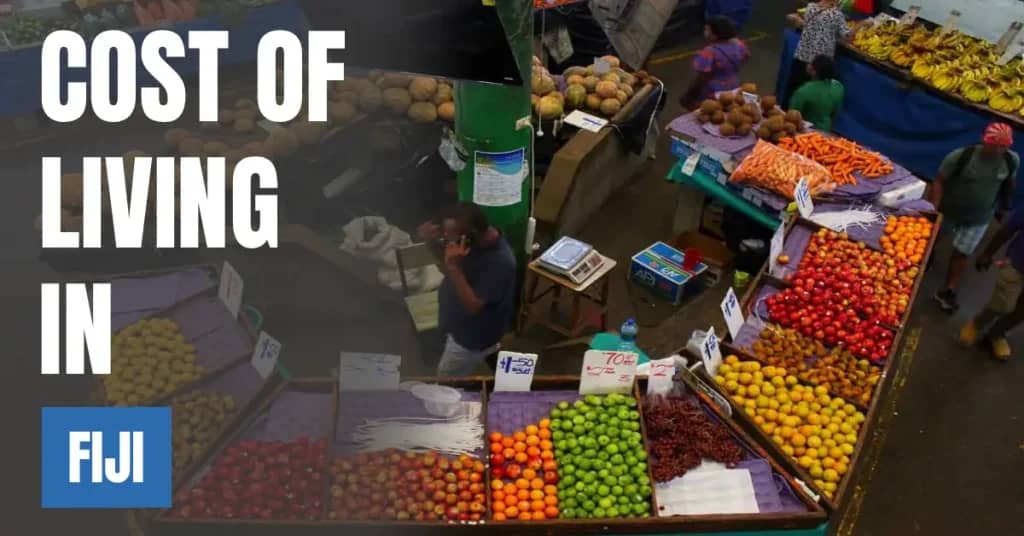
Cost of Living in Fiji 2026: Rent, Salaries and Monthly Expenses
The cost of living in Fiji in 2026 depends heavily on where you live, your housing arrangements and how much you spend on imported products. Fiji offers affordable local markets and public transportation, but renting a modern apartment in Suva or Nadi can be expensive relative to local salaries.
On this pageTable of Content
A budget-conscious single person may need approximately FJ$1,400 to FJ$2,000 per month including modest rent, while someone seeking a more comfortable lifestyle may spend FJ$2,400 to FJ$3,500 or more. A family of four renting a larger home may need FJ$4,000 to FJ$7,000 monthly, excluding expensive international-school fees. These are planning estimates rather than official national averages.
Fiji uses the Fijian dollar (FJD), shown throughout this guide as FJ$. All monthly estimates are expressed in local currency unless otherwise stated.
This guide examines accommodation, groceries, utilities, transport, healthcare, education, salaries, taxes and immigration-related expenses using information reviewed in October 2026.
Cost of Living in Fiji at a Glance
Housing is generally the largest monthly expense for people relocating to Fiji. Rent can vary substantially between central apartments, suburban properties and accommodation near popular tourist destinations.
| Expense | Estimated Cost in FJD | Notes |
|---|---|---|
| Budget-conscious single person | FJ$1,400 to FJ$2,000 monthly | Including modest rent |
| Moderate single person | FJ$2,400 to FJ$3,500 monthly | Including private apartment rent |
| Couple | FJ$2,800 to FJ$4,500 monthly | Including shared accommodation |
| Family of four | FJ$4,000 to FJ$7,000 monthly | Including rent, excluding costly international schooling |
| One-bedroom apartment outside city centre | FJ$400 to FJ$1,800 monthly | Observed national market range |
| One-bedroom apartment in city centre | FJ$1,200 to FJ$2,500 monthly | Observed national market range |
| Three-bedroom apartment outside city centre | FJ$1,500 to FJ$3,500 monthly | Observed national market range |
| Groceries for one person | FJ$350 to FJ$650 monthly | Estimated household planning allowance |
| Electricity and water | FJ$90 to FJ$250 monthly | Higher with heavy air-conditioning use |
| Internet and mobile | FJ$60 to FJ$160 monthly | Depends on plan and data requirements |
| Local restaurant meal | FJ$10 to FJ$20 | Varies by area |
| National minimum wage | FJ$5 per hour | Effective since 1 April 2025 |
The rental ranges reflect crowdsourced market observations rather than guaranteed current listings. Other monthly figures are illustrative planning allowances based on available prices and assumed consumption. Costs can be much higher for beachfront properties, imported products, international schooling and frequent travel between islands.
How Much Does It Cost to Live in Fiji Per Month?
A single adult can plan around FJ$1,400 to FJ$3,500 monthly including rent, depending on accommodation and lifestyle. A couple may spend FJ$2,800 to FJ$4,500, while a family of four may require FJ$4,000 to FJ$7,000 before international-school costs.
Excluding rent, a practical monthly allowance might be FJ$700 to FJ$1,300 for a single adult and FJ$1,800 to FJ$3,000 for a family of four. These estimates cover ordinary food, household utilities, telecommunications, transport, basic healthcare allowances and modest personal spending.
They do not include major medical treatment, private school tuition, significant vehicle payments, international flights or immigration applications.
Rent can transform the budget. For example, moving from shared accommodation costing FJ$500 to a central apartment costing FJ$1,800 adds FJ$1,300 to monthly expenditure without changing other living expenses.
Housing and Rent Prices in Fiji
Rent is often Fiji's biggest affordability challenge, particularly for households depending on local earnings. Modern apartments in desirable locations may cost considerably more than older housing farther from commercial centres.
How Much Is Rent in Fiji?
June 2026 country-level data from Numbeo indicated average reported rents of approximately FJ$804 for a one-bedroom apartment outside central areas and FJ$1,796 in central locations. Three-bedroom properties averaged approximately FJ$1,887 outside central areas and FJ$4,438 centrally.
These averages are not representative of every community. The underlying contributor sample is limited, and individual advertised properties may be cheaper or significantly more expensive.
| Property Type | Reported Average Monthly Rent | Reported Range |
|---|---|---|
| One-bedroom, central | FJ$1,796 | FJ$1,200 to FJ$2,500 |
| One-bedroom, outside centre | FJ$804 | FJ$400 to FJ$1,800 |
| Three-bedroom, central | FJ$4,438 | FJ$2,500 to FJ$7,180 |
| Three-bedroom, outside centre | FJ$1,887 | FJ$1,500 to FJ$3,500 |
Source: Numbeo Fiji country-level prices, June 2026.
Renting in Suva, Nadi and Other Areas
Suva has demand from government offices, businesses, professionals and students. Nadi attracts workers and international residents connected to tourism and aviation. Properties near employment centres and established expatriate neighbourhoods can command substantial premiums.
Numbeo's June 2026 Nadi figures placed one-bedroom central apartment rent at approximately FJ$2,125 and accommodation outside the centre at approximately FJ$1,175. These observations suggest that Nadi should not automatically be regarded as a cheap alternative to Suva.
Lautoka, Nausori, Labasa and residential communities outside major commercial areas may offer more affordable options, although comparable verified rental samples are limited. Commuting costs, transport availability and the condition of the property should be assessed alongside advertised rent.
Other Housing Expenses
- Rental deposits and possible advance payments.
- Electricity and water connection arrangements.
- Furniture, appliances and household equipment.
- Air-conditioning, fans and ventilation.
- Security features and property maintenance.
- Internet installation and coverage.
- Flood exposure, drainage and storm resilience.
Ask whether rent includes utilities, maintenance, furnishings and internet. A lower advertised rent may become less attractive if substantial repairs or transport expenses are necessary.
Can Foreigners Buy Property in Fiji?
Foreign property ownership is subject to legal restrictions, including rules affecting different land categories and certain residential land purchases. Foreign buyers should not assume that any available property or vacant plot can be purchased without restrictions.
Independent legal advice and verification of title, land classification, planning requirements and applicable approvals are essential before committing funds. A property purchase should also be evaluated separately from immigration eligibility.
Food and Grocery Costs in Fiji
A single adult may budget approximately FJ$350 to FJ$650 monthly for groceries, while a family of four may allocate FJ$900 to FJ$1,600 depending on diet, shopping habits and imported-food consumption.
Local markets can provide good value for seasonal vegetables, fruit and other locally available food. Imported packaged products and specialist dietary items can be more expensive because of shipping, distribution costs and limited competition.
Typical Grocery Prices
| Grocery Item | Approximate Price |
|---|---|
| Milk, 1 litre | FJ$2.80 to FJ$3.20 |
| White bread, approximately 500 g | FJ$1.00 to FJ$3.20 |
| White rice, 1 kg | FJ$2.00 to FJ$4.90 |
| Eggs, 12 | FJ$4.80 to FJ$9.00 |
| Apples, 1 kg | FJ$4.00 to FJ$8.00 |
| Tomatoes, 1 kg | FJ$4.00 to FJ$8.00 |
| Potatoes, 1 kg | FJ$2.00 to FJ$5.00 |
| Bottled water, 1.5 litres | FJ$1.50 to FJ$7.50 |
These are rounded indicative prices based on reported Fiji, Suva and Nadi market observations from June 2026. Actual shop prices vary, and the available samples do not establish a national retail price survey.
Source: Numbeo Fiji and Numbeo Nadi.
How to Reduce Grocery Spending
- Compare local municipal market prices with supermarket prices.
- Choose seasonal produce instead of relying heavily on imported food.
- Buy staple foods in practical quantities to avoid waste.
- Compare unit prices, especially on imported packaged items.
- Allow extra room in the budget for supply disruptions and price changes.
Restaurants and Eating Out in Fiji
An inexpensive restaurant meal may cost around FJ$10 to FJ$20, while dinner for two at a mid-range restaurant can cost approximately FJ$50 to FJ$150, depending on location and menu.
| Item | Indicative Price |
|---|---|
| Inexpensive restaurant meal | FJ$10 to FJ$20 |
| Mid-range meal for two | FJ$50 to FJ$150 |
| Fast-food combo | FJ$14 to FJ$20 |
| Cappuccino | FJ$5 to FJ$9 |
| Soft drink | FJ$2.50 to FJ$5 |
Source: Numbeo Suva, June 2026.
Local food outlets and takeaway meals can help control costs. Resort restaurants, waterfront venues and premium international dining can be considerably more expensive.
Someone eating out several times a week should budget separately for dining rather than treating all meals as part of the grocery allowance.
Utility Costs in Fiji
A household may reasonably set aside FJ$90 to FJ$250 monthly for electricity and water, with potentially higher bills for large households, electric appliances and extensive air-conditioning.
Electricity Prices and the 2026 Fuel Surcharge
Electricity costs changed materially in 2026. Following revisions to residential tariffs, an interim fuel surcharge of 5.91 cents per kilowatt-hour was introduced from 26 May 2026. At that time, the reported revised domestic rate was approximately 39.92 cents per kWh for affected residential customers.
At that indicative rate, consuming 200 kWh would represent approximately FJ$79.84 before considering any applicable additional charges or subsidy adjustments.
The government also supported eligible low-income households through electricity subsidies. Subsidy eligibility is not automatic for every resident, and households should check current arrangements with their electricity provider.
These figures describe the 2026 tariff changes and are not a substitute for a current customer-specific bill quotation.
Sources: Energy Fiji Limited and Fiji Ministry of Finance.
Water and Other Utilities
Water bills depend on the property, metering, occupancy and usage. Tenants should confirm whether water charges are included in rent.
Additional expenses may arise from bottled drinking water, water storage systems, gas cylinders, waste collection, backup power equipment and maintenance following severe weather.
Internet and Mobile Phone Costs in Fiji
For planning purposes, a household can allow FJ$60 to FJ$160 monthly for combined internet and mobile services, although prices vary significantly according to data allowance, speed, coverage and contract conditions.
Vodafone Fiji and Digicel Fiji are important mobile service providers. Internet options differ between urban neighbourhoods, smaller towns and more remote islands.
People working remotely should verify actual connection quality at the proposed address rather than relying only on advertised national coverage.
Consider upload speeds, data restrictions, service interruptions, electricity reliability and the cost of a backup mobile connection. Remote work involving video calls, large uploads or cloud applications may require a more expensive connection.
The internet budget shown here is a planning allowance, not a verified October 2026 quotation from an operator.
Transportation Costs in Fiji
Public buses are generally one of the most affordable ways to travel in Fiji, particularly for regular journeys on established routes. However, fares depend on distance and route, and public transportation is not universally free.
Bus Fares and the October 2026 Subsidy
In October 2026, Fiji announced a temporary 22.5% regulated bus fare adjustment effective from 9 October. The government agreed to absorb the increase, allowing paying passengers on covered routes to continue paying their existing fares.
The temporary arrangement covers regulated routes in Viti Levu, Vanua Levu and Taveuni and was announced for a six-month period ending 9 April 2027, subject to subsequent policy decisions.
This distinction is important: operators receive support for increased costs, but regular passengers still pay their underlying fares unless separately eligible for fully subsidised transport.
Source: The Fiji Times, 5 October 2026.
Monthly Transportation Budget
| Transport Pattern | Illustrative Monthly Allowance |
|---|---|
| Limited local bus travel | FJ$40 to FJ$80 |
| Regular bus commuting | FJ$80 to FJ$150 |
| Mixed buses and occasional taxis | FJ$120 to FJ$250 |
| Private vehicle transport | FJ$250 to FJ$700+ |
These are estimated spending allowances, not official fares or vehicle ownership averages. Longer commutes, insurance, repairs, parking and vehicle financing can substantially increase costs.
Inter-Island Travel
Ferries, domestic flights and boat services are important for travel between islands. These expenses can be significant for residents who need regular medical appointments, family visits, business travel or access to services outside their home island.
Inter-island transport is not included in the ordinary sample budgets unless specifically mentioned.
Healthcare Costs in Fiji
Fiji has a public healthcare system alongside private clinics and hospitals. Healthcare is not universally free for every visitor or foreign resident, and access, eligibility and charges can depend on immigration status, treatment category and facility.
Public facilities provide an important foundation for medical care, but specialist availability and services can differ between major urban hospitals and remote islands.
Public and Private Healthcare
Eligible residents may receive subsidised public healthcare, while private providers generally charge consultation, investigation and treatment fees. Foreign residents should check their specific eligibility before assuming they qualify for the same public benefits as citizens.
For budgeting, a single adult might reserve FJ$50 to FJ$150 monthly for routine medical costs or insurance contributions. This is an illustrative allowance, not a quoted insurance premium or guaranteed consultation cost.
Families, older residents and people with ongoing treatment needs may require substantially higher budgets.
Medical Report Fees in 2026
Fiji's Ministry of Health reintroduced certain medical report fees effective 1 January 2026. The announced charges included FJ$56.25 for employment medical reports and FJ$112.50 for overseas-treatment reports.
These are specific administrative medical-report charges, not standard prices for every doctor's appointment or hospital visit.
Source: Fiji Ministry of Health, February 2026.
Healthcare Planning for Expatriates
- Confirm whether your visa or residence status provides access to subsidised services.
- Compare private insurance policies, exclusions and waiting periods.
- Check emergency treatment arrangements near your home.
- Consider medical evacuation or overseas referral coverage where appropriate.
- Allow for specialist care and travel when treatment is unavailable locally.
A low-cost lifestyle budget should not be confused with adequate protection against major medical expenses.
Education and Childcare Costs in Fiji
Education costs depend on whether a family uses local schools, private institutions or international schools. The difference can materially affect the total cost of raising children in Fiji.
Public and Government-Supported Education
Fiji provides government-supported education initiatives, including tuition-related grants for school years 1 to 13, textbook support and assistance programmes.
However, public education should not automatically be described as completely cost-free for every family. Uniforms, transport, supplies, meals and other expenses can remain.
Foreign families should confirm admission rules and fee treatment directly with the school and relevant education authorities.
Source: Fiji Ministry of Education Strategic Plan 2023 to 2026.
Private Schools and Childcare
June 2026 crowdsourced country data showed a reported average private preschool fee of approximately FJ$363 per child per month, with observations ranging from FJ$200 to FJ$780.
Reported international primary school tuition averaged approximately FJ$23,416 per child annually, with a broad observed range of FJ$9,000 to FJ$35,000.
At the reported average, international primary school tuition alone would be equivalent to approximately FJ$1,951 per month per child when spread across 12 months.
These figures should be checked against school-specific published fee schedules. They are not verified national averages, and they demonstrate why the cost of international education should be calculated separately from everyday household expenses.
Source: Numbeo Fiji, June 2026.
Salaries and Minimum Wage in Fiji
A comfortable salary in Fiji depends primarily on household size and housing costs. A single renter seeking a moderate lifestyle may aim for approximately FJ$2,400 to FJ$3,500 in monthly take-home resources, while a family may need considerably more.
These figures describe spending needs, not typical salaries or guaranteed employment earnings.
What Is Fiji's Minimum Wage in 2026?
Fiji's national minimum wage is FJ$5 per hour, effective from 1 April 2025 and still reported as the applicable national rate in October 2026. Certain industries have sector-specific wage regulations, so the applicable legal rate should be checked for the particular role.
| Work Calculation | Gross Earnings at FJ$5 Per Hour |
|---|---|
| One hour | FJ$5 |
| 40 hours per week | FJ$200 |
| Average month at 40 hours weekly | Approximately FJ$867 |
| Annual earnings at 40 hours weekly | FJ$10,400 |
These calculations assume consistent paid hours across 52 weeks. Actual earnings depend on employment terms, applicable standard hours, overtime and deductions.
The national minimum wage came under government review in 2026. A review does not itself establish a new statutory wage, so the confirmed FJ$5 rate should not be replaced with an unannounced increase.
Sources: WageIndicator Fiji and Fiji Commerce and Employers Federation, September 2026.
Average Salaries and Affordability
Numbeo's June 2026 country-level data reported an average monthly net salary of approximately FJ$1,954. This is a user-contributed estimate, not an official national earnings statistic.
At that reported income level, central one-bedroom rent averaging approximately FJ$1,796 would consume around 92% of monthly take-home pay before groceries, transport or other expenses.
Even an apartment outside central areas averaging FJ$804 would absorb approximately 41% of that reported salary.
These comparisons illustrate an important affordability issue: Fiji can have relatively inexpensive local services while formal urban rental housing remains difficult to afford on ordinary local earnings.
Taxes and Their Effect on Living Costs
Taxation affects both disposable income and the retail cost of everyday purchases.
Value Added Tax
Fiji reduced its standard VAT rate from 15% to 12.5% effective 1 August 2025. Zero-rated and exempt supplies follow their applicable rules.
Consumers should check whether prices are VAT-inclusive, particularly when comparing service quotations.
Source: Fiji Revenue and Customs Service VAT Guide.
Personal Income Tax
For resident individuals, FRCS lists a zero-income-tax band up to FJ$30,000 of annual chargeable income, with progressive rates applying above that level. Non-residents have a different tax schedule, including taxation from the first dollar of chargeable income.
Tax residency depends on the applicable legal rules and individual circumstances. Foreign workers and internationally mobile residents should seek guidance before assuming their overseas earnings or employment income receive the same treatment as a Fiji tax resident's domestic income.
Source: FRCS Tax Rates.
Tourism Services Tax
A 5% Tourism Services Tax commenced on 1 September 2026 for qualifying tourism services supplied or consumed by operators exceeding the prescribed FJ$2 million turnover threshold.
It is not a universal 5% charge on every household purchase, but it can be relevant to residents using qualifying resort and tourism services.
Source: FRCS Tourism Services Tax Notice.
Realistic Monthly Budgets for Living in Fiji
The following examples use hypothetical spending assumptions to show how monthly expenses add up. They are budgeting scenarios rather than surveyed expenditure averages. All totals include rent, but exclude unusual one-off expenses and major emergencies.
Budget 1: Budget-Conscious Single Person
This example assumes modest shared or lower-cost accommodation, mostly home-cooked meals and regular bus use.
| Expense | Monthly Cost |
|---|---|
| Rent | FJ$500 |
| Electricity and water | FJ$100 |
| Groceries | FJ$400 |
| Transport | FJ$80 |
| Internet and mobile | FJ$80 |
| Healthcare allowance | FJ$60 |
| Dining and leisure | FJ$120 |
| Household and miscellaneous | FJ$100 |
| Total Including Rent | FJ$1,440 |
Budget 2: Moderate Single Person
This example assumes a private apartment outside the most expensive central neighbourhoods, some restaurant spending and regular household services.
| Expense | Monthly Cost |
|---|---|
| Rent | FJ$1,200 |
| Electricity and water | FJ$160 |
| Groceries | FJ$500 |
| Transport | FJ$180 |
| Internet and mobile | FJ$120 |
| Healthcare or insurance allowance | FJ$120 |
| Dining and leisure | FJ$250 |
| Miscellaneous | FJ$170 |
| Total Including Rent | FJ$2,700 |
Budget 3: Couple
This example assumes two adults sharing a private home, cooking regularly and maintaining a moderate entertainment budget.
| Expense | Monthly Cost |
|---|---|
| Rent | FJ$1,300 |
| Electricity and water | FJ$180 |
| Groceries | FJ$750 |
| Transport | FJ$250 |
| Internet and mobile | FJ$150 |
| Healthcare or insurance allowance | FJ$200 |
| Dining and leisure | FJ$350 |
| Miscellaneous | FJ$220 |
| Total Including Rent | FJ$3,400 |
Budget 4: Family of Four
This scenario assumes two adults and two children, a family-sized home, local or government-supported schooling where eligible, and no major international-school tuition.
| Expense | Monthly Cost |
|---|---|
| Rent | FJ$2,000 |
| Electricity and water | FJ$250 |
| Groceries | FJ$1,300 |
| Transport | FJ$450 |
| Internet and mobile | FJ$180 |
| Healthcare or insurance allowance | FJ$350 |
| School supplies and local education expenses | FJ$250 |
| Dining and leisure | FJ$450 |
| Miscellaneous | FJ$350 |
| Total Including Rent | FJ$5,580 |
International school fees can add thousands of Fijian dollars to the effective monthly cost for a family with two children. Families considering this option should obtain written tuition and additional-fee quotations before finalising their relocation budget.
Cost of Living Differences Between Fiji's Cities and Regions
Fiji's living costs vary by employment opportunities, rental supply, tourism demand, infrastructure and accessibility. There is no single reliable city ranking that applies to every type of household.
Suva
Suva offers access to government services, employment opportunities, universities, healthcare facilities and established shopping areas. Central rentals can be relatively expensive, especially in desirable residential neighbourhoods.
Nadi and Denarau
Nadi's tourism and airport economy can contribute to strong demand for accommodation. International residents seeking modern housing and access to resort facilities may face higher costs than those renting older local properties.
Denarau's resort-oriented environment should not be treated as representative of ordinary residential Fiji.
Lautoka
Lautoka may suit households seeking an urban centre outside Suva or Nadi. Housing prices should be assessed through actual available rentals, as strong comparable market datasets are limited.
Labasa, Savusavu and Smaller Communities
Some smaller communities may provide lower-cost housing, especially where tourism or expatriate demand is modest. However, greater travel distances, limited specialist healthcare, imported goods and transport between islands can offset potential savings.
Is Fiji Cheaper Than Australia, New Zealand and Other Pacific Countries?
Fiji can offer lower costs for some local meals, services and housing arrangements than major Australian and New Zealand cities. However, that does not mean every product or lifestyle is cheaper.
Imported electronics, vehicles, specialist equipment and some supermarket products can be comparatively expensive because of shipping and distribution costs.
Fiji also has lower local wage levels than Australia and New Zealand, making affordability substantially different for someone earning a foreign salary versus someone working for local minimum wage.
Comparisons with Vanuatu, Samoa or Tonga require care. Markets differ in size, import costs, accommodation supply and access to services, while comparable price datasets can be too limited for a reliable national ranking.
Households should compare the actual costs of their intended destination, including housing quality and transport, rather than treating a single international cost-of-living index as a definitive answer.
Hidden Costs New Residents Often Overlook
New residents should plan for expenses that may not appear in ordinary monthly cost comparisons.
- Immigration costs: Application fees, medical documentation, police clearance and renewal expenses.
- Moving expenses: Shipping, customs processing, furniture and household setup.
- Housing deposits: Advance rental payments and utility arrangements.
- Healthcare: Insurance exclusions, specialist care and possible overseas treatment.
- Weather resilience: Storm preparation, repairs, emergency supplies and insurance.
- Transport: Vehicle maintenance, inter-island travel and occasional flights.
- Connectivity: Additional mobile data, backup internet and power equipment.
- Education: Uniforms, private tuition, school transport and international school charges.
- Imported goods: Replacement appliances, specialist medicines and electronics.
These expenses are especially important for households relocating from countries where some public services, imported products or specialist facilities are easier to access.
Cost of Living Versus Residency Financial Requirements
Being able to afford daily life in Fiji does not automatically mean someone qualifies for a residence permit. Fiji's immigration pathways have specific eligibility, financial and documentation requirements.
Residence Permit on Assured Income
Fiji offers an assured-income residence pathway for eligible non-citizens aged 45 or older who have sufficient assets or income from outside Fiji and intend to reside without local employment.
Under the published requirements, the permit is structured around a three-year period. An initial six months is granted, with the remaining period subject to receiving remittances of FJ$100,000 and/or evidence of a qualifying property purchase of equivalent value or more.
This requirement must not be confused with normal annual living expenses or treated as an ordinary monthly spending target.
The official application information lists a primary applicant base fee of FJ$650.05 and FJ$185 per eligible dependent, alongside possible payment service charges.
Other conditions include medical fitness, character requirements and relevant supporting documents. Eligible dependents are limited under the published rules, and this permit does not authorise local employment.
Source: Fiji Ministry of Immigration, Residence Permit on Assured Income.
Employment and Other Residence Pathways
People intending to work in Fiji should investigate the relevant work authorisation rather than relying on an assured-income permit or a visitor status.
Immigration application fees, employer requirements and financial evidence may vary by permit category. Applicants should confirm the most recent conditions with Fiji's Ministry of Immigration before making relocation or employment commitments.
Source: Fiji Ministry of Immigration Fees and Publications.
Is Fiji Affordable for Expats, Retirees and New Residents?
Fiji can be affordable for people with reliable overseas earnings who choose modest accommodation and buy local products. It is much more challenging for households relying on low local wages while paying market-rate urban rent.
For a single adult, a take-home budget of FJ$2,700 could support the moderate example shown earlier. A couple may need around FJ$3,400 under comparable assumptions, while a family with two children might require FJ$5,580 before international schooling.
These are not guaranteed income thresholds. Higher rents, major medical needs, vehicle ownership and international education can make them insufficient.
Retirees should account for healthcare accessibility and permit eligibility. Remote workers should verify legal permission to perform their work and check connectivity before moving. Families should investigate school places and fees before selecting housing.
Practical Conclusion
Fiji offers a distinctive island lifestyle, but the cost of living should not be judged only by relatively inexpensive local food or public buses. Housing costs, imported goods, electricity, healthcare needs and education choices are often more important to an actual relocation budget.
A budget-conscious individual may manage around FJ$1,440 monthly with suitable low-cost accommodation. A more realistic moderate single-person example is FJ$2,700, while a family of four could spend around FJ$5,580 before international-school tuition.
For anyone moving to Fiji in 2026, the most important preparation is obtaining accurate accommodation quotations, confirming visa eligibility, assessing healthcare and schooling requirements, and maintaining savings for unexpected expenses.
Sources and Methodology
This article was reviewed in October 2026 using Fiji government publications, tax and immigration authorities, labour information, contemporary local reporting and crowdsourced market prices.
Rental, restaurant, food and salary observations were primarily drawn from available June 2026 Numbeo datasets. National data included only 116 reported price entries from 16 contributors over the preceding 12 months. Some individual city samples were smaller. These observations should therefore be considered indicative rather than statistically representative national averages.
Monthly household budgets are original illustrative calculations using defined assumptions. They are not official cost-of-living thresholds or measured average expenditures.
Where official rules and crowdsourced prices serve different purposes, they are treated separately. Rental markets, retail prices, transport policies and utility charges may change after publication.
- Numbeo, Cost of Living in Fiji
- Numbeo, Cost of Living in Suva
- Numbeo, Cost of Living in Nadi
- WageIndicator, Fiji Minimum Wage
- Fiji Commerce and Employers Federation, Wage Setting Review
- Fiji Revenue and Customs Service, Tax Rates
- Fiji Revenue and Customs Service, VAT Guide
- FRCS, Tourism Services Tax Notice
- Fiji Ministry of Finance, Targeted Relief Measures
- Energy Fiji Limited, Electricity Tariffs
- The Fiji Times, October 2026 Bus Fare Changes
- Fiji Ministry of Health, Medical Report Fees
- Fiji Ministry of Education, Strategic Plan 2023 to 2026
- Fiji Ministry of Immigration, Assured Income Residence
- Fiji Ministry of Immigration, Application Fees
Frequently Asked Questions
How much does it cost to live in Fiji per month?
A budget-conscious single person may spend around FJ$1,400 to FJ$2,000 monthly including modest rent, while a moderate single-person lifestyle could require FJ$2,400 to FJ$3,500. Couples may need FJ$2,800 to FJ$4,500, and families of four may require FJ$4,000 to FJ$7,000 before expensive international schooling. These are illustrative planning estimates, and accommodation is usually the biggest variable.
Is Fiji expensive to live in?
Fiji can be affordable for people who rent modest accommodation and purchase local food, but urban housing and imported products can be expensive compared with local salaries. The actual cost depends on location, household size, transportation and lifestyle. Expatriates earning overseas income may have a different experience from residents relying on local minimum-wage employment.
How much is monthly rent in Fiji?
June 2026 crowdsourced country data reported average rents of approximately FJ$804 for a one-bedroom apartment outside city centres and FJ$1,796 centrally. Three-bedroom properties averaged approximately FJ$1,887 outside central areas and FJ$4,438 centrally. These figures come from limited user contributions and should be checked against current property advertisements before renting.
What salary do you need to live comfortably in Fiji?
A single adult renting a moderate private apartment may aim for approximately FJ$2,400 to FJ$3,500 monthly in available take-home resources. Couples may need FJ$2,800 to FJ$4,500, while a family of four may require FJ$4,000 to FJ$7,000 before expensive international schooling. These are spending estimates, not typical local salary figures or immigration income thresholds.
What is the minimum wage in Fiji in 2026?
The national minimum wage is FJ$5 per hour, effective since 1 April 2025 and still reported as applicable in October 2026. At 40 paid hours weekly, that equals about FJ$867 in average monthly gross earnings. Some industries have separate minimum wage rules. A government review was discussed in 2026, but a proposed review should not be mistaken for an enacted wage increase.
Is healthcare free in Fiji?
Fiji has public healthcare services, but healthcare should not be assumed to be universally free for tourists or all foreign residents. Eligibility and treatment charges can depend on immigration status, facility and medical needs. Private consultations and specialist treatment generally involve charges. Foreign residents should verify public-service eligibility and consider insurance covering serious illness, specialist care and possible overseas treatment.
Is public transport free in Fiji?
No. Ordinary bus passengers generally pay fares, although some eligible passengers receive subsidised transport. From 9 October 2026, Fiji introduced a temporary 22.5% regulated bus fare adjustment that the government agreed to absorb on covered routes. Paying passengers therefore continued paying existing fares under that arrangement. The announced measure runs until 9 April 2027, subject to future decisions.
How much does a family of four need in Fiji?
A family of four may need approximately FJ$4,000 to FJ$7,000 monthly including housing and ordinary living expenses, but excluding costly international schooling. One illustrative budget totals FJ$5,580 for rent, utilities, food, transport, telecommunications, healthcare, local education expenses and personal spending. International primary school fees can add substantial costs, so families should request actual school quotations.
Which areas in Fiji are cheaper to live in?
Housing outside central Suva, Nadi and premium tourism locations may be more affordable, particularly in some suburban and smaller-town communities. Lautoka, Nausori and Labasa can be worth researching, although dependable comparable rental samples are limited. Lower rent should be evaluated alongside commuting, employment opportunities, healthcare access and the cost of obtaining goods and services.
Is Fiji cheaper than Australia or New Zealand?
Fiji may offer cheaper local meals, some services and certain housing arrangements than major Australian and New Zealand cities. However, imported goods, vehicles, electronics and premium accommodation may still be costly. Local wages are also substantially different. A meaningful comparison should use the same household size, housing standard and lifestyle rather than relying on broad national rankings.
Can foreigners retire in Fiji with an overseas income?
Eligible non-citizens aged 45 and above may apply under Fiji's assured-income residence pathway if they meet its financial, health, character and other requirements. Published permit conditions include an initial six-month period followed by further validity linked to FJ$100,000 in remittances and/or qualifying property purchase. This is separate from monthly living expenses and does not authorise local employment.
What extra costs should expats budget for when moving to Fiji?
Expatriates should budget for rental deposits, immigration applications, household setup, shipping, private insurance, emergency healthcare, unexpected property maintenance and occasional inter-island travel. People working online may also need backup internet and power arrangements. Families should investigate education costs, while retirees should consider specialist medical access and possible overseas treatment before choosing where to live.
Join the conversation
Have thoughts on this topic? Share them with others.
Ask questions, share experience, and learn from the Visaboards Community.