
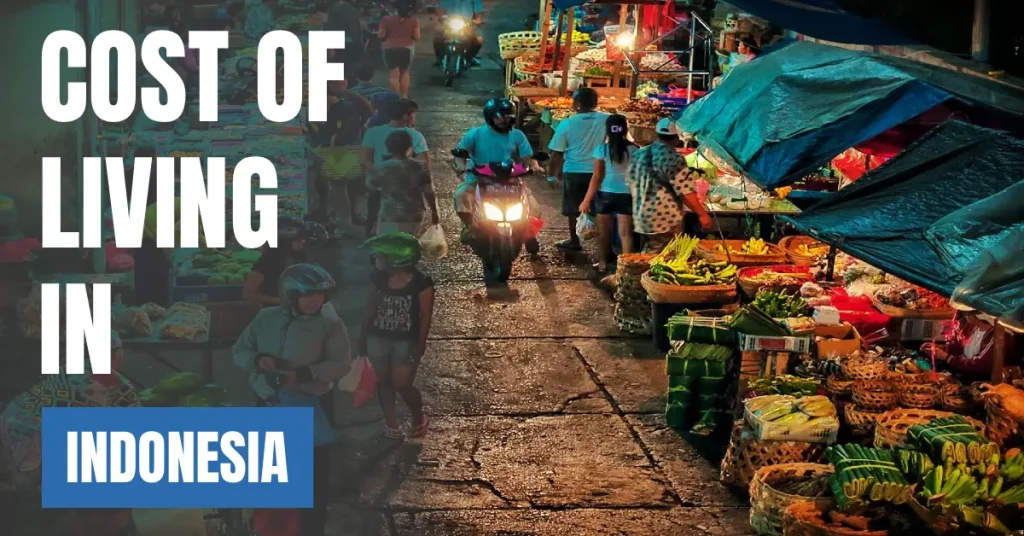
Cost of Living in Indonesia in 2026: Rent, Salaries and Monthly Expenses
The cost of living in Indonesia in 2026 depends heavily on where you live, the type of accommodation you choose and whether you follow a local or international lifestyle. A single person renting a modest apartment may budget approximately Rp7,000,000 to Rp13,000,000 per month, while higher-cost neighborhoods in Jakarta and popular parts of Bali can require considerably more.
On this pageTable of Content
Indonesia offers relatively inexpensive local food, public transport and everyday services. However, furnished apartments, imported groceries, private healthcare and international education can make living expenses substantially higher for foreign residents.
This guide examines current rental prices, groceries, utilities, transport, healthcare, education, salaries and realistic monthly budgets using Indonesian rupiah (IDR). It also explains why government minimum wages, expatriate living costs and immigration financial requirements should not be treated as equivalent figures.
Also Explore: Cost of Living in IranCost of Living in Indonesia at a Glance
A moderate single-person budget in Indonesia is approximately Rp9,000,000 to Rp15,000,000 per month including private apartment rent. Sharing accommodation and relying on local services can reduce costs, while international-standard housing and private schooling can increase them considerably.
| Expense | Estimated Cost in IDR | What It Covers |
|---|---|---|
| Single person, excluding rent | Rp5,000,000 to Rp8,000,000 monthly | Food, transport, utilities, communication and normal personal spending |
| Single person, including rent | Rp7,000,000 to Rp15,000,000 monthly | Modest to moderate lifestyle with accommodation |
| Couple, including rent | Rp12,000,000 to Rp22,000,000 monthly | Shared home and normal household expenses |
| Family of four, including rent | Rp22,000,000 to Rp40,000,000 monthly | Family housing and ordinary spending, excluding international-school tuition |
| One-bedroom apartment, city center | Rp2,500,000 to Rp18,900,000 monthly | Broad national market range |
| One-bedroom apartment, outside center | Rp1,100,000 to Rp11,600,000 monthly | Broad national market range |
| Groceries, one adult | Rp1,800,000 to Rp3,500,000 monthly | Primarily locally purchased food |
| Basic apartment utilities | Rp600,000 to Rp2,125,000 monthly | Electricity, water, cooling and related services for a typical larger apartment |
| Home broadband | Rp250,000 to Rp500,000 monthly | Typical fixed internet connection |
| Mobile phone plan | Rp32,000 to Rp150,000 monthly | Calls and mobile data |
| Public transport allowance | Rp150,000 to Rp400,000 monthly | Route-dependent local commuting |
| Inexpensive restaurant meal | Rp15,000 to Rp60,000 | One meal |
These are planning estimates rather than guaranteed prices. The accommodation ranges reflect broad 2026 market observations, while household budgets are illustrative calculations. The Numbeo Indonesia cost database and Wise cost-of-living data provide useful market comparisons, although their methodologies and underlying samples differ.
How Much Does It Cost to Live in Indonesia Per Month?
A single renter can reasonably plan around Rp7,000,000 to Rp15,000,000 monthly, including rent, depending on their city and lifestyle. A more expensive Jakarta apartment or Bali villa can push the total above this range.
For comparison, Wise's 2026 Indonesia data estimates approximately Rp7,309,029 in monthly living expenses for one person excluding rent, and Rp26,216,076 for a family of four excluding rent. These are market-model estimates, not government-defined living wages.
Students and local residents using shared rooms or boarding houses, commonly called kost, may spend considerably less than an individual renting a self-contained apartment. Conversely, households expecting Western-style accommodation, imported food, regular ride-hailing and private medical insurance should set a higher budget.
The most important budgeting distinction is between spending without rent and spending with rent. A low monthly living-cost estimate does not necessarily cover an apartment, rental deposit, international health insurance or school fees.
Housing and Rent Prices in Indonesia
Rent is one of the largest and most variable living expenses in Indonesia. National crowdsourced data places a city-center one-bedroom apartment at roughly Rp5.35 million monthly on average, compared with approximately Rp3.05 million outside central areas. Actual asking prices depend strongly on neighborhood, property quality, furnishing and lease duration.
Monthly Apartment Rent
| Property Type | National Average, Approximate | Observed Market Range |
|---|---|---|
| One-bedroom, city center | Rp5,350,000 | Rp2,500,000 to Rp18,900,000 |
| One-bedroom, outside center | Rp3,050,000 | Rp1,100,000 to Rp11,600,000 |
| Three-bedroom, city center | Rp13,880,000 | Rp5,000,000 to Rp36,400,000 |
| Three-bedroom, outside center | Rp8,210,000 | Rp2,800,000 to Rp27,300,000 |
Source: Numbeo Indonesia, May 2026 market observations. These figures are rounded and are not standardized quotes for individual properties.
Renting in Jakarta
Jakarta generally costs more than many secondary Indonesian cities, particularly in central business and expatriate neighborhoods. Numbeo's Jakarta observations indicate approximately Rp6.3 million for a central one-bedroom apartment and Rp3.6 million outside the center. Central three-bedroom apartments can average more than Rp20 million monthly.
Living near reliable MRT or commuter rail services may reduce transport expenses, but desirable transit-connected locations can command higher rents.
Renting in Bali
Bali requires particular care when comparing rental prices. Tourist-oriented locations such as Canggu, Seminyak and popular areas of Ubud may charge substantially more for furnished villas and short-term rentals than ordinary residential neighborhoods.
Some Bali properties advertise weekly, monthly or annual prices, and quoted rents may exclude electricity, housekeeping, pool maintenance or internet. Tourist accommodation prices should not be used as a reliable estimate of local household rent.
Additional Housing Expenses
- Security deposits and advance rent, particularly for longer leases.
- Apartment maintenance or building service charges.
- Furniture, kitchen equipment and appliances when a unit is unfurnished.
- Electricity for air conditioning, especially in larger apartments and villas.
- Parking, cleaning, waste collection and property management fees.
- Possible additional costs associated with annual leases and early termination.
Foreign buyers must also distinguish property purchase rights from ordinary rental arrangements. Indonesia has specific land ownership and property tenure rules for foreign nationals. A property purchase should be reviewed with a qualified Indonesian legal professional rather than assuming foreigners can obtain the same ownership rights as citizens.
Food and Grocery Costs in Indonesia
A single adult can plan approximately Rp1.8 million to Rp3.5 million per month for groceries when buying mainly local foods. Imported products, specialty diets and premium supermarkets may raise this amount.
| Grocery Item | Approximate Price |
|---|---|
| Milk, 1 liter | Rp15,000 to Rp30,000 |
| Fresh white bread, 500 grams | Rp14,500 to Rp38,000 |
| White rice, 1 kilogram | Rp12,000 to Rp20,000 |
| Eggs, 12 | Rp17,400 to Rp36,000 |
| Groceries for one adult, monthly planning range | Rp1,800,000 to Rp3,500,000 |
| Groceries for a family of four, monthly planning range | Rp5,000,000 to Rp9,000,000 |
Individual food-price ranges are based on 2026 Numbeo observations. Monthly household allowances are illustrative and depend on household size, diet and shopping habits.
Traditional markets can be economical places to buy seasonal vegetables, fruit, rice and locally produced ingredients. Supermarkets offer convenience, while imported cheese, meat, packaged products and specialty foods frequently cost more than local equivalents.
Restaurant and Eating-Out Costs
Eating out can be relatively inexpensive in Indonesia, especially at local warung restaurants. A simple meal may cost Rp15,000 to Rp60,000, while a mid-range restaurant meal for two commonly falls around Rp150,000 to Rp600,000.
| Item | Typical Price Range |
|---|---|
| Inexpensive restaurant meal | Rp15,000 to Rp60,000 |
| Mid-range meal for two | Rp150,000 to Rp600,000 |
| Fast-food combo | Rp50,000 to Rp70,000 |
| Cappuccino | Rp12,000 to Rp50,000 |
Regular meals at local establishments can reduce the need for expensive grocery shopping. However, cafes, international restaurants, delivery charges and frequent dining in popular tourist districts may significantly increase monthly spending.
When budgeting for restaurants, check whether menu prices include applicable service charges and taxes.
Utility Costs: Electricity, Water and Gas
Basic utilities for an approximately 85-square-meter apartment average around Rp1.16 million monthly in Numbeo's May 2026 data, with a broad reported range of Rp600,000 to Rp2,125,000.
Electricity is often the biggest variable, especially when air conditioning runs throughout the day. A small boarding room may have much lower bills, whereas a large air-conditioned villa can exceed standard apartment estimates.
Before signing a lease, ask whether electricity is prepaid or postpaid, whether water is included, and which building fees are payable separately.
Internet and Mobile Phone Costs
Home broadband generally costs approximately Rp250,000 to Rp500,000 monthly for a typical fixed connection, while mobile phone plans commonly range from Rp32,000 to Rp150,000 per month.
Coverage and speed vary by provider and neighborhood. Reliable internet is particularly important for remote workers, so checking the connection at the specific property is more useful than relying on citywide averages.
For households requiring continuous connectivity, a separate mobile data connection can provide backup during power outages or local broadband interruptions.
Transportation Costs in Indonesia
Public transportation in Indonesia can be affordable, especially in Jakarta, but fares depend on the transport system, route and city. Public transport is not universally free.
Public Transport and Jakarta MRT
Jakarta MRT fares vary by station pair, with published fares ranging from Rp3,000 to Rp14,000. A traveler making two Rp10,000 journeys on 22 working days would spend Rp440,000 per month on those trips alone.
The MRT Jakarta fare table provides station-specific prices. Commuter rail, buses and other transit services use their own fare structures, so a single generic monthly pass price does not represent all Indonesian transportation systems.
Ride-Hailing and Private Vehicles
Gojek and Grab are widely used for motorbike and car journeys in supported cities. Their prices depend on distance, demand, traffic, weather and service type.
Numbeo's national dataset reports standard taxi charges around Rp5,000 to Rp14,000 per kilometer, excluding possible starting fees and waiting charges. Motorbike transport can be more practical in congested urban areas, although safety and weather conditions should be considered.
People owning vehicles also need to budget for fuel, parking, maintenance, insurance and applicable registration expenses. Petrol prices and access to subsidized fuel should not be assumed to be identical for every driver or vehicle.
Healthcare Costs and Health Insurance in Indonesia
Healthcare in Indonesia is not universally free. Public health coverage operates through the Jaminan Kesehatan Nasional (JKN) system administered by BPJS Kesehatan, while private clinics and hospitals may charge patients directly or through private insurance.
Public Health Insurance
Eligibility for JKN depends on the person's legal and employment status. Foreign nationals working in Indonesia for at least six months fall within the framework of eligible or mandatory participants under applicable social security rules. A visitor or remote worker should not assume that entry into Indonesia automatically provides public health insurance.
Coverage is subject to membership conditions, contributions, referral procedures and benefit rules. Certain services may not be covered, and access through the public system should not be confused with unrestricted treatment at any private hospital.
Private Medical Care
Private healthcare expenses vary considerably by location, facility, treatment and specialist. Minor outpatient visits are usually less expensive than hospital treatment, surgery or emergency medical evacuation.
International health insurance can become a significant additional cost for expatriates. Premiums depend on age, coverage limits, medical history, deductibles and whether international evacuation is included.
New residents should confirm public-system eligibility, employer-provided coverage and private insurance requirements before estimating their healthcare budget. Official information is available through BPJS Kesehatan.
Education and Childcare Costs
Public education can be relatively affordable for eligible families, but international schools and private childcare may be among the largest expenses for expatriate households.
Indonesia's public education system and private or international school systems differ in language, curriculum, admission conditions and fees. Foreign families should verify whether their children can enroll in a particular public school and what documentation is required.
| Education Expense | Estimated Cost |
|---|---|
| Private full-day preschool, per child | Rp750,000 to Rp4,170,000 monthly |
| International primary school, per child | Rp42,000,000 to Rp200,000,000 annually |
| International primary school, average reported tuition | Approximately Rp93,400,000 annually |
| Public schooling | Varies by eligibility, school and associated expenses |
Source: Numbeo Indonesia, May 2026.
Annual international school tuition averaging Rp93.4 million is equivalent to roughly Rp7.8 million per month when divided by 12. This is only a planning conversion, not a monthly payment arrangement. Enrollment fees, uniforms, meals, books and transport can add further costs.
University fees likewise depend on institution, degree, nationality and funding arrangements. International applicants should use the institution's published tuition schedule rather than assuming domestic and foreign students pay the same fees.
Salaries and Average Earnings in Indonesia
A moderate independent lifestyle with a private apartment may require approximately Rp9 million to Rp15 million in monthly take-home income, but this is a lifestyle-based estimate rather than an official salary requirement.
Wise's 2026 dataset indicates an average monthly net salary of approximately Rp4.59 million. This is a modeled market-data figure, not an official national wage statistic, and individual earnings differ significantly across professions, cities and experience levels.
Higher-paying jobs in technology, finance, international companies and specialist professions may support private apartment living more comfortably. Lower-paid employees may rely on shared accommodation, family households or less expensive neighborhoods.
When comparing salary offers, account for income tax, social security deductions, transportation, health benefits, housing allowances and any additional contractual benefits. Gross salary is not the same as the amount available for monthly spending.
Minimum Wage in Indonesia in 2026
Indonesia does not have one identical minimum wage for every province. Provincial minimum wages (UMP), district or city minimum wages (UMK), and applicable sectoral rates vary by location and legal rules.
The Jakarta provincial minimum wage for 2026 is Rp5,729,876 per month, effective for the 2026 wage period. This represents a 6.17% increase from the 2025 Jakarta UMP of Rp5,396,761.
| Province | 2026 Provincial Minimum Wage |
|---|---|
| DKI Jakarta | Rp5,729,876 |
| Bali | Rp3,207,459 |
| West Java | Rp2,317,601 |
| Central Java | Rp2,327,386 |
| East Java | Rp2,446,880 |
| DI Yogyakarta | Rp2,417,495 |
Sources: Jakarta provincial government's December 24, 2025 announcement and Statistics Indonesia's 2026 provincial minimum wage table.
Indonesia's Ministry of Home Affairs reported that all 38 provinces had set 2026 provincial minimum wages under Government Regulation No. 49 of 2025, with an average national provincial increase of approximately 5.91%.
These figures should not be treated as guaranteed take-home salaries or universal municipal wage floors. Local district or city minimum wages can differ from the provincial amounts, and legal applicability depends on employment circumstances.
The Jakarta minimum wage is also below many single-person private-apartment budgets. This illustrates why minimum wages should not be presented as proof that an expatriate lifestyle is affordable on a local entry-level salary.
Taxes and Everyday Affordability
Indonesia's personal income tax is progressive, with rates from 5% to 35% on taxable income. The marginal bands are applied to taxable income after relevant deductions and allowances, not automatically to the employee's entire gross salary.
| Annual Taxable Income | Marginal Rate |
|---|---|
| Up to Rp60,000,000 | 5% |
| Above Rp60,000,000 to Rp250,000,000 | 15% |
| Above Rp250,000,000 to Rp500,000,000 | 25% |
| Above Rp500,000,000 to Rp5,000,000,000 | 30% |
| Above Rp5,000,000,000 | 35% |
Source: Indonesia's Directorate General of Taxes.
For everyday purchases, Indonesia did not apply the 12% VAT rate universally to all goods and services. The tax authority explained that the general treatment remained differentiated, with the higher effective VAT treatment focused on specified luxury items and services.
Tax residency and treatment of foreign-sourced earnings require separate consideration. A remote worker should not assume that receiving income from an overseas employer automatically eliminates potential Indonesian tax responsibilities. See the Directorate General of Taxes for applicable rules and professional guidance.
Realistic Monthly Budgets for Indonesia
The following four examples show complete monthly calculations in Indonesian rupiah. They are illustrative household budgets, not official living-cost thresholds. All totals include rent and the listed regular monthly expenses.
1. Budget-Conscious Single Person
This example assumes shared or basic accommodation in an affordable neighborhood, local groceries, limited restaurant spending and mainly public transport.
| Expense | Monthly Cost |
|---|---|
| Rent | Rp2,000,000 |
| Utilities | Rp350,000 |
| Groceries | Rp1,500,000 |
| Transport | Rp300,000 |
| Internet and mobile | Rp200,000 |
| Healthcare allowance | Rp250,000 |
| Dining and leisure | Rp600,000 |
| Estimated Monthly Total Including Rent | Rp5,200,000 |
This lower-cost example depends on finding inexpensive accommodation and keeping discretionary spending low. Private international medical insurance is not included.
2. Moderate Single Person
This example assumes a self-contained apartment, comfortable but controlled spending and a mix of local restaurants and home cooking.
| Expense | Monthly Cost |
|---|---|
| Rent | Rp4,500,000 |
| Utilities | Rp800,000 |
| Groceries | Rp2,500,000 |
| Transport | Rp700,000 |
| Internet and mobile | Rp450,000 |
| Healthcare allowance | Rp500,000 |
| Dining and leisure | Rp1,500,000 |
| Estimated Monthly Total Including Rent | Rp10,950,000 |
This is more representative of a single professional renting independently outside the most expensive accommodation districts. Long-distance travel and major medical treatment are excluded.
3. Couple
This example assumes two adults sharing a modest apartment and combining household expenses.
| Expense | Monthly Cost |
|---|---|
| Rent | Rp6,000,000 |
| Utilities | Rp1,000,000 |
| Groceries | Rp4,000,000 |
| Transport | Rp1,200,000 |
| Internet and mobile | Rp550,000 |
| Healthcare allowance | Rp800,000 |
| Dining and leisure | Rp2,500,000 |
| Estimated Monthly Total Including Rent | Rp16,050,000 |
The shared housing cost makes the per-person spending lower than maintaining two separate apartments. Private international insurance may increase the total.
4. Family of Four
This example assumes two adults and two children living in a three-bedroom home, with ordinary family expenses but no international-school tuition.
| Expense | Monthly Cost |
|---|---|
| Rent | Rp9,000,000 |
| Utilities | Rp1,500,000 |
| Groceries | Rp7,000,000 |
| Transport | Rp2,000,000 |
| Internet and mobile | Rp700,000 |
| Healthcare allowance | Rp1,500,000 |
| Dining and leisure | Rp3,500,000 |
| School-related miscellaneous allowance | Rp1,500,000 |
| Estimated Monthly Total Including Rent | Rp26,700,000 |
The school-related allowance covers only incidental education expenses, not private international-school tuition. At the national reported average of approximately Rp93.4 million annually per child, enrolling two children in international primary schools could add roughly Rp15.6 million monthly when annual tuition is spread across 12 months.
That would increase the illustrative family budget from Rp26.7 million to around Rp42.3 million per month, before any admission or transport fees.
Cost of Living Differences Between Indonesian Cities
Indonesia's living expenses differ significantly by region. Bali's popular expatriate and tourist districts can be more expensive than Jakarta in some spending categories, while Bandung and other secondary cities may offer lower accommodation costs.
| Location | Relative Living-Cost Considerations |
|---|---|
| Jakarta | Higher central apartment rents, but extensive public transport options |
| Bali | Potentially expensive tourist-district rentals, villas and international lifestyle services |
| Surabaya | Major urban amenities with different housing and commuting trade-offs |
| Bandung | Generally lower cost indexes than Jakarta in the referenced dataset |
| Yogyakarta | More budget-oriented options, particularly shared student accommodation |
| Smaller towns | Potentially inexpensive housing, with fewer international services and specialist facilities |
Numbeo's May 2026 city indexes recorded Bali at 33.5, Jakarta at 28.1, Surabaya at 25.3 and Bandung at 22.4 on its cost-of-living index. These are relative index figures, not monthly costs, and coverage varies by location.
For prospective residents, choosing a neighborhood within a city is often as important as choosing the city itself. A central apartment close to work can be more expensive in rent but cheaper in commuting time and daily transport.
Indonesia Compared With Thailand, Malaysia and the Philippines
Indonesia can provide lower-cost accommodation and local food options than some popular expatriate destinations in Southeast Asia, but countrywide comparisons are too broad to guarantee that one destination is always cheaper.
A resident choosing a basic room in Yogyakarta will have a different spending profile from someone renting a villa in Bali. Likewise, central Bangkok, Kuala Lumpur and Manila have different housing markets, transport systems, salaries and international school costs.
For reliable comparisons, use the same household size, accommodation type and spending assumptions across cities. The Numbeo cost-of-living database provides a consistent comparative framework, although its figures remain dependent on user-submitted prices.
The practical advantage of Indonesia is the range of lifestyle choices available, not a guarantee of being the cheapest country in Southeast Asia for every resident.
Costs New Residents Often Overlook
A monthly food-and-rent estimate is only part of the financial planning required to move to Indonesia. Initial relocation expenses and recurring fees can make the first year noticeably more expensive.
- Rental deposits, advance payments and property agent fees where applicable.
- Visa application, residence permit and renewal fees.
- International medical insurance and emergency coverage.
- Furniture, appliances, bedding and other home setup costs.
- Import charges or shipping fees for personal belongings.
- International-school registration and admission fees.
- Domestic flights between islands and airport transfers.
- Banking charges, international transfers and currency conversion.
- Vehicle registration, parking, servicing and insurance.
- Apartment service charges and separately billed maintenance.
- Medical expenses that fall outside insurance coverage.
Anyone relocating should maintain an emergency fund and account separately for one-time setup expenses instead of assuming their regular monthly budget will cover the entire move.
Cost of Living Versus Residency Financial Requirements
Being able to afford monthly living expenses does not automatically mean an applicant qualifies for a particular Indonesian residence permit.
Indonesia's E33G remote worker visa illustrates this distinction. According to Indonesia's immigration authority, the category requires evidence of at least USD60,000 in annual income from qualifying overseas employment, together with three months of bank statements showing a minimum balance of USD2,000.
The official immigration guidance lists a one-year E33G fee of Rp7,000,000 and requires qualifying work for an overseas company. The visa does not authorize ordinary paid employment for Indonesian individuals or businesses.
These amounts are immigration eligibility conditions, not official monthly living-cost estimates. Someone may be able to live on substantially less than the required income while still failing the visa's financial test.
Other visa categories have different purposes, eligibility standards and financial conditions. Check the latest requirements through the official immigration visa information and Indonesia's electronic visa portal before applying.
Is Indonesia Affordable for Expats and New Residents?
Indonesia can be affordable for foreigners earning a stable higher income, particularly those willing to rent outside premium districts, eat locally and use public transportation. However, affordability is more challenging when relying on lower local wages while maintaining private accommodation and international lifestyle expectations.
A person earning Rp12 million after tax may manage a moderate independent budget in many locations. A person earning around a provincial minimum wage may need shared housing, lower-cost transportation and tighter household spending.
Families should assess school eligibility and tuition before relocating. Healthcare access, visa restrictions, local tax obligations and connectivity can be just as important as rent when judging whether a destination is financially practical.
Conclusion: Is Living in Indonesia Worth the Cost?
Indonesia offers a wide range of living-cost options in 2026. Affordable local food, shared housing and reasonably priced public transport can support a modest lifestyle, while prime Jakarta apartments, Bali villas, private healthcare and international schools can make expatriate living substantially more expensive.
A practical starting point is approximately Rp7 million to Rp15 million monthly for a single renter, Rp12 million to Rp22 million for a couple and Rp22 million to Rp40 million for a family of four, excluding significant international-school tuition and exceptional medical costs.
Before moving, obtain current rental quotations in the exact neighborhood, confirm visa and insurance eligibility, calculate take-home income after applicable deductions and allow for deposits and other initial expenses. These steps produce a more reliable plan than relying on one national cost-of-living average.
Sources and Methodology
This article was reviewed on October 26, 2026. It combines official Indonesian government information, published transport fares, official immigration and tax guidance, and 2026 consumer-price observations from market databases.
National and city-level price estimates are indicative rather than fixed rates. Numbeo relies on crowdsourced submissions, which may be unevenly distributed across cities, income groups and property types. Wise presents modeled market estimates. These sources may differ because of collection dates, sample composition, definitions and calculation methods.
Illustrative sample budgets were calculated from individual expense categories and should not be interpreted as official consumer expenditure statistics. Immigration financial rules, minimum wages, insurance eligibility and applicable taxes were treated separately from market prices.
Sources consulted:
- Numbeo: Cost of Living in Indonesia, May 2026
- Numbeo: Cost of Living in Jakarta
- Wise: Biaya Hidup di Indonesia, 2026
- Jakarta Provincial Government: 2026 Minimum Wage Announcement
- Statistics Indonesia: Provincial Minimum Wages for 2026
- Ministry of Home Affairs: Evaluation of 2026 Provincial Minimum Wages
- MRT Jakarta: Published Fare Table
- BPJS Kesehatan: National Health Insurance Information
- Directorate General of Taxes: Personal Income Tax Rates
- Directorate General of Taxes: Tax Policy in 2026
- Indonesian Immigration: Visa Information and E33G Requirements
- VisaBoards: Original Indonesia Cost-of-Living Article
Frequently Asked Questions
How much does it cost to live in Indonesia per month?
A single person renting a modest apartment may need around Rp7,000,000 to Rp15,000,000 per month, including rent and everyday expenses. Someone sharing accommodation in a less expensive city may spend less. Jakarta's premium neighborhoods and popular Bali tourist areas can require a larger budget. Actual costs depend on accommodation, food, transportation, healthcare and lifestyle.
Is Indonesia expensive to live in?
Indonesia can be relatively affordable, especially when using local restaurants, traditional markets and modest housing. However, it is not inexpensive for every household. Imported goods, furnished villas, international schools and private healthcare can raise expenses substantially. Affordability also depends on income, since local salaries may be considerably lower than the earnings of foreign remote workers.
How much is apartment rent in Indonesia?
Numbeo's May 2026 national data suggests that one-bedroom apartments average approximately Rp5.35 million monthly in city centers and Rp3.05 million outside central areas. Actual rents vary widely. Jakarta business districts and popular Bali locations can be significantly more expensive, while shared rooms and housing in smaller cities may be much cheaper.
What salary is enough to live comfortably in Indonesia?
For a single person renting independently, approximately Rp9 million to Rp15 million per month in take-home income can support a moderate lifestyle in many locations. Higher spending may be necessary in prime Jakarta or Bali neighborhoods. This is a planning estimate, not an official salary requirement. A comfortable salary should cover rent, insurance, regular bills and savings.
What is the minimum wage in Indonesia in 2026?
Indonesia sets different minimum wages across provinces and, where applicable, districts or cities. Jakarta's 2026 provincial minimum wage is Rp5,729,876 monthly, while Bali's is Rp3,207,459 and West Java's is Rp2,317,601. These are provincial reference figures. Applicable city, district or sectoral minimum wages may differ, so workers should verify the rules for their workplace.
Is healthcare free in Indonesia for foreigners?
No. Foreigners do not automatically receive free healthcare in Indonesia. JKN public health insurance eligibility depends on legal and employment conditions, and foreign nationals working in Indonesia for at least six months fall within the relevant participation framework. Tourists and other visitors should arrange suitable coverage. Private treatment and services outside an insurance policy can require additional payment.
Is public transportation free in Indonesia?
No, public transport is not generally free across Indonesia. Fares differ by city, operator and service. Jakarta MRT publishes distance-based fares from Rp3,000 to Rp14,000, while buses, commuter services and ride-hailing have their own charges. Some eligible passenger groups may receive special concessions, but ordinary travelers should budget for their journeys.
How much does a family of four need in Indonesia?
A family of four can use approximately Rp22 million to Rp40 million monthly including rent as an initial planning range, excluding substantial international-school fees. One illustrative family budget totals Rp26.7 million. Enrolling two children in international primary schools at the reported national average tuition could add approximately Rp15.6 million monthly when the annual cost is spread across a year.
Which Indonesian cities are cheaper to live in?
Bandung, Yogyakarta and some smaller cities may offer lower housing and daily living costs than central Jakarta and premium areas of Bali. However, accommodation quality, available employment, healthcare access and transport options also differ. A city that looks inexpensive in a general cost index may not be economical for someone requiring imported goods, specialist facilities or international education.
Is Indonesia cheaper than Thailand or Malaysia?
Indonesia can be cheaper for some housing and local spending choices, particularly outside international tourist districts. However, broad national averages do not establish that it is always cheaper than Thailand or Malaysia. Comparing Jakarta with Bangkok or Bali with Kuala Lumpur requires matching apartment size, location, healthcare arrangements, household composition and personal spending preferences.
Can foreigners live in Indonesia on a small monthly budget?
Some foreigners can maintain a relatively low-cost lifestyle by using shared housing, local markets and public transport. However, sufficient living expenses do not establish eligibility for a visa. For example, Indonesia's E33G remote worker visa has a USD60,000 annual income requirement and other documentation conditions. Applicants must verify the requirements of their specific residence category.
What hidden costs should new residents expect?
New residents should plan for rental deposits, advance rent, visa fees, accommodation setup, insurance, travel, banking charges and possible property maintenance costs. Families may also face substantial school registration and tuition expenses. These costs are frequently absent from simple monthly cost-of-living averages. Keeping a separate relocation fund and emergency reserve can prevent unexpected financial pressure during the first year.
Join the conversation
Have thoughts on this topic? Share them with others.
Ask questions, share experience, and learn from the Visaboards Community.