
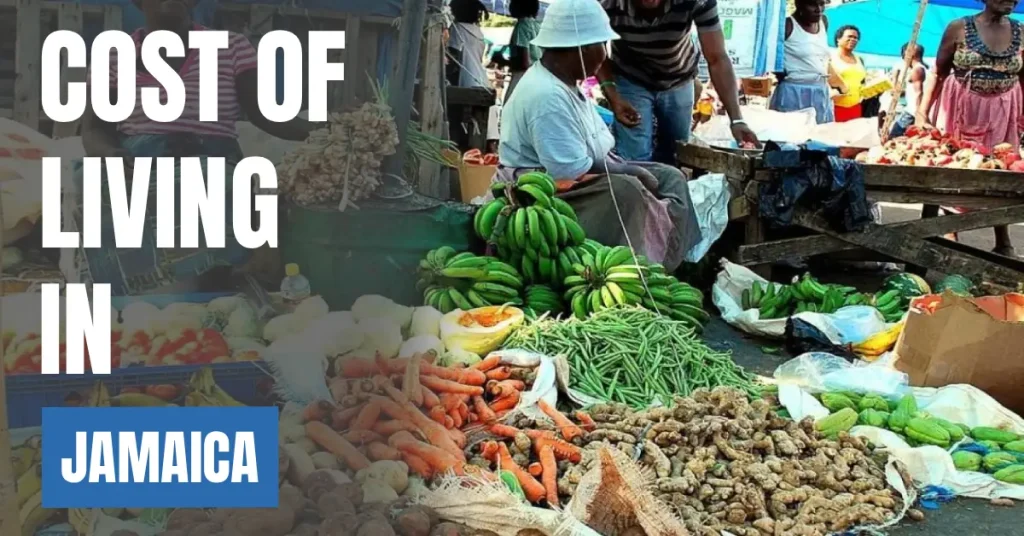
Cost of Living in Jamaica 2026: Rent, Food, Salaries and Monthly Expenses
The cost of living in Jamaica in 2026 depends on where you live, your housing arrangements, household size and lifestyle. Kingston and popular tourist destinations can be expensive, particularly for renters, while some smaller towns and rural communities offer more affordable accommodation.
On this pageTable of Content
Jamaica's official currency is the Jamaican dollar (JMD or J$). Housing, electricity, groceries and transportation are among the most important household expenses. Imported products, private healthcare, international schools and vehicle ownership can significantly increase monthly spending.
For someone earning a local salary, Jamaica may be less affordable than it appears when prices are converted into US dollars. Housing costs are especially important. A one-bedroom apartment in central Kingston can cost more than the monthly take-home salary reported in some consumer-price surveys.
The Statistical Institute of Jamaica (STATIN) reported annual inflation of 7.9% in August 2026 and a further 1.5% monthly increase in consumer prices in September 2026. Residents should therefore account for changing prices rather than relying entirely on older cost estimates.
This guide explains Jamaica's rental market, food prices, utility bills, transportation, healthcare, education, salaries, taxes and realistic monthly budgets for individuals, couples and families.
Also Explore: Cost of Living in IrelandCost of Living in Jamaica at a Glance
A single person renting privately in Jamaica may need approximately J$150,000 to J$300,000 or more per month, depending mainly on location and lifestyle. Families often need substantially more, particularly when paying market rent and private education expenses.
The following figures combine October 2026 Kingston consumer-price observations, national indicators and official government announcements. They are not all nationwide averages.
| Expense or Indicator | Estimated Cost in JMD | Details |
|---|---|---|
| One-bedroom apartment, central Kingston | J$110,000 to J$220,000 monthly | Crowdsourced reported range |
| One-bedroom apartment, outside central Kingston | J$72,500 to J$120,000 monthly | Crowdsourced reported range |
| Three-bedroom apartment, central Kingston | J$250,000 to J$450,000 monthly | Crowdsourced reported range |
| Three-bedroom apartment, outside central Kingston | J$170,000 to J$297,000 monthly | Approximate reported range |
| Basic apartment utilities | J$20,000 to J$33,000 monthly | Approximately 85-square-metre apartment |
| Home broadband | J$5,500 to J$13,000 monthly | Service and plan dependent |
| Mobile plan | J$3,000 to J$7,500 monthly | Reported plan prices |
| Inexpensive restaurant meal | J$900 to J$3,000 | Kingston observations |
| National minimum wage | J$17,000 weekly | 40-hour work week, effective July 1, 2026 |
| Reported average net salary, Kingston | Approximately J$117,500 monthly | Limited crowdsourced salary estimate |
Rental and consumer-price figures are based primarily on Numbeo's Kingston observations, updated October 24, 2026. The minimum wage comes from an official Jamaica Information Service announcement.
The sample is limited and actual market offers may differ considerably. Housing prices should always be confirmed directly before making a relocation decision.
How Much Does It Cost to Live in Jamaica Per Month?
A realistic monthly budget for Jamaica should account for rent, food, electricity, water, internet, transport, healthcare, personal expenses and emergency savings.
The following are illustrative budgets for people renting accommodation. They are constructed planning examples rather than official national averages.
| Household Type | Illustrative Monthly Cost Including Rent | Assumptions |
|---|---|---|
| Budget-conscious single person | J$160,000 | Modest housing, public transport, home cooking |
| Moderate single person | J$265,000 | Private one-bedroom rental, regular personal spending |
| Couple | J$365,000 | Two adults sharing accommodation |
| Family of four | J$625,000 | Three-bedroom home, two adults and two children |
In these examples, estimated monthly expenses excluding rent are J$95,000 for the budget-conscious single person, J$125,000 for the moderate single person, J$190,000 for the couple and J$395,000 for the family of four.
These examples do not include major medical treatment, buying a vehicle, substantial school tuition or relocation costs. Households living in owner-occupied accommodation or with relatives may spend considerably less.
Detailed calculations for each household appear later in this guide.
Housing and Rent Prices in Jamaica
Housing is one of the largest monthly expenses for residents who rent privately. Rent differs substantially between Kingston, St. Andrew, Montego Bay, Spanish Town, Ocho Rios, smaller towns and rural parishes.
How Much Is Rent in Jamaica?
October 2026 crowdsourced data indicate that a one-bedroom rental outside central Kingston costs around J$90,400 per month on average, while a comparable apartment in central Kingston costs around J$152,600.
| Apartment Type | Kingston Average Monthly Rent | Reported Range |
|---|---|---|
| One bedroom, city centre | J$152,600 | J$110,000 to J$220,000 |
| One bedroom, outside city centre | J$90,400 | J$72,500 to J$120,000 |
| Three bedrooms, city centre | J$335,800 | J$250,000 to J$450,000 |
| Three bedrooms, outside city centre | J$222,800 | J$170,000 to J$297,000 |
Source: Numbeo, Kingston, October 2026.
These observations should not be interpreted as official rental statistics. Numbeo reported 163 entries from 21 contributors across all cost categories over the preceding 12 months when the data were reviewed.
Rent in Other Jamaican Cities
Kingston and St. Andrew contain important employment, education and commercial districts, making housing location particularly relevant for commuters.
Montego Bay has tourism, hospitality and residential markets that can create strong demand for desirable properties. Ocho Rios and other resort communities may also have higher prices for furnished or short-term accommodation.
Spanish Town and some inland or rural communities may offer more affordable housing options, although travel costs and commuting times can offset the difference.
There is insufficient consistent, current city-level rental evidence to publish a reliable percentage discount for every Jamaican city relative to Kingston.
Security Deposits and Upfront Rental Costs
A rental budget should include more than the monthly payment. Landlords may require security deposits and advance rent, subject to the rental agreement and applicable laws.
Tenants should also ask whether electricity, water, internet, parking, maintenance and shared-property fees are included.
For example, a tenant agreeing to J$100,000 monthly rent could need substantially more than J$100,000 to move in, depending on the required initial payments, furniture, transport and utility setup.
Inspect the property and understand the rental agreement before transferring money. Security, storm resilience, drainage and reliable utility connections are important considerations in Jamaica.
Buying Property in Jamaica
Property purchase costs vary by parish, neighborhood, land title, property condition and access to amenities.
Crowdsourced October 2026 Kingston observations suggested apartment purchase prices around J$457,000 per square metre in central locations and approximately J$329,000 outside the centre. However, the price samples for property purchases are narrow and should not replace current listings or independent valuations.
Buyers should also budget for legal representation, title investigation, applicable transfer charges, registration, valuation, insurance and maintenance. Foreign purchasers should obtain professional legal guidance before proceeding.
Food and Grocery Costs in Jamaica
Groceries are a significant household expense. Prices depend on whether products are imported or locally produced, shopping location, seasonal availability and household preferences.
Fresh produce markets may offer alternatives to supermarkets, while imported packaged foods and branded products can increase spending.
Typical Grocery Prices in Kingston
The following prices are rounded observations from October 2026, not guaranteed prices at every store.
| Grocery Item | Approximate Price (JMD) |
|---|---|
| Milk, 1 litre | J$657 |
| White bread, approximately 454 g | J$541 |
| Rice, 1 kg | J$255 |
| Eggs, 12 | J$562 |
| Chicken fillets, 1 kg | J$1,000 |
| Tomatoes, 1 kg | J$483 |
| Onions, 1 kg | J$420 |
| Potatoes, 1 kg | J$515 |
| Bananas, 1 kg | J$617 |
| Bottled water, approximately 1.5 litres | J$234 |
Some values are converted and rounded from the pound-based units displayed in Numbeo's October Kingston data. Actual supermarket package sizes and weights may differ.
How Much Should You Budget for Groceries?
An illustrative single-person grocery allowance is J$30,000 to J$55,000 monthly for someone preparing most meals at home. A family of four may need around J$80,000 to J$140,000 or more depending on consumption patterns.
These are budgeting allowances, not official food-basket estimates. Households purchasing imported specialty foods, substantial quantities of meat or prepared meals may spend more.
Practical ways to control grocery spending include comparing supermarkets with public markets, purchasing seasonal local produce and planning meals before shopping.
Restaurant and Eating Out Costs in Jamaica
Restaurant prices vary widely between local eateries, takeaway businesses, fast-food outlets, upscale restaurants and tourist-facing establishments.
October 2026 Kingston observations provide the following examples:
| Restaurant Expense | Estimated Cost (JMD) |
|---|---|
| Inexpensive restaurant meal | J$900 to J$3,000 |
| Fast-food combination meal | J$1,200 to J$1,500 |
| Three-course meal for two, mid-range restaurant | J$8,000 to J$30,000 |
| Cappuccino | J$250 to J$1,100 |
| Soft drink | J$150 to J$250 |
These are reported price ranges, not official restaurant tariffs. The original VisaBoards article presented inexpensive meals in US dollars, but using Jamaican dollars helps residents compare prices directly with local earnings.
Eating at local cookshops and limiting restaurant spending can help reduce expenses. Delivery fees, service charges and tips should also be considered where applicable.
Utilities: Electricity, Water and Household Bills
Electricity and other household utilities can represent a substantial expense, particularly in air-conditioned homes.
October 2026 Kingston data placed the average monthly cost of electricity, cooling, water and garbage services for an approximately 85-square-metre apartment at J$26,700, with a reported range around J$20,000 to J$33,000.
Actual bills depend on property size, air-conditioning use, appliance efficiency, number of occupants, water consumption and applicable utility tariffs.
A household operating several air conditioners regularly may face a higher electricity bill than one relying mainly on natural ventilation and fans.
Jamaica also faces tropical storms and hurricanes, which can cause power interruptions and property damage. Households should consider the potential cost of backup lighting, drinking-water storage and emergency supplies.
Internet and Mobile Phone Costs
Home broadband and mobile data expenses vary by provider, coverage, speed and package.
| Service | Reported Monthly Cost |
|---|---|
| Home broadband | J$5,500 to J$13,000 |
| Mobile plan with calls and substantial data | J$3,000 to J$7,500 |
These ranges come from October 2026 Kingston crowdsourced observations. Advertised prices, installation fees and service availability should be checked directly with providers.
Remote workers should investigate connection stability and consider a backup mobile connection. Internet availability and performance can vary between dense urban neighborhoods and rural areas.
Transportation Costs in Jamaica
Jamaica has public buses, licensed route taxis, private taxis and other transport services. The cost and availability of public transportation depend on the route and location.
How Much Does Public Transportation Cost?
Public transportation is not generally free. Bus fares vary by route and passenger category, and some operators use electronic fare systems.
For example, the Jamaica Urban Transit Company (JUTC) reported that adults using the SmartFare card on the St. Thomas to Kingston route paid J$200 in February 2026, compared with J$300 without the card. Eligible concessionary passengers paid different fares.
Other JUTC routes have different fare structures. A general one-way fare or monthly pass quoted by a crowdsourced database should not be mistaken for a universal national rate.
Source: Jamaica Information Service, JUTC SmartFare, February 2026.
Public Transport Versus Car Ownership
Public transportation may be more affordable for someone living near a reliable bus route. Car ownership, however, can become important where transport connections are limited or commuting involves several transfers.
October 2026 Kingston observations placed gasoline near J$227 per litre, with considerable variation between reported purchases.
A private car budget must also include insurance, licensing, maintenance, tyres, parking and repairs. Imported vehicles and replacement components can substantially increase ownership costs.
For residents choosing between a cheaper home outside Kingston and a property closer to work, commuting time and expenses should be included in the comparison.
Healthcare Costs and Insurance in Jamaica
Jamaica provides public healthcare services without standard user fees at many government health facilities, alongside private hospitals and clinics that charge for treatment.
The original VisaBoards guide focuses mainly on private consultation prices. However, that overlooks an important part of Jamaica's healthcare system.
Is Public Healthcare Free in Jamaica?
Public health centres offer services without user fees, and government hospitals generally operate without ordinary user fees. Certain partially government-funded hospitals may charge a registration fee, and other eligibility rules or service-related expenses can apply.
Jamaica Information Service explains that public health centres and hospitals provide a range of services, although availability depends on the facility.
Source: Jamaica Information Service, Government Healthcare Options.
Private Healthcare
Private clinics and hospitals charge for consultations, tests, procedures and other services. Private treatment may be useful for patients seeking a particular specialist or service, but costs vary substantially.
Individuals should obtain current prices from the provider. A simple doctor's consultation does not represent the full cost of diagnostics, specialist treatment or hospitalization.
Health Insurance and Medication Costs
Private medical insurance premiums depend on age, coverage, exclusions, deductibles and insurer. Some workers receive employer-sponsored coverage.
Residents should also investigate whether they qualify for assistance under the National Health Fund (NHF) and other applicable programmes. Eligibility, benefits and medication coverage are determined by programme rules.
Foreign residents should verify their access to public services and insurance separately. A visitor should not assume that all medical treatment will be free.
Households with chronic conditions should budget for medication, follow-up appointments and any treatment not covered by insurance or public programmes.
Education and Childcare Costs in Jamaica
Families moving to Jamaica should distinguish between government-funded public education, independent schools, international schools and childcare.
Public Primary and Secondary Schools
Publicly funded education is available without mandatory tuition fees under Jamaica's established public-school funding policies.
The Ministry of Education has stated that school contributions should not prevent access to education. Its published guidance also distinguishes permissible registration-related costs from prohibited charges.
For example, a 2023 ministry bulletin stated that primary-school registration should be free and set a limit on secondary-school registration-package charges at that time. Families should verify the current applicable policy directly with their school.
Even when tuition is not charged, parents may spend money on uniforms, books, transportation, meals, examination materials and extracurricular activities.
Sources: Jamaica Information Service, Non-Mandatory School Fees and School Registration Guidelines.
Private Schools and International Education
Private schooling can be a major household expense. October 2026 crowdsourced Kingston observations reported approximately J$57,300 per month for private full-day preschool and around J$1.31 million annually for international primary education.
These figures have wide ranges and limited samples. A private preschool may cost significantly less or more depending on location, facilities and hours.
Schools may charge additional amounts for uniforms, transportation, meals, registration and activities.
University and Technical Education
University tuition varies depending on the institution, degree programme, course load and student category.
Jamaica's 2026/27 education budget also included a government announcement to eliminate tuition fees for HEART/NSTA programmes up to Level 5. Eligibility and programme conditions should be verified with the institution.
Source: Jamaica Information Service, March 2026 Education Funding.
Average Salaries and Minimum Wage in Jamaica
Local earnings are essential to understanding affordability. A household receiving income in Jamaican dollars may face very different financial pressures from a resident receiving a stable income from overseas.
What Is the Minimum Wage in Jamaica in 2026?
Jamaica's national minimum wage is J$17,000 per 40-hour work week, effective July 1, 2026. The government increased the weekly rate from J$16,000.
This is equivalent to approximately J$73,667 per month when 52 working weeks are averaged across 12 months, before applicable deductions.
The increase applies under the National Minimum Wage Order and the Industrial Security Guards Minimum Wage Order approved in June 2026.
Source: Jamaica Information Service, June 25, 2026.
What Is the Average Salary in Jamaica?
An October 2026 Numbeo sample reported an average net monthly salary of approximately J$117,500 in Kingston. This is a user-contributed estimate, not an official national earnings survey.
Actual salaries differ by sector, experience, employer, education, location and working hours. Professionals, managers and specialized workers may earn more than entry-level or minimum-wage employees.
Can You Live on the Minimum Wage in Jamaica?
Living independently on the minimum wage can be difficult, especially when renting a private apartment at market rates.
The approximately J$73,667 monthly minimum-wage equivalent is below the October 2026 reported average cost of a one-bedroom apartment outside central Kingston.
This illustrates why shared housing, multigenerational households, multiple earners and lower-cost locations can make a substantial difference to affordability.
The comparison does not imply every minimum-wage worker rents a separate Kingston apartment. Housing arrangements vary considerably, and actual take-home pay may include overtime, allowances or other income.
Income Tax and Everyday Affordability
Jamaica's personal income tax system affects disposable earnings. Employees may also have statutory payroll deductions and other contributions.
Income Tax Threshold in 2026
Effective April 1, 2026, Jamaica increased its annual personal income tax threshold to J$1,902,360, equivalent to J$158,530 monthly for the applicable payroll period.
Tax Administration Jamaica explained that the effective threshold for the full 2026 calendar year was J$1,876,614 because of the transition between rates during the year.
The standard personal income tax rate is generally 25% on taxable income above the threshold, with a higher rate applying to income above the relevant upper band under current law.
Employees should also consider National Insurance Scheme contributions, National Housing Trust contributions and other applicable deductions when calculating take-home pay.
Source: Tax Administration Jamaica, April 14, 2026.
Consumption Taxes
General Consumption Tax (GCT) can affect the cost of taxable goods and services. The standard GCT rate is 15%, although exemptions, zero-rating and special rates apply to certain categories.
Residents should check whether quoted service prices include applicable taxes, especially for telecommunications, accommodation, professional services and major purchases.
Realistic Sample Monthly Budgets in Jamaica
The following examples show how costs can accumulate across different households. They are illustrative budgets prepared for planning purposes, not official Jamaican expenditure averages.
Budget-Conscious Single Person
This example assumes modest accommodation, mostly home-prepared meals and regular use of public transportation.
| Expense | Monthly Cost (JMD) |
|---|---|
| Rent | 65,000 |
| Groceries | 35,000 |
| Utilities | 18,000 |
| Internet and mobile | 9,000 |
| Transportation | 10,000 |
| Healthcare and personal care | 8,000 |
| Dining and miscellaneous | 15,000 |
| Total Including Rent | 160,000 |
The monthly cost excluding rent is J$95,000. This scenario assumes affordable housing is available and does not include major savings or unusual emergencies.
Moderate Single Person
This example assumes a private one-bedroom apartment, regular groceries, broadband internet and more discretionary spending.
| Expense | Monthly Cost (JMD) |
|---|---|
| Rent | 140,000 |
| Groceries | 45,000 |
| Utilities | 27,000 |
| Internet and mobile | 12,000 |
| Transportation | 15,000 |
| Healthcare and personal care | 10,000 |
| Dining and leisure | 16,000 |
| Total Including Rent | 265,000 |
The monthly cost excluding rent is J$125,000. A higher-end Kingston rental, car ownership or extensive private healthcare would increase spending.
Monthly Budget for a Couple
This example assumes two adults sharing a rented home and managing household costs together.
| Expense | Monthly Cost (JMD) |
|---|---|
| Rent | 175,000 |
| Groceries | 75,000 |
| Utilities | 35,000 |
| Internet and mobile | 15,000 |
| Transportation | 25,000 |
| Healthcare and personal care | 15,000 |
| Dining and leisure | 25,000 |
| Total Including Rent | 365,000 |
The monthly cost excluding rent is J$190,000. Couples with two reliable incomes may be able to distribute household expenses more easily, although savings and debt repayments should be calculated separately.
Monthly Budget for a Family of Four
This example assumes two adults and two children living in a three-bedroom rental property, with ordinary education-related expenses but no international-school tuition.
| Expense | Monthly Cost (JMD) |
|---|---|
| Rent | 230,000 |
| Groceries | 120,000 |
| Utilities | 45,000 |
| Internet and mobile | 18,000 |
| Transportation | 55,000 |
| Healthcare and personal care | 35,000 |
| Education and childcare allowance | 70,000 |
| Clothing, dining and miscellaneous | 52,000 |
| Total Including Rent | 625,000 |
The monthly cost excluding rent is J$395,000. Actual expenses may be substantially lower for families living in owned accommodation or using public education without paid childcare.
Private or international schools, vehicle payments, additional childcare and major health expenses can increase the family budget considerably.
Cost of Living Differences by City and Parish
Jamaica's living costs differ between urban business districts, tourism-oriented areas, commuter towns and rural communities.
Kingston and St. Andrew
Kingston and St. Andrew offer employment, business services, hospitals, educational institutions and shopping facilities. However, desirable residential neighborhoods can involve high rental prices and substantial commuting costs.
Montego Bay, St. James
Montego Bay is a major tourism and commercial centre. Rent in desirable residential or tourist-oriented areas may be expensive, and short-term accommodation markets can influence local housing availability.
Ocho Rios, St. Mary and St. Ann
Ocho Rios and nearby communities attract tourism-related activity. Housing costs depend on whether a property serves local residents, vacationers or longer-term tenants.
Spanish Town, St. Catherine
Spanish Town may offer alternative accommodation to Kingston for some households. However, commuting distance, public transport connections and traffic should be evaluated carefully.
Rural Parishes
Some rural locations may provide more affordable accommodation, but access to employment, specialist healthcare, public transportation and reliable connectivity may be more limited.
Climate, flood risk, storm exposure and utility reliability should also be considered when comparing locations.
Is Jamaica More Expensive Than Other Caribbean Countries?
Jamaica's cost of living can be compared with countries such as the Dominican Republic, Trinidad and Tobago and Barbados, but reliable comparisons require a consistent methodology.
Housing, electricity, imported food, local wages and transport all influence affordability. Tourist-district prices should not be compared directly with low-cost residential communities in another country.
The Dominican Republic may offer cheaper rental or grocery options in certain cities, while some goods and services in Barbados can be comparatively expensive. Trinidad and Tobago has a different energy and subsidy structure that affects household spending.
However, no precise current percentage difference is presented because a sufficiently consistent October 2026 cross-country basket was not established for this guide.
For an accurate comparison, residents should compare equivalent housing, education, healthcare and transportation needs, preferably in local currencies relative to their expected take-home income.
Expenses New Residents Often Overlook
Monthly price estimates may exclude expenses that make relocation and everyday life more costly.
- Security deposits and advance rent: Moving into a rental property can require significant cash before the first month begins.
- Electricity and cooling: Air-conditioning may increase monthly bills, particularly during hot weather.
- Transportation: Commuting, vehicle insurance, repairs, parking and taxis can increase costs beyond basic bus fares.
- Medical expenses: Private consultations, tests, medicines and insurance premiums can create additional obligations.
- Storm preparation: Emergency food, water, backup power and property protection may require additional spending.
- Imported products: Some food, electronics, household appliances and vehicle components may carry substantial import-related costs.
- Education: Uniforms, school transportation, books, childcare and extracurricular activities may not be included in tuition estimates.
- Household setup: Furniture, cooking appliances and other essential equipment can increase initial relocation costs.
- Insurance: Home, vehicle and medical insurance should be considered separately where applicable.
- Emergency savings: Repair bills, employment changes and inflation can quickly affect a tightly balanced budget.
Cost of Living Versus Residency Financial Requirements
Living expenses and immigration requirements are separate considerations. Having enough money for rent and groceries does not automatically satisfy the legal requirements for residing or working in Jamaica.
Foreign nationals may need appropriate immigration permission, work authorization or other documentation depending on their nationality, purpose of stay and length of residence.
Different immigration categories may require different evidence relating to employment, income, savings or sponsorship. There is no single verified monthly financial threshold that can safely be applied to every prospective resident.
Applicants should confirm their circumstances with Jamaica's relevant immigration authorities and any responsible diplomatic mission before making commitments.
Is Jamaica Affordable for Expats, Retirees and Students?
Jamaica may be affordable for some people with reliable foreign-currency income, existing accommodation or family support. However, housing, electricity, imported products and private services can make independent living expensive.
Expats and Remote Workers
Remote workers should assess rental availability, internet reliability, insurance, tax responsibilities and the legal conditions attached to working while residing in Jamaica.
Foreign-currency income can provide an advantage when exchange rates are favorable, but this should not be confused with affordability for local wage earners.
Retirees
Retirees should consider regular medical needs, transportation, housing accessibility, climate-related property maintenance and insurance coverage.
Living close to suitable healthcare facilities may be more important than finding the cheapest rental property.
Students
Students may reduce expenses through shared accommodation, public transport and home cooking. However, tuition, books, university charges and transport between accommodation and campus can materially affect the budget.
International students should also investigate applicable tuition categories and immigration requirements.
Conclusion: Is Jamaica Expensive to Live In?
Jamaica can be expensive for households earning local salaries, particularly those paying private-market rent in Kingston or popular tourist destinations.
The July 2026 minimum-wage increase to J$17,000 per week improved the statutory base rate, but private rent, food, utilities and commuting expenses can still exceed what a single low-income earner can comfortably support.
A financially realistic move to Jamaica begins with a confirmed rental arrangement, a detailed budget in Jamaican dollars, reliable income and adequate emergency savings.
Choosing the right parish, comparing accommodation carefully, understanding public healthcare and education options, and planning for hurricane-season expenses can help households manage costs more effectively.
Sources and Methodology
This guide was reviewed on October 26, 2026. The original VisaBoards article was compared with recent consumer-price observations, Jamaican government announcements, official inflation figures, public-service guidance and other available market sources.
Prices are primarily presented in Jamaican dollars. Consumer-price and rent observations are estimates, not guaranteed quotations or official national averages. Numbeo relies on user submissions and may have limited samples in some categories.
Illustrative household budgets were constructed from broad market observations and explicit spending assumptions. They are not official household expenditure surveys.
Rental prices, inflation, utility tariffs, transport fares and insurance premiums may change. Figures from different dates or methodologies should not be treated as directly interchangeable.
Sources Used
- VisaBoards, Original Cost of Living in Jamaica Guide
- Statistical Institute of Jamaica, Inflation and Economic Indicators
- Numbeo, Kingston Cost of Living, October 2026
- Numbeo, Jamaica National Consumer Price Observations
- Jamaica Information Service, Minimum Wage Increase, June 2026
- Tax Administration Jamaica, Income Tax Threshold, April 2026
- Jamaica Information Service, JUTC SmartFare, February 2026
- Jamaica Information Service, Public Healthcare Options
- Jamaica Information Service, Public School Fees
- Jamaica Information Service, School Registration Guidelines
- Jamaica Information Service, Education Funding, March 2026
Frequently Asked Questions
How much does it cost to live in Jamaica per month in 2026?
A single person renting privately in Jamaica may need approximately J$160,000 to J$265,000 per month under the illustrative budgets in this guide, including rent. Couples and families typically require more. Actual expenses depend on location, housing arrangements, transportation and lifestyle. These are planning examples rather than official national averages, and shared or owner-occupied housing can reduce costs substantially.
Is Jamaica expensive to live in?
Jamaica can be expensive for residents earning local wages, especially those renting privately in Kingston or tourist-oriented areas. Electricity, imported groceries, housing and private services can absorb a large share of income. Smaller towns or shared accommodation may offer savings, but employment opportunities and transportation should be considered before choosing a location.
How much is rent in Jamaica in 2026?
October 2026 crowdsourced Kingston observations suggest a one-bedroom apartment costs approximately J$90,400 monthly outside the city centre and J$152,600 in central locations. Larger apartments cost considerably more. These are limited market observations, not official national rental averages. Prices in Montego Bay, Spanish Town, Ocho Rios and rural communities may differ substantially.
What is the minimum wage in Jamaica in 2026?
The national minimum wage in Jamaica increased to J$17,000 per 40-hour work week on July 1, 2026. This is approximately J$73,667 per month when calculated over 52 weeks and divided by 12, before applicable deductions. The government approved the increase from J$16,000 in June 2026. Actual earnings may differ with working hours, overtime and employment benefits.
What salary is needed to live comfortably in Jamaica?
The salary needed depends mainly on housing, household size and lifestyle. An illustrative moderate single-person monthly budget is J$265,000 including rent, while a couple's example is J$365,000. These are not official income requirements or national averages. Someone sharing a home or living outside expensive urban areas may require less, while private schooling or car ownership can increase expenses.
Is public healthcare free in Jamaica?
Jamaica's public health centres generally provide services without user fees, and government hospitals ordinarily operate without standard user fees. Some partially government-funded hospitals may charge registration fees, while private treatment and uncovered expenses can cost extra. Eligibility, service availability and medication support depend on individual circumstances. Foreign residents should confirm their entitlement and insurance arrangements before relying on public healthcare.
How much do groceries cost in Jamaica?
Grocery expenses vary with household size, shopping preferences and the proportion of imported goods. An illustrative monthly allowance is J$30,000 to J$55,000 for one person and J$80,000 to J$140,000 or more for a family of four. These are planning allowances, not official averages. Buying seasonal local produce and preparing meals at home may help control spending.
Is public transportation free in Jamaica?
No, public transportation is generally paid. Bus fares depend on the operator, route, payment method and eligibility for concessions. On the St. Thomas to Kingston JUTC route, adults using SmartFare cards paid J$200 in February 2026, compared with J$300 without a card. Other services have different fares, so commuters should verify current prices for their intended route.
How much does a family of four need in Jamaica?
An illustrative family-of-four budget in this guide totals J$625,000 per month including a three-bedroom rental, food, utilities, transportation, healthcare and education-related expenses. The figure excludes substantial international-school tuition, major medical bills and vehicle purchases. Households with owned accommodation or fewer childcare expenses may spend less, while families in premium locations may spend considerably more.
Is Jamaica cheaper than the Dominican Republic?
Some areas of the Dominican Republic may offer lower accommodation or grocery costs than popular Jamaican urban and tourism locations. However, a reliable comparison depends on specific cities, household needs, exchange rates and income. A precise nationwide percentage difference cannot be established from isolated price observations. Compare equivalent rental properties, healthcare, education and transport before deciding which country is more affordable.
Are public schools free in Jamaica?
Public education in Jamaica operates under policies designed to prevent mandatory school fees from restricting access to education. However, families may still face expenses for uniforms, books, meals, transport and approved school-related items. Private and international schools charge separate fees. Parents should confirm current registration and contribution policies directly with the relevant school and education authorities.
Do foreigners need a minimum income to live in Jamaica?
There is no single verified monthly income requirement that applies to every foreign resident in Jamaica. Immigration and financial-documentation requirements depend on nationality, immigration category, employment arrangements and length of stay. A household's practical living budget is separate from any official requirement for a visa, work permit or residence status. Prospective residents should confirm current rules with the relevant Jamaican authorities.
Join the conversation
Have thoughts on this topic? Share them with others.
Ask questions, share experience, and learn from the Visaboards Community.