
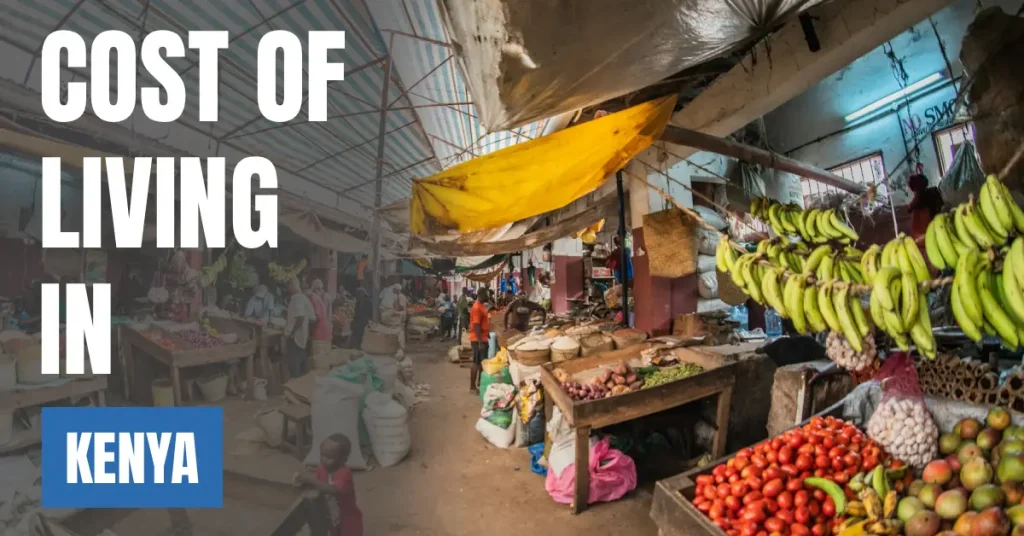
Cost of Living in Kenya in 2026: Rent, Salaries and Monthly Expenses
The cost of living in Kenya in 2026 depends heavily on where you live, the accommodation you choose and whether you rely on local services or prefer an international lifestyle. Nairobi generally has higher housing costs than Mombasa, Kisumu, Nakuru and Eldoret. However, even within Nairobi, rent can vary considerably between neighbourhoods.
On this pageTable of Content
As a practical planning estimate, a single person renting a modest apartment may need KSh 50,000 to KSh 90,000 per month, including rent. A more comfortable lifestyle in Nairobi can cost KSh 90,000 to KSh 150,000 or more. A family of four may need KSh 130,000 to KSh 250,000 monthly before expensive international school fees, depending on housing and transport choices. These are illustrative planning ranges, not official national averages.
Housing is often the largest expense, followed by food, transport and utilities. Families considering private healthcare and international education should allow substantially more than a basic household budget.
Prices are also changing. The Kenya National Bureau of Statistics reported annual inflation of 6.8% in September 2026, with food prices increasing by 9.5% and transport prices by 15.6% over the preceding year. These changes make current local quotations particularly important when planning a move.
Also Explore: Cost of Living in KazakhstanCost of Living in Kenya at a Glance
The following table provides estimated 2026 living costs in Kenyan shillings (KES or KSh). Prices are indicative and combine published consumer-price observations with illustrative household planning allowances.
| Expense | Estimated Cost | What It Includes |
|---|---|---|
| Single person, excluding rent | KSh 25,000 to 55,000/month | Food, transport, utilities, communications and basic personal spending |
| Single person, including rent | KSh 50,000 to 100,000/month | Modest independent accommodation and ordinary living expenses |
| Couple, including rent | KSh 80,000 to 160,000/month | Shared accommodation and household expenses |
| Family of four, including rent | KSh 130,000 to 250,000/month | Household expenses, excluding expensive private or international schooling |
| One-bedroom apartment outside Nairobi centre | KSh 20,000 to 50,000/month | Observed market range from a crowdsourced Nairobi dataset |
| One-bedroom apartment in central Nairobi | KSh 40,000 to 78,000/month | Observed market range; premium properties can exceed it |
| Groceries for one adult | KSh 12,000 to 25,000/month | Mostly home-prepared meals |
| Basic apartment utilities | KSh 4,000 to 12,000/month | Electricity, water and household services; usage varies |
| Home internet | KSh 3,000 to 7,500/month | Illustrative fixed broadband market range |
| Local transport | KSh 3,000 to 10,000/month | Regular public transport, depending on commuting frequency |
| Casual restaurant meal | KSh 300 to 1,000 | One meal, depending on venue and city |
Important: The household totals include rent, while the first single-person figure excludes it. The figures do not automatically include school tuition, vehicle ownership, international travel, significant medical treatment, debt repayments or immigration fees.
How Much Does It Cost to Live in Kenya Per Month?
A single renter can use approximately KSh 50,000 to KSh 100,000 per month as a starting budget, including housing. A lower amount may be possible with shared accommodation, while central Nairobi apartments and frequent private transport can raise spending significantly.
Monthly Cost for a Single Person
An adult cooking most meals at home and using public transport may spend around KSh 25,000 to KSh 55,000 before rent. Add accommodation according to the neighbourhood, housing quality and whether the property includes utilities.
Monthly Cost for a Couple
A couple sharing a modest apartment can plan around KSh 80,000 to KSh 160,000 per month including rent. Shared housing and internet costs help reduce spending per person, but dining, healthcare and transport remain important variables.
Monthly Cost for a Family of Four
A family of four may need KSh 130,000 to KSh 250,000 monthly including rent but excluding costly private or international schooling. Families needing larger homes, childcare, a private vehicle or comprehensive medical insurance could spend considerably more.
These estimates are intended for planning. There is no single dependable monthly amount that describes every Kenyan household.
Housing and Rent Prices in Kenya
Rent is one of the most important factors determining affordability in Kenya. Nairobi is particularly expensive in central and higher-demand residential areas, while smaller cities may offer lower rents for comparable accommodation.
According to Numbeo's 2026 consumer submissions, typical Nairobi rent observations include:
| Apartment Type | Average Monthly Rent | Observed Price Range |
|---|---|---|
| One bedroom, Nairobi city centre | KSh 55,658 | KSh 40,000 to 78,000 |
| One bedroom, outside Nairobi centre | KSh 29,500 | KSh 20,000 to 50,000 |
| Three bedrooms, Nairobi city centre | KSh 144,118 | KSh 100,000 to 200,000 |
| Three bedrooms, outside Nairobi centre | KSh 66,665 | KSh 50,000 to 100,000 |
| One bedroom, Mombasa city centre | KSh 25,000 | KSh 20,000 to 40,000 |
| Three bedrooms, Mombasa city centre | KSh 61,250 | KSh 45,000 to 82,000 |
These are crowdsourced observations rather than verified current rental listings. Actual rent can differ according to building age, furnishing, security, neighbourhood and lease terms.
Affordable and Expensive Areas
In Nairobi, neighbourhoods such as Kilimani, Kileleshwa, Westlands and Karen attract residents seeking particular amenities, security arrangements or larger properties. Accommodation in these areas may command a premium.
More budget-oriented renters often investigate areas farther from major employment districts or consider shared housing. However, a cheaper apartment is not always a cheaper overall choice if it creates a long and expensive daily commute.
Mombasa, Kisumu, Nakuru and Eldoret can offer alternatives to Nairobi's more expensive housing market. Property-specific quotations remain essential because high-end homes and popular coastal locations may still be costly.
Upfront Rental Expenses
New tenants should budget for more than the first month's rent. Common costs may include a refundable security deposit, utility connections, moving services, furniture, internet installation and building service charges.
Deposit requirements and agency charges depend on the individual agreement. Ask whether water, rubbish collection, parking, security and maintenance are included before signing a lease.
Buying Property in Kenya
Property purchase prices are highly location-specific. Foreign buyers also face different legal conditions from Kenyan citizens. Under Kenya's constitutional land framework, non-citizens generally hold land through leasehold tenure, subject to a maximum term of 99 years, rather than unrestricted freehold ownership.
Prospective buyers should obtain independent legal advice and verify the title, land classification, transfer taxes and permitted ownership structure.
Food and Grocery Costs in Kenya
A single adult who prepares most meals at home can use KSh 12,000 to KSh 25,000 per month as an indicative grocery allowance. Imported products, specialty foods and frequent supermarket convenience purchases can increase the total.
The following examples reflect 2026 Nairobi consumer-price observations and should not be treated as fixed retail prices.
| Grocery Item | Approximate Price |
|---|---|
| Milk, 1 litre | KSh 113 |
| White bread, 500 g | KSh 71 |
| White rice, 1 kg | KSh 262 |
| Eggs, 12 | KSh 211 |
| Chicken fillets, 1 kg | KSh 797 |
| Beef, 1 kg | KSh 791 |
| Tomatoes, 1 kg | KSh 125 |
| Bananas, 1 kg | KSh 127 |
| Bottled water, 1.5 litres | KSh 95 |
Kenya's food budget varies substantially with diet and shopping habits. Locally produced vegetables, maize flour, beans, rice and seasonal fruit may be more economical than imported convenience products.
The September 2026 official inflation figures show why grocery budgets require flexibility. National food and non-alcoholic beverage prices were 9.5% higher than a year earlier, although the price of individual products may rise or fall independently.
Restaurant and Eating-Out Costs
Eating out in Kenya can be relatively inexpensive at local establishments but much more costly at upscale restaurants, hotels and international dining venues.
| Dining Expense | Estimated Price |
|---|---|
| Inexpensive restaurant meal | KSh 300 to 1,000 |
| Mid-range restaurant meal for two | KSh 2,000 to 5,000 |
| Fast-food combo | KSh 800 to 1,500 |
| Cappuccino | KSh 200 to 450 |
The ranges are illustrative and informed by consumer submissions, not regulated menu prices. Local meals such as ugali, vegetables, beans and rice can help keep everyday dining costs down. Frequent restaurant deliveries, coffee-shop visits and international cuisine can make a noticeable difference to monthly spending.
Utilities: Electricity, Water and Cooking Gas
Basic utilities for an apartment may cost approximately KSh 4,000 to KSh 12,000 per month for many households, although consumption and housing conditions can produce higher bills.
Numbeo's 2026 Nairobi observations put combined basic utilities for an approximately 85-square-metre apartment near KSh 7,450 per month, with a wide reported range.
Electricity costs depend on consumption and applicable tariffs, levies and adjustments. Households using electric water heating or air conditioning may spend more. Water supply, waste collection and cooking gas can also be billed separately.
Before renting, ask whether the apartment uses prepaid electricity, has reliable water storage and requires separate payment for building services. Backup power and water delivery may create additional expenses where utilities are unreliable.
Internet and Mobile Phone Costs
Home broadband in Kenya commonly costs around KSh 3,000 to KSh 7,500 monthly within the consumer-price ranges reviewed. A mobile plan with a substantial data allowance may cost approximately KSh 1,000 to KSh 4,000.
In Nairobi, Numbeo's 2026 observations indicated broadband averaging about KSh 4,567 per month and mobile plans averaging approximately KSh 2,031.
Major providers include Safaricom, Airtel and fixed-broadband operators. Coverage, speed, fair-use policies and installation charges vary by address.
Remote workers should verify service availability before committing to a property. A backup mobile-data connection and occasional coworking space may be worthwhile additional expenses.
Transportation Costs in Kenya
Public transport is generally more affordable than owning a car or depending on private taxis. However, commuting costs vary with distance, traffic, route and travel time.
Matatus and Buses
Matatus, privately operated minibuses and shared vehicles, are a major form of everyday transport in Kenyan cities. Fares depend on the route, demand and traffic conditions.
Numbeo's 2026 Nairobi consumer observations show approximately KSh 100 for a local one-way journey, with a reported range of KSh 100 to KSh 200. These are indicative observations, not official fixed fares.
The same dataset lists an estimated monthly public-transport spending figure of around KSh 6,000. Kenya does not have a universally free public-transport system for residents, and travellers should not assume that one monthly ticket is accepted across all independently operated matatus.
Taxis and Ride-Hailing
Ride-hailing and private taxis provide more convenient door-to-door travel but can significantly increase monthly spending. Charges depend on distance, traffic, booking conditions and demand.
Someone who takes taxis every working day should budget separately from a commuter using matatus.
Motorcycles and Boda Bodas
Boda bodas are widely used for shorter journeys and can be convenient where traffic congestion is severe. Fares often require agreement before the journey. Passengers should consider safety, helmet availability and local operating conditions.
Fuel Prices and Car Ownership
According to Kenya's Energy and Petroleum Regulatory Authority, the pump-price period from October 15 to November 14, 2026 lists Nairobi super petrol at KSh 226.96 per litre and diesel at KSh 227.76 per litre.
Fuel is only one component of vehicle ownership. Insurance, parking, repairs, servicing, road-related fees and occasional unexpected maintenance can make a private car expensive.
Transport prices have also been rising. The official September 2026 consumer-price report recorded a 15.6% annual increase in the transport category, making older fare and fuel estimates less dependable.
Healthcare Costs and Insurance in Kenya
Healthcare in Kenya is not universally free. The country has public, faith-based and private healthcare providers, with eligibility, payment requirements and available services depending on the facility and insurance arrangements.
The Social Health Authority (SHA) administers healthcare financing arrangements that include the Social Health Insurance Fund (SHIF), alongside the Primary Healthcare Fund and the Emergency, Chronic and Critical Illness Fund.
How SHIF Contributions Work
Kenya's SHIF replaced the former National Hospital Insurance Fund arrangements. The contribution rate for salaried members is generally 2.75% of gross income, subject to a KSh 300 monthly minimum under the published contribution framework.
For example, 2.75% of a KSh 60,000 gross monthly salary is KSh 1,650. On a KSh 100,000 salary, it is KSh 2,750. These are contribution calculations, not estimates of private insurance premiums.
Healthcare benefits, eligibility and payment procedures depend on the applicable programme, registration status, participating facility and service. New residents should confirm their specific entitlement rather than assuming they qualify immediately for every publicly financed treatment.
Public Versus Private Healthcare
Public facilities can be less expensive for eligible patients, but service availability and waiting times differ by location. Private hospitals and specialists may offer additional choices at higher cost.
Anyone planning to relocate should account for insurance, prescriptions, routine consultations, dental treatment and emergency care. People with ongoing medical conditions should obtain direct quotations from insurers and treatment providers.
Do not treat a low advertised consultation price as the full cost of medical care. Diagnostics, hospital admission, specialist procedures and medication may be charged separately.
Education and Childcare Costs in Kenya
Education costs vary greatly between public schools, private Kenyan schools and international institutions. The choice of school can substantially change a family's cost of living.
Public Schools
Kenya provides public financing for basic education, and public schooling is generally much cheaper than private international education. However, parents may still face costs for uniforms, supplies, transport, meals, boarding or other permitted charges.
Non-Kenyan families should verify admission conditions, any applicable fees and documentation requirements with the school and relevant education authorities.
Private and International Schools
Private-school fees differ widely by curriculum, level and location. International schools are often a major household expense.
Numbeo's 2026 Nairobi dataset reports an illustrative international primary-school tuition average of around KSh 1.3 million per child annually, with a broad reported range of KSh 400,000 to more than KSh 2.5 million per year.
The same source indicates private full-day preschool averaging approximately KSh 33,750 monthly in Nairobi. These crowdsourced figures should not replace fee schedules issued directly by schools.
Families should also consider application fees, school transport, uniforms, meals, extracurricular activities and annual tuition increases.
University Education
University fees depend on institution, programme, funding status and whether the student is Kenyan or international. Students should obtain an official fee structure and budget separately for accommodation, transport, books and healthcare.
Average Salaries and Income in Kenya
There is no single salary that guarantees a comfortable lifestyle throughout Kenya. The amount required depends on location, household size, rent and financial commitments.
Numbeo's June 2026 crowdsourced national dataset reported an average monthly net salary of approximately KSh 44,271, while Nairobi observations were around KSh 54,823. These are respondent-based estimates, not official nationwide payroll averages.
The distinction matters because the income required to rent independently in a desirable Nairobi neighbourhood may be higher than the take-home pay reported by some workers.
What Salary Is Enough to Live Comfortably in Kenya?
For a single renter, net monthly income of KSh 70,000 to KSh 120,000 may support a moderate lifestyle, depending on rent. In more expensive Nairobi neighbourhoods, a higher income may be necessary.
A couple may find a combined net income of around KSh 120,000 to KSh 200,000 useful for planning. Families requiring private schooling, larger housing or regular car travel often need significantly more.
These are illustrative affordability targets rather than official salary thresholds. They should be adjusted for savings goals and actual household obligations.
Minimum Wage in Kenya in 2026
Kenya does not have one identical minimum wage for every employee. Statutory rates vary by occupation, industry and geographic zone.
The Regulation of Wages (General) (Amendment) Order, 2026, Legal Notice 108, introduced rates effective May 1, 2026, with a corrected schedule published in June.
| Work Location | General Labourer Minimum Monthly Basic Wage |
|---|---|
| Nairobi, Mombasa, Kisumu, Nakuru and Eldoret cities | KSh 18,047.40 |
| Former municipalities and specified town councils including Mavoko, Ruiru and Limuru | KSh 16,650.95 |
| Other areas | KSh 9,628.07 |
These amounts apply to the specified general-labourer occupational category and are basic monthly rates excluding housing allowance. Different occupations have different statutory minimums. Daily and hourly schedules include housing under the published wage framework.
The corrected June schedule is especially important because the initial May publication contained discrepancies. Readers should use the corrected 2026 legal notice rather than an outdated 2024 wage table.
Even the higher general-labourer minimum is substantially below the estimated cost of independently renting a modest Nairobi apartment and maintaining an ordinary household. Shared housing, additional family earnings and other support may therefore be necessary.
Taxes and Payroll Deductions Affecting Affordability
Gross salary is not the same as disposable income. Kenyan employees may have several statutory deductions before receiving their take-home pay.
Personal Income Tax
The Kenya Revenue Authority publishes progressive individual PAYE tax bands ranging from 10% to 35%, with a standard personal relief of KSh 2,400 per month for qualifying resident taxpayers. Actual PAYE depends on taxable pay, applicable deductions and reliefs.
Affordable Housing Levy
The Affordable Housing Levy generally requires a 1.5% deduction from an employee's gross monthly salary, with a separate matching 1.5% employer contribution. Employees should not mistake the employer contribution for an additional personal deduction.
National Social Security Fund
From February 2026, the fourth implementation year of Kenya's NSSF contribution schedule uses a lower earnings limit of KSh 9,000 and an upper earnings limit of KSh 108,000.
The maximum employee NSSF contribution is KSh 6,480 per month, matched by the employer at the applicable upper earnings limit. For eligible earnings below that limit, the employee contribution is generally calculated at 6%.
Social Health Contributions
SHIF contributions are generally 2.75% of gross income, subject to the minimum contribution framework. Employees need to consider this alongside PAYE, NSSF and the housing levy.
For example, a gross salary of KSh 100,000 implies an employee NSSF contribution of approximately KSh 6,000, a SHIF contribution of KSh 2,750 and a housing levy of KSh 1,500 before calculating PAYE. The resulting take-home salary will be lower than KSh 89,750 once applicable income tax is deducted.
Income tax treatment may change with individual circumstances, residence status and allowable deductions. Employees should check current KRA rules or a payroll calculator for their precise net pay.
Realistic Sample Monthly Budgets in Kenya
The examples below show exactly how monthly totals are calculated. They are illustrative household spending plans built around observed market ranges, not official surveys of what every Kenyan household spends.
| Monthly Expense | Budget Single | Moderate Single | Couple | Family of Four |
|---|---|---|---|---|
| Rent | KSh 15,000 | KSh 35,000 | KSh 45,000 | KSh 70,000 |
| Utilities | KSh 3,000 | KSh 6,000 | KSh 8,000 | KSh 12,000 |
| Groceries | KSh 12,000 | KSh 20,000 | KSh 30,000 | KSh 48,000 |
| Transport | KSh 4,000 | KSh 7,000 | KSh 12,000 | KSh 20,000 |
| Internet and mobile | KSh 2,000 | KSh 5,000 | KSh 6,000 | KSh 8,000 |
| Healthcare and insurance allowance | KSh 2,000 | KSh 4,000 | KSh 7,000 | KSh 12,000 |
| Dining, personal and leisure | KSh 4,000 | KSh 10,000 | KSh 15,000 | KSh 25,000 |
| Total Including Rent | KSh 42,000 | KSh 87,000 | KSh 123,000 | KSh 195,000 |
Budget Assumptions
- Budget-conscious single: Shared accommodation or low-cost housing, mostly home-cooked meals and public transport. This is a relatively constrained lifestyle.
- Moderate single: Modest independent apartment, regular broadband, ordinary groceries and some dining out.
- Couple: Shared apartment, two adults, combined grocery and transport spending, with no childcare expenses.
- Family of four: Two adults and two children, larger accommodation and ordinary household spending, without premium private-school tuition.
The healthcare allowances are reserves rather than guaranteed insurance quotations. These examples exclude income taxes, payroll deductions, major school fees, vehicle purchases, retirement savings, large medical bills and immigration expenses.
A family using international schools could add several hundred thousand shillings per child each year, depending on the institution. Monthly equivalents of tuition should be budgeted even when fees are billed termly.
Cost of Living by City in Kenya
Housing choice, commuting patterns and local infrastructure can matter more than headline national averages. The following comparison describes typical cost pressures rather than assigning an unsupported exact city-wide price index.
| City | General Cost Profile | Key Considerations |
|---|---|---|
| Nairobi | Higher housing costs in many central and premium areas | Employment access, traffic, private schools and housing quality |
| Mombasa | Potentially lower ordinary apartment rents than Nairobi | Coastal neighbourhoods, tourism-related prices and cooling expenses |
| Kisumu | Often attractive for lower-cost housing searches | Property availability, transport and local employment |
| Nakuru | Alternative to Nairobi's more expensive districts | Residential location and commuting requirements |
| Eldoret | Potentially economical for locally oriented households | Housing availability and access to specialist services |
Nairobi and Mombasa have enough publicly accessible consumer submissions to illustrate meaningful differences in some categories, especially apartment rent. Comparable current city-level datasets for every smaller city are more limited.
For a reliable relocation decision, compare actual rental properties, travel times and local service costs instead of relying only on a national average.
How Does Kenya Compare With Tanzania, Uganda and South Africa?
Kenya can be competitive with neighbouring countries for certain everyday expenses, but it is not consistently cheaper or more expensive in every category.
Comparisons between Nairobi and Dar es Salaam, Kampala or Johannesburg can produce different results depending on the neighbourhood, type of housing and whether international-standard services are included.
- Kenya versus Tanzania: Compare Nairobi and Dar es Salaam rents, transport and imported-goods prices separately. A general claim that one country is always cheaper is unreliable.
- Kenya versus Uganda: Kampala and Nairobi have different housing markets, transport structures and salary conditions. Household-specific comparisons are more useful than broad rankings.
- Kenya versus South Africa: Johannesburg, Cape Town and Nairobi differ considerably in rent, electricity costs, security-related expenses and private services.
Available crowdsourced cost-of-living databases can help with broad comparisons, but results change with respondent samples, exchange rates and the selected cities. No precise cross-country percentage difference is asserted here because a sufficiently consistent October 2026 comparison dataset was not established.
Hidden Costs New Residents Often Overlook
Moving to Kenya involves expenses that may not appear in basic cost-of-living estimates.
- Rental deposits and moving: Upfront rent, deposits, furniture and relocation services can create a large initial cash requirement.
- Security and building charges: Some properties charge separately for guards, maintenance, parking or waste collection.
- Backup utilities: Water storage, additional mobile data, generators or alternative power arrangements may be necessary.
- Health coverage: Private insurance, prescriptions, specialist treatment and emergency care can exceed ordinary monthly medical allowances.
- Transport: Vehicle insurance, parking, maintenance and traffic-related fuel use may substantially increase spending.
- School-related expenses: Admission charges, transport, uniforms, meals and extracurricular activities can add to tuition.
- Immigration and legal costs: Permits, renewals, documentation and professional advice may require separate budgets.
- Currency changes: Residents earning foreign currency may see their effective costs change with exchange rates.
A financial reserve for unexpected medical, household and relocation expenses is sensible, especially during the first months after arrival.
Cost of Living Versus Residency Financial Requirements
The amount needed to live in Kenya is different from the amount required to qualify for a residence permit. Immigration authorities may set income, investment, professional or other eligibility conditions unrelated to an individual's actual spending.
Class K Permit for Ordinary Residents
Kenya's Directorate of Immigration Services states that its Class K ordinary resident permit generally applies to qualifying applicants aged at least 35 with assured annual income of at least USD 24,000 from qualifying non-employment sources.
The published official Class K page lists a non-refundable processing fee of KSh 20,000 and an issuance fee of KSh 250,000 per year, with specific treatment for East African Community nationals.
This income threshold is an immigration eligibility condition, not a government estimate of what every person needs to spend living in Kenya. Class K also places restrictions on employment and income-generating activity without an appropriate permit.
Digital Nomads and Remote Workers
Kenya also has a Class N permit category for eligible digital nomads working remotely for foreign employers or serving clients outside Kenya. The official immigration information describes one- or two-year renewable permits, subject to requirements.
Applicants should check the current financial, documentary and fee conditions on the government's immigration portal rather than assuming tourist entry allows unrestricted long-term remote work.
Employees and Other Residents
Work permits and other immigration categories have their own criteria. The monthly household budgets in this article do not establish visa eligibility, legal residence, tax residency or permission to work.
Foreign residents should verify their legal status, health-system eligibility and tax obligations before relying on any projected relocation budget.
Is Kenya Affordable for Expats and New Residents?
Kenya can offer relatively accessible everyday living costs for residents who earn sufficient income and adapt to local housing, transport and shopping options. Affordability becomes more challenging when households require premium accommodation, international education, extensive private healthcare or regular private transport.
For an individual earning KSh 50,000 net per month, a KSh 35,000 apartment would consume 70% of take-home income before groceries, electricity or commuting. A household with KSh 150,000 net income renting a KSh 45,000 apartment would spend 30% on rent, leaving more flexibility for essentials and savings.
These examples demonstrate why housing affordability should be considered alongside income rather than evaluating Kenya only against prices in foreign currencies.
Practical Ways to Reduce Living Costs
- Compare housing costs and commuting time together before choosing a neighbourhood.
- Shop for seasonal produce and regularly compare local market and supermarket prices.
- Use public transport where routes and personal safety conditions make it practical.
- Check internet coverage and utility reliability before signing a rental agreement.
- Compare public, private and international school options early if relocating with children.
- Confirm salary deductions and healthcare coverage before accepting employment.
- Keep an emergency reserve for healthcare, repairs and unexpected relocation costs.
Conclusion: How Much Should You Budget for Kenya in 2026?
Kenya can be affordable relative to many higher-income destinations, but the experience varies sharply between households. A single renter may need KSh 50,000 to KSh 100,000 monthly for modest independent living, while couples and families should plan around their housing, schooling and healthcare needs.
The most important expense is often rent. Nairobi's more expensive housing markets can place considerable pressure on salaries, while other cities and lower-cost neighbourhoods may offer better value.
Rising food and transport costs, statutory salary deductions and private-service expenses should also influence financial planning. Before relocating, obtain current rental quotations, calculate your actual net income and confirm the services included in your chosen accommodation.
Sources and Methodology
This article was reviewed on October 28, 2026. It draws on Kenyan government publications, official regulators, immigration authorities and crowdsourced consumer-price databases.
Official sources were used for inflation, fuel prices, payroll rules, social contributions, immigration requirements and minimum wages. Numbeo observations from 2026 were used to illustrate housing, groceries, restaurants, utilities and household-service prices.
Household budget tables are original illustrative calculations based on these observed price ranges. They are not official survey averages or guaranteed prices.
Numbeo's June 2026 national Kenya dataset reported 1,390 entries from 119 contributors over the preceding 12 months. This is useful market information but is not a nationally representative government survey. City samples may be smaller and unevenly distributed.
Prices, exchange rates, rental listings and government rules may change. Where sources were not directly comparable or current verification was insufficient, this article avoids publishing precise unsupported estimates.
References
- Kenya National Bureau of Statistics: September 2026 Consumer Prices and Inflation
- Kenya National Bureau of Statistics: CPI Explorer
- Numbeo: Cost of Living in Kenya
- Numbeo: Cost of Living in Nairobi
- Numbeo: Cost of Living in Mombasa
- Energy and Petroleum Regulatory Authority: Pump Prices
- Kenya Revenue Authority: PAYE Rates
- Kenya Revenue Authority: Affordable Housing Levy
- Kenya Revenue Authority: SHIF Contribution Calculator
- National Social Security Fund: 2026 Contribution Rates
- 2026 Kenya Minimum Wage Schedule, referencing Legal Notice 108 of 2026
- Directorate of Immigration Services: Class K Ordinary Residents
- Kenya eFNS: Class N Digital Nomads
- Kenya National Bureau of Statistics: Economic Survey 2026
Frequently Asked Questions
How much does it cost to live in Kenya per month in 2026?
A single renter may need approximately KSh 50,000 to KSh 100,000 monthly, including modest accommodation and basic living costs. Living expenses excluding rent may be around KSh 25,000 to KSh 55,000. Central Nairobi, private transport and international lifestyle preferences can increase spending substantially. These are planning ranges rather than official national averages.
Is Kenya expensive to live in?
Kenya can be relatively affordable for people using local services and earning sufficient income, but it is not inexpensive for everyone. Rent, especially in desirable Nairobi neighbourhoods, can absorb a large share of local salaries. Imported goods, private healthcare and international schooling also raise costs. Smaller cities and shared accommodation may offer more affordable alternatives.
How much is monthly rent in Nairobi?
Numbeo's 2026 observations suggest one-bedroom apartments in central Nairobi average around KSh 55,658 per month, compared with about KSh 29,500 outside the centre. Three-bedroom apartments average approximately KSh 144,118 centrally and KSh 66,665 outside the centre. These are crowdsourced estimates. Actual properties can cost substantially more or less depending on location and quality.
What salary is enough to live comfortably in Kenya?
A single renter may consider net monthly income of approximately KSh 70,000 to KSh 120,000 for a moderate lifestyle, depending on housing and city. A couple may use KSh 120,000 to KSh 200,000 combined net income as a planning range. These are not official salary requirements, and households with children or expensive accommodation may need considerably more.
What is the minimum wage in Kenya in 2026?
Kenya's minimum wage varies by occupation and work location. Under the corrected 2026 General Wages Order, effective May 1, the monthly basic wage for a general labourer is KSh 18,047.40 in Nairobi, Mombasa, Kisumu, Nakuru and Eldoret. The corresponding rates are KSh 16,650.95 in specified municipalities and KSh 9,628.07 in other areas. Housing allowances and occupation-specific rules also matter.
Is healthcare free in Kenya?
Healthcare in Kenya is not universally free. Public healthcare financing operates through several programmes administered by the Social Health Authority, including SHIF. Eligibility, benefits and payment obligations depend on registration, facility and service. Salaried members generally contribute 2.75% of gross income, subject to the minimum contribution framework. Private treatment, prescriptions and additional services may involve separate charges.
How much does transport cost in Kenya?
Transport costs depend on city, route and travel habits. Nairobi consumer submissions from 2026 indicate a local one-way public transport fare around KSh 100, while a regular commuter might budget several thousand shillings per month. Private taxis and vehicle ownership cost more. Nairobi petrol was listed at KSh 226.96 per litre for October 15 to November 14, 2026.
How much does a family of four need per month in Kenya?
A family of four may use KSh 130,000 to KSh 250,000 monthly as an initial planning range, including rent and ordinary household expenses but excluding expensive international schooling. A sample household budget in this guide totals KSh 195,000 per month. Housing, childcare, medical insurance and school choice can increase the total substantially, particularly in Nairobi.
Which areas of Kenya are cheaper to live in?
Some residential areas outside central Nairobi and cities such as Kisumu, Nakuru and Eldoret may offer lower housing costs than premium Nairobi neighbourhoods. Mombasa also shows lower apartment-rent observations in the 2026 consumer data reviewed. However, location alone does not guarantee savings. Compare actual rent, commuting, utilities and access to healthcare and schools before choosing where to live.
Is Kenya cheaper than Tanzania or Uganda?
Kenya is not consistently cheaper or more expensive than Tanzania or Uganda across all expense categories. Nairobi, Dar es Salaam and Kampala have different housing, transport and consumer markets. The result depends on the selected cities, neighbourhoods and household lifestyle. Direct comparisons using recent rental listings and comparable consumer-price data are more reliable than applying a single national ranking.
How much money is required to relocate to Kenya?
Relocation costs depend on housing deposits, moving expenses, insurance, travel and immigration status. These upfront expenses are separate from monthly living costs. For Kenya's Class K ordinary resident permit, eligible applicants generally need assured annual income of at least USD 24,000 and must meet additional conditions. Other permits have different requirements, so applicants should verify the correct immigration category before moving.
Join the conversation
Have thoughts on this topic? Share them with others.
Ask questions, share experience, and learn from the Visaboards Community.