
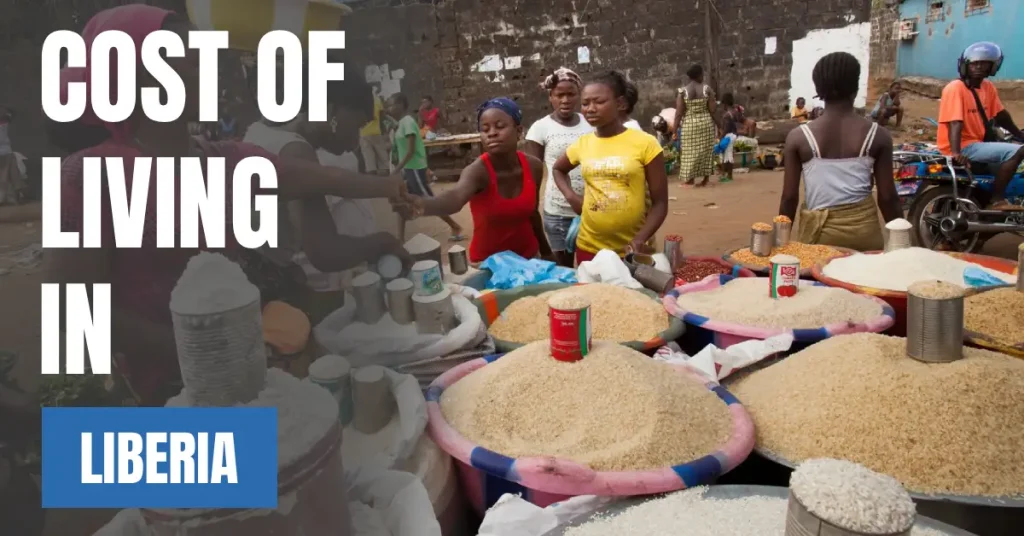
Cost of Living in Liberia in 2026: Rent, Food, Salaries and Monthly Expenses
The cost of living in Liberia in 2026 depends heavily on location, accommodation standards, household income and access to reliable electricity, water and healthcare. Monrovia, the capital, has the country's largest concentration of international businesses, employment opportunities and services, but accommodation suitable for foreign professionals can be substantially more expensive than basic local housing.
On this pageTable of Content
As a practical planning estimate, a single person renting independently may need approximately US$600 to US$1,400 per month, including rent. A couple may require US$1,000 to US$2,200, while a family of four may spend US$1,500 to US$3,500 or more. These are illustrative budgets, not official national expenditure averages. International-standard housing, private schooling, backup electricity and comprehensive medical insurance can push costs considerably higher.
Liberia has a dual-currency economy. Both the Liberian dollar (LRD) and United States dollar (USD) circulate, and many property rentals and imported products are priced in US dollars. On 29 October 2026, the Central Bank of Liberia published an indicative exchange-rate spread of L$169.4387 buying and L$171.4858 selling per US$1. For easier comparison, this guide uses approximately L$170 per US$1, with prices shown primarily in Liberian dollars and their approximate US dollar equivalents.
The most important consideration is the difference between basic local expenses and the cost of maintaining a higher-service lifestyle. Food from local markets and shared transport can be relatively inexpensive, while imported groceries, reliable power, private healthcare and professionally managed housing may require a substantially larger budget.
Also Explore: Cost of Living in LuxembourgCost of Living in Liberia at a Glance
A moderate single-person budget in Liberia may range from approximately L$102,000 to L$238,000 (US$600 to US$1,400) monthly, including rent. The actual cost depends on whether the person lives in shared accommodation, a basic apartment or a more expensive property with reliable utilities.
| Expense | Estimated Cost in LRD | Approximate USD |
|---|---|---|
| Single person excluding rent | L$51,000–L$119,000/month | US$300–US$700 |
| Single person including rent | L$102,000–L$238,000/month | US$600–US$1,400 |
| Couple including rent | L$170,000–L$374,000/month | US$1,000–US$2,200 |
| Family of four including rent | L$255,000–L$595,000+/month | US$1,500–US$3,500+ |
| Basic one-bedroom rental | L$25,500–L$68,000/month | US$150–US$400 |
| Better-equipped one-bedroom rental | L$59,500–L$153,000+/month | US$350–US$900+ |
| Family-sized rental accommodation | L$68,000–L$255,000+/month | US$400–US$1,500+ |
| Groceries for one person | L$34,000–L$68,000/month | US$200–US$400 |
| Groceries for four people | L$68,000–L$153,000/month | US$400–US$900 |
| Electricity, water and related utilities | L$10,200–L$34,000+/month | US$60–US$200+ |
| Home internet | L$3,400–L$10,200+/month | US$20–US$60+ |
| Mobile phone and data | L$850–L$3,400/month | US$5–US$20 |
| Inexpensive restaurant meal | L$510–L$1,700 | US$3–US$10 |
| Basic monthly transport allowance | L$4,250–L$17,000 | US$25–US$100 |
These are indicative planning ranges rather than verified nationwide average prices. They combine the existing Visaboards guide, limited crowdsourced observations and adjustments for different housing and service standards. The LRD amounts are illustrative conversions using L$170 per US$1, not actual retail quotes in Liberian dollars.
Official exchange rates change, and currency conversion costs may differ between banks and money changers. For current rates, consult the Central Bank of Liberia.
How Much Does It Cost to Live in Liberia Per Month?
A single person living independently in Liberia may budget approximately US$600 to US$1,400 monthly, including rent and ordinary expenses. Someone sharing accommodation or following a local spending pattern could spend less. A foreign professional seeking reliable electricity, air conditioning, private transport and higher-standard accommodation could spend considerably more.
The estimated US$300 to US$700 monthly cost excluding rent covers food, a contribution toward utilities, local transport, communications and routine personal expenses. It does not include rent, major medical treatment, private school fees or large one-time expenses.
Monthly costs vary particularly because Liberia has substantial differences in housing quality, infrastructure access and imported-product availability. Two households paying similar rent can have very different electricity, fuel and water expenses.
Monthly Living Costs for Students
A student sharing accommodation may aim for approximately US$350 to US$700 per month, excluding tuition. This assumes relatively economical housing, local meals and limited personal spending.
Actual expenses depend on the university, campus location, transport requirements and accommodation arrangements. Students should request current housing and tuition information directly from their institution rather than relying on a general national estimate.
Housing and Rent Prices in Liberia
Rent is one of the largest household expenses in Liberia, particularly in Monrovia and neighbourhoods popular with international organisations, business professionals and expatriate families.
Basic apartments and rooms may be comparatively inexpensive, but properties offering dependable electricity, water storage, security, air conditioning and maintained access roads can cost substantially more.
How Much Is Rent in Monrovia?
A basic one-bedroom apartment may cost around US$150 to US$400 monthly, while a more modern or better-equipped apartment can cost US$350 to US$900 or more. Larger homes, serviced accommodation and premium properties may exceed these ranges.
| Accommodation Type | Planning Range in LRD | Approximate USD |
|---|---|---|
| Shared room or basic accommodation | L$17,000–L$51,000 | US$100–US$300 |
| Basic one-bedroom apartment | L$25,500–L$68,000 | US$150–US$400 |
| Better-equipped one-bedroom apartment | L$59,500–L$153,000+ | US$350–US$900+ |
| Basic family-sized apartment | L$68,000–L$136,000 | US$400–US$800 |
| Higher-standard family accommodation | L$136,000–L$255,000+ | US$800–US$1,500+ |
Housing data for Liberia is particularly limited. Numbeo's January 2026 country page reported only five price entries from two contributors during the preceding 12 months, making its averages unsuitable as authoritative national benchmarks.
The existing Visaboards article quotes US$350 to US$600 for centrally located one-bedroom properties, while Numbeo's sparse observations show lower figures for some basic properties. These differences likely reflect varying locations and standards, but the small sample prevents a reliable national market average.
Rental Costs Beyond Monrovia
Gbarnga, Buchanan, Kakata and other regional locations may offer lower-cost accommodation, particularly outside commercial centres. However, rental availability can be limited and property quality varies.
A cheaper property may lack reliable power, piped water, secure parking or dependable internet. These infrastructure differences should be included when comparing regional and capital-city housing costs.
Rental Deposits and Upfront Payments
Some Liberian rental arrangements require substantial advance payments rather than a simple monthly payment schedule. The amount and terms are not uniform, so tenants should confirm whether rent is payable monthly, quarterly, semiannually or for a longer period.
Ask whether the quoted price includes electricity, security, maintenance, internet, water supply and generator operation. Obtain a written agreement and verify ownership or authorised management before transferring substantial funds.
Foreign buyers should also obtain legal advice before purchasing property. Liberia restricts land ownership by non-citizens, and long-term leasing arrangements require careful legal review.
Food and Grocery Costs in Liberia
Groceries for one adult may cost around US$200 to US$400 per month, depending on whether the household primarily buys local food or imported products. A family of four may spend approximately US$400 to US$900 monthly.
Rice is a staple food, alongside cassava, plantains, vegetables, fish and locally produced ingredients. Shopping in local markets can reduce costs, while imported dairy products, packaged foods and specialist dietary items can be much more expensive.
| Grocery Item | Indicative USD Price | Approximate LRD |
|---|---|---|
| Milk, 1 litre | US$1.40–US$2.50 | L$238–L$425 |
| Bread, approximately 500 g | US$1.00–US$2.80 | L$170–L$476 |
| Rice, 1 kg | US$0.80–US$5.20+ | L$136–L$884+ |
| Eggs, 12 | US$1.80–US$4.80 | L$306–L$816 |
| Chicken, 1 kg | US$3.50–US$12.00+ | L$595–L$2,040+ |
| Beef, 1 kg | US$5.00–US$14.00+ | L$850–L$2,380+ |
| Bottled water, 1.5 litres | US$0.70–US$3.00 | L$119–L$510 |
These figures illustrate the unusually wide variation between local-market assumptions and small-sample online observations. For example, the existing Visaboards guide quotes rice around US$0.80 to US$1.50 per kilogram, while Numbeo's sparse 2026 dataset reports a substantially higher average. Different brands, sales locations and reporting methods make these figures difficult to reconcile.
For accurate planning, new residents should price an actual basket of groceries in the neighbourhood where they intend to live. Food allowances should also reflect the cost of safe drinking water and any imported products needed regularly.
Restaurants and Eating Out in Liberia
Eating out in Liberia can be economical at local food establishments, while international restaurants, hotels and imported-food menus can be substantially more expensive.
| Food or Activity | Estimated USD Cost |
|---|---|
| Basic local meal | US$3–US$7 |
| Inexpensive restaurant meal | US$5–US$10 |
| Mid-range meal for two | US$20–US$50+ |
| Fast-food combination meal | US$5–US$12 |
| Coffee | US$1.50–US$5 |
| Basic monthly gym membership | US$15–US$40+ |
These are indicative consumer-price ranges rather than verified restaurant menus. Regular home cooking and locally prepared food are generally the easiest ways to reduce dining expenditure.
Electricity, Water and Utility Costs
Utilities require careful planning in Liberia because the availability and reliability of infrastructure differ considerably between properties. Households may rely on grid electricity, generators, inverters, water tanks or privately arranged water supplies.
For budgeting, basic utility expenses may be approximately US$60 to US$200 per month, excluding unusually high generator fuel consumption. Homes with frequent air-conditioning use, large generators or substantial water deliveries may cost considerably more.
Electricity Tariffs in Liberia in 2026
The Liberia Electricity Corporation introduced a new approved tariff structure effective 1 January 2026, covering the period through 31 December 2028, subject to regulatory adjustments.
For ordinary residential customers, the published tariff including the applicable 12% goods and services tax is US$0.246 per kilowatt-hour. The monthly fixed charge is US$2.240 for prepaid residential service and US$4.245 for postpaid residential service.
| Residential Electricity Item | Approved Charge in USD |
|---|---|
| Residential energy charge, including GST | US$0.246/kWh |
| Prepaid residential fixed charge | US$2.240/month |
| Postpaid residential fixed charge | US$4.245/month |
| Social tariff energy charge, including GST | US$0.146/kWh |
At 200 kWh per month, the energy charge alone is US$49.20. Adding the prepaid fixed charge gives approximately US$51.44 before any other applicable adjustments. At 400 kWh, the corresponding calculation is approximately US$100.64.
These figures apply to eligible grid-connected residential customers using the stated tariff. Generator fuel, equipment, maintenance and private electricity arrangements are separate expenses.
The Liberia Electricity Corporation publishes the approved tariff schedule.
Water and Backup Power
Some households pay separately for water deliveries, filtration, storage and pumping. Backup electricity may also be necessary where grid supply is unavailable or unreliable.
Before renting, ask whether the property has an independent water tank, how electricity is metered, who pays for generator fuel and whether monthly utility costs have been documented.
Internet and Mobile Phone Costs
Residents may budget approximately US$20 to US$60 or more monthly for home internet and US$5 to US$20 for mobile service and data. Actual charges depend on the provider, location, data allowance and connection technology.
Mobile connectivity may be sufficient for routine communication, but people working remotely should check actual coverage and speeds at their chosen property. Maintaining a secondary connection can be useful for work that depends on uninterrupted internet access.
Business-grade connections or more reliable installations may cost significantly more than ordinary consumer plans.
Transportation Costs in Liberia
Local transport in Liberia includes shared taxis, minibuses and motorcycle taxis, commonly known as pehn-pehn. A person using basic shared transport may budget around US$25 to US$100 monthly, depending on commuting distance and frequency.
Short local journeys may cost less than private taxi services. However, there is no single nationwide fixed fare for all transport types, and the existing article's per-kilometre taxi estimate should not be treated as an official regulated tariff.
Private transport can become a major expense for residents travelling regularly between different parts of Monrovia or working in locations with limited public transport.
Car ownership introduces additional costs for fuel, insurance, repairs, tyres and maintenance. Poor road conditions or seasonal travel difficulties may also increase vehicle operating costs, especially outside the capital.
Healthcare Costs and Medical Insurance
Healthcare in Liberia is not universally free, and access varies across public facilities, private clinics and specialised services. Some publicly supported healthcare services are available, but patients may still face out-of-pocket costs for medicines, diagnostic testing, transport or treatment unavailable locally.
The existing Visaboards guide estimates ordinary consultations at around US$10 to US$20 and specialist appointments at US$20 to US$35. These are indicative private-service price estimates, not nationally regulated medical fees.
Residents should consider that healthcare affordability involves more than consultation prices. Reliable diagnostics, specialist availability, emergency transport and access to medicines can have a substantial impact on the total cost.
Foreign residents and employees should confirm exactly which services are covered by employer-sponsored medical insurance. For complex or specialised treatment, international evacuation coverage may be worth considering, but overseas treatment and evacuation should not be assumed to be included in standard insurance.
Public healthcare eligibility, private facility prices and insurance benefits should be verified before relocation.
Education and Childcare Costs
Education costs vary substantially between public schools, private institutions and international schools. Public education is generally less expensive, but families should investigate actual expenses for uniforms, supplies, transport, examinations and school contributions.
The existing Visaboards guide gives a broad annual private-school allowance of approximately US$400 to US$2,500, but this should not be interpreted as a confirmed nationwide school-fee range. International-standard education may cost considerably more.
Parents should compare school fees together with admissions charges, textbooks, transport, meals and any additional activities.
Public and private schools can differ in class sizes, facilities, resources and curriculum. For families relocating with children, the availability of a suitable school near their home may be as important as tuition.
Salaries and Minimum Wage in Liberia in 2026
Liberia does not have one simple monthly minimum wage that applies equally to every worker. The published minimum wage figures vary by employment category, and the statutory amounts are low compared with the cost of independently renting urban housing.
WageIndicator's June 2026 information lists the minimum for unskilled labourers at US$0.68 per hour or US$5.50 per day. For domestic or casual workers, it lists US$0.43 per hour or US$3.50 per day. These rates are shown as effective from 26 June 2015, and the June 2026 listing does not establish that a new increase occurred in 2026.
| Worker Category | Published Minimum Hourly Rate | Published Daily Rate |
|---|---|---|
| Unskilled labourers | US$0.68 | US$5.50 |
| Domestic and casual workers | US$0.43 | US$3.50 |
The hourly and daily rates are separately reported figures and should not be converted into a universal statutory monthly wage without checking the applicable working hours and employment category.
For illustration, multiplying the daily US$5.50 rate by 22 working days gives US$121 per month, while US$3.50 multiplied by 22 days gives US$77. These are mathematical examples, not official monthly minimum wages.
See WageIndicator's Liberia minimum wage information for the published category rates.
What Is the Average Salary in Liberia?
A reliable, current nationwide average take-home salary for 2026 could not be established from a sufficiently representative official dataset in the sources reviewed.
Numbeo reports a monthly net salary observation of approximately US$700, but its Liberia dataset contains very few contributors. That number should not be described as the official or representative average national salary.
Salaries differ significantly across informal employment, local private businesses, government services, mining, telecommunications, international organisations and specialist professional positions.
What Salary Is Needed to Live Comfortably in Liberia?
A single renter in Monrovia may aim for approximately US$1,000 to US$1,800 monthly in take-home income for a moderate lifestyle with some financial flexibility. A couple or family generally needs a larger combined income.
These are household budgeting targets, not measured salary averages or legal earnings thresholds. People living with relatives or using lower-cost shared accommodation may manage on less, while foreign professionals requiring higher-standard housing, private transport and comprehensive insurance may need substantially more.
Income Tax and Take-Home Pay in Liberia
Income tax affects the amount workers can actually spend on accommodation and daily necessities. Liberia uses progressive personal income tax bands for resident individuals.
According to the Liberia Revenue Authority, the annual resident personal income tax schedule includes a zero-rate band up to L$70,000, followed by progressive rates of 5%, 15% and 25% applied through the relevant tax formulas.
| Annual Taxable Income in LRD | Resident Income Tax Calculation |
|---|---|
| Up to L$70,000 | 0% |
| L$70,001–L$200,000 | 5% of income above L$70,000 |
| L$200,001–L$800,000 | L$6,500 plus 15% of income above L$200,000 |
| Above L$800,000 | L$96,500 plus 25% of income above L$800,000 |
For non-resident individuals, PwC's September 2026 tax summary reports a flat personal income tax rate of 20%. Actual taxation depends on residence status, income source, deductions and the relevant employment arrangements.
Employees should request a net-pay estimate before accepting an offer, particularly where compensation involves both currencies, housing benefits or employer-provided allowances.
Source: Liberia Revenue Authority, Personal Income Tax.
Realistic Monthly Budget Examples for Liberia
These four examples demonstrate how monthly expenses may add up. All totals include rent. They are constructed planning scenarios rather than official household expenditure figures.
Budget-Conscious Single Person
This budget assumes shared or basic accommodation, mostly locally prepared meals, shared transport and limited discretionary spending.
| Expense | Monthly Cost (USD) |
|---|---|
| Rent | US$150 |
| Electricity and water | US$45 |
| Groceries | US$180 |
| Transport | US$35 |
| Internet and mobile | US$25 |
| Healthcare and insurance allowance | US$30 |
| Leisure and miscellaneous | US$55 |
| Total Including Rent | US$520 (approximately L$88,400) |
Moderate Single Person
This assumes an independent apartment, moderate utility usage, a mixture of local and imported groceries and occasional meals outside the home.
| Expense | Monthly Cost (USD) |
|---|---|
| Rent | US$450 |
| Electricity and water | US$100 |
| Groceries | US$270 |
| Transport | US$60 |
| Internet and mobile | US$45 |
| Healthcare and insurance allowance | US$65 |
| Dining and miscellaneous | US$160 |
| Total Including Rent | US$1,150 (approximately L$195,500) |
Couple Living Together
This budget assumes two adults sharing accommodation, ordinary household expenses and modest leisure spending.
| Expense | Monthly Cost (USD) |
|---|---|
| Rent | US$650 |
| Electricity and water | US$130 |
| Groceries | US$450 |
| Transport | US$100 |
| Internet and mobile | US$60 |
| Healthcare and insurance allowance | US$100 |
| Dining and miscellaneous | US$210 |
| Total Including Rent | US$1,700 (approximately L$289,000) |
Family of Four
This example assumes two adults and two children living in family accommodation, with a basic allowance for school supplies and activities. Private international-school tuition and substantial generator fuel expenses are excluded.
| Expense | Monthly Cost (USD) |
|---|---|
| Rent | US$900 |
| Electricity and water | US$180 |
| Groceries | US$650 |
| Transport | US$180 |
| Internet and mobile | US$80 |
| Healthcare and insurance allowance | US$180 |
| Children's supplies and activities | US$180 |
| Dining and miscellaneous | US$350 |
| Total Including Rent | US$2,700 (approximately L$459,000) |
These examples are sensitive to housing standards, exchange rates, family circumstances and medical coverage. Households requiring a private school, frequent generator use, a full-time driver or international medical evacuation insurance should prepare an additional budget.
Cost of Living in Monrovia vs Other Liberian Cities
Monrovia generally has the broadest selection of employment, rental accommodation and commercial services, but costs differ within the city and across Liberia's other urban areas.
Monrovia
The capital provides the widest selection of international services, shops, employers and private healthcare facilities. Rental costs can rise considerably in neighbourhoods with desirable infrastructure and accommodation standards.
Buchanan
Buchanan is a coastal city with commercial and port-related activity. Basic housing may cost less than comparable expatriate-oriented properties in Monrovia, although availability and access to specialist services can be more limited.
Gbarnga
Gbarnga offers a smaller urban environment and may provide economical accommodation. However, residents should assess transport costs, healthcare availability, employment opportunities and connectivity before moving.
Kakata
Kakata may appeal to households seeking accommodation outside Monrovia. Any rental savings should be compared against travel costs and commuting time, particularly for people working in or visiting the capital regularly.
Reliable city-by-city consumer-price datasets remain insufficient for precise rankings. These comparisons are qualitative, not verified percentage differences in living costs.
Is Liberia Cheaper Than Ghana, Sierra Leone and Nigeria?
Liberia can be less expensive for certain locally purchased goods and basic accommodation, but it is not consistently cheaper than Ghana, Sierra Leone or Nigeria across every household expense.
Housing quality, imported food costs, exchange rates, transport systems, electricity access and healthcare requirements differ considerably between these countries.
Ghana may offer broader urban infrastructure in some areas, but that does not establish that every Ghanaian city costs more than Monrovia. Sierra Leone has some similar infrastructure and household-budget challenges, while major Nigerian cities vary substantially in cost and housing standards.
The existing Visaboards article describes Liberia as generally cheaper than Ghana and Nigeria, but the available evidence does not establish a consistent 2026 nationwide price advantage. A meaningful comparison should use equivalent housing, transport and service standards, rather than headline expenditure estimates alone.
Hidden Costs New Residents Should Budget For
New residents often underestimate non-rent expenses associated with infrastructure, administration and international-standard services.
- Advance rent: Some landlords require substantial rent payments before occupancy.
- Generator fuel: Backup electricity can add considerable ongoing costs.
- Water storage: Water delivery, pumping and filtration may be necessary.
- Internet backup: Reliable remote work may require multiple connections.
- Private transport: Some commutes are difficult without a car or regular private rides.
- Healthcare: Insurance, diagnostic tests, emergency transport and international treatment can be expensive.
- Imported goods: Familiar brands, specialist foods and electronic equipment may carry significant premiums.
- Schooling: Tuition, uniforms, admission charges and school transport may not be included in headline fees.
- Currency conversion: The buying and selling exchange rates differ, and repeated conversion creates additional costs.
- Relocation administration: Permit fees, document processing, immigration compliance and professional services may require separate funds.
Cost of Living vs Residency and Immigration Costs
Liberia's monthly living costs should not be confused with immigration and residency permit fees. A person may be able to fund ordinary household expenses but still need substantial additional funds for legally required documentation and applications.
The Liberia Immigration Service publishes resident permit charges that vary according to nationality and application type.
| First-Time Resident Permit Category | Published Fee (USD) |
|---|---|
| Non-African citizen | US$750 |
| Non-ECOWAS African citizen | US$600 |
| ECOWAS citizen | US$150 |
The published renewal amounts include US$350 for non-African citizens, US$300 for non-ECOWAS African citizens and US$100 for ECOWAS citizens. Separate categories and charges apply to spouses, minors, replacements and changes of status.
These are immigration administration fees, not the amount of savings needed to support a household. Employment permission, visa requirements, supporting documents and any applicable financial evidence must be assessed separately.
Source: Liberia Immigration Service, Resident Permit Information.
Is Liberia Affordable for Expats and New Residents?
Liberia can be affordable for expats who have stable income, employer-provided housing or benefits covering medical insurance and utilities. However, the cost of independently arranging reliable accommodation, transport and healthcare can be much higher than a basic local budget suggests.
Foreign professionals should evaluate employment packages based on net salary, housing allowance, utility support, insurance coverage, security arrangements and transport assistance.
Students and residents with local family support may have much lower living expenses. Families requiring private international education, larger homes and comprehensive healthcare should allow for a more substantial budget.
For workers earning local minimum wages, basic living costs can absorb a high share of income. A general claim that Liberia is inexpensive does not accurately describe affordability across all income groups.
Conclusion: How Much Money Do You Need to Live in Liberia?
For 2026, approximately US$600 to US$1,400 per month is a practical planning range for one person renting independently in Liberia, including ordinary living costs. A couple might budget US$1,000 to US$2,200, while a family of four could need US$1,500 to US$3,500 or more. These estimates vary greatly with housing, infrastructure and lifestyle.
Locally purchased food and shared transport can be economical, but reliable electricity, imported products, private healthcare, secure housing and international schooling may increase expenses significantly.
Before moving, verify property conditions, obtain current utility and generator expenses, confirm healthcare insurance and compare all household costs with expected take-home income. A relocation budget should also include upfront rent, immigration fees and emergency savings.
Sources and Methodology
This guide was reviewed in October 2026. Research included the existing Visaboards article, official Liberian government agencies, electricity tariff publications, labour information, tax sources and consumer-price datasets.
The Central Bank of Liberia's 29 October 2026 exchange-rate publication was used to establish the approximate L$170 per US$1 conversion applied throughout the tables. Exchange rates may change, and actual exchange transactions may use different rates.
The retail price and rental estimates are planning ranges, not official nationwide averages. Liberia's crowdsourced price coverage is particularly limited. Numbeo's January 2026 Liberia dataset reported only five entries from two contributors over the previous twelve months, making precise countrywide averages unreliable.
Where the existing article and crowdsourced price observations differ, the differences have been explained rather than treated as proof that one source is universally correct. Monthly budgets are independently calculated examples based on stated assumptions, not official measured household spending.
- Visaboards: Existing Cost of Living in Liberia Guide
- Central Bank of Liberia: Daily Exchange Rates
- Liberia Electricity Corporation: Approved 2026–2028 Electricity Tariffs
- WageIndicator: Liberia Minimum Wages, June 2026
- Liberia Revenue Authority: Personal Income Tax
- PwC Worldwide Tax Summaries: Liberia Individual Income Taxes
- Liberia Immigration Service: Resident Permit Fees
- Numbeo: Liberia Consumer Prices, Limited Crowdsourced Data
- Numbeo: Monrovia Consumer Prices, Limited Crowdsourced Data
Frequently Asked Questions
How much does it cost to live in Liberia per month in 2026?
A single person renting independently in Liberia may need approximately US$600 to US$1,400 per month, including rent, groceries, utilities, transport and everyday personal expenses. Shared accommodation and locally purchased food can reduce costs, while higher-standard housing and imported goods increase them. Couples may budget US$1,000 to US$2,200, and families of four US$1,500 to US$3,500 or more. These are illustrative planning ranges rather than official national averages.
Is Liberia expensive to live in?
Liberia can be relatively affordable for people purchasing local goods and using shared transport, but costs differ sharply by lifestyle and income. Housing with reliable utilities, imported groceries, private healthcare and international schooling can be expensive. Local minimum wages are also low compared with independent urban rental costs. Affordability depends on earnings and the standard of accommodation and services required.
How much is rent in Monrovia?
Basic one-bedroom apartments in Monrovia may cost around US$150 to US$400 monthly, while better-equipped accommodation can cost US$350 to US$900 or more. Family-sized or premium properties may be substantially more expensive. These are broad budgeting ranges, not reliable citywide averages. Before renting, confirm whether electricity, generator fuel, water, security and maintenance are included and how far in advance rent must be paid.
What is the minimum wage in Liberia in 2026?
Published minimum wage figures differ by worker category. WageIndicator's June 2026 listing shows US$0.68 per hour or US$5.50 per day for unskilled labourers, and US$0.43 per hour or US$3.50 per day for domestic and casual workers. These rates are listed as effective since June 2015. Liberia does not have one simple monthly minimum wage applicable equally to every worker.
What salary do you need to live comfortably in Liberia?
A single person renting independently in Monrovia may aim for approximately US$1,000 to US$1,800 per month in take-home income for a moderate lifestyle. Shared housing can reduce the amount required, while reliable electricity, private transport and comprehensive health insurance increase it. This is a budgeting estimate, not an official salary benchmark. Expats should compare salary together with employer-provided housing, insurance and transport benefits.
Is healthcare free in Liberia?
Healthcare is not universally free in Liberia. Some public services receive government or external support, but patients may face expenses for medicines, tests, transport and treatments unavailable locally. Private consultations and specialised care can cost more. Foreign residents should confirm their eligibility for available public services and assess private medical insurance, including whether emergency evacuation or treatment abroad is covered.
How much does electricity cost in Liberia?
From January 2026, the Liberia Electricity Corporation's published residential electricity charge is US$0.246 per kilowatt-hour including the applicable GST. Prepaid residential users also have a monthly fixed charge of US$2.240. At 200 kWh, the calculated bill is approximately US$51.44 before any other adjustments. Generator fuel, private electricity arrangements and equipment maintenance are additional expenses and can increase total household power costs.
How much does a family of four need in Liberia?
A family of four may budget approximately US$1,500 to US$3,500 or more monthly, including rent and routine household expenses. An illustrative moderate budget is US$2,700 per month. Families needing private international schooling, extensive generator use, personal transport or comprehensive medical insurance could spend significantly more. The total depends particularly on housing standards, school selection and healthcare needs.
Which cities in Liberia are cheaper than Monrovia?
Gbarnga, Buchanan, Kakata and some smaller towns may offer lower-cost basic accommodation than Monrovia. However, reliable comparative price statistics are limited, and lower rent does not always mean lower overall living expenses. Residents must consider employment options, transport, electricity, water, healthcare and internet availability. Comparing actual properties and service costs is more useful than relying on a general city ranking.
Is Liberia cheaper than Ghana or Sierra Leone?
Liberia can be cheaper for some local purchases and basic accommodation, but there is insufficient consistent 2026 evidence to establish that it is cheaper than Ghana or Sierra Leone in every category. Housing quality, infrastructure, salaries, imported goods and exchange rates affect comparisons. A useful assessment should compare similar homes and household needs in specific cities rather than treating national cost-of-living estimates as directly interchangeable.
What currency is used for living expenses in Liberia?
Liberia uses both the Liberian dollar and the United States dollar in everyday economic activity. Local purchases may be priced in Liberian dollars, while some rentals, imported goods and professional services are quoted in US dollars. On 29 October 2026, the Central Bank of Liberia published buying and selling rates around L$169 to L$171.5 per US$1. Actual exchange rates and transaction charges vary.
How much does a residency permit cost in Liberia?
The Liberia Immigration Service publishes different permit fees depending on nationality and application category. Its listed first-time resident permit charges include US$750 for non-African citizens, US$600 for non-ECOWAS African citizens and US$150 for ECOWAS citizens. Renewals and family categories have different fees. These administrative charges are separate from housing expenses, living-cost estimates and any applicable employment or immigration requirements.
Join the conversation
Have thoughts on this topic? Share them with others.
Ask questions, share experience, and learn from the Visaboards Community.