
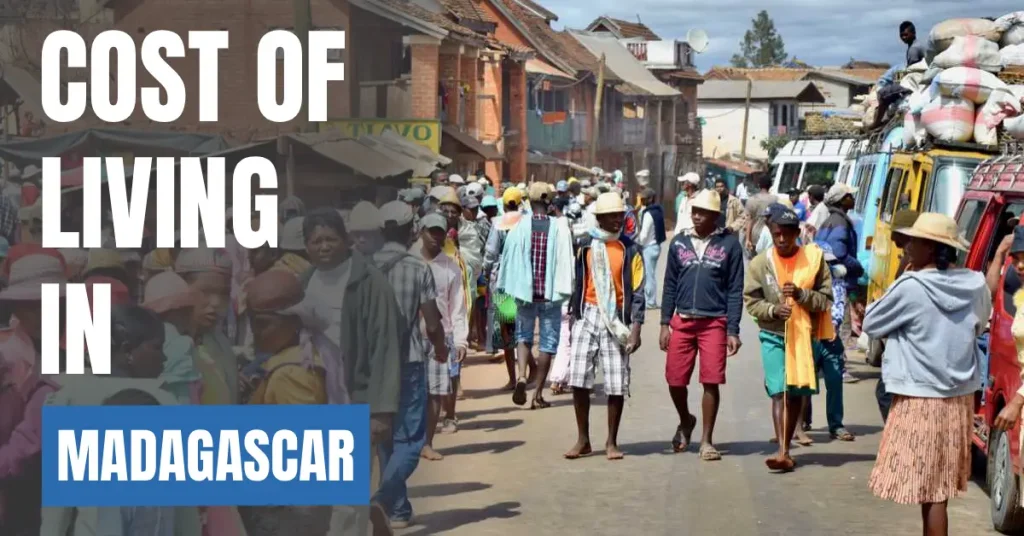
Cost of Living in Madagascar 2026: Rent, Food, Salaries and Monthly Expenses
The cost of living in Madagascar in 2026 can be relatively affordable for people who use local transport, buy locally produced food and live outside expensive residential districts. However, accommodation, reliable electricity, internet access, private healthcare and international education can make life considerably more expensive, particularly in Antananarivo.
On this pageTable of Content
A budget-conscious single renter might plan around MGA 1.3 million per month, while someone seeking more comfortable accommodation and services could need approximately MGA 2.5 million. A family of four renting a larger apartment may require MGA 4 million or more, excluding expensive international schooling. These are illustrative planning budgets rather than official national averages.
Madagascar's currency is the Malagasy ariary (MGA), commonly written as Ar. Prices in this guide are shown primarily in ariary so residents and prospective expatriates can compare costs directly with local salaries.
The biggest affordability issue is the difference between local earnings and the cost of independently renting modern accommodation. Madagascar's official minimum wages are substantially below the typical cost of a market-rate apartment in central Antananarivo. Reliable water, electricity, healthcare and transport should also be considered when deciding where to live.
Also Explore: Cost of Living in MalawiCost of Living in Madagascar at a Glance
Madagascar offers inexpensive local meals and shared transport, but rental housing and dependable household services can represent substantial expenses. The following table combines October 2026 Antananarivo market estimates with illustrative monthly budgets.
| Expense | Estimated Cost in MGA | Basis |
|---|---|---|
| Budget-conscious single renter | 1,300,000/month | Illustrative budget including rent |
| Moderate single renter | 2,500,000/month | Illustrative budget including rent |
| Couple | 3,400,000/month | Illustrative budget including rent |
| Family of four | 5,100,000/month | Illustrative budget including rent; excludes international school tuition |
| One-bedroom apartment, city centre | 700,000-2,900,000/month | Reported Antananarivo range |
| One-bedroom apartment, outside centre | 300,000-936,000/month | Reported Antananarivo range |
| Three-bedroom apartment, outside centre | 650,000-2,500,000/month | Reported Antananarivo range |
| Basic household utilities | 212,500-1,000,000/month | Reported Antananarivo range for an approximately 85 m² apartment |
| Broadband internet | 226,000-300,000/month | Reported Antananarivo range |
| Inexpensive restaurant meal | 7,000-20,000 | Reported Antananarivo range |
| Local transport ticket | Around 600 | Reported Antananarivo fare |
| Non-agricultural minimum wage | 315,000/month | Reported October 2026 private-sector rate |
Sources include Numbeo's Antananarivo price data, updated October 2, 2026, and the 2026 minimum-wage changes reported by Deel Local Payroll.
Prices are not guaranteed quotations. Crowdsourced market data can contain small samples, and actual spending differs according to location, household size and access to services.
How Much Does It Cost to Live in Madagascar Per Month?
A single renter in Madagascar might budget approximately MGA 1.3 million to MGA 2.5 million per month including housing, depending on location and living standards. Couples and families generally require more, especially when renting larger properties or paying for private education.
For someone sharing accommodation, shopping at local markets and using shared transport, monthly costs can be considerably lower than for someone renting a modern, centrally located apartment.
Living Costs Excluding Rent
Monthly living costs excluding rent include food, utilities, transport, internet, mobile service, healthcare allowances and personal spending. In the illustrative budgets later in this article, these total MGA 850,000 for a budget-conscious single person and MGA 1.45 million for a moderate single person.
Living Costs Including Rent
Adding accommodation increases those example budgets to MGA 1.3 million and MGA 2.5 million respectively. A modern apartment in central Antananarivo can cost considerably more than the housing allowance used in either example.
The distinction is important because an employer who provides housing can reduce a worker's monthly cash expenses significantly. A household living in a family-owned property may also have a very different budget from one paying commercial rent.
Housing and Rent Prices in Madagascar
Housing is a major cost for new residents, particularly those who want reliable utilities, good internet access and a convenient location in Antananarivo.
October 2026 crowdsourced rental figures show a large difference between central and outlying properties. The ranges also suggest substantial variation in building quality and neighbourhood.
Average Apartment Rent in Antananarivo
| Property Type | Reported Monthly Average | Reported Range |
|---|---|---|
| One-bedroom, city centre | MGA 1,442,500 | MGA 700,000-2,900,000 |
| One-bedroom, outside centre | MGA 665,705 | MGA 300,000-936,000 |
| Three-bedroom, city centre | MGA 3,265,000 | MGA 1,500,000-5,590,000 |
| Three-bedroom, outside centre | MGA 1,421,667 | MGA 650,000-2,500,000 |
Source: Numbeo Antananarivo, October 2026. The averages are rounded and based on crowdsourced observations rather than an official rental census.
These figures indicate that renting centrally can absorb several times the published minimum monthly wage. They should not be applied automatically to every Madagascar city.
What Affects Rent in Madagascar?
- Distance from employment centres, schools and major roads.
- Security, building access and neighbourhood conditions.
- Electricity reliability and availability of backup power.
- Water storage, pressure and availability.
- Whether the apartment is furnished.
- Internet connection and mobile coverage.
- Parking, building maintenance and service charges.
- Lease terms, deposits and advance payments.
Some properties have additional equipment or services that make everyday living more reliable. Those features may explain why two apartments in the same city have very different rental prices.
Can Foreigners Buy Property in Madagascar?
Foreign ownership of land in Madagascar is legally restricted, and long-term leases or specifically authorised investment arrangements may be relevant in certain cases. Buying an apartment or arranging a lease should not be confused with obtaining residency permission.
Foreign nationals should obtain independent local legal advice before signing a property transaction. The costs, legal rights and eligibility requirements depend on the exact structure of the purchase or lease.
Food and Grocery Costs in Madagascar
Groceries are relatively affordable when households buy rice, vegetables, fruit and other locally available foods. Imported packaged food, specialist products and certain dairy items can cost considerably more.
Rice is a major staple in Madagascar, so rice prices and local agricultural conditions have a direct effect on many household food budgets.
Common Grocery Prices
| Grocery Item | Approximate Antananarivo Price |
|---|---|
| Milk, 1 litre | MGA 4,325 |
| White bread, approximately 454 g | MGA 4,115 |
| White rice, 1 kg | MGA 3,283 |
| Eggs, 12 | MGA 9,075 |
| Chicken fillets, 1 kg | MGA 19,737 |
| Beef, 1 kg | MGA 21,500 |
| Bananas, 1 kg | MGA 2,500 |
| Tomatoes, 1 kg | MGA 3,786 |
| Potatoes, 1 kg | MGA 2,583 |
| Bottled water, approximately 1.5 litres | MGA 3,100 |
Source: Numbeo Antananarivo, October 2026. Per-kilogram amounts were calculated from the published pound-based prices and rounded.
How Much Should You Budget for Groceries?
For planning purposes, a single person preparing most meals at home could allow approximately MGA 250,000-500,000 per month, while a family of four might allow MGA 800,000-1.3 million or more. These are illustrative allowances, not official household spending statistics.
Households that purchase imported groceries, regularly eat meat or require special dietary products may need larger budgets. Prices can also differ between traditional markets, supermarkets, tourist locations and remote communities.
Restaurant and Eating-Out Costs
Local meals can be inexpensive in Madagascar, but spending rises when residents frequently visit international restaurants, tourist establishments or more expensive cafes.
| Restaurant Expense | Reported Antananarivo Average |
|---|---|
| Inexpensive restaurant meal | MGA 12,000 |
| Mid-range meal for two, three courses | MGA 90,000 |
| Fast-food combination meal | MGA 25,000 |
| Cappuccino | MGA 7,314 |
| Soft drink | MGA 3,500 |
Source: Numbeo, October 2026.
Buying an MGA 12,000 lunch on 20 working days would cost MGA 240,000 per month. For someone earning close to the statutory minimum wage, this would consume a large proportion of monthly income.
Preparing meals at home, choosing local restaurants and limiting imported drinks and snacks can reduce discretionary food spending.
Utilities: Electricity, Water and Household Bills
Utilities can be a significant expense in Madagascar because households must consider service reliability as well as the amount shown on their monthly bills.
Numbeo's October 2026 Antananarivo dataset reports approximately MGA 329,399 per month for basic electricity, heating, cooling, water and waste services in an 85-square-metre apartment, with estimates ranging from MGA 212,500 to MGA 1 million.
The wide range reflects variation in accommodation and reported household costs. It should not be interpreted as a regulated national tariff.
Water and electricity interruptions can create additional expenses, including backup power, water storage, equipment maintenance and alternative supplies.
Prospective tenants should ask whether water, waste collection and other service charges are included in rent. They should also check service reliability during the hours when they expect to be at home.
Internet and Mobile Phone Costs
Reliable broadband may represent a substantial monthly expense in Madagascar, particularly for remote workers and expatriates who need dependable international communications.
| Service | Reported Antananarivo Price |
|---|---|
| Mobile plan with calls and data | MGA 74,750/month |
| Home broadband | MGA 253,000/month |
| Broadband reported range | MGA 226,000-300,000/month |
Source: Numbeo Antananarivo, October 2026.
Lower-cost mobile data or limited-service options may be available, but the monthly figures above describe specific crowdsourced plan categories. They should not be treated as the cheapest available connections.
Before renting, confirm whether broadband is available at the exact address, whether installation charges apply and whether the connection is suitable for work or education.
Transportation Costs in Madagascar
Local shared transportation can be inexpensive, but travel times, road conditions and the practical availability of public transport vary considerably.
Public Transport and Taxis
Shared minibuses, often called taxi-be, are commonly used in Antananarivo. Other areas have different combinations of local transport, intercity services and taxis.
| Transport Expense | Reported Cost |
|---|---|
| Local one-way ticket | Around MGA 600 |
| Taxi starting fare | Around MGA 15,000 |
| Taxi distance charge, approximately 1 km | Around MGA 9,000 |
| Petrol, 1 litre | Around MGA 5,131 |
These are Antananarivo crowdsourced figures from October 2026. Actual taxi charges may be negotiated or arranged differently from the standardized estimates shown in price databases.
Numbeo displays a zero for the monthly public transport pass in Antananarivo, but this should not be interpreted as evidence that public transport is free. It may reflect a missing or inapplicable standardized pass category. Pass availability and actual fares must be checked locally.
Transport Budget for New Residents
A person relying mainly on shared minibuses can have relatively low cash transport costs. Someone using taxis frequently or operating a private vehicle will need a larger allowance.
Vehicle ownership also involves repairs, tyres, maintenance, insurance and the potential expense of travel on poor-quality roads.
For newcomers, the practical distance between home, work, shopping and medical facilities may be more important than the cheapest advertised rent.
Healthcare Costs in Madagascar: Is Healthcare Free?
Healthcare in Madagascar is not universally free. Public healthcare facilities provide important services, but patients may face charges for consultations, medicines, diagnostic tests or treatment. Costs and access differ between facilities, regions and patient groups.
The availability of medical personnel, equipment, medication and specialist care can be especially limited outside major urban areas. Affordability therefore depends not only on consultation charges but also on whether necessary treatment is locally accessible.
The original Visaboards article estimated ordinary consultations at US$5-10 and specialist appointments at US$10-15. However, current representative national evidence was insufficient to verify these as dependable 2026 rates. Actual private clinic quotations should be obtained directly.
Healthcare Expenses to Consider
- Public or private consultation fees.
- Prescription medicines and routine tests.
- Specialist treatment and diagnostic imaging.
- Dental and optical care.
- Medical insurance premiums and deductibles.
- Emergency transport or treatment abroad.
- Travel and accommodation costs when specialist treatment is unavailable nearby.
Foreign residents should check whether their insurance covers Madagascar, the hospitals included in the policy and any medical evacuation provisions. Some international health insurance arrangements may exclude particular activities or treatments.
The World Bank's Madagascar country resources provide broader context on poverty, public services and development challenges. These structural conditions matter when evaluating healthcare availability, but they do not establish a universal private consultation price.
Education and Childcare Costs in Madagascar
Families moving to Madagascar should distinguish between public schools, local private schools and international institutions. These options can have very different costs, languages of instruction and admission requirements.
Public Education
Public schooling is generally intended to be accessible without standard tuition charges at the primary level, but families may still pay for uniforms, materials, transport, meals and other school-related needs.
In a 2026 Madagascar education study, UNESCO's Global Education Monitoring Report describes continuing financial barriers to preschool attendance. Using 2021-2022 household survey evidence, it reports average annual household spending of approximately MGA 108,000 on pre-primary expenses such as meals, uniforms, supplies and transport.
That historical figure should not be presented as a current 2026 preschool fee. It demonstrates that families may incur education-related costs even when public provision exists.
Private and International Schools
| Education Expense | Reported Antananarivo Cost |
|---|---|
| Private full-day preschool | Approximately MGA 110,833 per child monthly |
| Private preschool reported range | MGA 75,000-180,000 monthly |
| International primary school | Approximately MGA 67.6 million per year |
| International primary reported range | Approximately MGA 55.9-113.2 million per year |
Source: Numbeo Antananarivo, October 2026.
Important: The international school estimates are exceptionally high relative to ordinary household budgets and are based on a limited crowdsourced dataset. They should not be treated as representative of every international school in Madagascar. Families should request current published fees from their preferred institutions before making financial commitments.
School transport, uniforms, meals, enrolment and examination fees may be charged separately. The language of instruction is also an important consideration for children relocating from abroad.
Average Salaries and Minimum Wage in Madagascar
The available crowdsourced data indicate that local salaries are low compared with the cost of independently renting modern accommodation in Antananarivo.
Numbeo's October 2026 Antananarivo dataset reports an average monthly net salary of approximately MGA 584,667. This is a small-sample crowdsourced estimate, not an official national earnings survey.
At this estimated salary, the average one-bedroom apartment outside the city centre, approximately MGA 665,705, would cost more than the entire monthly take-home income. This illustrates why shared accommodation, homeownership, family housing and employer-provided benefits can be essential.
What Is the Minimum Wage in Madagascar in 2026?
Effective October 1, 2026, Madagascar's reported private-sector minimum monthly wages are:
| Sector | Minimum Monthly Wage | Effective Date |
|---|---|---|
| Non-agricultural | MGA 315,000 | October 1, 2026 |
| Agricultural | MGA 320,000 | October 1, 2026 |
These updated rates are reported under Decree No. 2026-1358, signed June 2, 2026, by Deel Local Payroll and the Malagasy workers' union resource FISEMA.
Earlier information from Madagascar's National Social Insurance Fund (CNaPS) still displays the March 2026 minimums of MGA 300,000 for non-agricultural employment and MGA 304,300 for agricultural work. Those amounts predate the reported October increase.
Some other wage databases also display older 2024 category rates. Readers should therefore avoid treating the first wage figure they encounter online as necessarily current.
The updated 2026 rates relate to private-sector employment. Applicable pay scales, occupational categories and employment arrangements should be checked for individual workers.
What Salary Is Needed to Live Comfortably in Madagascar?
A moderate single renter in Antananarivo might plan for around MGA 2.5 million in monthly disposable income, based on the illustrative budget in this guide. A couple could budget approximately MGA 3.4 million, while families may require substantially more.
These figures are not official living-wage thresholds. They reflect a particular housing and spending standard and may be significantly higher than the earnings of many local households.
For expatriates, accommodation allowances, private medical cover, transport benefits and education assistance can have a major effect on overall affordability.
Income Taxes and Everyday Affordability
Employees should compare monthly living costs with take-home pay after tax and applicable social contributions.
Madagascar imposes salary income tax known as Impôt sur les Revenus Salariaux et Assimilés (IRSA).
According to PwC Worldwide Tax Summaries, last reviewed November 18, 2025, the published monthly salary income tax bands are:
| Monthly Taxable Income Band | Rate |
|---|---|
| Up to MGA 350,000 | 0% |
| MGA 350,001-400,000 | 5% |
| MGA 400,001-500,000 | 10% |
| MGA 500,001-600,000 | 15% |
| Above MGA 600,000 | 20% |
PwC notes that a minimum salary income tax of MGA 3,000 applies. These are marginal tax bands, not flat rates applied to the entirety of an employee's gross salary. Payroll deductions, exemptions and individual circumstances must be considered when estimating net income.
Tax treatment can differ for self-employed individuals and foreign residents. Employees receiving housing, vehicle or other benefits should also check whether those benefits affect taxable employment income.
Because tax legislation can change, these published rates should be checked against current rules before making payroll or relocation decisions.
Realistic Sample Monthly Budgets for Madagascar
The following calculations show how households might allocate their spending. They are illustrative budgets informed by market prices, not representative national expenditure statistics.
| Monthly Expense (MGA) | Budget Single | Moderate Single | Couple | Family of Four |
|---|---|---|---|---|
| Rent | 450,000 | 1,050,000 | 1,300,000 | 1,800,000 |
| Utilities | 180,000 | 300,000 | 350,000 | 500,000 |
| Groceries | 300,000 | 450,000 | 750,000 | 1,200,000 |
| Transport | 60,000 | 150,000 | 250,000 | 400,000 |
| Internet and mobile | 100,000 | 250,000 | 300,000 | 350,000 |
| Healthcare allowance | 50,000 | 100,000 | 150,000 | 250,000 |
| Dining and personal expenses | 160,000 | 200,000 | 300,000 | 400,000 |
| Education and childcare allowance | 0 | 0 | 0 | 200,000 |
| Total Including Rent | 1,300,000 | 2,500,000 | 3,400,000 | 5,100,000 |
| Total Excluding Rent | 850,000 | 1,450,000 | 2,100,000 | 3,300,000 |
Assumptions Behind These Budgets
- Budget-conscious single person: Modest accommodation outside the centre, mainly home-cooked meals, shared transport and restrained discretionary spending.
- Moderate single person: Better accommodation, higher internet and utility expenses, a mix of transport options and occasional dining.
- Couple: Shared housing, a larger combined food allowance and greater transport spending.
- Family of four: Larger accommodation, substantial grocery and utility expenses, and a limited education allowance. International school tuition is not included.
The budget-conscious single-person example assumes an inexpensive mobile or shared internet arrangement rather than a full high-speed broadband subscription. The moderate budget includes a larger communications allowance.
Healthcare amounts are routine spending reserves, not confirmed insurance premiums. The family education allowance should not be interpreted as sufficient for international schooling.
These examples exclude major relocation expenses, international flights, vehicle purchases, large medical emergencies, immigration fees, significant savings contributions and expensive private education.
Cost of Living by City and Region in Madagascar
Madagascar's major cities differ in housing availability, commercial activity, climate, transport and services. Reliable comparative consumer-price data are concentrated in Antananarivo, making precise nationwide city rankings difficult.
Antananarivo
Antananarivo is the capital and the strongest reference point for available urban rental and consumer-price data. Employment, government services, international schools and specialist medical services influence housing demand in parts of the city.
A central one-bedroom apartment averages approximately MGA 1.44 million in the October 2026 crowdsourced dataset, compared with approximately MGA 666,000 outside the centre.
Commuting time and infrastructure reliability can significantly affect the practical cost of living.
Toamasina
Toamasina is a major port city with employment related to trade, transport and commercial activity.
Housing and transport costs depend on proximity to work, the coast and local services. Current comparable market observations are insufficient to provide a dependable citywide 2026 rent average.
Antsirabe
Antsirabe offers a different living environment from the capital, with a highland climate and a smaller urban economy.
Some households may find more modest accommodation than in expensive parts of Antananarivo, but available evidence does not justify a precise percentage discount for rent or other everyday expenses.
Mahajanga
Mahajanga is a coastal city where location, seasonal demand and access to transport can affect housing prices.
Residents should check actual accommodation listings, water and electricity arrangements, and the cost of obtaining goods that may not be available locally.
Other Towns and Rural Areas
Housing may cost less in some smaller towns, but transport, medical care, supplies and reliable communications can be harder to access. A low rental payment does not necessarily mean lower total household expenditure.
For rural or remote work placements, employers should explain how housing, emergency transport, healthcare and essential supplies will be provided.
How Does Madagascar Compare With Mauritius, Kenya and South Africa?
Madagascar is often described as cheaper than Mauritius and South Africa, but general country-level price comparisons should be treated cautiously.
For example, Mauritius may have higher market rents in some developed areas, while Madagascar may involve additional spending to obtain reliable household infrastructure or imported goods. Different income levels and public services also affect purchasing power.
Comparisons with Kenya and South Africa depend on the selected cities, housing standards and transport needs. International schooling, specialist healthcare and private security can materially change the results.
There is insufficient consistently comparable October 2026 city-level evidence in the sources reviewed to publish defensible percentage savings across all these countries.
For a useful comparison, choose specific cities, match accommodation quality, estimate the same household basket and convert currencies using the exchange rate for a clearly stated date.
Hidden Living Expenses New Residents Often Overlook
Some of the most important expenses in Madagascar are not obvious from standard rental or grocery price tables.
- Power and water reliability: Backup power, water storage and equipment maintenance can increase household costs.
- Internet installation: The advertised monthly subscription may not include installation or equipment.
- Transport and road conditions: Car maintenance, longer travel times and private transport arrangements may add significant costs.
- Imported products: Electronics, specialist medicines and familiar packaged foods may cost more than locally produced alternatives.
- Medical emergencies: Specialist treatment or evacuation can be expensive.
- Education: International school tuition may exceed ordinary family living expenses.
- Rental deposits: Initial payments, furniture and moving expenses may require substantial funds.
- International travel: Flights and family visits can make expatriate living more expensive.
- Exchange-rate changes: Income paid in one currency and expenses paid in another create financial uncertainty.
New residents should maintain an emergency reserve based on their circumstances, employment benefits and ability to access funds when needed.
Cost of Living Versus Residency Financial Requirements
Monthly living expenses are separate from the financial and documentary requirements for visas, work authorisation or long-term residence in Madagascar.
A household that can afford MGA 3 million per month does not automatically qualify for a residence permit.
Madagascar provides an official electronic tourist visa system, but tourist permission should not be confused with work authorisation or long-term residency. Applicants should consult the official Madagascar eVisa portal and relevant diplomatic or immigration authorities.
No universal minimum bank balance applicable to every long-term residency category could be reliably established from the reviewed evidence. Requirements depend on the applicant's circumstances, type of stay and relevant rules.
Prospective workers, students, investors and family members should verify the specific visa or residence pathway before making commitments.
Is Madagascar Affordable for Expats and New Residents?
Madagascar can offer a manageable cost of living for expatriates with adequate income, suitable accommodation and access to dependable services. However, local salary levels are generally much lower than the budgets associated with independent modern housing.
A new resident should evaluate more than the stated salary:
- Net income after taxes and social contributions.
- Employer-funded accommodation or housing allowances.
- Transport and commuting requirements.
- Medical insurance and emergency care arrangements.
- School fees for accompanying children.
- Internet reliability and necessary work equipment.
- Cost of imported necessities and international travel.
- Emergency savings and currency exposure.
People employed by international organisations or overseas companies may have very different financial circumstances from workers earning local wages.
A practical relocation decision should be based on a complete household budget and confirmed local arrangements rather than a simple claim that Madagascar is inexpensive.
Conclusion: How Much Money Do You Need to Live in Madagascar?
The cost of living in Madagascar in 2026 depends primarily on housing, location, family size and the level of access to reliable services.
As illustrative starting points, a budget-conscious single renter may plan around MGA 1.3 million per month, a moderate single renter around MGA 2.5 million, a couple around MGA 3.4 million and a family of four around MGA 5.1 million. Each example includes rent but excludes substantial one-time expenses, and the family example excludes international school tuition.
Madagascar offers inexpensive local food and public transport options, but modern rental accommodation, broadband, utilities and private services may consume a large share of income. The gap between statutory minimum wages and urban rental prices is especially important for affordability.
Before moving, obtain current rental quotations, check employment benefits, confirm medical arrangements and compare actual service availability in the intended neighbourhood. A realistic local budget is more useful than a national average alone.
Sources and Methodology
This article was reviewed on October 30, 2026. It updates the original March 2026 Visaboards article using available consumer-price datasets, Malagasy social insurance information, 2026 wage reporting, tax references and international education research.
The latest available Antananarivo Numbeo dataset showed 298 price entries from 14 contributors during the previous 12 months, with an update date of October 2, 2026. This is a limited sample and cannot represent all households, neighbourhoods or cities in Madagascar.
The household budgets in this guide are calculated examples, not official expenditure averages. They use clearly stated housing and living-cost assumptions and should be adapted to actual quotations.
Minimum wage reporting was checked against the CNaPS wage history and more recent sources describing the October 2026 increase. The CNaPS page still displayed March rates at the time of review, creating an apparent publication lag. Tax rates were taken from the latest PwC reference retrieved, which was reviewed in November 2025.
Rental costs, grocery prices, exchange rates, wages and government requirements may change. Comparisons between crowdsourced estimates and official administrative information are identified where relevant, and unsupported national figures are avoided.
References
- Numbeo: Cost of Living in Antananarivo, October 2, 2026.
- Numbeo: Cost of Living in Madagascar, 2026.
- CNaPS: Historical Minimum Wage Rates, accessed October 2026.
- Deel Local Payroll: Madagascar October 2026 Minimum Wage Update.
- FISEMA: Madagascar Salary and Minimum Wage Information.
- PwC: Madagascar Personal Income Taxes, reviewed November 18, 2025.
- PwC: Madagascar Income Determination.
- UNESCO Global Education Monitoring Report: Madagascar, 2026.
- World Bank: Madagascar Country Overview.
- Madagascar Official eVisa Portal.
- Visaboards: Original Cost of Living in Madagascar Article, March 24, 2026.
Frequently Asked Questions
How much does it cost to live in Madagascar per month?
A budget-conscious single renter might spend approximately MGA 1.3 million per month, while a moderate single renter could budget around MGA 2.5 million. Both examples include rent, groceries, utilities, transport and personal expenses. These are illustrative budgets rather than official national averages. Housing quality, location, access to reliable services and lifestyle can significantly change actual costs.
How much is apartment rent in Madagascar?
In October 2026, a one-bedroom apartment in central Antananarivo averaged approximately MGA 1.44 million per month in crowdsourced data, compared with around MGA 666,000 outside the centre. Three-bedroom apartments averaged approximately MGA 3.27 million centrally and MGA 1.42 million outside central districts. Other cities may have different rental markets, and individual property quotations should always be checked.
What salary is needed to live comfortably in Madagascar?
A moderate single renter might aim for around MGA 2.5 million per month in disposable income based on the example budget in this guide. Couples may need approximately MGA 3.4 million and families more. These are planning figures, not official salary requirements. Employer-provided accommodation, healthcare coverage, neighbourhood choice and school fees can substantially change the income needed.
What is the minimum wage in Madagascar in 2026?
Reported private-sector minimum monthly wages effective October 1, 2026, are MGA 315,000 for non-agricultural workers and MGA 320,000 for agricultural workers under Decree No. 2026-1358. Earlier wage references may still display March 2026 or 2024 rates. Workers should confirm their applicable sector, occupational category and employment conditions, as legal wage thresholds do not necessarily cover independent market-rate housing.
Is healthcare free in Madagascar?
Healthcare in Madagascar is not universally free. Public facilities provide essential services, but patients may face charges for medicines, consultations, diagnostic tests or treatment. Facilities, staffing and specialist availability differ considerably by location. Expatriates should check their eligibility for public services, obtain suitable medical coverage where appropriate and consider the cost of emergency treatment or medical evacuation.
Is public transport free in Madagascar?
Public transport is generally not free. October 2026 crowdsourced data show a local transport fare of approximately MGA 600 in Antananarivo. Shared minibuses are an important transport option, although routes and reliability differ. A zero value for monthly passes in some datasets does not demonstrate that services are free. Taxi travel and private vehicle ownership can cost substantially more.
How much does a family of four need in Madagascar?
An illustrative family-of-four budget is approximately MGA 5.1 million per month including rent, food, utilities, transport and a limited education allowance. It excludes expensive international school tuition and major medical expenses. Families with employer-funded housing may spend less, while households paying for international education or higher-standard accommodation could need significantly more.
Are groceries expensive in Madagascar?
Local groceries can be relatively affordable, particularly rice, seasonal vegetables and fruit. October 2026 Antananarivo estimates place rice at approximately MGA 3,283 per kilogram, 12 eggs at MGA 9,075 and chicken fillets at around MGA 19,737 per kilogram. Imported products and specialist foods can be more expensive. Total spending depends on household size, shopping habits and diet.
Is Antananarivo more expensive than other cities in Madagascar?
Antananarivo has expensive central rental accommodation, with a reported one-bedroom city-centre average of approximately MGA 1.44 million per month in October 2026. Some smaller cities may offer cheaper housing, but sufficiently comparable datasets are unavailable to establish precise differences. Transport, healthcare access and utility reliability should also be considered when comparing locations.
Is Madagascar cheaper than Mauritius?
Madagascar can offer lower local food and accommodation costs than some areas of Mauritius, but a universal percentage saving cannot be reliably established from the evidence reviewed. The comparison depends on city, housing standards, transport, imported products and medical or education requirements. Prospective residents should compare complete monthly budgets rather than individual prices alone.
Is Madagascar affordable for expatriates?
Madagascar can be financially manageable for expatriates earning sufficient income and receiving employer-provided accommodation or other benefits. However, reliable broadband, private healthcare, international education and centrally located rental housing can be expensive relative to local wages. A relocation budget should also allow for transport, emergency savings, imported necessities and initial housing deposits.
Is there a minimum bank balance required for residency in Madagascar?
No universal bank-balance requirement applicable to every Madagascar long-term residency category was reliably established from the sources reviewed. Requirements depend on nationality, purpose of stay and the relevant immigration pathway. Tourist eVisa permission is not equivalent to work authorisation or long-term residency. Applicants should confirm current financial and documentary requirements with official Malagasy immigration or diplomatic authorities.
Join the conversation
Have thoughts on this topic? Share them with others.
Ask questions, share experience, and learn from the Visaboards Community.