
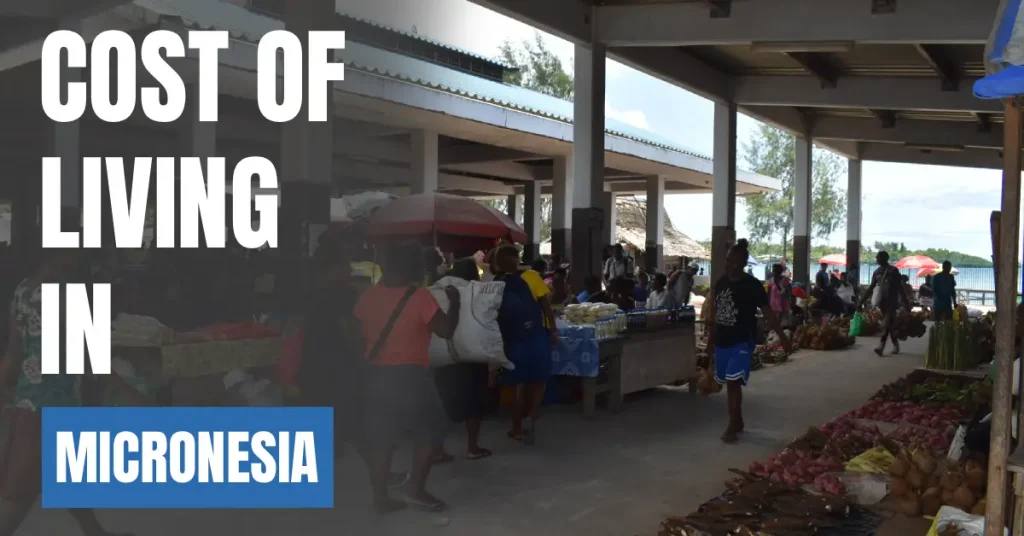
Cost of Living in Micronesia 2026: Rent, Food, Salaries and Monthly Expenses
The cost of living in Micronesia depends heavily on housing, imported groceries, electricity, internet access and the island where you choose to live. In 2026, a single person renting independently may need approximately $1,000 to $1,900 per month, while a family of four could require $2,800 to $4,500 or more. These are illustrative planning ranges, not official national averages.
On this pageTable of Content
The Federated States of Micronesia (FSM) consists of four states: Pohnpei, Chuuk, Yap and Kosrae. It uses the United States dollar (USD), making budgeting straightforward for people earning in dollars. However, its remote Pacific location, small housing market and dependence on imported products create expenses that newcomers may underestimate.
Housing is particularly important. Published rental estimates differ considerably, and some apartments marketed to foreign workers cost substantially more than basic locally arranged accommodation. Reliable nationwide consumer price data are also limited, making it essential to distinguish researched prices from illustrative budgets.
This guide examines housing, food, transport, utilities, healthcare, education, wages, taxes and residency considerations using information reviewed in November 2026.
Cost of Living in Micronesia at a Glance
Micronesia can be relatively affordable for someone with family accommodation or employer-provided housing, but independent renters may face much higher monthly costs. The estimates below are intended for preliminary budgeting and should not be interpreted as government-published averages.
| Expense | Estimated Cost (USD) | Important Context |
|---|---|---|
| Single person, excluding rent | $550 to $1,000/month | Everyday expenses, excluding housing and major emergencies |
| Single person, including rent | $1,000 to $1,900/month | Independent rental and moderate spending |
| Couple, including rent | $1,600 to $2,800/month | Shared housing and household expenses |
| Family of four, including rent | $2,800 to $4,500+/month | Assumes standard housing without expensive private school tuition |
| One-bedroom rental | $450 to $1,200/month | Broad market-planning range, particularly for Pohnpei |
| Three-bedroom rental | $800 to $3,000/month | Large differences in condition, location and availability |
| Groceries, one adult | $200 to $400/month | Depends on imported food and local produce |
| Inexpensive restaurant meal | $7 to $12 | Indicative menu pricing |
| Electricity, water and basic utilities | $70 to $200+/month | Air-conditioning and household size matter |
| Home internet | From approximately $49/month | Plan, data limits, provider and equipment costs vary |
| Transportation | $40 to $300+/month | Walking and occasional taxis versus regular vehicle use |
| Healthcare | Highly variable | Public services, insurance and overseas treatment needs differ |
How to interpret these numbers: Accommodation figures are informed by published market estimates, including Wise's Micronesia and Pohnpei listings. Other expenditure ranges combine the existing Visaboards price examples with illustrative planning assumptions. They are not verified quotations for a particular household. Actual costs should be checked directly before relocating.
How Much Does It Cost to Live in Micronesia Per Month?
A single person paying market rent should provisionally budget around $1,000 to $1,900 monthly, including rent. A couple sharing accommodation might plan for $1,600 to $2,800, while a family of four may need $2,800 to $4,500 or more.
The monthly amount changes significantly depending on whether accommodation is privately rented, subsidized or provided by an employer. A locally established household that grows some food, shares transportation and owns its home may spend considerably less than an incoming professional who rents furnished housing.
For an independent single renter, everyday expenses excluding rent may total about $550 to $1,000 a month. Adding a one-bedroom rental costing $450 to $900 produces a broad combined range of $1,000 to $1,900. Higher-quality accommodation, extensive air-conditioning, private health insurance or frequent travel can push expenses above this level.
These estimates should also be considered alongside inflation. The International Monetary Fund's May 2026 assessment reported 3.2% inflation for fiscal year 2025 and projected 4.0% for fiscal year 2026. Higher import and fuel costs remain significant affordability risks.
Housing and Rent Prices in Micronesia
Rent is one of the largest and least predictable living expenses in Micronesia. Published 2026 figures suggest that a one-bedroom apartment in Pohnpei may cost approximately $450 to $1,200 per month, depending on its location and condition. Larger properties can cost substantially more.
Monthly Apartment Rental Prices
| Rental Type | Indicative Monthly Rent |
|---|---|
| One-bedroom, central Pohnpei | $600 to $1,200 |
| One-bedroom, outside central Pohnpei | $450 to $945 |
| Three-bedroom, central Pohnpei | $740 to $3,000 |
| Three-bedroom, outside central Pohnpei | $800 to $1,950 |
| One-bedroom, central Kolonia | $560 to $840 |
| One-bedroom, outside central Kolonia | $400 to $600 |
These figures are published market estimates from Wise's Pohnpei cost-of-living dataset and Kolonia dataset. Wise warns that coverage is limited and some categories are incomplete. The ranges should therefore be treated as indications, not guaranteed available rental prices or statistically representative averages.
Another country-level Wise estimate places a central one-bedroom apartment at approximately $967 per month and a central three-bedroom apartment at $1,500. This is considerably higher than some of the lower estimates previously published online. The difference illustrates why a single national rent figure is not reliable for every island or housing arrangement.
What Affects Rental Prices?
- Location: Accommodation close to administrative centers, shops and workplaces may command higher rents.
- Furnishing: Furnished homes can be more expensive and may require fewer upfront purchases.
- Electricity and cooling: Whether air-conditioning and utility bills are included can change the effective rent.
- Property condition: Water storage, ventilation, storm resilience and maintenance are important.
- Lease terms: Deposits, advance payments and responsibility for repairs should be clarified before signing.
- Availability: Small rental markets mean suitable accommodation may not be advertised publicly.
Can Foreigners Buy Property in Micronesia?
Foreign nationals cannot acquire title to land in the Federated States of Micronesia. Article XIII, Section 4 of the FSM Constitution prohibits land ownership by noncitizens and corporations not wholly owned by citizens.
Some arrangements may permit foreigners to lease land or own buildings subject to applicable law. However, customary ownership, lease duration, land registration and consent requirements can complicate transactions. Foreign residents should obtain local legal advice rather than assume that purchasing a home works like buying freehold property elsewhere.
Groceries and Food Prices in Micronesia
A single adult may budget around $200 to $400 monthly for groceries, although households relying heavily on imported packaged food can spend more. Locally produced fish, root crops, bananas and seasonal vegetables can help reduce expenses when available.
Many essential products arrive by sea or air, so freight expenses, delivery schedules and supply interruptions affect both prices and availability.
Typical Grocery Price Estimates
| Grocery Item | Indicative Price (USD) |
|---|---|
| Milk, 1 liter | $1.50 to $3.00 |
| Bread, one loaf | $1.50 to $3.00 |
| Rice, 1 kilogram | $1.50 to $3.00 |
| Eggs, 12 | $2.50 to $4.50 |
| Chicken, 1 kilogram | $4 to $7 |
| Beef, 1 kilogram | $7 to $12 |
| Bananas, 1 kilogram | $1 to $2 |
| Tomatoes, 1 kilogram | $3 to $5 |
| Bottled water, 1.5 liters | $1 to $2 |
These are indicative figures carried forward from the existing Visaboards guide, not a verified November 2026 supermarket survey. Actual prices can differ by retailer, state, shipment timing, product quality and availability.
Imported dairy, meat, packaged snacks and specialty dietary products are especially likely to affect a newcomer's grocery budget. Buying local produce when available, planning meals and limiting unnecessary imported items can reduce spending.
Restaurants and Eating Out
A basic restaurant meal in Micronesia may cost approximately $7 to $12, while a meal for two at a mid-range restaurant may be around $25 to $50. These are indicative prices rather than a standardized nationwide restaurant survey.
| Dining Expense | Estimated Price (USD) |
|---|---|
| Inexpensive meal | $7 to $12 |
| Mid-range meal for two | $25 to $50 |
| Fast-food-style meal | $7 to $10 |
| Coffee | $2 to $4 |
| Tea | $1 to $2 |
Restaurant selection is more limited outside the main population centers. Imported ingredients, transport costs and inconsistent stock can influence menus. A person regularly buying lunch or dinner outside the home should allow a separate dining budget rather than treating restaurant spending as part of groceries.
Electricity, Water and Utility Costs
Basic utilities may cost a small household around $70 to $200 or more per month, excluding internet. Electricity is usually the most important variable because cooling appliances can significantly increase consumption.
The earlier Visaboards guide estimated electricity at $40 to $100 monthly and water at $20 to $40. These figures remain useful as preliminary examples, but they do not constitute verified current tariffs across all four states. Wise's Pohnpei dataset provides an illustrative combined basic-utilities figure of approximately $135 per month for an 85-square-meter residence.
Residents should check whether water is metered, whether garbage services are included, and whether the property has reliable water storage or backup power. Generator fuel, equipment maintenance and interruptions to essential services may create additional costs that ordinary utility tables overlook.
Internet and Mobile Phone Costs
Home internet plans can start at approximately $49 to $50 monthly, but actual spending depends on speed, data limits, location and equipment. Some services require substantial upfront hardware purchases, so comparing monthly subscription prices alone can be misleading.
The FSM Telecommunications Regulatory Authority publishes provider and package comparisons, including the following advertised examples:
| Provider and Plan | Advertised Monthly Price | Advertised Service |
|---|---|---|
| FSMTC Kaboom Bronze | $49 | 10 Mbps download |
| FSMTC Kaboom Gold | $99 | 20 Mbps download |
| Starlink Personal | $50 | 100 Mbps download; equipment charge listed separately |
| iBoom Home Broadband Promotion | $75 | 100 Mbps download in Yap |
| MCS Pohnpei, 30 GB plan | $78 | 50 Mbps advertised speed with a 30 GB package |
These are regulator-listed examples, not guarantees of current availability, unlimited data or achieved speeds. The regulator's comparison also lists a $389 Starlink terminal charge and a $627 terminal charge for certain MCS packages. Check installation, shipping, taxes, data caps and contract conditions directly with providers.
Internet access has improved considerably. According to the World Bank's July 2026 connectivity assessment, reforms and infrastructure investment reduced entry-level fixed broadband costs per Mbps by 99% between 2014 and 2025. New submarine cable infrastructure and satellite services have expanded connectivity, although service quality continues to vary between islands.
Mobile expenses depend on prepaid data consumption, calls and provider coverage. People working remotely should test their exact residential connection before relying on it for video meetings, uploads or uninterrupted professional work.
Transportation Costs in Micronesia
Transportation is affordable only when daily journeys are short or when residents have convenient access to shared vehicles. There is no comprehensive nationwide public bus or rail network, and commuters often depend on taxis, private vehicles or arrangements with other residents.
The U.S. Department of State's travel guidance reports that conventional public buses, trains and metro systems are not available. However, Canadian travel guidance identifies a limited bus service on Yap, while the FSM tourism office notes that transport options vary by island. These sources are best understood as describing the absence of a dependable nationwide scheduled transit system rather than an absolute absence of every local bus service.
Estimated Transport Expenses
| Transport Situation | Budget Consideration |
|---|---|
| Walking with occasional short taxi rides | Approximately $40 to $80/month |
| Regular local taxi use | Approximately $100 to $200+/month |
| Private vehicle fuel and routine expenses | Approximately $150 to $300+/month, excluding purchase costs |
| Travel between states | Separate airfare or boat expenses; obtain route-specific quotations |
These monthly figures are planning allowances, not published transport fares. Actual taxi charges should be agreed upon before travel. A fixed per-kilometer taxi rate or nationwide monthly bus pass should not be assumed.
Vehicle owners must also consider repairs, tires, registration, insurance where applicable and imported spare parts. Travel between the four states may require flights or boats and can be a substantial additional expense. It should not be included in a routine local commuting budget unless it occurs regularly.
Healthcare Costs and Medical Insurance
Healthcare in Micronesia is not universally free, but many public services are provided at minimal cost, and certain publicly funded programs operate without charges. Eligibility, insurance coverage and patient costs depend on the particular service and the resident's circumstances.
According to the FSM health system overview published through the U.S. Health Resources and Services Administration, each state operates a central public hospital and community health facilities. Many maternal and child health and family planning programs provide free services through public funding.
The same official health narrative states that most residents do not have health insurance. Government employees participate in the MiCare insurance system, with additional arrangements required to include family members. Private providers are limited, and not all facilities accept government health insurance.
Older market estimates of $10 to $25 for general consultations or $25 to $50 for specialist visits should not be treated as universal current prices. They also leave out medicines, diagnostic procedures, hospitalization and complex treatment.
Medical Evacuation and Specialist Care
A significant financial concern is the limited availability of specialized treatment. Complex cases may require referral or medical evacuation overseas, potentially to Guam, Hawaii or another regional healthcare center, depending on medical arrangements and available services.
Foreign residents should verify whether their insurance covers inpatient treatment, prescriptions, emergency evacuation, overseas care and accompanying family members. An inexpensive local consultation does not necessarily mean the total cost of healthcare is low.
Education and Childcare Costs
Public education in the Federated States of Micronesia is free, while private education generally requires tuition payments. Families should distinguish public schooling, private tuition, early childhood care and any specialized education needs before calculating their monthly budgets.
The FSM Education Sector Strategic Plan 2020-2024 explains that public schooling follows a system influenced by the United States. Education through grade eight is compulsory for children generally aged 6 to 14, while secondary schooling is not compulsory. Public school textbooks are provided free.
Private schools charge fees, but costs vary by institution and state. The earlier Visaboards guide quoted $50 to $300 for private education and $400 to $700 for international education without consistently defining billing periods or providing school-specific verification. Those numbers should not be treated as established monthly tuition averages.
School uniforms, transport, supplies, meals and extracurricular activities may still generate expenses even where tuition is free. Childcare and preschool availability can be limited, and private or informal arrangements should be priced locally.
Average Salaries and Employment in Micronesia
There is no sufficiently reliable, current nationwide average take-home salary that represents every occupation and state. Wages vary significantly between government jobs, private businesses, professional contracts, international organizations and informal economic activity.
The IMF's 2026 assessment highlights the public sector's importance, the effects of previous public-sector pay increases and continuing economic constraints. Limited private-sector activity means that workers cannot assume that an internationally competitive salary will be available locally.
A U.S. government health-system narrative referencing the 2024/25 Household Income and Expenditure Survey reports per-capita income of $3,836, but this is not equivalent to average employee wages or average take-home pay. It should not be used as a salary benchmark.
Current Minimum Wage in Micronesia
Micronesia does not have one uniform minimum wage applying to every worker. The applicable rate depends on whether employment is with the national government, a state government or the private sector.
The following rates were reported in the U.S. Department of State's 2024 Investment Climate Statement and remain listed by WageIndicator in its June 2026 update.
| Employment Category | Reported Minimum Hourly Wage |
|---|---|
| FSM national government | $4.52 |
| Pohnpei state government | $2.90 |
| Chuuk state government | $2.00 |
| Kosrae state government | $2.16 |
| Yap state government | $3.24 |
| Pohnpei private sector | $1.75 |
The cited sources identify Pohnpei as the only state with a generally applicable private-sector statutory minimum wage. The figures above are the latest rates located in the reviewed sources, not confirmation of every local legal amendment after their publication.
At $1.75 per hour and 40 paid hours per week, a Pohnpei private-sector minimum-wage employee would earn approximately $303 gross per month using 52 weeks divided by 12 months. This is well below the illustrative cost of renting independently. At the national government minimum of $4.52 per hour, the same calculation produces about $783 gross monthly, also before taxes and deductions.
These calculations demonstrate why housing assistance, shared family accommodation and access to other household resources can be decisive for affordability.
What Salary Is Needed to Live Comfortably?
A single person renting independently may aim for approximately $1,500 to $2,200 monthly in available spending income for a more comfortable budget, depending on location and lifestyle. A family of four may require around $3,500 to $5,000 or more, particularly if private education, a vehicle or substantial medical insurance costs are involved.
These are budgeting targets, not verified market salaries. Employment contracts should be evaluated based on after-tax earnings and benefits such as housing, transport, insurance and flights.
Taxes and Take-Home Pay
Workers should calculate their income after taxes and applicable payroll deductions rather than compare gross salary directly with monthly living expenses.
Under Title 54, Section 121 of the FSM Code, the wages and salaries tax is generally assessed at 6% on the first $11,000 of annual earnings and 10% on earnings above that amount, subject to statutory provisions and applicable deductions.
For example, an employee earning $18,000 annually would have a simplified wages-and-salaries tax calculation of $660 on the first $11,000 and $700 on the remaining $7,000, totaling $1,360 before considering exemptions, deductions or other relevant rules.
Social security contributions and any applicable employer or employee obligations can further affect take-home pay. Employees should confirm their current deductions with their payroll administrator or the relevant FSM authorities. Actual tax treatment may also depend on employment arrangements and residency status.
Realistic Monthly Budgets for Different Household Types
The following four budgets illustrate how major expenses can add up. They are constructed planning scenarios, not recorded household spending or official averages. All four include rent and ordinary monthly spending but exclude international flights, major relocation purchases, large medical emergencies and private school tuition.
| Monthly Expense | Budget Single | Moderate Single | Couple | Family of Four |
|---|---|---|---|---|
| Rent | $450 | $750 | $900 | $1,400 |
| Electricity, water and utilities | $90 | $140 | $160 | $220 |
| Groceries | $220 | $300 | $500 | $850 |
| Local transportation | $50 | $120 | $180 | $300 |
| Internet and mobile | $55 | $100 | $120 | $160 |
| Healthcare and insurance allowance | $40 | $100 | $160 | $300 |
| Dining and leisure | $60 | $150 | $200 | $300 |
| Household and miscellaneous | $75 | $140 | $180 | $320 |
| Total Including Rent | $1,040 | $1,800 | $2,400 | $3,850 |
| Total Excluding Rent | $590 | $1,050 | $1,500 | $2,450 |
Budget-Conscious Single Person: $1,040 Monthly
This example assumes a basic $450 rental, frequent home cooking, modest electricity consumption and occasional local transport. It leaves limited room for emergencies, international travel or major household purchases. Housing at this price may not be readily available to every newcomer.
Moderate Single Person: $1,800 Monthly
This budget provides more flexibility for independent accommodation, internet, occasional restaurant meals and regular local transportation. It is better suited to a renter who wants some financial room beyond minimum daily expenses.
Couple: $2,400 Monthly
A couple may benefit from sharing rent, internet and utilities. The example assumes joint accommodation, moderate grocery spending and some transport and leisure costs. It does not include childcare or recurring international travel.
Family of Four: $3,850 Monthly
This scenario allows for a larger home, higher grocery consumption, transport and routine health-related expenses. It assumes access to public education rather than expensive private schooling. Families with specialist healthcare needs, private tuition or frequent travel may need a much higher budget.
Budget warning: The healthcare allowances above are not insurance premiums or promises of medical coverage. Every household should maintain a separate emergency reserve, particularly for potential overseas treatment or evacuation.
Cost of Living Differences Between Pohnpei, Chuuk, Yap and Kosrae
Costs differ substantially across Micronesia's four states, but consistent price surveys are not available for every category in every location. It would be misleading to rank all four states from cheapest to most expensive using the limited published evidence.
Pohnpei
Pohnpei contains the national capital, Palikir, and the commercial center of Kolonia. It offers government employment, services and a more visible formal rental market. Published rental data for Pohnpei show considerable variation, particularly for accommodation suited to professionals and families.
Chuuk
Chuuk's principal commercial center is Weno. Residents may find different accommodation arrangements and local food access than in Pohnpei, but transport, imported goods and access to specialized healthcare remain important concerns. The absence of a robust current rental sample makes reliable cross-state price comparisons difficult.
Yap
Yap has its own commercial and administrative center around Colonia. Internet options have expanded, including fiber-linked services and additional providers. A resident's spending will depend on available rental accommodation, transport arrangements and whether housing or utilities are included with employment.
Kosrae
Kosrae has a smaller formal housing and services market. Locally arranged accommodation may differ substantially from properties advertised to incoming professionals. Residents should investigate transport access, healthcare capacity and connectivity before selecting a home.
Main Islands Versus Outer Islands
Remote islands may offer access to traditional food production and family accommodation, but purchased supplies, shipping, fuel, equipment maintenance and medical travel can be expensive or difficult to arrange. A lower cash rent does not necessarily mean a lower overall cost of living.
Is Micronesia Cheaper Than Fiji, Samoa or Hawaii?
Micronesia may be cheaper than Hawaii for certain housing and everyday services, but reliable nationwide evidence does not support a precise statement that it is always cheaper than Fiji or Samoa.
Fiji and Samoa have different currencies, housing markets, employment structures and import costs. Their larger urban and tourism markets also offer different accommodation and retail choices. Comparison websites may produce different rankings depending on sample size, exchange rates and the cities selected.
| Location | Key Affordability Consideration |
|---|---|
| Micronesia | USD spending, scarce rental data, imports and inter-island logistics |
| Fiji | Greater range of urban services and housing, with substantial location differences |
| Samoa | Different rental market and imported-product costs; local household arrangements matter |
| Hawaii | U.S. housing and service-market conditions, with generally higher formal-market housing costs |
The most meaningful comparison is between actual homes, grocery baskets and employment packages in specific locations, rather than between broad country averages. Without comparable current price samples, exact percentage differences would create false precision.
Hidden Costs New Residents Often Overlook
New residents should maintain funds for expenses that may not appear in basic monthly cost tables.
- Initial housing payments: Deposits, advance rent, furnishings and household equipment.
- International travel: Flights to and from FSM may require connections through regional hubs.
- Inter-island transport: Flights and boat travel are separate from ordinary local transport spending.
- Medical emergencies: Overseas treatment, evacuation and travel for accompanying relatives.
- Backup services: Generators, water storage, fuel and equipment maintenance where needed.
- Telecommunications equipment: Router, terminal, installation and possible data overage fees.
- Imported goods: Shipping, customs-related charges and replacement parts.
- Family expenses: Childcare, school supplies, private tuition and special education requirements.
- Financial arrangements: International transfer charges, ATM availability and accessible emergency cash.
- Employment and immigration: Permit processing, documentation and professional advice where applicable.
A useful approach is to separate recurring monthly spending from one-time relocation costs and maintain an additional emergency fund. People who depend on overseas medical care or frequent travel between islands may need substantially more savings.
Cost of Living Versus Residency Financial Requirements
A budget sufficient to pay monthly living expenses does not automatically establish eligibility to reside or work in Micronesia. Immigration permission, employment authorization, sponsorship and documentation are separate legal issues.
Under the FSM Immigration Code, short visits and longer stays have different permit arrangements. The law provides for short visitor stays without a written entry permit for qualifying periods, while longer visits, employment and study may require specific authorization.
United States citizens and certain other categories have special arrangements under the Compact of Free Association and relevant laws. Other foreign nationals should not assume that tourist entry gives them unrestricted residence or employment rights.
No universal, verified 2026 minimum bank-balance requirement applicable to every prospective long-term resident was established from the reviewed official sources. Requirements depend on the legal basis for the stay and the applicable permit conditions. Applicants should confirm documentation and financial-support requirements with the FSM Division of Immigration and Labor before making financial commitments.
The FSM tourism office's entry guidance also notes the importance of onward-travel documentation and lists a $20 departure tax at each of the four state airports. These travel-related expenses should be budgeted separately from household living costs.
Is Micronesia Affordable for Expats and New Residents?
Micronesia can be affordable for a foreign resident receiving suitable housing, insurance and transport benefits, but it may be financially challenging for someone relying on low local wages while paying independent market rent.
The strongest financial position is generally held by residents whose employment package addresses major uncertainties, particularly accommodation, healthcare, professional transport needs and travel allowances.
Remote workers should verify both legal work authorization and internet reliability. Families need to assess available schooling and medical services before assuming that lower living expenses will offset the cost of relocation.
For residents earning local minimum wages, the gap between cash income and independent rental budgets is particularly significant. Local family networks, shared housing and access to subsistence food production can influence living standards in ways that expat-oriented online budgets do not capture.
Final Verdict: Is Micronesia Expensive to Live In?
Micronesia is not automatically a low-cost country. Housing can be expensive relative to local earnings, imported groceries increase daily spending, and limited transportation and healthcare options create risks that may not appear in basic price comparisons.
For initial planning in 2026, an independent single renter can consider approximately $1,000 to $1,900 per month including rent. A family of four may need around $2,800 to $4,500 or more, depending on housing, schooling, transport and healthcare.
The most reliable way to assess affordability is to obtain actual accommodation quotations, check local grocery and utility costs, verify internet packages, and calculate after-tax employment income. A relocation budget should also include emergency savings and the costs of entering, leaving or traveling between islands.
Sources and Methodology
This guide was reviewed on November 3, 2026. Research included government legislation, international financial institutions, official health and education materials, telecommunications regulatory information, travel guidance and published market-cost estimates.
The existing Visaboards page was used to identify previously quoted consumer prices, but these prices were not treated as a verified current national survey. Published rental datasets from Wise were compared with other market references. For smaller markets, online estimates can contain limited observations, incomplete categories or inconsistent geographic definitions.
Budget scenarios were calculated from explicitly stated spending assumptions. They are illustrative planning tools rather than official cost-of-living statistics. Rental listings, consumer prices, insurance premiums and telecommunications packages may change frequently.
Government and international institutional evidence was prioritized for wage policies, taxes, education, healthcare, transport availability and macroeconomic conditions. The older World Bank poverty brief uses the 2013/14 household survey, while more recent 2024/25 household-survey information is referenced in official health-system reporting. Neither provides a sufficiently complete current, location-specific consumer price basket for a precise nationwide monthly household budget.
References
- International Monetary Fund, 2026 Article IV Consultation, May 2026
- IMF, Federated States of Micronesia 2026 Staff Report
- U.S. Department of State, 2024 Investment Climate Statement
- WageIndicator, FSM Minimum Wage Rates, June 2026
- FSM Code, Title 54, Taxation of Wages and Salaries
- Constitution of the Federated States of Micronesia, Article XIII
- U.S. Health Resources and Services Administration, FSM Health System Overview
- FSM Department of Education, Education Sector Strategic Plan 2020-2024
- FSM Telecommunications Regulatory Authority, Consumer Information
- World Bank, FSM Digital Connectivity Results, July 2026
- U.S. Department of State, FSM Travel Advisory
- Government of Canada, FSM Travel Advice
- FSM National Tourism Office, Getting Here and Getting Around
- FSM Code, Title 50, Immigration
- FSM National Tourism Office, Entry Requirements
- Wise, Micronesia Cost of Living
- Wise, Pohnpei Cost of Living
- Wise, Kolonia Cost of Living
- Visaboards, Original Micronesia Cost of Living Guide, March 2026
- World Bank, Micronesia Poverty and Equity Brief, October 2024
Frequently Asked Questions
How much does it cost to live in Micronesia per month?
A single person renting independently may need approximately $1,000 to $1,900 per month, including accommodation and everyday expenses. Excluding rent, a planning range of around $550 to $1,000 may be reasonable. These are illustrative estimates, not official averages. Housing type, island, transport and imported food consumption have the greatest influence on the final budget.
How much is rent in Micronesia in 2026?
One-bedroom rentals may range from approximately $450 to $1,200 per month in published Pohnpei market estimates. Larger homes can cost $800 to $3,000 depending on location, condition and size. Rental information across Micronesia is limited, and actual available properties may differ considerably from online averages. Obtaining a direct quotation before relocation is essential.
What salary is needed to live comfortably in Micronesia?
A single independent renter may aim for approximately $1,500 to $2,200 in monthly spending income, depending on housing and lifestyle. A family may need $3,500 to $5,000 or more. These are planning targets rather than typical local salaries. Employment benefits such as provided accommodation, transport or medical insurance can significantly reduce the income needed.
What is the minimum wage in Micronesia?
There is no single minimum wage covering every worker in Micronesia. Rates reported for 2026 include $4.52 per hour for national government employment and $1.75 for private-sector employment in Pohnpei. State government rates differ across Pohnpei, Chuuk, Kosrae and Yap. Workers should verify which law and employment classification apply to their specific position.
Is healthcare free in Micronesia?
Healthcare is not universally free. Public hospitals and community health facilities provide many services at minimal cost, while some publicly funded maternal and child health programs operate without patient charges. Insurance eligibility and costs differ. Specialist treatment may be limited, and serious medical conditions sometimes require overseas referral or evacuation, creating potentially substantial expenses.
Is public transportation available in Micronesia?
Micronesia does not have a comprehensive nationwide public bus or rail system. Taxis, private vehicles and locally arranged transport are more common on the main islands. Limited bus services have been reported on Yap, but availability differs by location. Residents should not assume they can depend on a regular public transport timetable or monthly bus pass.
How much does a family of four need in Micronesia?
A family of four renting independently may budget approximately $2,800 to $4,500 or more per month, including housing, groceries, utilities, transportation and ordinary healthcare spending. One illustrative family budget totals $3,850 monthly. Private school tuition, major medical treatment, international travel and significant relocation expenses are not included and may increase costs substantially.
Are groceries expensive in Micronesia?
Imported groceries can be expensive because goods must be transported to remote islands. A single adult might budget $200 to $400 per month for groceries, depending on consumption. Locally available fish, root crops and seasonal produce may reduce costs. Product availability and pricing can change with shipping schedules, fuel expenses and the island where purchases are made.
Which part of Micronesia is cheapest to live in?
There is not enough consistent current housing and consumer price data to identify a reliably cheapest state. Pohnpei has more visible rental information, while accommodation on Chuuk, Yap and Kosrae may depend on local arrangements. A lower rent does not necessarily produce lower total costs when transport, imported goods, internet access and healthcare travel are considered.
Can foreigners live and work in Micronesia?
Foreigners can live or work in Micronesia when they qualify under the applicable immigration arrangements. United States citizens and certain other nationalities have special provisions, while other foreign nationals may require appropriate residence, visitor or employment permits. Having sufficient money for daily living does not automatically provide legal residency or work authorization. Requirements should be checked with FSM immigration authorities.
Is Micronesia cheaper than Fiji or Samoa?
There is insufficient consistent, current evidence to say that Micronesia is universally cheaper than Fiji or Samoa. Costs depend on housing, food imports, local earnings and the specific island or city being compared. Fiji and Samoa also have different currencies and markets. Comparing actual rental quotations and household expenses provides a more reliable assessment than broad country rankings.
Join the conversation
Have thoughts on this topic? Share them with others.
Ask questions, share experience, and learn from the Visaboards Community.