
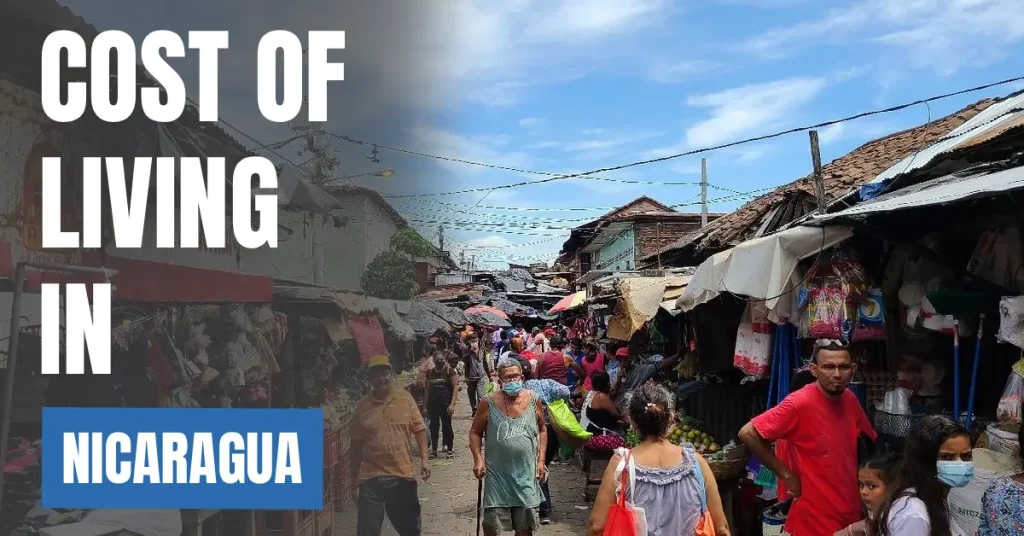
Cost of Living in Nicaragua in 2026: Rent, Salaries and Monthly Expenses
The cost of living in Nicaragua in 2026 is relatively affordable for people earning in US dollars or receiving sufficient income from abroad. However, affordability looks very different for residents earning local wages. Rent, electricity, imported groceries, healthcare and education can absorb a substantial share of household income.
On this pageTable of Content
A budget-conscious single person sharing accommodation may spend approximately C$18,000 to C$30,000 per month, including rent. Someone renting a private apartment may need C$28,000 to C$45,000, while a family of four may require C$55,000 to C$90,000 or more, depending on schooling, housing and lifestyle.
Managua, Granada, León, Estelí and San Juan del Sur have different housing markets. Smaller towns may offer lower rents, while popular tourist areas and properties marketed to international residents can be significantly more expensive.
The country's official currency is the Nicaraguan córdoba (NIO), commonly written as C$. The Central Bank of Nicaragua established an official exchange rate of C$36.6243 per US dollar for 2026, with no scheduled annual depreciation. Actual bank and exchange-provider rates may differ.
Living costs also continue to change. In its October 2026 economic outlook, the Central Bank reported annual inflation of 4.0% in July and projected inflation of 3.5% to 4.5% for the full year. Consequently, older grocery and household budget estimates should not be treated as fixed prices.
This guide examines the cost of living in Nicaragua in 2026, including accommodation, food, restaurants, transportation, utilities, healthcare, education, salaries, taxes and financial requirements for foreigners.
Also Explore: Cost of Living in North MacedoniaCost of Living in Nicaragua at a Glance
Nicaragua can offer relatively low day-to-day costs, but housing choices and income sources make a major difference. The following estimates are monthly planning ranges, not official national averages.
| Expense | Estimated Cost in NIO | Details |
|---|---|---|
| Single person, excluding rent | C$10,000–C$18,000/month | Food, utilities, transport and personal spending |
| Single person, including shared rent | C$18,000–C$30,000/month | Modest accommodation and regular expenses |
| Single person, including private rent | C$28,000–C$45,000/month | Independent apartment and ordinary spending |
| Couple, including rent | C$35,000–C$55,000/month | Shared household without dependent children |
| Family of four, including rent | C$55,000–C$90,000+/month | Family housing and everyday expenses, excluding expensive private schooling |
| One-bedroom rental | C$7,000–C$18,000/month | Varies by city, location and quality |
| Three-bedroom rental | C$13,000–C$31,000+/month | Indicative family housing range |
| Groceries, one adult | C$5,000–C$9,000/month | Mainly home-cooked meals |
| Electricity | C$1,500–C$4,000+/month | Usage and air conditioning affect costs |
| Home internet | C$700–C$1,500/month | Depends on provider and package |
| Mobile phone | C$180–C$600/month | Basic or moderate-use service |
| 2026 minimum wage | C$6,188.02–C$13,848.23/month | Depends on the employment sector |
The consumer price ranges are illustrative budgeting estimates. Actual rent, groceries and utilities vary significantly, and households using air conditioning frequently may spend considerably more on electricity.
The minimum wages are statutory amounts, while the living-cost estimates reflect hypothetical household spending. These figures should not be interpreted as a nationally representative household expenditure survey.
How Much Does It Cost to Live in Nicaragua Per Month?
For a single adult, approximately C$18,000 to C$30,000 per month may cover a modest lifestyle with shared accommodation. Renting independently can increase the total to approximately C$28,000 to C$45,000. Couples and families usually require higher budgets, particularly when paying for private healthcare or schooling.
Monthly Living Costs Excluding Rent
A single adult may spend approximately C$10,000 to C$18,000 per month on groceries, utilities, mobile service, transport, healthcare allowances and moderate personal spending.
This excludes housing, major medical procedures, school tuition, vehicle purchases, debt repayments and significant international travel.
People relying primarily on local food markets and public transport may spend less than those buying imported products, using taxis frequently or maintaining a Western-style lifestyle.
Monthly Living Costs Including Rent
Rent changes the financial picture considerably. A person sharing a property can distribute electricity, water and internet costs among several occupants, while someone renting alone pays most fixed household expenses independently.
For families, the biggest variables are housing size, transport arrangements, childcare, medical coverage and education.
Housing and Rent Prices in Nicaragua
Housing is usually the largest regular expense for foreign residents and many urban households. Nicaragua offers inexpensive local accommodation as well as modern apartments, furnished houses and higher-priced properties marketed to tourists or expatriates.
How Much Is Rent in Nicaragua?
A one-bedroom apartment may cost roughly C$7,000 to C$18,000 monthly, depending on the city and neighbourhood. Larger family homes can range from approximately C$13,000 to C$31,000 or more.
| Property Type | Indicative Monthly Rent | Approximate USD Equivalent |
|---|---|---|
| Shared room or modest local accommodation | C$4,500–C$9,000 | US$123–US$246 |
| One-bedroom outside central areas | C$7,000–C$13,000 | US$191–US$355 |
| One-bedroom in a central area | C$11,000–C$18,000 | US$300–US$491 |
| Three-bedroom outside central areas | C$13,000–C$22,000 | US$355–US$601 |
| Three-bedroom in a central or desirable area | C$22,000–C$31,000+ | US$601–US$846+ |
The US dollar equivalents use Nicaragua's official 2026 exchange rate and are rounded. These indicative rental ranges are based on the market estimates in the original Visaboards Nicaragua guide, not a comprehensive verified database of completed rental contracts.
Furnished apartments, gated communities, short-term holiday rentals and properties near tourist attractions may exceed these ranges. Long-term tenants may find different prices from visitors booking accommodation for a few weeks.
Rental Deposits and Upfront Expenses
New tenants should budget for a security deposit, initial rent, potential agency costs and any furniture or appliances not included with the property.
Deposit amounts and payment arrangements depend on the agreement and applicable law. Tenants should inspect the property, check what utilities are included and obtain written terms before making substantial payments.
Buying Property in Nicaragua
The existing market guide suggests approximate property purchase prices of C$22,000 to C$66,000 per square metre in different urban locations, equivalent to roughly US$600 to US$1,800 per square metre.
These are broad market indications, not verified 2026 transaction averages. Purchase prices depend on land title, location, building condition, infrastructure and property type.
Foreign buyers should arrange independent legal due diligence, including title verification, taxes, land-use restrictions and any rules affecting coastal or border properties. Property ownership should not be assumed to guarantee immigration residence.
Food and Grocery Costs in Nicaragua
Groceries in Nicaragua can be affordable when households buy local produce, rice, beans, eggs and seasonal foods. Imported products, international brands and specialty ingredients can increase the weekly shopping bill.
For one adult, a practical starting grocery allowance is approximately C$5,000 to C$9,000 monthly. Couples may spend C$9,000 to C$14,000, while families of four can budget around C$13,000 to C$20,000 or more.
| Grocery Item | Indicative Price in NIO |
|---|---|
| Milk, 1 litre | C$35–C$55 |
| Bread, one loaf | C$55–C$75 |
| Rice, 1 kg | C$30–C$60 |
| Eggs, 12 | C$55–C$85 |
| Chicken, 1 kg | C$110–C$170 |
| Beef, 1 kg | C$140–C$260 |
| Apples, 1 kg | C$70–C$120 |
| Bananas, 1 kg | C$20–C$40 |
| Bottled water, 1.5 litres | C$30–C$50 |
These are approximate consumer estimates, not live supermarket quotations. Prices can change by season, supplier and region.
Food inflation is especially important for household budgets. The Central Bank's monetary policy report recorded annual food and beverage inflation of 6.70% in June 2026, compared with overall inflation of 3.98%.
The National Institute of Development Information (INIDE) publishes information on Nicaragua's basic basket of goods, or canasta básica. This official measure provides useful insight into household purchasing pressure, but it should not be confused with a full expatriate budget including independent rental accommodation and private services.
Shopping at local markets, choosing seasonal produce and preparing meals at home can reduce expenses. Households with particular dietary requirements should check availability and prices before relocating.
Restaurant and Eating Out Costs
Local restaurants, street-food vendors and simple cafés can provide relatively inexpensive meals. Tourist-oriented restaurants and international dining establishments are usually more expensive.
| Food or Drink | Indicative Cost |
|---|---|
| Inexpensive local restaurant meal | C$140–C$260 |
| Mid-range meal for two | C$700–C$1,300 |
| Fast-food combination meal | C$140–C$260 |
| Café coffee | C$55–C$115 |
| Soft drink or tea | C$35–C$75 |
These figures are approximate menu-price allowances. More expensive venues may charge substantially higher prices, particularly in tourist areas.
The Central Bank reported annual inflation of 4.76% for restaurants and hotels in June 2026. Regular dining out can therefore increase monthly spending more quickly than an estimate based only on inexpensive local meals suggests.
Utilities and Household Bills in Nicaragua
Utilities in Nicaragua can be relatively inexpensive for households with modest consumption, but electricity costs can rise sharply when air conditioning is used frequently.
A basic household might budget C$1,500 to C$4,000 or more for electricity each month, depending on the property, tariff, appliances and climate.
| Utility | Indicative Monthly Cost |
|---|---|
| Electricity | C$1,500–C$4,000+ |
| Water | C$180–C$500 |
| Home internet | C$700–C$1,500 |
| Mobile service per adult | C$180–C$600 |
| Cooking gas and additional household services | Depends on consumption and service arrangements |
These estimates should not be added automatically to every budget because some rental agreements include selected services.
Electricity affordability also depends on government support and the applicable tariff. Nicaragua's central bank reported the continuation of subsidies for selected essential services and fuels during 2026. Such policies may moderate prices, but they do not mean that every household receives the same benefits or that electricity is universally cheap.
Power interruptions, backup power equipment and water storage can also affect living arrangements in some areas. Prospective tenants should check the reliability of services at the specific property.
Internet and Mobile Phone Costs
Home internet may cost approximately C$700 to C$1,500 per month, while basic or moderate-use mobile service may cost around C$180 to C$600 monthly.
Availability depends on the neighbourhood and provider. Urban areas generally offer more service choices than remote communities, but connection quality can vary even within the same city.
Remote workers should verify upload speed, network stability, electricity reliability and backup connectivity before signing a long-term rental contract. The cheapest internet package may not be sufficient for regular video calls or large file transfers.
Transportation Costs in Nicaragua
Public transportation is inexpensive in many parts of Nicaragua. However, fares, service frequency and vehicle availability vary by location and transport type.
Public Bus Fares in Managua
In September 2026, local reporting confirmed that the standard urban bus fare in Managua remained C$2.50 per journey. At two journeys per weekday for 22 working days, the basic fare calculation would be approximately C$110 per month.
This does not include additional journeys, different transport services or the cost of reaching destinations not served by a convenient route.
Other intercity buses, minibuses and private transport services have their own fares. The C$2.50 Managua fare should not be presented as a universal public transport price across Nicaragua.
Taxis and Private Transportation
Taxis can provide additional flexibility, especially where public routes are inconvenient. Costs depend on location, distance and the agreed fare.
Passengers should confirm the price before beginning a journey when a regulated meter or clearly displayed tariff is not available.
Owning a Car
Car ownership adds fuel, insurance, registration, maintenance, tyres and parking expenses. Road conditions and travel distances can also increase vehicle operating costs.
The Central Bank reported government fuel price support during 2026, including policies intended to moderate gasoline and diesel prices. Nevertheless, fuel affordability should be reviewed using current local prices rather than relying on an older fixed estimate.
Residents in Managua or smaller urban areas may be able to manage without a car. Households living remotely or travelling frequently between cities may find vehicle ownership more practical.
Healthcare Costs in Nicaragua
Nicaragua has public healthcare services and a social security system, alongside private hospitals and medical providers. Healthcare is not best understood through consultation prices alone because eligibility, insurance coverage and available facilities affect actual expenses.
Public Healthcare
Public healthcare services operate through Nicaragua's Ministry of Health (MINSA). Residents may be able to access public facilities without the same fees charged by private providers, but service availability, eligibility, waiting times and required documentation can differ.
Foreign residents and visitors should confirm their access to services rather than assuming that every treatment will be available without charge.
Social Security Healthcare Coverage
The Nicaraguan Social Security Institute (INSS) provides sickness and maternity coverage for insured workers and eligible beneficiaries under applicable rules.
The system includes preventive, curative and hospital services delivered through contracted healthcare providers. Under the published INSS conditions, workers contributing under the comprehensive insurance regime generally need at least eight weeks of contributions to qualify for the relevant healthcare protection.
Eligibility and benefits are therefore tied to social security status and should not be confused with a universal private insurance policy.
Private Doctors and Health Insurance
Private consultations can offer additional choices, but costs depend on the specialist, clinic and required treatment.
| Healthcare Expense | Indicative Cost |
|---|---|
| Basic private doctor consultation | C$350–C$750 |
| Private specialist consultation | C$700–C$1,900+ |
| Individual insurance | Requires a personalised policy quotation |
| Family medical insurance | Requires a personalised policy quotation |
The consultation prices are broad estimates, not standard national medical tariffs. The original guide provided low indicative insurance premiums, but these should not be treated as comprehensive 2026 coverage prices without checking policy benefits, exclusions and coverage limits.
Private treatment, advanced procedures and medical evacuation can cost considerably more. Foreign residents should assess suitable health insurance and the availability of specialist treatment in their chosen area.
Education and Childcare Costs in Nicaragua
Education costs depend on whether a family chooses public, private or international schooling. Public education is generally much less expensive, but families may still need to budget for supplies, transport and other practical expenses.
Public Schools
Nicaragua's Constitution recognises free education, and public basic education is provided by the state. The UNESCO-linked SITEAL country profile explains that state-provided basic education is free and compulsory across the specified early and primary education stages.
Families still need to consider stationery, uniforms where required, school meals and transport. Foreign parents should confirm enrolment documentation, language needs and school availability.
Private and International Schools
Private education is not free. Fees depend on the institution, grade and facilities offered.
As an initial market estimate, some private schools may charge approximately C$1,800 to C$7,500 monthly. International schools can cost substantially more, with tuition and additional charges varying greatly.
The original Nicaragua guide cites international school fees of approximately US$2,000 to US$8,000 annually. These figures should be treated as historical planning indications, not verified 2026 fee schedules.
Parents should obtain current written quotations directly from institutions, including enrolment, tuition, transport, uniforms and extracurricular charges.
Childcare and Early Education
Childcare costs vary by provider, location, hours and children's ages. Full-day private care generally requires a larger budget than informal or part-time family arrangements.
No sufficiently reliable nationwide 2026 childcare price average was established for this guide. Families should obtain local quotations and avoid assuming that school tuition estimates also cover nursery care.
Salaries and Wages in Nicaragua
Local earnings are one of Nicaragua's main affordability challenges. A country may be inexpensive when measured in US dollars while remaining difficult to afford for people employed at local wage levels.
The Central Bank's July 2026 monetary policy report recorded annual nominal salary growth of 5.1% among workers insured by INSS as of June 2026, while real salaries increased by approximately 1%.
These are wage growth rates, not the average salary of every worker. INSS wage records also do not fully represent informal employment and other workers outside the insured system.
Minimum Wage in Nicaragua in 2026
Nicaragua does not have one minimum wage for every industry. The National Minimum Wage Commission approved a general 4% increase for most sectors, effective from 1 March 2026 through 28 February 2027. The free trade zone sector received a separate adjustment effective from 1 January 2026.
The following sectoral figures are reported in the 2026 wage agreement and supported by Arias's legal analysis of the minimum wage decision.
| Economic Sector | Monthly Minimum Wage (NIO) |
|---|---|
| Agriculture and livestock | C$6,188.02 |
| Fishing | C$9,409.09 |
| Mining and quarrying | C$11,113.46 |
| Manufacturing | C$8,320.48 |
| Small artisan and tourism businesses | C$6,519.58 |
| Commerce, restaurants, hotels, transport and specified utilities | C$11,350.08 |
| Construction, financial institutions and insurance | C$13,848.23 |
| Community, social and personal services | C$8,674.94 |
| Central and municipal government | C$7,716.70 |
| Free trade zone industries | Approximately C$9,986.46 |
The free trade zone figure has minor differences across secondary reporting sources, so the applicable official sector schedule should be checked for payroll compliance.
The difference between minimum wages and household living expenses is substantial. Even the highest listed regular sector minimum of C$13,848.23 falls below the illustrative C$20,000 monthly budget for one adult sharing accommodation.
Actual living conditions may differ for workers who share housing with relatives, receive employer benefits or maintain lower household expenses. Nevertheless, the comparison shows why international purchasing power and local affordability should not be treated as equivalent.
What Salary Is Needed to Live Comfortably?
A single person renting independently may aim for after-tax monthly income of approximately C$30,000 to C$45,000 or more. A couple may need C$35,000 to C$55,000 in combined monthly take-home income, while families require more according to dependants and schooling arrangements.
These are planning targets derived from the sample budgets, not official salary thresholds. Someone wishing to save regularly or pay for international healthcare and education should aim above basic spending requirements.
Income Taxes and Everyday Affordability
Nicaragua taxes employment income using a progressive schedule. According to the General Directorate of Revenue (DGI), the following rates apply to annual net taxable employment income.
| Annual Net Taxable Income | Marginal Rate on the Relevant Band |
|---|---|
| Up to C$100,000 | 0% |
| C$100,000–C$200,000 | 15% |
| C$200,000–C$350,000 | 20% |
| C$350,000–C$500,000 | 25% |
| Over C$500,000 | 30% |
These are marginal bands, meaning the highest applicable rate is not charged on all income. Employment-related social security contributions and allowable deductions also affect taxable income and take-home pay.
PwC's Nicaragua tax summary, reviewed in August 2026, notes that Nicaraguan-source income can be taxable for both residents and non-residents. Tax treatment may differ for non-resident income recipients, so foreign workers should confirm the rules relevant to their circumstances.
Nicaragua also applies a general value-added tax known as IVA, normally 15% on applicable taxable supplies. Exemptions and special treatment exist for certain transactions. Consumers should confirm whether quoted prices include taxes.
Realistic Monthly Budgets for Nicaragua in 2026
These four examples show how monthly expenses can accumulate for different households. All totals include rent and ordinary living expenses. They are constructed budget examples rather than measured national averages.
| Monthly Expense | Budget Single | Moderate Single | Couple | Family of Four |
|---|---|---|---|---|
| Rent | C$9,000 | C$14,500 | C$18,000 | C$24,000 |
| Utilities | C$1,500 | C$2,300 | C$3,000 | C$4,500 |
| Groceries | C$4,500 | C$6,000 | C$10,000 | C$16,000 |
| Transportation | C$900 | C$1,600 | C$2,500 | C$4,500 |
| Internet and mobile | C$1,100 | C$1,300 | C$1,800 | C$2,400 |
| Healthcare allowance | C$800 | C$1,300 | C$2,000 | C$3,000 |
| Dining and leisure | C$1,200 | C$2,500 | C$3,500 | C$5,000 |
| Other expenses | C$1,000 | C$2,000 | C$3,200 | C$5,600 |
| Total Including Rent | C$20,000 | C$31,500 | C$44,000 | C$65,000 |
Budget-Conscious Single Person: C$20,000
This example assumes modest shared housing, local groceries, limited recreational spending and mainly inexpensive transportation. It excludes major medical expenses, savings goals and large one-time purchases.
Moderate Single Person: C$31,500
This budget assumes an independent apartment, moderate electricity consumption, occasional dining out and regular personal spending. Living in an expensive tourist area or using air conditioning extensively may increase costs.
Couple: C$44,000
The couple shares rent, internet and most utilities. The estimate assumes no dependent children, no expensive private medical treatment and no substantial vehicle loan payments.
Family of Four: C$65,000
This example includes a larger home and higher grocery, transport and utility expenses. It assumes public schooling or otherwise low education costs, without major private childcare or international school tuition.
Families choosing international schools, full-time childcare or expensive private healthcare should add those costs separately.
Cost of Living by City and Region
Nicaragua's housing and lifestyle expenses differ between the capital, historic cities, coastal communities and rural regions.
Managua
Managua offers major employment, shopping, education and private healthcare options. Residents can choose between modest local housing and more expensive properties in desirable neighbourhoods.
Transport and electricity costs depend on where people live, work and study. Affordable urban bus fares can help households reduce commuting expenses.
Granada
Granada is known for its historic centre and international visitor appeal. Modest homes outside the most popular areas may be more affordable than furnished properties aimed at tourists.
Residents should compare long-term leases with short-term rental prices because they serve different markets.
León
León has a university environment and offers potential opportunities for students and budget-conscious residents. Shared accommodation and local dining can be comparatively affordable.
However, modern furnished apartments or accommodation in highly desirable locations may still carry higher costs.
Estelí
Estelí may appeal to people seeking a smaller urban environment and potentially more modest housing costs. Local employment opportunities and the availability of specialist services should be evaluated before relocating.
San Juan del Sur
San Juan del Sur attracts tourists and international residents, particularly around its coastal lifestyle. Furnished rentals and properties near beaches may command premiums.
Households should check seasonal rental availability, internet reliability, transportation options and access to healthcare before making long-term commitments.
Which City Is Cheapest?
There is no sufficiently comprehensive, comparable 2026 rental dataset to establish a definitive cheapest city. León, Estelí and smaller towns may provide affordable options, but individual property prices and employment opportunities matter more than a general city ranking.
Nicaragua vs Costa Rica, Panama and Mexico
Nicaragua is often considered less expensive than Costa Rica and Panama for particular housing and daily expenses. However, a reliable comparison should account for the specific cities, salary levels, healthcare needs and lifestyle being considered.
| Country Comparison | Practical Affordability Considerations |
|---|---|
| Nicaragua vs Costa Rica | Nicaragua may offer less expensive local accommodation and dining, while healthcare, wages and location choices can change the overall comparison. |
| Nicaragua vs Panama | Panama City and premium residential areas may involve higher expenses, but earnings and services should also be compared. |
| Nicaragua vs Mexico | Both countries have substantial regional differences. Housing in major Mexican cities and tourist destinations cannot be compared reliably with Nicaragua's national averages. |
These observations are qualitative, not statistical proof of a fixed percentage difference. No harmonised current dataset was established to support precise national cost comparisons.
People considering relocation should compare comparable rental properties, after-tax income, healthcare coverage and transport arrangements rather than relying on an overall cheapest-country claim.
Hidden Costs New Residents Often Overlook
A low advertised rental price does not necessarily mean a low overall relocation budget. New residents should consider the following additional expenses:
- Security deposits: Upfront rental payments may require substantial cash.
- Air conditioning: Electricity consumption can increase considerably in warmer regions.
- Furniture and appliances: Unfurnished accommodation may require significant purchases.
- Private healthcare: Specialist treatment, insurance exclusions and emergency care can create large expenses.
- Schooling: International school fees, uniforms, transport and supplies may exceed normal household allowances.
- Transport: Car maintenance, fuel, taxis and intercity journeys add to spending.
- Banking and currency exchange: International transfers and provider exchange rates may involve extra charges.
- Immigration documentation: Legalisation, translations, medical examinations and application charges can increase relocation costs.
- Emergency reserves: Unexpected medical care, travel or property repairs should be funded separately.
Cost of Living vs Nicaragua Residency Financial Requirements
Having enough income for daily living does not automatically establish eligibility for legal residence in Nicaragua. Immigration rules depend on the category, documentation and laws in force.
Pensionado and Rentista Residency
Older guidance commonly describes pensionado residency with US$1,000 monthly pension income and rentista residency with US$1,250 monthly stable income. However, these amounts should not be presented as automatically valid immigration requirements in 2026.
An important legal change occurred in August 2024. Nicaragua's Law No. 1210, the General Tourism Law, repealed Law No. 694, which had provided specific benefits for pensionado and rentista residents.
Some immigration regulations and secondary guides still refer to these categories, creating uncertainty about the current application process and available benefits. Applicants should confirm the presently accepted category, income evidence and procedure directly with the Nicaraguan immigration authority before relying on older financial thresholds.
Tourists, Workers and Other Residents
Tourist permission, employment authorisation and permanent residence involve different legal conditions. A visitor's ability to pay for accommodation does not grant the right to work or reside permanently.
Remote workers should also verify immigration permission and tax implications rather than assuming that foreign income automatically makes them eligible for residence.
Is Nicaragua Affordable for Expats and New Residents?
Nicaragua can be affordable for people with sufficient foreign-sourced income, secure accommodation and realistic expectations. However, local salaries, healthcare choices, infrastructure and immigration conditions complicate the picture.
An individual earning US$1,500 per month has an official-rate equivalent of approximately C$54,936 before transfer fees or other deductions. That amount can support a substantially different lifestyle from employment at Nicaragua's sectoral minimum wages.
Expats should also consider medical facilities, internet stability, language requirements, local services, school options and access to employment or banking.
Residents who depend on public transport and local markets may manage lower expenses, whereas those requiring international schooling, extensive private healthcare and premium housing should plan for much higher spending.
Conclusion: How Much Money Do You Need in Nicaragua?
For 2026, a reasonable initial monthly planning range is C$18,000 to C$30,000 for a single person in shared accommodation, C$28,000 to C$45,000 for an independent renter and C$55,000 to C$90,000 or more for a family of four. All these amounts include rent, but not large exceptional expenses.
Nicaragua's relatively low consumer prices should be considered alongside its significantly lower local wages. Housing, electricity use, healthcare access and schooling decisions are central to the affordability calculation.
Before relocating, compare actual rentals in the intended neighbourhood, calculate after-tax income, obtain healthcare and school quotations where necessary, and verify current immigration requirements. This approach provides a more reliable picture than relying on a single national cost-of-living estimate.
Sources and Methodology
This article was reviewed on 4 November 2026. Research included Nicaragua's central bank, statistical and taxation authorities, social security information, education references, labour-law reporting, immigration legislation and the existing Visaboards guide.
The primary currency is the Nicaraguan córdoba. US dollar equivalents use the Central Bank's official 2026 exchange rate of C$36.6243 per dollar and may differ from exchange-provider rates.
Official minimum wages, exchange rates, inflation figures, tax schedules and legal provisions are distinguished from indicative rental and consumer spending estimates. The sample monthly budgets are illustrative calculations, not official household expenditure averages.
Consumer cost databases and expatriate rental listings can have limited or uneven samples, particularly outside Managua. Market prices vary by region, housing type, season and lifestyle. Multiple sources were compared where suitable, and unsupported precision was avoided.
Sources Used
- Central Bank of Nicaragua: October 2026 Macroeconomic Outlook
- Central Bank of Nicaragua: Monetary and Exchange Policy Report, July 2026
- Central Bank of Nicaragua: Official Exchange Rate for 2026
- INIDE: Basic Household Basket Statistics
- Arias: Nicaragua Minimum Wage Agreement, March 2026
- WageIndicator: Nicaragua Minimum Wage Rates
- DGI: Employment Income Tax Schedule
- PwC: Nicaragua Individual Income Tax
- INSS: Sickness and Maternity Healthcare Coverage
- UNESCO SITEAL: Nicaragua Education Profile
- INTUR: Law No. 1210, General Tourism Law
- Nicaragua Legal Database: Former Law No. 694
- Canal 4: Managua Public Transportation Fare, September 2026
- Visaboards: Original Cost of Living in Nicaragua Article
Frequently Asked Questions
How much does it cost to live in Nicaragua per month?
A single person sharing accommodation may spend approximately C$18,000 to C$30,000 monthly, including rent and regular living expenses. Renting independently may increase costs to C$28,000 to C$45,000. A family of four may require C$55,000 to C$90,000 or more. These are illustrative planning ranges, and actual expenses depend on housing, location, healthcare and lifestyle.
Is Nicaragua expensive to live in?
Nicaragua can be relatively inexpensive for people with sufficient income from abroad, especially when using local markets and modest accommodation. However, affordability is much more challenging for workers earning local wages. Rising food prices, electricity consumption, private healthcare and school fees can increase expenses. The Central Bank reported annual inflation of 4% in July 2026.
How much is rent in Nicaragua?
A one-bedroom apartment may cost approximately C$7,000 to C$18,000 monthly, depending on its location and quality. Larger three-bedroom homes may cost C$13,000 to C$31,000 or more. These figures are broad market estimates rather than official rental medians. Furnished accommodation and properties in popular tourist destinations may cost substantially more.
What salary is needed to live comfortably in Nicaragua?
A single adult renting independently may aim for approximately C$30,000 to C$45,000 or more in monthly take-home income. Couples may need C$35,000 to C$55,000 combined, while families usually require more. These are household planning targets, not official wage requirements. Comfortable living depends on housing, savings goals, schooling and healthcare choices.
What is the minimum wage in Nicaragua in 2026?
Nicaragua has different minimum wages for different economic sectors. From March 2026, regular sector minimum wages range from C$6,188.02 per month in agriculture to C$13,848.23 in construction, finance and insurance. The general increase was 4%, with a separate free trade zone adjustment. These are gross legal wage floors, not a nationally uniform minimum salary.
Is healthcare free in Nicaragua for foreigners?
Foreigners should not assume that all medical care is free. Nicaragua operates public health facilities and a social security healthcare system, but access and benefits depend on the person's circumstances. Eligible workers covered through INSS can receive specified healthcare services. Private consultations, specialist treatment and insurance can involve additional expenses, so foreign residents should verify eligibility and medical coverage.
How much does a family of four need in Nicaragua?
A family of four may require approximately C$55,000 to C$90,000 or more monthly, including rent, groceries, utilities, transport and ordinary spending. An illustrative budget in this guide totals C$65,000 per month. International schooling, childcare, private medical treatment and expensive furnished housing can increase spending substantially beyond that amount.
Is public transportation cheap in Nicaragua?
Yes, basic public transportation can be inexpensive. In September 2026, Managua's standard urban bus fare was reported at C$2.50 per journey. However, that fare does not apply to every bus or transport service nationwide. Intercity journeys, taxis, car ownership and private transportation have different costs, so commuters should calculate spending based on their intended routes.
Is Nicaragua cheaper than Costa Rica?
Nicaragua may offer lower prices for certain housing, dining and daily expenses compared with Costa Rica. However, the difference varies by city, accommodation type and lifestyle. Salary levels, healthcare arrangements and transport costs must also be considered. Without a consistent current dataset, it is not reliable to claim a specific nationwide percentage difference between the two countries.
How much income is needed for Nicaragua residency?
Residency financial requirements depend on the immigration category and current rules. Older guides frequently cite US$1,000 monthly for pensionado status and US$1,250 for rentista status, but Law No. 694 was repealed in 2024. As a result, applicants should not rely on those amounts or associated benefits without confirming current requirements and procedures directly with Nicaragua's immigration authority.
Join the conversation
Have thoughts on this topic? Share them with others.
Ask questions, share experience, and learn from the Visaboards Community.