Cost of Living in Samoa 2026: Rent, Food, Salaries and Monthly Costs
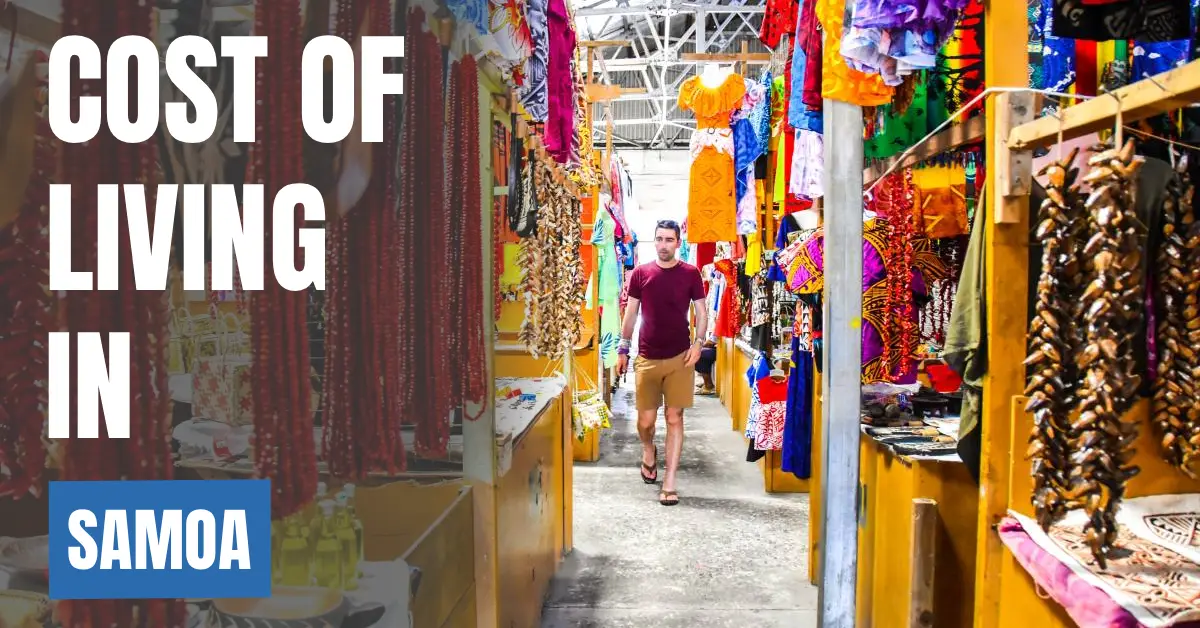
The cost of living in Samoa in 2026 depends heavily on housing choice. Public transport and water can be inexpensive, but furnished housing around Apia, imported groceries, electricity use, private healthcare, and car ownership can raise a monthly budget quickly.
For a single person renting independently, a practical planning range is about WST 1,900 to WST 4,500 per month including rent. The lower end assumes basic housing, local food and bus use. The upper end reflects a furnished home near Apia, more imported groceries, more dining out, and higher utility use.
A family of four may need roughly WST 6,500 to WST 9,500 per month including rent for a comfortable urban lifestyle, before expensive private or international schooling, regular car costs or frequent overseas travel.
These are planning ranges, not official national averages. Samoa has a small rental market and very limited crowdsourced cost-of-living data. Current property listings show especially large differences between basic local housing and furnished, air-conditioned homes marketed to professionals and expatriates.
Learn more about the island nation visit: Samoa country.
Looking for jobs in Samoa? Visit: Samoa Jobs
Also Explore: Cost of Living in AndorraCost of Living in Samoa at a Glance
| Expense | 2026 Cost or Planning Range |
|---|---|
| Budget-conscious single person, including rent | About WST 1,900 to WST 2,600 per month |
| Moderate single person, including rent | About WST 3,200 to WST 4,500 per month |
| Couple, including rent | About WST 4,300 to WST 6,000 per month |
| Family of four, including rent | About WST 6,500 to WST 9,500 per month, before costly private schooling |
| Basic 2-bedroom rental observed in Vailele | From about WST 800 per month |
| Furnished 2-bedroom rental near Apia | About WST 2,500 to WST 4,800 per month in recent listings |
| Higher-end 3-bedroom rental | Around WST 4,000 to WST 6,000 or more per month |
| Apia town bus fare | WST 1.30 |
| Home internet | About WST 80 to WST 200 per 28 days depending on data allowance |
| Mobile data plan | About WST 50 to WST 100 per 28 days for higher-data prepaid plans |
| Current minimum wage | WST 5.24 per hour from 1 July 2026 |
| Average annual formal-sector wage, year ending December 2025 | WST 40,022, about WST 3,335 per month gross |
| VAGST | 15% on most taxable goods and services |
Samoa’s Consumer Price Index was 3.1% higher year on year in July 2026, while average annual inflation was 1.2%. This means individual prices can still move noticeably even when the broader annual inflation rate appears relatively modest.
How Much Does It Cost to Live in Samoa Per Month?
A single renter should generally plan around WST 1,900 to WST 4,500 per month including rent. A couple may need around WST 4,300 to WST 6,000, while a family of four may need approximately WST 6,500 to WST 9,500 before expensive private schooling or substantial car costs.
Housing creates most of the variation. Someone renting a simple unfurnished property outside central Apia, cooking mainly local food and using buses can spend far less than someone choosing a secure furnished property with air conditioning, imported groceries and frequent taxis.
For planning purposes, monthly expenses excluding rent may look roughly like this:
| Household | Estimated Monthly Costs Excluding Rent |
|---|---|
| Single person | WST 1,000 to WST 1,700 |
| Couple | WST 1,700 to WST 2,600 |
| Family of four | WST 2,800 to WST 4,500 |
These figures are planning estimates built from current transport, telecommunications, water and rental information plus conservative household allowances. They should not be treated as official Samoa Bureau of Statistics household expenditure averages.
How Much Is Rent in Samoa?
Rent can range from under WST 1,000 per month for a basic unfurnished home to WST 4,000 to WST 6,000 or more for larger, furnished and higher-specification properties around greater Apia.
This is one of the most important corrections to simple cost-of-living estimates for Samoa. There is no single reliable “average rent” that represents the market well.
Recent 2026 advertisements provide useful examples:
- A 2-bedroom unfurnished home in Vailele was advertised at WST 800 per month.
- A furnished 2-bedroom property in Vailele was advertised at WST 2,500 per month.
- A furnished 2-bedroom home in Moto’otua was listed at WST 2,500 per month.
- Secure furnished 2-bedroom properties in the wider Apia market have been advertised at around WST 4,800 per month.
- Larger 3-bedroom properties have appeared around WST 4,000 to WST 6,000 per month, with some premium homes costing more.
The difference reflects furnishing, security, air conditioning, appliances, location, property condition, garden space and whether a property is positioned toward local households or foreign professionals.
Apia vs Areas Outside Central Apia
Apia and nearby residential areas such as Moto’otua, Vailima, Vaoala, Lotopa and Vailele contain much of the rental stock most visible online. Moving farther from central Apia can reduce housing costs, but transport becomes more important.
A cheaper house can therefore create additional costs if you need a vehicle, frequent taxis or a long daily commute.
Can Foreigners Buy Property in Samoa?
Foreign residents should not assume that buying a home works the same way as in countries with unrestricted freehold ownership. Samoa’s investment guidance states that only Samoan citizens may buy freehold land, while customary land cannot be sold. Leasing is therefore important for many foreign investors and long-term residents.
Lease terms depend on the land category and purpose. Anyone considering a long-term lease or property investment should obtain legal advice before making financial commitments.
Groceries and Food Costs in Samoa
A single person who cooks most meals at home might budget around WST 450 to WST 800 per month for groceries. A couple may spend about WST 850 to WST 1,300, while a family of four could reasonably budget WST 1,400 to WST 2,200 depending on diet.
These are household planning ranges rather than official grocery basket prices. Food spending varies significantly according to how much local produce, fish and staple food you buy compared with imported packaged products, dairy products and specialty foods.
Fresh local produce can be bought through markets including Fugalei Market in Apia. Prices for locally grown agricultural products can move considerably from month to month depending on supply and season. Samoa Bureau of Statistics publishes a monthly Local Market Survey specifically tracking these movements.
Imported foods are one of the areas where newcomers may find Samoa less inexpensive than expected. A household that regularly buys imported snacks, cereals, premium dairy products, specialty ingredients, or overseas brands should use the upper end of the grocery budget.
Restaurants and Eating Out
Eating out can remain manageable if it is occasional, but regular restaurant meals materially increase the monthly budget. A current quick-service benchmark is around WST 24 to WST 25 for a fast-food meal.
Restaurant pricing varies widely between local takeaway food, cafés, hotel restaurants and venues aimed at visitors. Someone eating out several times each week should consider adding WST 300 to WST 700 or more to a monthly budget, depending on household size and restaurant choice.
Utilities in Samoa
A practical household allowance for electricity, water and cooking-related utilities is around WST 120 to WST 450 per month, but air conditioning can substantially increase electricity consumption.
Water itself is comparatively inexpensive. Samoa Water Authority’s published household tariff begins at WST 0.61 per cubic metre for the first usage tier, increases to WST 1.34 and then WST 1.74 at higher consumption levels. Its published household flat rate is WST 16 per month.
Electricity is more lifestyle-sensitive. A naturally ventilated home using fans can have very different consumption from a larger property running several air-conditioning units. For that reason, ask a landlord for recent electricity bills rather than assuming a national monthly average.
Internet and Mobile Costs
For home internet, a realistic current budget is approximately WST 80 to WST 200 per 28 days, depending primarily on the data allowance.
Digicel Samoa currently advertises Maota home internet packages including:
- WST 80 for 100 GB over 28 days
- WST 100 for 200 GB over 28 days
- WST 129 for 500 GB over 28 days
- WST 200 for 1 TB on its current Maota plan page
For mobile service, Vodafone Samoa currently offers examples such as WST 50 for 60 GB over 28 days and WST 60 for 75 GB over 28 days. Higher-data plans are also available.
Offers, data allowances and promotions change frequently, so check the provider before using these figures as a long-term contract assumption.
Transportation Costs in Samoa
Public buses are inexpensive, but they are not free. Under the Land Transport Authority fare schedule effective 31 July 2026, a bus trip within the Apia town area costs WST 1.30.
Examples of official Upolu fares from the same schedule include:
- Apia town area: WST 1.30
- Apia Park: WST 1.60
- Moto’otua Hospital by bus: WST 1.70
- Vailele: about WST 2.00 to WST 2.10 depending on the stop
- Vailima village: WST 2.60
Taxis cost substantially more than buses. The 2026 LTA fare schedule lists WST 6.30 to Moto’otua Hospital from the relevant central Apia taxi area, while longer journeys can cost tens of tala or considerably more.
A person commuting mainly by bus might spend only WST 60 to WST 150 per month on routine transport. Someone relying on taxis should budget substantially more.
Car ownership changes the calculation again. Fuel, registration, insurance, maintenance, imported parts and repairs can make a vehicle one of the larger household expenses. A car may nevertheless become practical for residents living away from convenient bus routes.
Healthcare Costs in Samoa
Healthcare in Samoa should not be described simply as free. Samoa has a publicly funded health system with subsidized services, but new residents should still budget for medical expenses, medicines, private care and, where appropriate, health or medical evacuation insurance.
Government health policy documents have historically kept public user fees low to improve access. Ministry of Health material also states that public hospital and outpatient fees are waived for certain age groups, including children aged 12 and under and people aged 60 and above. However, a comprehensive current 2026 public fee schedule was not available in the reviewed material, so fixed consultation prices should not be presented as universal.
For an expatriate household, setting aside around WST 100 to WST 250 per person each month as an insurance or healthcare reserve can be sensible, but this is a budgeting assumption rather than an official premium or medical fee.
People with ongoing medical conditions should check access to required specialists, medicines and insurance before relocating. Complex treatment may sometimes require care outside Samoa, making overseas medical or evacuation coverage particularly relevant for some residents.
Education and Childcare
Education costs depend heavily on whether a child attends a government, mission or private institution. Samoa’s School Fee Grant Scheme provides government funding to government and mission schools and covers tuition for primary students and students in Years 9 to 11.
This does not mean every education-related expense disappears. Families can still face costs for uniforms, transport, stationery, activities, registration-related charges and education outside the grant’s coverage.
Private schooling and early childhood education vary by provider. Families considering a particular school should request the current fee schedule directly rather than relying on a national average.
Salaries in Samoa
The latest fully detailed annual figure reviewed from the Samoa Bureau of Statistics shows an average annual formal-sector wage of WST 40,022 for the year ending December 2025. That is approximately WST 3,335 per month gross.
This figure covers formally registered employment and should not be interpreted as what every worker in Samoa earns. Salaries vary substantially by occupation and industry.
Samoa Bureau of Statistics also reported that formal employment was 8.2% higher year on year in the June 2026 quarter.
What Is the Minimum Wage in Samoa in 2026?
Samoa’s minimum wage is WST 5.24 per hour from 1 July 2026 for the private sector and state-owned enterprises covered by the relevant labour rules.
The government has also published scheduled increases:
- WST 5.24 per hour from 1 July 2026
- WST 5.65 per hour from 1 July 2027
- WST 6.05 per hour from 1 July 2028
Workers covered by the Public Service Act are not covered by this minimum-wage provision.
At 40 hours per week, WST 5.24 per hour is approximately WST 908 per month gross. This is important affordability context. It is below the cost of many independently rented homes before food, utilities or transport are added.
What Salary Is Needed to Live Comfortably in Samoa?
A single person renting independently around greater Apia may find WST 3,500 to WST 4,500 per month gross or more a more realistic target for a moderate lifestyle, particularly when renting furnished accommodation.
A person with very inexpensive housing can live on considerably less. Someone wanting a modern furnished home, a car, imported food and frequent restaurant meals may require substantially more.
This also shows why Samoa should not simply be labelled “cheap.” The official average annual formal wage of WST 40,022 is about WST 3,335 per month gross, while many furnished rentals marketed around Apia alone cost WST 2,500 or more each month.
Taxes and Everyday Affordability
Samoa uses progressive personal income tax rates. The Ministry of Revenue publishes the following bands:
- Annual income up to WST 15,000: no income tax
- WST 15,001 to WST 25,000: 20% rate on the applicable band
- Income above WST 25,000: 27% rate on the applicable higher band
Samoa also has a 15% Value Added Goods and Services Tax, or VAGST, applying to most goods and services supplied by registered businesses and to most imported goods.
When assessing whether a salary is adequate, compare your expected take-home income rather than only the headline gross salary.
Realistic Monthly Budgets for Samoa
The examples below are planning scenarios, not official averages. They use current rental advertisements and verified 2026 service prices, combined with practical household allowances.
Budget-Conscious Single Person
| Expense | Estimated Monthly Cost |
|---|---|
| Basic rent | WST 800 |
| Electricity and water | WST 150 |
| Groceries | WST 550 |
| Transport | WST 120 |
| Internet and mobile | WST 130 |
| Healthcare reserve | WST 100 |
| Dining and leisure | WST 150 |
| Estimated Total | WST 2,000 per month |
This assumes an unusually affordable basic rental, local shopping, frequent bus use and limited discretionary spending.
Moderate Single Person
| Expense | Estimated Monthly Cost |
|---|---|
| Furnished rent | WST 2,500 |
| Electricity and water | WST 250 |
| Groceries | WST 700 |
| Transport | WST 200 |
| Internet and mobile | WST 180 |
| Healthcare reserve | WST 150 |
| Dining and leisure | WST 300 |
| Estimated Total | WST 4,280 per month |
This is closer to the budget of a professional who wants furnished housing near Apia while still controlling discretionary spending.
Couple
| Expense | Estimated Monthly Cost |
|---|---|
| Rent | WST 2,800 |
| Electricity and water | WST 300 |
| Groceries | WST 1,050 |
| Transport | WST 300 |
| Internet and mobile | WST 180 |
| Healthcare reserve | WST 250 |
| Dining and leisure | WST 450 |
| Estimated Total | WST 5,330 per month |
Sharing rent and internet makes the cost per person lower than maintaining two separate households.
Family of Four
| Expense | Estimated Monthly Cost |
|---|---|
| 3-bedroom housing | WST 4,000 |
| Electricity and water | WST 450 |
| Groceries | WST 1,800 |
| Transport | WST 500 |
| Internet and mobile | WST 220 |
| Healthcare reserve | WST 400 |
| School-related expenses | WST 400 |
| Dining and leisure | WST 600 |
| Estimated Total | WST 8,370 per month |
This family budget does not include expensive private or international school tuition, major medical treatment, frequent flights or the full cost of owning and maintaining a vehicle.
Costs New Residents Often Overlook
- Air conditioning: A heavily air-conditioned home can cost considerably more to operate than a naturally ventilated property.
- Imported products: Specialty groceries, electronics, appliances, clothing and replacement parts may cost more than expected.
- Car ownership: Fuel is only one component. Repairs, parts, registration and insurance should also be budgeted.
- Long taxi journeys: Buses are inexpensive, but official taxi fares increase substantially for destinations farther from Apia.
- Medical contingencies: Private treatment, medicines and overseas medical care can create expenses not reflected in ordinary monthly budgets.
- School extras: Government support for tuition does not necessarily cover uniforms, transport, materials and all fees.
- Internet equipment: Some home internet options require a router, registration or contract.
- Immigration fees: Residence and work-related permits are separate from normal living expenses.
Cost of Living vs Samoa Residency Financial Requirements
Your estimated living budget is not the same thing as Samoa’s immigration financial requirement. Immigration authorities require evidence of sufficient funds for several visitor and temporary residence situations, but the current government permit information does not publish one universal monthly income amount that every applicant must meet.
Current published immigration fees include:
| Permit Category | Published Fee |
|---|---|
| Temporary residence for employment, main applicant applying off-island | WST 900 |
| Temporary residence for employment, main applicant applying in Samoa | WST 1,800 |
| Dependent spouse or child for employment permit | WST 450 each |
| Temporary residence for study | WST 450 for main applicant |
| Academic or scientific research | WST 1,200 for main applicant |
| Family reunion or support | WST 200 |
| Permanent residence | WST 3,200 for an adult |
Permit eligibility, documentation and fees depend on the purpose of residence. Applicants should check their exact category with Samoa Immigration rather than using a cost-of-living estimate as proof of immigration eligibility.
Is Samoa Cheaper Than Fiji, Tonga or New Zealand?
There is not enough high-quality comparable 2026 data to confidently rank Samoa against Fiji or Tonga with a simple percentage. This is especially important because online cost-of-living databases have very small Samoa samples.
For example, one major crowdsourced database reported only 46 Apia price entries from eight contributors over the previous 12 months in July 2026. Another warns that its Apia estimates are based on fewer than five contributors.
Therefore, claims such as “Samoa is slightly cheaper than Fiji” or “Samoa costs the same as Tonga” should not be presented as facts without stronger comparable data.
For someone relocating, comparing the actual rent, salary, healthcare, school and transport options relevant to their household is more useful than relying on a broad country ranking.
Is Samoa Affordable for Expats and New Residents?
Samoa can be affordable for someone with inexpensive housing and a lifestyle built around local food and buses, but an expat-style lifestyle in greater Apia is not necessarily cheap relative to local salaries.
The contrast is clear in current figures. Samoa’s 2026 minimum wage is WST 5.24 per hour, while the latest annual formal-sector wage benchmark is about WST 3,335 per month gross. At the same time, furnished 2-bedroom homes around Apia can rent for WST 2,500 to WST 4,800 per month.
Foreign workers whose employer provides housing, transport or health insurance may therefore experience a very different cost of living from residents paying all these expenses themselves.
Conclusion
The biggest factor in the cost of living in Samoa in 2026 is housing. A person who secures basic accommodation, buys local food and uses Samoa’s inexpensive buses can keep monthly costs relatively low. A furnished, air-conditioned home near Apia, imported groceries, taxis or a car, private healthcare and private education can push the budget much higher.
For planning, approximately WST 2,000 per month can represent a very lean independent single-person budget with low-cost housing. A more moderate furnished lifestyle can approach WST 4,000 or more for one person. A family renting a larger home should consider a budget around WST 6,500 to WST 9,500 before major private-school or vehicle expenses.
Most importantly, compare these living costs with your actual after-tax income and housing arrangement. Samoa may look inexpensive when only food or bus fares are considered, but rent and imported goods can materially change the picture.
Sources and Methodology
This guide was reviewed in August 2026. Official Samoa government sources were prioritized for inflation, employment, minimum wage, tax, transport, immigration, education, water and health information. Current telecommunications providers and 2026 property advertisements were used where government statistics do not provide suitable consumer market prices.
Rental figures are examples from the current market rather than a statistically representative national average. Samoa’s rental inventory is relatively small, and furnished properties marketed online can differ considerably from basic local housing.
Crowdsourced cost-of-living databases were used cautiously because current Apia samples are small. Their broad national totals were not treated as authoritative. Prices, rents, mobile plans and promotions can change after publication.
- Samoa Bureau of Statistics, Consumer Price Index, July 2026
- Samoa Bureau of Statistics, Employment Statistics, December 2025 and June 2026 Quarter
- Samoa Bureau of Statistics, Local Market Survey
- Ministry of Commerce, Industry and Labour, Employment Services and minimum wage information
- Ministry of Commerce, Industry and Labour, Samoa investment and land guidance
- Land Transport Authority, Bus and Taxi Passenger Fare List effective 31 July 2026
- Ministry of Revenue, individual income tax and VAGST rates
- Samoa Immigration, permit services and immigration fees
- Ministry of Education and Culture, School Fee Grant Scheme information
- Ministry of Health, health sector policy and service information
- Samoa Water Authority, household water tariffs
- Digicel Samoa and Vodafone Samoa, current internet and mobile plans
- Navigator Real Estate Samoa and current local rental advertisements
- Numbeo and Expatistan, used primarily to assess data coverage and limitations
Frequently Asked Questions
How much does it cost to live in Samoa per month?
A single renter may need roughly WST 1,900 to WST 4,500 per month including rent in 2026. A lower budget assumes basic accommodation, mostly local groceries and bus travel. Furnished housing around Apia can push costs much higher. Couples may need around WST 4,300 to WST 6,000, while a family of four may require roughly WST 6,500 to WST 9,500.
How much is rent in Samoa?
Rent varies enormously by property type. A basic 2-bedroom unfurnished home in Vailele was advertised at WST 800 per month in 2026, while furnished 2-bedroom homes around greater Apia have appeared around WST 2,500 to WST 4,800. Larger secure or higher-specification homes can reach WST 4,000 to WST 6,000 or more per month.
What salary do you need to live comfortably in Samoa?
A single person renting independently around greater Apia may want roughly WST 3,500 to WST 4,500 per month gross or more for a moderate lifestyle. Housing is the key variable. Someone with subsidized or family housing can live on considerably less, while a person renting a premium furnished home, owning a car and buying many imported products may need substantially more.
What is the minimum wage in Samoa in 2026?
Samoa’s minimum wage is WST 5.24 per hour from 1 July 2026 for covered private-sector and state-owned enterprise workers. The government has scheduled increases to WST 5.65 from July 2027 and WST 6.05 from July 2028. At 40 hours per week, the current WST 5.24 rate equals approximately WST 908 per month gross.
Is healthcare free in Samoa?
Healthcare should not be assumed to be universally free. Samoa has a publicly funded and subsidized health system, and government material provides free public hospital and outpatient services for certain groups, including children aged 12 and under and people aged 60 and above. New residents should still budget for fees, medicines, private care and insurance because a universal 2026 fee schedule was not identified.
Is public transport free in Samoa?
No. Public buses are inexpensive but not free. Under the Land Transport Authority fare schedule effective 31 July 2026, an Apia town bus ride costs WST 1.30. Trips to nearby areas generally cost a few tala, while longer routes cost more. Taxis are considerably more expensive, so regular taxi use can materially increase a resident’s monthly transport budget.
How much does a family of four need to live in Samoa?
A family of four may reasonably plan around WST 6,500 to WST 9,500 per month including rent. A worked moderate example in this guide totals about WST 8,370. The figure includes housing, groceries, utilities, transport, communications, a healthcare reserve, school-related expenses and leisure, but excludes expensive private schooling, major medical treatment and the full cost of owning a car.
Are groceries expensive in Samoa?
Groceries can be affordable when a household relies heavily on local produce, fish and staple foods, but imported products can raise the bill. A single person might budget WST 450 to WST 800 per month, while a family of four could plan for around WST 1,400 to WST 2,200. These are planning ranges because Samoa does not have a large, reliable consumer-price sample for every grocery item.
Is Samoa cheaper than Fiji?
There is not enough robust comparable 2026 data to say confidently that Samoa is cheaper or more expensive than Fiji overall. Current Samoa crowdsourced datasets have very small samples, making precise country rankings unreliable. Housing, imported food, transport and income also differ considerably between households. Comparing actual rent and expenses for your intended location is more useful than relying on a simple Samoa-versus-Fiji percentage.
What financial requirements are there for residency in Samoa?
Samoa Immigration requires evidence of sufficient funds for several permit situations, but its current guidance does not publish one universal minimum monthly income for all residents. Permit fees vary by category. For example, an employment temporary residence application is WST 900 when the main applicant applies off-island, while an adult permanent residence application is WST 3,200. Eligibility requirements should be checked separately from living-cost estimates.