
INFORMATION
Top Universities in Central African Republic for Local & International Students
Post Date · Modified · Country · Central African Republic
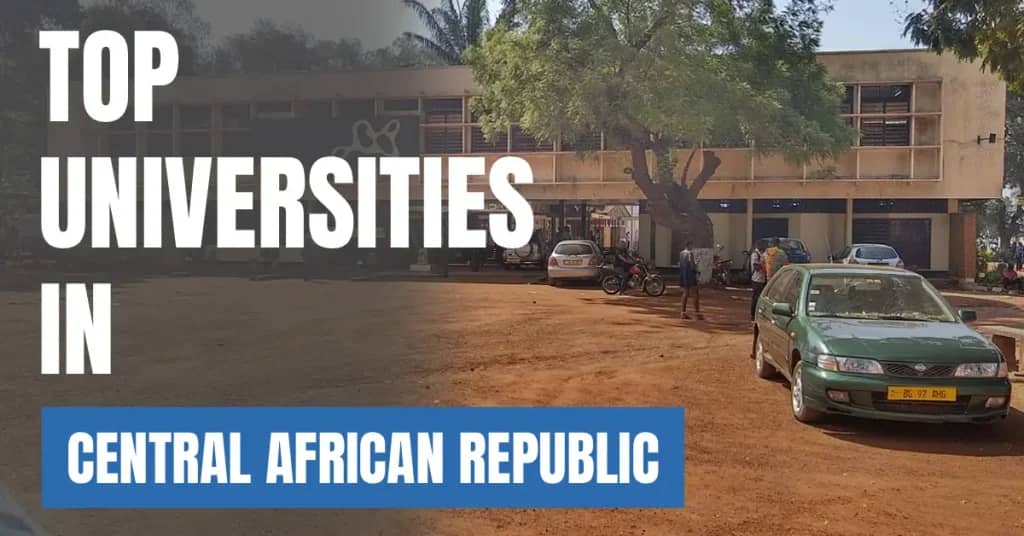
The Central African Republic offers a modest but developing higher education system shaped by public universities, specialized institutes, and private institutions. Students choose the Central African Republic for its unique academic environment, culturally rich society, and opportunities in development-focused fields. To learn more about the country, visit the Central African Republic country page.
On this pageTable of Content
Overview of Higher Education in the Central African Republic
Higher education in the Central African Republic is centered around public universities, teacher-training institutes, technical schools, and emerging private institutions. The system emphasizes expanding access to education, supporting development through research, and strengthening national capacity. French is the primary language of instruction.
List of Top Universities in the Central African Republic
This section highlights leading universities based on academic reputation, research output, student experience, and international visibility.
University of Bangui (Université de Bangui)
Location: Bangui
Type: Public
The University of Bangui is the main and most prominent institution of higher education in the Central African Republic. It offers programs in law, economics, sciences, humanities, engineering, and health sciences. The university plays a critical role in national human resource development and research.
Key Highlights
- Largest and most established university in the country
- Extensive program offerings across major disciplines
- Commitment to national development and capacity building
- Diverse student population
- Collaborations with regional and international academic bodies
Notable Academic Areas
- Science & Technology
- Business & Economics
- Social Sciences
- Arts & Humanities
Institut Universitaire de Gestion des Entreprises (IUGE)
Location: Bangui
Type: Private
IUGE is a respected business-oriented higher education institution in the Central African Republic. It offers programs in management, finance, administration, and entrepreneurship, focusing on preparing students for professional careers in the private and public sectors.
Key Highlights
- Focus on business and management education
- Modern and professionally oriented curriculum
- Strong ties with national employers
- Experienced faculty and practical learning methods
- Opportunities for skill development and leadership training
Notable Academic Areas
- Science & Technology
- Business & Economics
- Social Sciences
- Arts & Humanities
École Normale Supérieure (ENS) – Bangui
Location: Bangui
Type: Public (Teacher Training)
ENS is a specialized teacher training institution dedicated to producing qualified educators for the nation’s primary and secondary school system. It focuses on pedagogy, subject-specific training, and educational development.
Key Highlights
- Leading teacher-training institution in the country
- Emphasis on pedagogy and educational development
- Programs aligned with national education needs
- Dedicated faculty with expertise in education
- Important role in strengthening the education sector
Notable Academic Areas
- Science & Technology
- Business & Economics
- Social Sciences
- Arts & Humanities
Types of Universities in the Central African Republic
- Public universities
- Private universities
- Teacher-training institutes
- Technical and vocational schools
- Specialized higher education centers
General Admission Process for Universities in the Central African Republic
Step-by-Step Application Path
- Select a preferred university and program
- Review the entry and eligibility requirements
- Prepare the required documents
- Submit the university application (online or in-person)
- Complete entrance exams or interviews (if required)
- Receive admission confirmation and enroll
Documents Usually Required for University Admission
- Academic transcripts
- Identification documents
- Language proficiency documents
- Recommendation letters
- Motivation letter or personal statement
Why Students Choose the Central African Republic for Higher Education
- Affordable cost of study and living
- Growing academic institutions
- Opportunities in development-focused academic fields
- Culturally rich and diverse community
- Unique academic and social experience
Scholarships and Financial Support (General Overview)
- Government-funded support programs
- University scholarships
- Merit-based and need-based awards
- External scholarship opportunities
Student Life in the Central African Republic
Student life in the Central African Republic is shaped by cultural diversity, academic community, and a strong sense of resilience. Universities offer opportunities for student engagement, academic clubs, and campus activities. The country’s unique environment provides an enriching learning experience.
FAQs – Top Universities in the Central African Republic
How many universities are there in the Central African Republic?
The country has several public and private institutions, including specialized higher education centers.
Are universities in the Central African Republic internationally recognized?
Some institutions maintain academic partnerships with regional and international organizations, contributing to growing recognition.
What language(s) are programs generally taught in?
Programs are primarily taught in French, the official language of instruction.
Are scholarships available for international students?
Yes, scholarships may be available through universities, government agencies, and external academic partners.
Is the Central African Republic a good option for higher education?
Yes, it offers unique learning opportunities, especially for students interested in development, social sciences, and community-focused fields.
Summary
The Central African Republic provides a developing but meaningful higher education environment supported by public universities, specialized institutes, and a culturally rich community. It is an option for students seeking academically driven and socially impactful study opportunities.
Still exploring?
Still not satisfied with the answer? Let’s discuss your future.
Ask follow-up questions, share your case, and get perspectives from others in the Visaboards Community.