
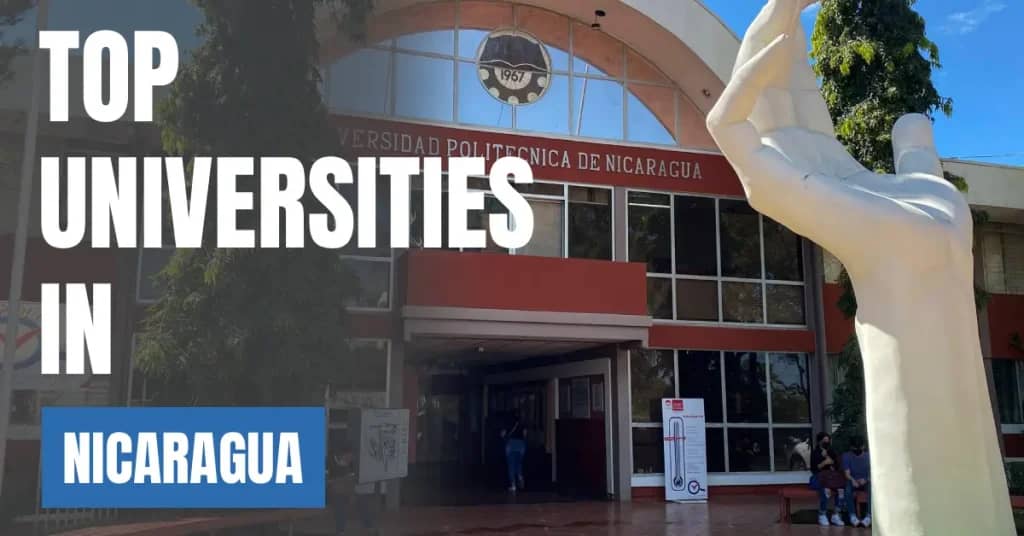
Choosing a university in Nicaragua requires more than looking at an international ranking. The country has broad public universities, specialist institutions for engineering and agriculture, universities serving the Caribbean Coast, and private institutions with very different fee structures.
On this pageTable of Content
UNAN-Managua has the clearest current conventional international ranking evidence among the universities reviewed, appearing in the 401+ band in the QS Latin America and the Caribbean Rankings 2026 and 71st in the Central America table. However, students focused on engineering, agriculture or Caribbean-region study have strong reasons to consider other institutions instead.
Nicaragua’s university system has also changed substantially in recent years, so students should verify an institution’s current legal status, admission process and program recognition rather than relying on older university lists.
Quick Answer: Universities Worth Considering
| University | Main Reason to Consider It | Particularly Relevant For | Important Consideration |
|---|---|---|---|
| UNAN-Managua | Broad public university with current QS evidence | Students wanting a comprehensive public university | Overall ranking does not prove strength in every subject |
| Universidad Nacional de Ingeniería (UNI) | Specialist engineering and architecture institution | Engineering, technology and architecture | Narrower academic scope |
| Universidad Nacional Agraria (UNA) | Specialist agricultural focus | Agriculture, livestock, environment and production | Primarily useful for relevant specialist subjects |
| UNAN-León | Broad public university outside Managua | Health, science, veterinary and other professional programs | Limited comparable international ranking evidence |
| URACCAN | Strong Caribbean and intercultural role | Students in or connected to the Caribbean Coast | Conventional rankings do not capture its regional role well |
| Bluefields Indian & Caribbean University (BICU) | Extensive Caribbean regional presence | Students needing programs across Caribbean locations | Limited comparable outcome data |
| Universidad Americana (UAM) | Private option with transparent tuition | Students comparing private study in Managua | Costs are substantially different from public institutions |
| UNCSM | Newer public university with a current 2027 offer | Students seeking one of its current programs | Limited long-term ranking and graduate-outcome evidence |
How We Chose These Universities
This guide does not create a fabricated national ranking or combine unrelated ranking systems into a single score.
Universities were included where the evidence established a clear student decision reason, such as a current external ranking, specialist academic role, official recognition, regional importance, transparent tuition or a current academic offer.
Official recognition and system information were checked primarily against Nicaragua’s Consejo Nacional de Evaluación y Acreditación, or CNEA. University-specific admissions, fees and academic offerings were checked against official university sources. QS was used where conventional international ranking evidence was available.
Comparable acceptance rates, graduate salaries and national student-satisfaction statistics were not available for enough institutions to support responsible university-by-university comparisons, so they are not estimated here.
UNAN-Managua
Why We Recommend It
UNAN-Managua is the clearest starting point for students seeking a broad public university with current international ranking evidence.
QS places the Universidad Nacional Autónoma de Nicaragua, Managua in the 401+ band in its Latin America and the Caribbean Rankings 2026 and 71st in its Central America table.
The university also announced more than 70 degree programs for its 2027 academic offer, covering five areas of knowledge in Managua and its regional university centres.
Best For
Students seeking a comprehensive public institution with a wider choice of disciplines.
Admission Reality
For the 2026 first-entry process, applicants could select three degree options. Medicine and Dentistry applicants needed at least 90 points to enter the prematriculation process, with selection based on academic averages in specified secondary-school subjects until available places were filled.
Students applying for 2027 should use the new 2027 rules once formally published rather than assuming that every 2026 threshold remains unchanged.
Important Consideration
UNAN-Managua’s overall QS position should not be interpreted as proof that it is Nicaragua’s strongest institution for every field. Specialist universities may provide a clearer fit for particular subjects.
Universidad Nacional de Ingeniería (UNI)
Why We Recommend It
UNI has one of the clearest specialist academic identities in Nicaragua.
The university describes itself as Nicaragua’s institution specializing in engineering and architecture and reports three internationally accredited academic programs.
For an engineering-focused student, that specialist evidence can be more relevant than choosing solely according to a broad university ranking.
Best For
Engineering, architecture, technology and related technical fields.
Accreditation Consideration
Students should verify accreditation for the exact program they intend to study. The fact that three UNI programs have international accreditation does not mean that every degree carries the same accreditation status.
Important Consideration
UNI’s focused academic model provides less breadth than a comprehensive institution such as UNAN-Managua.
Universidad Nacional Agraria (UNA)
Why We Recommend It
UNA has a clearly differentiated role for students interested in agricultural and productive-sector disciplines.
For its 2027 admission cycle, UNA states that it has 14 degree programs, five higher technical programs and five regional university centres in Camoapa, Juigalpa, Matagalpa, Chinandega and Niquinohomo.
Its programs focus on productive, environmental, livestock, transformation and commercialization fields.
Best For
Students interested in agronomy, livestock, veterinary-related study, environmental fields, food production and agricultural development.
Important Consideration
UNA should be compared with other universities primarily for the fields it specializes in, rather than treated as a general alternative for unrelated disciplines.
UNAN-León
Why We Recommend It
UNAN-León is an officially listed public university and provides a major public-university option outside Managua.
Its published academic offer includes programs across agriculture, business, education, law, nursing, veterinary medicine, systems engineering and other areas through León and regional university centres.
Best For
Students who want a broad public-university option outside Managua and find an appropriate degree in its current academic catalogue.
Important Consideration
The evidence reviewed does not provide sufficiently comparable current international ranking or graduate-employment data to claim that UNAN-León academically outranks Nicaragua’s other major universities.
Students should compare individual programs rather than rely on unsupported overall reputation claims.
URACCAN
Why We Recommend It
URACCAN demonstrates why Nicaragua should not be evaluated using global rankings alone.
The Universidad de las Regiones Autónomas de la Costa Caribe Nicaragüense has a distinct regional and intercultural role connected to Nicaragua’s Caribbean territories.
For 2027, URACCAN announced 35 university programs and 3,725 available places across its campuses, regional centres, extensions and other delivery models.
Its academic areas include education, social sciences, economics and law, engineering and technology, agriculture, and health and social services.
Best For
Students in Nicaragua’s Caribbean regions and applicants whose academic interests align with URACCAN’s territorial and intercultural model.
Important Consideration
URACCAN’s regional purpose cannot be fairly measured through international rankings alone. Program availability and location are more useful comparison factors.
Bluefields Indian & Caribbean University (BICU)
Why We Recommend It
BICU provides another important route to higher education in Nicaragua’s Caribbean regions.
Its current 2027 academic offer covers education, humanities, economic and social sciences, science and technology, health and social services, and engineering.
BICU lists academic locations including Bluefields, Bilwi, Bonanza, Waspam, El Rama, Corn Island, Laguna de Perlas and Paiwas. Its website also reports 35 programs and 18 territorial expressions.
Best For
Students whose location or career plans make access to higher education on the Caribbean Coast especially important.
Important Consideration
Comparable international ranking and graduate-outcome evidence remains limited, so BICU’s strongest case is geographic and program fit rather than a league-table position.
Universidad Americana (UAM)
Why We Recommend It
UAM provides one of the clearest private-university comparisons because its current legal status and fee information can be verified directly.
CNEA lists Universidad Americana among Nicaragua’s legally established institutions.
Current Tuition
UAM’s admissions information currently publishes the following charges for many standard undergraduate programs:
| Fee | Published Amount |
|---|---|
| Prematriculation | C$2,035 |
| Annual registration | C$7,400 |
| Student card | C$370 |
| Insurance | C$740 |
| Monthly tuition | C$10,360 |
| Number of monthly tuition payments | 12 |
Medicine, Dentistry and UAM College have different published rates, so C$10,360 should not be presented as a universal UAM tuition figure.
Ranking Context
Times Higher Education places UAM in the 1001–1500 band in its Sustainability Impact Ratings 2026. These ratings assess institutions’ contribution to the United Nations Sustainable Development Goals and should not be presented as the conventional THE World University Rankings.
Best For
Students considering private higher education in Managua who want clear published fee information and a broad range of academic fields.
Important Consideration
The financial comparison with public universities can be substantial. Students should calculate costs using the exact UAM program rather than a general university-wide estimate.
Universidad Nacional Casimiro Sotelo Montenegro (UNCSM)
Why It Deserves Consideration
UNCSM is a current public institution with a substantial academic offer, but it has a much shorter institutional track record than Nicaragua’s older universities.
For 2027, UNCSM announced 16 professional degree programs offered in Managua, Chinandega and Matagalpa, with several study schedules and modalities.
The university also reported more than 5,000 new-entry students beginning classes in February 2026.
Best For
Students whose intended degree, preferred location and study schedule match the university’s current offering.
Important Consideration
Independent long-term rankings, comparable graduate outcomes and mature student-experience evidence remain limited because the institution is relatively new.
Why Older Nicaragua University Lists Can Be Misleading
One of the clearest examples is Universidad Centroamericana, commonly known as UCA.
QS still displays a profile for UCA and places it in the 401+ band of the Latin America and Caribbean Rankings 2026.
However, Nicaragua’s official legislative record shows that the university’s legal personality was cancelled on August 18, 2023.
For a prospective student, current legal and operational status is more important than the continued existence of an older ranking profile.
UCA therefore should not be presented as a normal current application option in a 2026–2027 student guide.
Rankings vs Subject Fit
UNAN-Managua currently provides the clearest conventional QS ranking reference, but ranking alone does not answer which university a particular student should select.
Students focused on engineering have a clearer specialist case at UNI.
Students pursuing agriculture and related productive-sector fields should examine UNA.
Students in the Caribbean regions should compare URACCAN and BICU according to their programs and territorial access.
Students considering private study can use UAM’s published fees to make a more direct cost comparison.
The strongest shortlist therefore changes according to the student’s intended degree.
Public vs Private University Costs
A reliable single figure for the cost of university in Nicaragua would be misleading.
The public system’s 2027 educational offer announced more than 70,000 places in 120 programs across 13 public universities, with the official announcement describing the system as free public higher education.
UNA likewise describes its admission model as free public education.
International applicants should not automatically assume that every cost arrangement applying to domestic students will apply identically to them. They should verify their status and any program-specific charges directly before enrolment.
Private universities use a different model. At UAM, many listed programs currently require annual registration plus twelve monthly tuition payments and other charges.
This public-private difference is more useful to students than a single country-wide average tuition figure.
Admission: What Students Actually Need to Know
Admissions for Nicaragua’s public universities have become more centralized.
For UNAN-Managua’s 2026 process, students could choose three degree options, while some high-demand professional programs had additional academic thresholds.
For the 2027 cycle, Nicaragua’s public higher-education system announced a combined offer of more than 70,000 places across 120 degree programs.
Students should therefore check the current centralized admission instructions as well as university-specific requirements.
Private institutions may operate separate admission systems. UAM, for example, publishes its own admission requirements and fee structure.
International Applicants
A 2025 public-university admissions regulation stated that Nicaraguan or foreign applicants who completed secondary education outside Nicaragua had to obtain recognition of their studies through MINED and receive the relevant student code before prematriculation.
This is useful evidence of how foreign credentials have been handled, but international applicants for 2027 should verify the newest rules because admission procedures can change.
Recognition and Accreditation
Students should distinguish between:
- The legal status of the university
- Institutional quality assurance
- Accreditation of a particular degree
- Professional recognition required to practise a regulated profession
CNEA describes itself as the governing and highest authority of Nicaragua’s National System for Quality Assurance in Education and states that it regulates and accredits higher-education institutions and their degree programs.
This is especially important for students considering medicine, dentistry, nursing, engineering, architecture or another regulated profession.
A university’s overall ranking should never substitute for checking the recognition requirements of the exact degree.
Scholarships and Student Support
Comparable scholarship amounts are not published consistently enough across the universities reviewed to create a responsible scholarship ranking.
UNAN-Managua maintains a scholarship and university-residence program, including procedures covering foreign students in some residence documentation requirements.
URACCAN also reports scholarships and university residences as part of its student-support system, particularly for students from distant territories.
Students should confirm scholarship eligibility, value, duration and application conditions directly with each institution rather than relying on generic claims that scholarships are available.
Graduate Outcomes and Student Experience
Reliable comparable graduate-employment percentages were not found for enough Nicaraguan universities to support a meaningful ranking by employability.
The same limitation applies to comparable student-satisfaction statistics.
University marketing claims about employment, facilities or academic quality should therefore not be converted into measurable outcomes without supporting evidence.
For career-focused applicants, program accreditation, practical training, location and verified institutional partnerships may provide more useful evidence.
Which University Should You Choose?
Consider UNAN-Managua if you want a broad public institution and value the clearest available current QS evidence.
Consider UNI if your priority is engineering or architecture and you want an institution explicitly specialized in these fields.
Consider UNA if your intended career relates to agriculture, livestock, environmental production or associated applied fields.
Consider UNAN-León if you want a broad public option outside Managua and its current program catalogue matches your intended subject.
Consider URACCAN or BICU if location in Nicaragua’s Caribbean regions, regional access or community context is central to your decision.
Consider UAM if you are comparing private institutions and want transparent published tuition information.
Consider UNCSM if one of its current programs, locations or study modes fits your needs, while recognizing that less independent long-term evidence is available.
Most importantly, compare the specific degree rather than choosing solely according to the university name.
Frequently Asked Questions
What is the top university in Nicaragua?
UNAN-Managua has the clearest current conventional international ranking evidence among the universities reviewed, appearing in the 401+ band of the QS Latin America and the Caribbean Rankings 2026. This does not make it the strongest choice for every subject.
Which university in Nicaragua is best for engineering?
Universidad Nacional de Ingeniería is a particularly relevant option for engineering and architecture because the institution explicitly specializes in those fields and reports three internationally accredited academic programs.
Which university in Nicaragua is best for agriculture?
Universidad Nacional Agraria is the clearest specialist option for agriculture-related study. Its 2027 offer includes 14 degree programs, five higher technical programs and five regional university centres.
Are public universities in Nicaragua free?
Official public-university sources describe Nicaragua’s current public higher-education model as free, and the 2027 system announced more than 70,000 places across 120 programs. International students should verify whether the same financial conditions apply to their individual status.
How much does Universidad Americana in Nicaragua cost?
For many standard undergraduate programs, UAM currently lists C$7,400 annual registration and C$10,360 monthly tuition across 12 payments, plus prematriculation, student-card and insurance charges. Medicine, Dentistry and UAM College have different fees.
Can international students study at universities in Nicaragua?
International students may study in Nicaragua, but foreign credentials can require additional recognition procedures. Public-university rules used for 2025 required applicants who completed secondary school abroad to obtain study recognition through MINED before prematriculation. Applicants should verify the current rule for their intake.
Is Universidad Centroamericana UCA still a current university option?
UCA should not be presented as a normal current application option. Nicaragua’s official legislative record shows that its legal personality was cancelled on August 18, 2023, even though older ranking profiles remain online.
Should I choose a university in Nicaragua based only on ranking?
No. Overall ranking is only one factor. Engineering students may find UNI more relevant, agriculture students may prefer UNA, Caribbean-region students may benefit from URACCAN or BICU, and private-university applicants should compare costs such as UAM’s published tuition.
Sources and Methodology
Last reviewed: September 2026.
University recognition and quality-assurance information was checked primarily against Nicaragua’s Consejo Nacional de Evaluación y Acreditación (CNEA). CNEA describes itself as the country’s governing and highest authority for the national education quality-assurance system.
The main conventional ranking reference was the QS Latin America and the Caribbean Rankings 2026, used principally for UNAN-Managua. Ranking information was not treated as proof of subject superiority.
Academic offers and admissions were checked against official information from UNAN-Managua, UNI, UNA, UNAN-León, URACCAN, BICU, UAM and UNCSM.
UAM tuition was taken from its current admissions information. UCA’s changed legal status was checked against Nicaragua’s official legislative record rather than relying only on continuing ranking profiles.
Where reliable comparable information was unavailable, including acceptance rates, graduate salaries, national student-satisfaction results and consistent international-student tuition, no figures were invented.
Internal Linking Opportunities
- [Internal link opportunity: Study in Nicaragua]
- [Internal link opportunity: Student Visa for Nicaragua]
- [Internal link opportunity: Cost of Living in Nicaragua]
- [Internal link opportunity: Scholarships in Nicaragua]
- [Internal link opportunity: International Student Admission in Nicaragua]
Join the conversation
Have thoughts on this topic? Share them with others.
Ask questions, share experience, and learn from the Visaboards Community.