
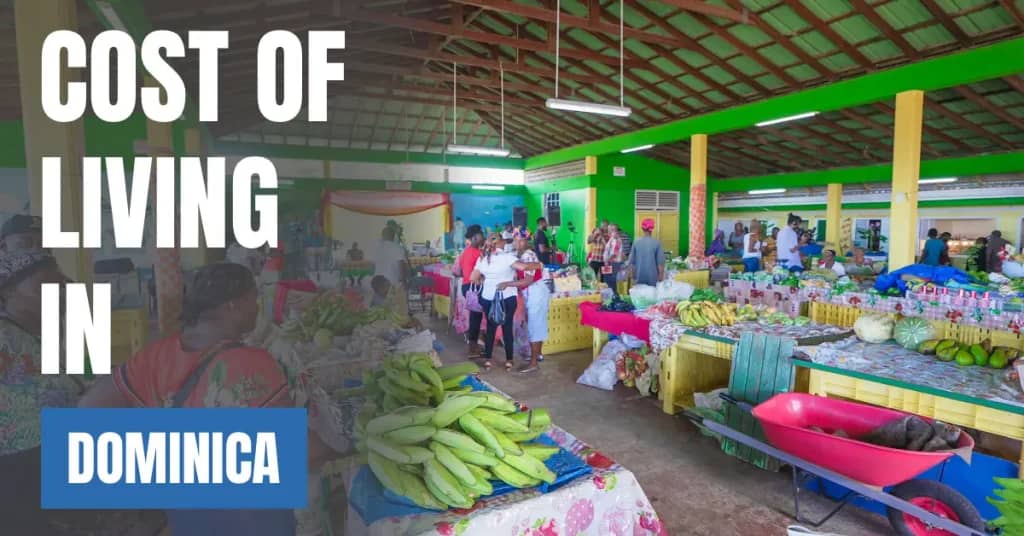
Cost of Living in Dominica in 2026: Rent, Food, Salaries and Monthly Expenses
The cost of living in Dominica in 2026 depends heavily on housing, imported groceries, transport and whether residents earn a local salary or receive income from overseas. A single person renting modest accommodation may budget approximately EC$2,200 to EC$4,200 per month, while a family of four may require EC$5,000 to EC$9,000 or more, including rent. These are planning estimates, not official national averages.
On this pageTable of Content
Dominica, officially the Commonwealth of Dominica, is a mountainous Caribbean island known for its rainforests, waterfalls, agriculture and small communities. Roseau, Portsmouth and surrounding villages offer different housing choices and access to services. Everyday costs can be manageable when residents use local markets and public minibuses, but imported products, electricity, private vehicles and specialized healthcare can substantially increase expenses.
Dominica uses the Eastern Caribbean dollar (XCD or EC$), which is pegged at EC$2.70 to US$1. All prices in this guide are primarily shown in Eastern Caribbean dollars unless otherwise stated. The figures reflect information reviewed in October 2026 and should be treated as indicative estimates rather than guaranteed prices.
Cost of Living in Dominica at a Glance
A moderate single-person budget in Dominica is approximately EC$2,800 to EC$4,200 per month including rent, while a more economical lifestyle may cost EC$2,200 to EC$2,800. Accommodation choices and transport needs are the biggest reasons that monthly budgets vary.
| Expense | Estimated Cost in EC$ | Details |
|---|---|---|
| Single person, excluding rent | EC$1,400–2,500/month | Food, utilities, communication, transport, personal spending and basic health allowance |
| Single person, including rent | EC$2,200–4,200/month | Modest long-term accommodation and regular living expenses |
| Couple, including rent | EC$3,500–6,000/month | Shared housing and ordinary household expenses |
| Family of four, including rent | EC$5,000–9,000+/month | Housing, food, utilities, transport and basic family expenses; private schooling may increase costs |
| One-bedroom long-term rental | EC$550–1,900/month | Location, furnishings and property quality affect rent |
| Three-bedroom long-term rental | EC$1,700–3,000+/month | Family housing; premium properties may cost more |
| Groceries, single person | EC$550–1,000/month | Depending on reliance on local and imported products |
| Basic household utilities | EC$200–450/month | Electricity, water and household fuel; excludes internet |
| Home internet | From approximately EC$135/month | Provider, coverage and service plan affect pricing |
| Local minibus journey | Approximately EC$2–12 | Route-dependent fare |
The household budget ranges above are constructed planning scenarios informed by available consumer-price observations and reported housing costs. They are not directly comparable to a statistical national average. The Expatistan Dominica dataset warns that its national estimates are based on few observations, while CityCost estimates approximately US$1,253 monthly for one person in Roseau including rent. Different housing types, spending baskets and data samples explain why published totals can disagree.
How Much Does It Cost to Live in Dominica Per Month?
For one adult, a reasonable initial budget is EC$2,200 to EC$4,200 per month including rent, with a moderate lifestyle typically falling around EC$2,800 to EC$4,200. A couple may need EC$3,500 to EC$6,000, while a family of four may require EC$5,000 to EC$9,000 or more.
These estimates assume a long-term residential rental, mostly home-prepared meals, routine transport, internet, utilities and normal personal expenses. They do not automatically cover private school fees, international travel, major medical treatment, vehicle purchases or substantial savings.
Rent-free residents can spend substantially less. However, a household that relies on imported groceries, daily taxis, extensive air-conditioning or international healthcare may exceed the ranges shown above.
Housing and Rent Prices in Dominica
A basic one-bedroom apartment may cost approximately EC$550 to EC$1,900 per month, depending on the property and location. Newer furnished homes, desirable coastal properties and short-term accommodation may cost considerably more.
Estimated Monthly Apartment Rents
| Property Type | Estimated Monthly Rent |
|---|---|
| One-bedroom apartment outside central areas | EC$550–1,200 |
| One-bedroom apartment in a more central or desirable area | EC$750–1,900 |
| Three-bedroom apartment outside central areas | EC$1,700–2,300 |
| Three-bedroom apartment in a central or desirable area | EC$2,000–3,000+ |
These broad ranges combine the existing market context with 2026 housing-price observations and are not guaranteed live rental quotations. For instance, Wise's Roseau cost-of-living dataset reports averages near US$204 monthly for an outside-centre one-bedroom apartment and US$284 for a central apartment. These figures are toward the lower end of what newcomers may encounter and may not represent well-maintained, fully furnished properties currently available to rent.
Other datasets and short-stay rental platforms may report substantially higher prices because furnished holiday apartments and long-term local housing serve different markets. Prospective tenants should verify real availability, contract length, furnishing, security deposits and whether utilities are included.
Buying Property in Dominica
Buying a home involves more than the advertised purchase price. Buyers should investigate land title, survey boundaries, access roads, drainage, building condition, storm resistance, legal fees and applicable property-transfer or noncitizen ownership requirements.
Dominica is exposed to tropical storms and hurricanes. Property insurance, structural repairs, drainage and resilience improvements may represent significant long-term costs, particularly for exposed or older buildings.
Grocery and Food Prices in Dominica
A single person may spend approximately EC$550 to EC$1,000 monthly on groceries, while a family of four might allocate EC$1,300 to EC$2,300, depending on diet, shopping location and imported-food consumption.
Local produce, including bananas, root vegetables and seasonal fruits, can offer good value. Imported dairy products, packaged food, specialty ingredients and some meats may be comparatively expensive because of shipping, handling and retail costs.
Common Grocery Price Estimates
| Product | Approximate Price in EC$ |
|---|---|
| Milk, 1 litre | EC$7–9 |
| Bread, approximately 500 g | EC$4–7 |
| Rice, 1 kg | EC$3–7 |
| Eggs, 12 | EC$6–15 |
| Chicken breast, 1 kg | EC$15–28 |
| Tomatoes, 1 kg | EC$8–15 |
| Apples, 1 kg | EC$12–18 |
| Bottled water, 1.5 litres | EC$3–7 |
These are approximate consumer-price ranges, not a fixed supermarket price list. Available observations from Expatistan, Nomadlio and existing VisaBoards pricing differ by product, sample and collection date.
Shopping directly at local markets, buying seasonal produce and planning meals around locally available food can help reduce expenses. Families should calculate their own shopping basket rather than assuming that inexpensive local vegetables make all groceries cheap.
Restaurant and Eating-Out Costs in Dominica
An inexpensive restaurant meal commonly costs around EC$15 to EC$30. Eating out frequently can therefore add several hundred Eastern Caribbean dollars to a monthly budget.
| Restaurant Expense | Estimated Price in EC$ |
|---|---|
| Inexpensive local meal | EC$15–30 |
| Fast-food or takeaway meal | EC$15–25 |
| Mid-range dinner for two | EC$100–300 |
| Coffee or cappuccino | EC$7–15 |
| Restaurant soft drink | EC$5–9 |
Simple local eateries are generally more economical than hotel restaurants and tourist-oriented dining. Restaurant prices are particularly sensitive to location, service level and imported ingredients.
A practical monthly allowance is EC$100 to EC$250 for occasional inexpensive meals or EC$300 to EC$700 and above for more frequent dining. These amounts are lifestyle allowances, not measured national averages.
Electricity, Water and Household Utilities
Budget approximately EC$200 to EC$450 monthly for basic household utilities, excluding internet and mobile service. Homes using air-conditioning regularly may face significantly higher electricity bills.
Electricity is an important cost consideration in Dominica. Household spending depends on property size, ventilation, appliance efficiency, refrigeration, water heating and cooling habits. Water and cooking-gas expenses also vary according to usage.
Ask landlords for recent utility bills before signing a lease. Check whether the home has reliable water storage, functioning electrical equipment, adequate drainage and practical ventilation.
Internet and Mobile Phone Costs
Home internet service can start at approximately EC$135 per month, while mobile spending depends on data requirements and plan type.
Digicel Dominica advertises fibre options including a 250 Mbps plan at EC$135 monthly, a 350 Mbps plan at EC$170 and a 500 Mbps plan at EC$205, with tax included in its displayed prices. Availability must be checked at the actual address.
For mobile service, Digicel has advertised a 30-day prepaid package with 50 GB of data for EC$120 and a seven-day package priced at EC$40. Promotions and tariffs can change.
Remote workers should confirm broadband installation availability, typical upload performance, mobile coverage and backup connectivity before committing to a property. A relatively cheap rental is not economical for a remote worker if unreliable connectivity disrupts paid work.
Transportation Costs in Dominica
Dominica's shared minibus network is relatively affordable, with many fares around EC$2 to EC$12 per journey. However, public transportation is not free, and service frequency varies by location and day.
Privately operated minibuses connect Roseau with many towns and villages. Unlike a large scheduled urban transit network, services commonly depend on route demand, and evening, Sunday and public-holiday availability can be limited.
The Government of Dominica approved updated bus fares effective March 15, 2023. A published route-fare reference lists the following examples:
| Minibus Route | Indicative One-Way Fare |
|---|---|
| Roseau to Stock Farm | EC$2 |
| Roseau to Pointe Michel | EC$3 |
| Roseau to Trafalgar | EC$4 |
| Roseau to Scotts Head | EC$4.50 |
| Roseau to Portsmouth | EC$10 |
These routes are listed in the Dominica By Bus fare reference. Residents should confirm the fare when travelling because routes and operational conditions can change.
For someone commuting 22 days per month, a EC$4 one-way ride would cost EC$176 monthly for two daily journeys. Travelling between Roseau and Portsmouth at EC$10 each way for the same number of days would cost EC$440 monthly.
Taxis cost considerably more than minibuses, particularly for airport transfers and longer trips. People living in rural or mountainous areas may require a private vehicle. Fuel, insurance, licensing, servicing, tyres and unexpected repairs should be included in car-ownership budgets.
Healthcare Costs in Dominica: Is Healthcare Free?
Dominica provides an extensive public primary-healthcare network, with essential services largely free at the point of use. However, this does not mean every hospital service, private consultation, medicine or specialist treatment is free for every resident or visitor.
According to the Pan American Health Organization's April 2026 report, Dominica operates more than 50 public health centres and clinics across seven health districts. These provide community-based primary care and essential health services.
Dominica also has hospital and private medical services, but access to certain specialist procedures and highly complex treatment may be more limited than in larger countries. Some patients may need overseas referrals or treatment, generating additional medical, accommodation and travel expenses.
New residents should investigate whether their immigration status affects charges or access to subsidized services. Private medical insurance and emergency medical evacuation cover may be particularly relevant for foreign residents and people with ongoing treatment needs.
A useful monthly healthcare allowance should account for regular prescriptions, insurance premiums, dental treatment and possible out-of-pocket charges. Actual insurance costs depend on age, benefits, medical history and insurer, so a single universal premium would be misleading.
Education and Childcare Costs
Public schooling in Dominica is generally tuition-free for eligible students, but families still need to budget for uniforms, stationery, transportation and other school-related expenses. Private schooling and childcare add further costs.
Section 16 of Dominica's Education Act 1997 establishes free public-school tuition, while allowing specified exceptions and approved charges, including potential provisions affecting certain non-CARICOM students.
Families relocating from overseas should confirm enrolment eligibility, school placement and any applicable fees directly with the education authorities.
Private and specialized schooling costs vary significantly. Reliable, current national fee schedules are not comprehensive enough to provide one representative annual figure for every school. Obtain written tuition schedules and include registration, books, meals, uniforms and transport.
Childcare is another variable expense. Availability and pricing depend on age, hours, location and whether the family uses a daycare facility or private caregiver.
Salaries and the Minimum Wage in Dominica in 2026
Dominica's statutory minimum wage depends on occupation. The revised rates became effective on December 1, 2025, replacing the 2021 order. Many specified jobs have a minimum of EC$9 per hour, while certain other occupations have higher or different rates.
Current Minimum Wage Rates
| Occupation or Category | Minimum Rate |
|---|---|
| Factory, tourism and manufacturing daily-paid workers | EC$9.00/hour |
| Cooks, bartenders and servers | EC$9.00/hour |
| Room attendants and groundskeepers | EC$9.00/hour |
| Cashiers and receptionists | EC$9.42/hour |
| Security guards | EC$9.60/hour |
| Agricultural workers and labourers | EC$9.75/hour |
| Home assistants receiving meals | EC$240/week |
| Home assistants without meals | EC$300/week |
| Live-in home assistants | EC$264/week |
These figures come from the government's Labour Standards (Minimum Wage) Order 2025, S.R.O. 49 of 2025. Other categories, including temporary assistants and trainees, have specific rates under the order.
At EC$9 per hour, working 40 hours weekly for 52 weeks produces approximately EC$1,560 in gross monthly earnings when averaged across 12 months. This is before applicable deductions and assumes paid hours throughout the year.
That income is below the estimated cost of independently renting and maintaining a modest household in many of the scenarios presented here. Sharing accommodation, living with family or having another household income may therefore be important for low-wage workers.
What Salary Is Needed to Live Comfortably in Dominica?
For a single person renting independently, approximately EC$3,000 to EC$4,500 in monthly take-home income may provide a more workable budget for moderate expenses and a limited financial cushion. A family of four may need EC$6,000 to EC$9,000 or more in household take-home income depending on accommodation, schooling and transport.
These are recommended planning targets derived from living-expense scenarios, not official salary benchmarks. Published salary databases for Roseau report different averages and have limited samples, so they should not be treated as representative of all workers or professions.
Taxes and Their Impact on Everyday Affordability
Taxes matter when assessing actual spending power. Dominica generally applies a standard value-added tax rate of 15% to taxable supplies, with a 10% rate for specified accommodation and diving activities, as described by the Inland Revenue Division. Exemptions and zero-rated supplies are treated differently.
The Inland Revenue Division also publishes the following resident personal income tax bands:
| Annual Income Band | Resident Income Tax Treatment |
|---|---|
| First EC$30,000 | Resident allowance, generally tax-free |
| Next EC$20,000 | 15% |
| Next EC$30,000 | 25% |
| Income above EC$80,000 | 35% |
These are marginal tax bands, not flat rates on all earnings. The tax-free allowance and potential deductions affect taxable income. Relevant social-security contributions and other payroll deductions also affect take-home pay. See the official income tax schedule for details.
Foreign workers should not assume that the taxation of salary, business income or overseas earnings is identical to that of a local employee. Tax residence, immigration permission, income source and any specific concession should be reviewed individually.
Realistic Monthly Budgets for Living in Dominica
The following worked examples show how expenses can combine into a monthly household total. Each budget includes rent and ordinary recurring spending. They are illustrative financial plans rather than surveyed averages or quotations from individual suppliers.
Budget-Conscious Single Person
Assumption: inexpensive one-bedroom accommodation or simple long-term rental, mostly home cooking, minibus travel and limited discretionary spending.
| Expense | Monthly Cost |
|---|---|
| Rent | EC$650 |
| Utilities | EC$200 |
| Groceries | EC$600 |
| Transportation | EC$150 |
| Internet and mobile | EC$190 |
| Healthcare and personal care allowance | EC$100 |
| Dining and leisure | EC$150 |
| Miscellaneous | EC$160 |
| Total Including Rent | EC$2,200 |
This example excludes private insurance premiums above the stated allowance, major emergencies and substantial savings.
Moderate Single Person
Assumption: more convenient apartment, reliable home internet, a balanced grocery basket and regular recreational spending.
| Expense | Monthly Cost |
|---|---|
| Rent | EC$1,100 |
| Utilities | EC$300 |
| Groceries | EC$800 |
| Transportation | EC$250 |
| Internet and mobile | EC$250 |
| Healthcare and personal care allowance | EC$200 |
| Dining and leisure | EC$350 |
| Miscellaneous | EC$250 |
| Total Including Rent | EC$3,500 |
Couple Living Together
Assumption: shared one-bedroom or modest two-bedroom accommodation, mostly home-prepared meals and a combination of shared transport and discretionary activities.
| Expense | Monthly Cost |
|---|---|
| Rent | EC$1,300 |
| Utilities | EC$350 |
| Groceries | EC$1,150 |
| Transportation | EC$350 |
| Internet and mobile | EC$300 |
| Healthcare and personal care allowance | EC$250 |
| Dining and leisure | EC$400 |
| Miscellaneous | EC$350 |
| Total Including Rent | EC$4,450 |
Family of Four
Assumption: two adults and two school-age children, a three-bedroom rental, ordinary grocery spending and public-school attendance without private tuition.
| Expense | Monthly Cost |
|---|---|
| Rent | EC$2,000 |
| Utilities | EC$500 |
| Groceries | EC$1,800 |
| Transportation | EC$650 |
| Internet and mobile | EC$350 |
| Healthcare and personal care allowance | EC$400 |
| School supplies and related costs | EC$350 |
| Dining and leisure | EC$450 |
| Miscellaneous | EC$550 |
| Total Including Rent | EC$7,050 |
Private school tuition, full-time childcare, car-loan payments and international health coverage would be additional. Families should maintain emergency savings because unexpected medical, transport or housing costs can be substantial.
Cost Differences Between Roseau, Portsmouth and Rural Dominica
Roseau and Surrounding Communities
Roseau is the capital and commercial centre. It provides relatively convenient access to offices, shops, healthcare services and major transport routes. Central accommodation and desirable furnished rentals can command premiums, although some basic apartments may be inexpensive.
Portsmouth
Portsmouth is the country's second-largest town and an alternative for residents who prefer the north of the island. Rental costs depend on the neighbourhood and property, and certain coastal or visitor-oriented accommodation may cost more than basic local rentals. Transport to Roseau must be considered if employment or essential services require frequent travel.
Rural Villages and Smaller Communities
Some inland and rural communities provide access to simpler accommodation and local agricultural produce. However, lower rent does not always produce lower total living costs. Longer travel distances, less frequent transport, variable internet coverage and the need for a vehicle can offset housing savings.
Instead of assuming that every rural location is cheaper, compare the combined monthly cost of rent, transport, connectivity and access to essential services.
How Does Dominica Compare With Other Caribbean Countries?
Dominica can offer lower-cost local lifestyles than some tourism-oriented Caribbean locations, but a precise national ranking against Jamaica, Grenada or Barbados is difficult to substantiate with the available comparable 2026 data.
Dominica and Grenada both use the Eastern Caribbean dollar, which makes direct price comparisons convenient. Housing quality, food imports, transportation choices and tourism-related property demand nevertheless differ.
Jamaica has a much larger market and more varied urban and rural price environments, while Barbados has a different housing and service market. It is not reliable to assume that every product, rental or household budget is cheaper in Dominica.
For relocation decisions, compare actual listings and household shopping baskets in specific communities rather than relying on country-wide affordability rankings based on small datasets.
Hidden Costs New Residents Often Overlook
- Rental deposits and initial setup: An advance payment, security deposit, furniture and basic household supplies can substantially increase the first month's outlay.
- Storm preparedness: Emergency supplies, building maintenance, insurance and backup power arrangements can be important.
- Vehicle ownership: Imported cars, fuel, servicing, tyres, insurance and repairs can be expensive compared with local minibus travel.
- Specialist medical care: Treatment abroad may involve flights, lodging, insurance limits and accompanying-family costs.
- Imported household products: Appliances, electronics and specialty food can be affected by freight charges and import-related costs.
- Telecommunications: Installation, additional mobile data or backup internet may be necessary for remote work.
- School-related spending: Uniforms, transportation, supplies and childcare remain relevant even where tuition is free.
- Currency and international banking fees: The fixed exchange-rate peg does not eliminate transfer charges, foreign bank fees or card-conversion costs.
Cost of Living Versus Residency Financial Requirements
The money required to live in Dominica is not necessarily the same as the income or financial evidence required to qualify for a visa or residence category.
Dominica offers the Work in Nature (WIN) extended-stay programme for eligible remote workers. According to the official programme information, applicants must expect to earn US$50,000 or more over the next 12 months and/or demonstrate the means to support themselves and accompanying family members, subject to the programme's requirements.
The published fees include a US$100 non-refundable application fee, followed by a US$800 visa fee for an individual or US$1,200 for a family application. The programme allows eligible remote work for up to 18 months, subject to its conditions.
Applicants must also provide health insurance valid in Dominica. Official programme guidance describes an income-tax waiver for qualifying remote work conducted under the WIN visa, while participants remain responsible for their obligations in their usual tax domicile.
The US$50,000 figure is an immigration-programme eligibility benchmark, not the average local salary, a mandatory household expenditure or a general financial requirement applying to every type of resident. Other visa, employment and residence routes have different eligibility conditions.
Is Dominica Affordable for Expats and New Residents?
Dominica may be affordable for people earning stable overseas income and willing to use local housing, food and transportation. Affordability can be more difficult for people relying entirely on lower-paid local employment, especially when renting independently.
The island offers a nature-focused lifestyle and a relatively small community environment. However, relocation decisions should account for access to work, healthcare, schools, suitable housing and reliable internet, not simply the advertised prices of basic meals.
Prospective residents should compare their expected net income with an itemized monthly budget, obtain real rental quotations and maintain an emergency fund before relocating.
Conclusion: Planning Your Living Expenses in Dominica
For 2026, a useful starting estimate is EC$2,200 to EC$4,200 per month for a single renter, EC$3,500 to EC$6,000 for a couple and EC$5,000 to EC$9,000 or more for a family of four. These figures include rent and ordinary household costs, but do not include every possible relocation or emergency expense.
Dominica's affordability is strongly influenced by housing choice, reliance on imports, transport requirements and household income. The December 2025 minimum-wage increase improves statutory pay for covered jobs, but lower-income residents may still find independent rental living difficult.
For the most reliable relocation budget, confirm accommodation costs, compare local grocery prices, investigate healthcare eligibility, review current employment terms and verify residency requirements before making financial commitments.
Sources and Methodology
This article was reviewed on October 21, 2026. It combines official legislation and government guidance, regional public-health information, telecommunications prices and available cost-of-living datasets. Official sources were preferred for legal rates and eligibility requirements, while consumer-price platforms were used only for indicative market estimates.
The original VisaBoards article was compared with more recent information. Its earlier USD-based family and individual budgets were not carried forward as authoritative national averages, and its incomplete EC-dollar conversion column was replaced with estimates in Dominica's actual currency.
Market datasets for Dominica can contain few observations and sometimes measure different types of accommodation, including holiday rentals. Estimates therefore vary across sources. Sample budgets are explicitly constructed scenarios and should not be interpreted as statistical averages. Prices, exchange fees, government rules and provider offers may change after review.
References
- VisaBoards: Existing Cost of Living in Dominica Guide
- Government of Dominica: Labour Standards (Minimum Wage) Order 2025
- Dominica Inland Revenue Division: Current Income Tax Rates
- Dominica Inland Revenue Division: Value Added Tax
- Pan American Health Organization: Dominica Primary Health Care, April 2026
- Government of Dominica: Education Act
- Government of Dominica: Bus Fare and Taxi Rate Approval
- Dominica By Bus: Route Fare Reference
- Digicel Dominica: Home Internet Prices
- Digicel Dominica: Prepaid Mobile Plans
- Dominica Work in Nature Programme: Official Visa Details
- Dominica Work in Nature Programme: Application Process
- Wise: Cost of Living in Roseau
- CityCost: Roseau Living Costs, October 2026
- Expatistan: Dominica Cost of Living
- Nomadlio: Roseau Consumer Price Estimates
Frequently Asked Questions
How much does it cost to live in Dominica per month?
A single person in Dominica may budget approximately EC$2,200 to EC$4,200 monthly including long-term rent, groceries, utilities, internet and ordinary transport. A moderate single-person budget commonly falls around EC$2,800 to EC$4,200. Costs can be lower for people sharing housing or living with family. These are planning estimates, not official nationwide averages, and they exclude major emergencies and expensive lifestyle choices.
How much is rent in Dominica in 2026?
Estimated long-term one-bedroom rents range from approximately EC$550 to EC$1,900 monthly, depending on location, furnishings and property condition. Three-bedroom accommodation may cost EC$1,700 to EC$3,000 or more. Basic older rentals can be cheaper than well-equipped expatriate housing. Short-stay holiday listings may be substantially more expensive, so prospective tenants should confirm lease conditions, deposits and utility arrangements.
What salary do you need to live comfortably in Dominica?
A single adult renting independently may aim for approximately EC$3,000 to EC$4,500 monthly in take-home income for a moderate lifestyle and some financial flexibility. A family of four may need approximately EC$6,000 to EC$9,000 or more in combined take-home income. These are household planning targets, not official wage averages. The required income changes with rent, schooling, transport and medical coverage.
What is the minimum wage in Dominica in 2026?
The minimum wage depends on the occupation under the Labour Standards (Minimum Wage) Order 2025, effective December 1, 2025. Many listed workers, including cooks, servers and certain factory and tourism workers, must receive at least EC$9 per hour. Cashiers and receptionists have a rate of EC$9.42 per hour, security guards EC$9.60, and agricultural workers EC$9.75. Some home assistants receive weekly minimum rates.
Is healthcare free in Dominica?
Many essential public primary-healthcare services are largely free at the point of use, supported by more than 50 public clinics and health centres. However, hospital charges, private consultations, medicines and specialized treatment are not necessarily free for everyone. Foreign residents should confirm their eligibility and potential charges. Health insurance, including overseas treatment or evacuation cover when appropriate, can be important for managing unexpected medical expenses.
Is public transportation free in Dominica?
No. Dominica's transport network relies heavily on privately operated shared minibuses, which charge fares according to route and distance. Many journeys cost approximately EC$2 to EC$12. For example, a published fare reference lists EC$10 for Roseau to Portsmouth. Services can be less frequent during evenings, Sundays and public holidays, so residents who commute frequently should budget for alternative transportation when necessary.
How much does a family of four need to live in Dominica?
A family of four may need approximately EC$5,000 to EC$9,000 or more monthly, including rent, food, household utilities, transport and ordinary school-related expenses. One illustrative budget totals EC$7,050 per month for a family renting a three-bedroom home and using public schooling. Private tuition, full-time childcare, private vehicle costs and major healthcare expenses can increase the total significantly.
What are grocery prices like in Dominica?
A single adult may budget around EC$550 to EC$1,000 monthly for groceries, while a family of four could spend EC$1,300 to EC$2,300. Local vegetables, fruit and seasonal produce may help control costs, but imported dairy products, processed foods and specialty goods can be expensive. Prices vary across markets and supermarkets, so regular shoppers should compare individual products rather than relying on a single average.
Where are the cheapest places to live in Dominica?
Some rural communities and less central neighbourhoods may offer less expensive accommodation than desirable furnished properties near Roseau or tourist-oriented coastal locations. However, cheaper rent does not always mean cheaper living. Limited transport, longer commutes, weak internet coverage and the need for a private vehicle can increase total monthly expenses. Compare actual rentals and practical access to services before choosing an area.
Does Dominica require a minimum income for residency?
There is no single income requirement applying to every immigration category. Dominica's Work in Nature remote-work programme specifies an expected annual income of US$50,000 or more and/or sufficient means to support the applicant and accompanying family members, alongside other eligibility conditions. The programme also has application and visa fees. Ordinary living expenses and immigration eligibility are separate considerations, and different residence routes have different requirements.
Join the conversation
Have thoughts on this topic? Share them with others.
Ask questions, share experience, and learn from the Visaboards Community.