
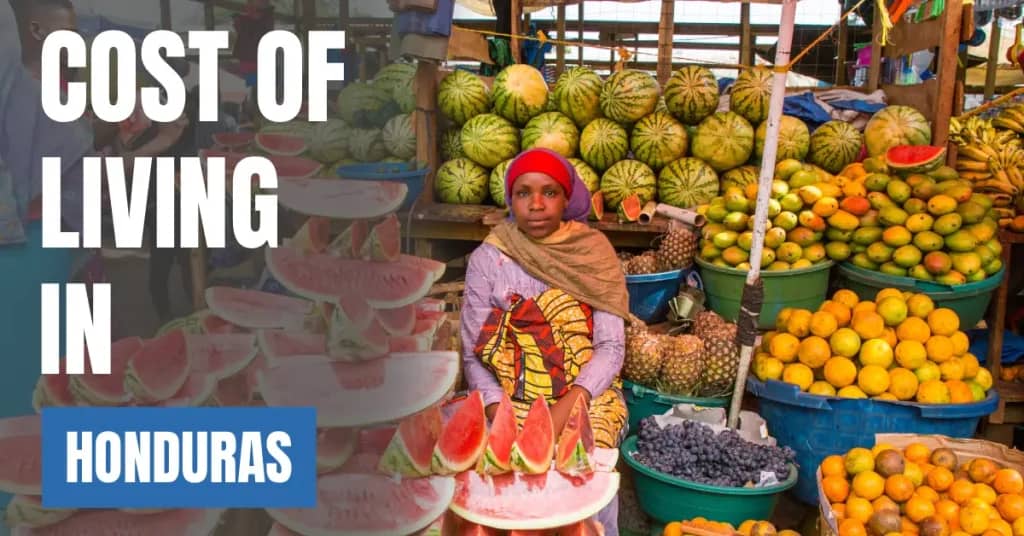
Cost of Living in Honduras 2026: Rent, Food, Salaries and Monthly Expenses
The cost of living in Honduras in 2026 depends largely on housing, location, household size and lifestyle. Local food and basic transport can be relatively affordable, but private apartments, electricity, healthcare, vehicles and international schooling can substantially increase monthly expenses.
On this pageTable of Content
A budget-conscious single person may plan approximately HNL 15,000 to HNL 22,000 per month including modest accommodation. Someone renting an independent apartment and seeking a more comfortable lifestyle may need HNL 25,000 to HNL 40,000 or more. These are illustrative planning ranges, not official household spending averages.
Honduras uses the Honduran lempira (HNL). Prices differ between Tegucigalpa, San Pedro Sula, La Ceiba, Roatán and smaller communities. This guide examines current expenses, the 2026 minimum wage, inflation, healthcare, education, residency requirements and practical budgets for people considering moving to Honduras.
Cost of Living in Honduras at a Glance
Housing is one of the largest expenses for independent renters in Honduras. Food and public transport can be less costly, but the total depends on accommodation standards and the availability of public services.
| Expense | Estimated Cost in HNL | Details |
|---|---|---|
| Budget single person, including rent | 15,000 to 22,000 monthly | Shared or inexpensive housing |
| Moderate single person, including rent | 25,000 to 40,000 monthly | Independent apartment |
| Couple, including rent | 30,000 to 50,000 monthly | Shared housing expenses |
| Family of four, including rent | 45,000 to 75,000 monthly | Excludes premium international schooling |
| Single person, excluding rent | 8,000 to 16,000 monthly | Basic non-housing expenses |
| One-bedroom apartment, city centre | About 13,400 monthly | October 2026 crowdsourced national estimate |
| One-bedroom apartment, outside centre | About 11,000 monthly | Location and quality vary |
| Three-bedroom apartment, city centre | About 25,500 monthly | National market estimate |
| Groceries, one person | 3,500 to 6,000 monthly | Mainly home-prepared meals |
| Local transportation | 600 to 1,500 monthly | Public transport and occasional taxis |
| Basic apartment utilities | About 3,350 monthly | For an approximately 85 m² apartment |
| Home broadband internet | About 1,040 monthly | Higher-speed unlimited connection |
| Average reported net salary | About 14,380 monthly | Limited crowdsourced sample |
The rent, utility and salary observations above are drawn from Numbeo's October 2, 2026 Honduras dataset, containing 309 price entries from 20 contributors during the preceding 12 months. They are not official national statistics and should not be treated as guaranteed market prices.
Planning budgets are constructed examples. Their components and assumptions are explained later in this article.
How Much Does It Cost to Live in Honduras Per Month?
A single renter may need approximately HNL 15,000 to HNL 22,000 monthly for a modest lifestyle with shared or low-cost housing. A more comfortable single-person budget, with an independent apartment, is approximately HNL 25,000 to HNL 40,000 including rent.
A couple may plan around HNL 30,000 to HNL 50,000 monthly, while a family of four could need HNL 45,000 to HNL 75,000 before expensive international education and premium housing.
These examples assume mainly home-cooked meals, reasonably controlled transportation and no major medical emergencies.
Current affordability is also affected by inflation. According to the Central American Monetary Council's October 12, 2026 report, using information from the Central Bank of Honduras, annual inflation reached 6.28% in September 2026, compared with 4.55% a year earlier. Accumulated inflation for 2026 reached 5.29% through September.
Transport and food were major contributors to these price increases. Households should therefore review their spending assumptions regularly, especially for groceries, fuel and commuting.
Housing and Rent Prices in Honduras
Rent is often the largest expense for newcomers seeking an independent home. Prices depend on city, neighbourhood, security, property condition, furnishing, parking and the reliability of electricity and water.
How Much Is Rent in Honduras in 2026?
Numbeo's October 2026 dataset reported approximately HNL 13,391 per month for a one-bedroom city-centre apartment and HNL 10,980 outside central areas. Larger three-bedroom properties averaged approximately HNL 25,474 in central locations and HNL 19,567 elsewhere.
| Property Type | Average Monthly Rent | Reported Range |
|---|---|---|
| One bedroom, city centre | HNL 13,391 | HNL 4,500 to 26,857 |
| One bedroom, outside centre | HNL 10,980 | HNL 5,000 to 20,000 |
| Three bedrooms, city centre | HNL 25,474 | HNL 15,000 to 59,086 |
| Three bedrooms, outside centre | HNL 19,567 | HNL 12,000 to 40,286 |
These are national crowdsourced market observations. They do not establish the typical rent in every Honduran city. Someone renting a room or sharing a home may spend substantially less, while furnished apartments in desirable neighbourhoods may cost considerably more.
What Affects Rental Prices?
- Proximity to employment centres, schools and essential services.
- Building security and neighbourhood conditions.
- Furnishing, air conditioning and appliance availability.
- Parking, maintenance and shared-building charges.
- Electricity and water reliability.
- Tourism demand and short-term rental competition in coastal destinations.
Roatán and other tourism-focused locations require separate research because island logistics, visitor demand and expatriate-oriented accommodation can create different price conditions from mainland urban areas.
Before signing a lease, tenants should confirm the deposit, advance rent, utilities, maintenance responsibility and any property-management fees.
Buying Property in Honduras
Honduras may offer residential properties at prices below those in some higher-income countries, but ownership expenses and legal requirements require careful investigation.
Numbeo's October 2026 sample suggested central apartment purchase prices averaging approximately HNL 56,855 per square metre, calculated from its reported price per square foot. However, the underlying observations are limited and should not be treated as property valuation advice.
Foreign buyers should obtain independent legal advice and verify title, registration, land-use rights, applicable ownership restrictions and closing costs, particularly in coastal and island areas.
Food and Grocery Costs in Honduras
Groceries can be relatively affordable for households using local markets and preparing meals at home. Imported packaged foods, specialty products and premium supermarkets often raise food costs.
A single person might budget HNL 3,500 to HNL 6,000 monthly for groceries, while a family of four may need approximately HNL 9,000 to HNL 14,000, depending on diet and household habits.
Indicative Grocery Prices in 2026
| Product | Average Price in HNL |
|---|---|
| Milk, 1 litre | 38 |
| White bread, 1 lb loaf | 49 |
| White rice, 1 lb | 18 |
| Eggs, 12 | 48 |
| Chicken fillets, 1 lb | 69 |
| Beef, 1 lb | 103 |
| Bananas, 1 lb | 16 |
| Tomatoes, 1 lb | 20 |
| Potatoes, 1 lb | 23 |
| Local cheese, 1 lb | 86 |
These figures are rounded from Numbeo's October 2026 Honduras observations. Most produce and meat quantities in this table are per pound, not per kilogram.
The Central Bank of Honduras reported increased pressure on food prices during September 2026, including changes affecting eggs, chicken, maize and beans. Weather conditions and higher transportation costs were important factors.
Shopping at local markets, buying seasonal produce and comparing supermarkets can help control grocery spending, although savings depend on availability and location.
Restaurants and Eating Out
Restaurant prices in Honduras depend on whether you eat at local establishments, commercial food courts or higher-end restaurants.
Numbeo's October 2026 observations reported an average inexpensive restaurant meal of HNL 200, a fast-food combo around HNL 224 and a three-course restaurant meal for two averaging approximately HNL 853, excluding drinks.
| Restaurant Expense | Indicative Cost |
|---|---|
| Inexpensive restaurant meal | HNL 200 |
| Fast-food combo | HNL 224 |
| Mid-range meal for two | HNL 853 |
| Cappuccino | HNL 64 |
| Soft drink | HNL 28 |
These are dataset averages, not minimum prices. Local meals can cost less, while imported food, upscale restaurants and tourist locations can cost substantially more.
People eating out regularly should allocate a separate allowance rather than assuming restaurant spending is included in their basic grocery budget.
Utilities: Electricity, Water and Cooking Gas
Utility bills depend on property size, air-conditioning use, climate, household consumption and service conditions.
Numbeo reported approximately HNL 3,346 monthly for electricity, cooling, water and waste-related basic utilities in an 85 m² apartment. Its observed range was around HNL 2,500 to HNL 5,332.
These amounts can change considerably with air-conditioning use and building efficiency. Utility arrangements should be checked individually before renting.
Are Electricity Subsidies Available?
Honduras has used targeted residential electricity subsidies, including assistance linked to household electricity consumption. Eligibility, consumption thresholds and financing arrangements have been subject to policy decisions and may change.
Residents should verify the rules applicable to their electricity account with the Empresa Nacional de Energía Eléctrica (ENEE). A subsidy available to an eligible residential account should not be assumed to apply to every rental property, expatriate household or commercial connection.
Some homes may also require water storage, backup electricity or additional maintenance. These expenses should be clarified with landlords rather than assumed to be included in the quoted rent.
Internet and Mobile Phone Costs
Internet and mobile expenses depend on the provider, speed, network availability and data requirements.
Numbeo's October 2026 figures placed an unlimited broadband connection offering at least 60 Mbps at approximately HNL 1,038 monthly, with observed prices from HNL 750 to HNL 2,000.
Mobile plans with calls and at least 10 GB of data averaged approximately HNL 543 monthly in the same dataset.
Remote workers should verify actual upload speed, connection reliability and backup mobile coverage at the property they intend to rent. Advertised broadband speeds do not guarantee the same real-world performance in every neighbourhood.
Transportation Costs in Honduras
Public transport in Honduras is generally paid rather than free. Buses, minibuses, taxis and other local services are available, but fares and reliability vary by city and route.
Numbeo's October 2026 observations placed an ordinary one-way local transport ticket at approximately HNL 19 and a reported monthly pass at HNL 1,500. Not every transport network offers an equivalent monthly pass, so the latter figure should not be interpreted as a nationwide public transport product.
| Transport Expense | Indicative Cost |
|---|---|
| One-way local ticket | HNL 19 |
| Reported monthly pass | HNL 1,500 |
| Taxi starting fare | HNL 52 |
| Taxi fare per mile | HNL 60 |
| Gasoline, 1 litre | HNL 30 |
These are crowdsourced reference figures. Actual fares depend on the local operator, route, time and type of journey.
For someone using public transport regularly, HNL 600 to HNL 1,500 may be a useful monthly planning allowance. Frequent taxis or private vehicle ownership will normally require more.
Vehicle owners must also budget for fuel, insurance, repairs, parking and registration. Congestion and transport safety can affect the practical value of living farther from work.
Healthcare Costs in Honduras
Healthcare in Honduras is not universally free. The country has public health services, social-security-linked medical coverage and private healthcare providers, but eligibility, access, waiting times and out-of-pocket expenses differ.
Public Healthcare
The public healthcare system is administered through national and local health institutions. Public facilities provide important services, although medicine availability, specialist access, diagnostic capacity and waiting times can vary.
Some services may be available with limited direct fees, but patients should not assume every consultation, medicine, diagnostic test or hospital procedure will be fully funded.
Social Security Healthcare
The Instituto Hondureño de Seguridad Social (IHSS) provides social-security-related coverage for eligible contributors and beneficiaries. Access depends on registration, contributions, legal eligibility and the applicable rules.
Not every resident or foreign visitor is automatically entitled to the same IHSS benefits.
Private Healthcare
Private hospitals and clinics may provide additional choices for diagnostics, specialist appointments and treatment, particularly in larger urban centres. However, private care can be costly, especially when hospitalization or complex procedures are required.
The previous VisaBoards article quoted private consultation estimates in US dollars, but those figures should not be treated as current nationwide tariffs without direct verification.
New residents should budget for medicines, dental care, insurance and emergency treatment. International health insurance may be relevant for expatriates who require access to private hospital networks or emergency evacuation.
Education and Childcare Costs
Education costs in Honduras depend on whether a child attends a public school, local private school or international school. Tuition alone may not reflect the full cost of education.
Public Education
Public schooling can reduce direct tuition expenses, but parents may still need to pay for uniforms, books, transport, meals and school supplies. Access, location and school conditions should be checked individually.
Private Schools
Private schools charge varying tuition and related fees. Families should obtain current schedules for registration, tuition, materials, school transport and other charges before committing to a particular school.
International Schools
Numbeo's October 2026 Honduras observations placed annual international primary-school tuition around HNL 91,952 per child, with reported values ranging from approximately HNL 61,771 to HNL 120,000.
The same dataset estimated private full-day preschool or kindergarten at approximately HNL 5,583 per child monthly, with considerable variation.
These are limited market estimates, not quotations from individual schools. International school fees and associated costs can exceed the range shown, depending on curriculum, location and grade level.
Salaries and Income in Honduras
Average earnings vary substantially by industry, location, qualifications and employment form. Informal employment, agriculture, retail, manufacturing, professional services and international businesses can have very different pay structures.
Numbeo's October 2026 observations placed average monthly net salary at approximately HNL 14,379. This is based on crowdsourced submissions and should not be interpreted as the official national average.
The practical importance of this figure is affordability: the reported average net salary is only slightly above the reported average rent for a centrally located one-bedroom apartment.
This does not mean every worker pays that rent. Many households share housing, live outside expensive urban areas or use alternative family arrangements. However, it demonstrates why internationally oriented urban housing can be difficult to afford on typical local earnings.
What Is the Minimum Wage in Honduras in 2026?
Honduras does not have one universal minimum-wage amount for every worker. The applicable statutory minimum depends on the economic activity and the employer's workforce size.
Under the official 2026 and 2027 wage agreement published by the Secretaría de Trabajo y Seguridad Social (SETRASS), 2026 monthly minimum wages range from approximately HNL 9,596.64 to HNL 19,298.72 across the published classifications.
The agreement is identified as Acuerdo No. SETRASS-233-2026, and the labour ministry indicates that the 2026 table applies from January 2026.
Examples of 2026 Minimum Wages
| Economic Activity | Employer Size | Monthly Minimum Wage |
|---|---|---|
| Agriculture, forestry, hunting and fishing | 1 to 10 workers | HNL 9,596.64 |
| Agriculture, forestry, hunting and fishing | 151 or more workers | HNL 12,349.49 |
| Mining and quarrying | 1 to 10 workers | HNL 13,110.80 |
| Mining and quarrying | 151 or more workers | HNL 18,530.19 |
| Financial, real estate and business services | 151 or more workers | HNL 19,298.72 |
The correct minimum wage for an employee should be checked against the full official table, including applicable classifications and any special rules.
Comparing the statutory wage with independent rental costs shows that housing affordability can be challenging for workers at the lower end of the wage scale.
For example, a one-bedroom apartment costing HNL 11,000 monthly would consume more than the lowest published monthly minimum wage before food, utilities or transport.
The government's minimum-wage schedule should therefore not be confused with the income required to support a comfortable independent lifestyle.
Income Taxes and Take-Home Pay in Honduras
Income tax matters when assessing whether a quoted salary is sufficient to support living expenses. Honduras uses progressive personal income tax rates, and the applicable result depends on taxable income and relevant deductions.
According to the Servicio de Administración de Rentas (SAR), the 2026 personal income tax schedule is:
| Annual Net Taxable Income | Tax Rate |
|---|---|
| Up to HNL 228,324.32 | Exempt |
| HNL 228,324.33 to 348,154.10 | 15% |
| HNL 348,154.11 to 809,660.75 | 20% |
| Above HNL 809,660.75 | 25% |
These rates apply progressively to relevant income brackets, not as one flat rate on all income.
The 2026 scale was updated through Acuerdo SAR-01-2026. Employees should also consider any applicable payroll deductions and employer-related benefits when calculating take-home pay.
Tax treatment can differ for foreign residents and income earned outside Honduras. Anyone relocating with foreign employment, business or investment income should obtain qualified advice about their individual circumstances.
Realistic Monthly Budget Examples for Honduras
The following tables show constructed monthly budgets in Honduran lempiras. All totals include rent, with expenses calculated separately so readers can adjust the assumptions to their circumstances.
Budget-Conscious Single Person
| Expense | Monthly Cost |
|---|---|
| Shared or modest housing | HNL 6,000 |
| Utilities | HNL 1,000 |
| Groceries | HNL 3,500 |
| Transportation | HNL 800 |
| Internet and mobile | HNL 700 |
| Healthcare allowance | HNL 700 |
| Dining and miscellaneous | HNL 2,000 |
| Total Including Rent | HNL 14,700 |
Assumptions: shared or inexpensive accommodation, home cooking, public transportation and limited discretionary spending. Excludes major medical expenses, international insurance and relocation fees.
Moderate Single Person
| Expense | Monthly Cost |
|---|---|
| One-bedroom apartment | HNL 12,000 |
| Utilities | HNL 2,500 |
| Groceries | HNL 5,000 |
| Transportation | HNL 2,000 |
| Internet and mobile | HNL 1,500 |
| Healthcare allowance | HNL 1,000 |
| Dining and leisure | HNL 4,000 |
| Total Including Rent | HNL 28,000 |
Assumptions: independent accommodation, regular internet access, groceries for home cooking and occasional restaurant meals. Does not include vehicle ownership or expensive international health insurance.
Couple
| Expense | Monthly Cost |
|---|---|
| Accommodation | HNL 15,000 |
| Utilities | HNL 3,500 |
| Groceries | HNL 8,000 |
| Transportation | HNL 3,000 |
| Internet and mobile | HNL 1,800 |
| Healthcare allowance | HNL 2,000 |
| Dining and miscellaneous | HNL 5,000 |
| Total Including Rent | HNL 38,300 |
Assumptions: two adults sharing a private apartment, moderate consumption, no children and no major emergency expenses.
Family of Four
| Expense | Monthly Cost |
|---|---|
| Three-bedroom accommodation | HNL 20,000 |
| Utilities | HNL 4,000 |
| Groceries | HNL 12,000 |
| Transportation | HNL 5,000 |
| Internet and mobile | HNL 2,000 |
| Healthcare allowance | HNL 3,000 |
| Local education and supplies | HNL 4,000 |
| Dining, clothing and miscellaneous | HNL 7,000 |
| Total Including Rent | HNL 57,000 |
Assumptions: two adults and two children, moderate accommodation, mainly local shopping and no expensive international-school tuition. A household requiring premium schooling, private transport or larger medical insurance premiums should budget substantially more.
Cost of Living by City and Region
Housing and lifestyle expenses differ considerably across Honduras. National averages should not be applied automatically to every destination.
Tegucigalpa
The capital offers government offices, employment opportunities, universities, hospitals and a substantial urban rental market.
Numbeo's June 2026 Tegucigalpa observations suggested approximately HNL 12,101 monthly for a centrally located one-bedroom apartment and HNL 10,059 outside central areas. Those figures were based on a small dataset and are subject to significant variation.
San Pedro Sula
San Pedro Sula is an important commercial and industrial centre. Housing costs depend on neighbourhood, building quality, security and access to workplaces.
Residents should compare rents, commuting costs and local service availability before deciding whether living farther from employment areas offers genuine savings.
La Ceiba
La Ceiba is a coastal city with a different property and tourism market from the major inland urban centres. Rental prices can depend on proximity to popular areas, property condition and seasonal demand.
Reliable citywide consumer-price evidence remains limited, so individual rental quotations are more useful than broad national comparisons.
Roatán and the Bay Islands
Roatán can be relatively expensive for households choosing furnished housing in tourism-oriented or expatriate-focused areas. Imported goods, transport logistics and tourism demand may add to living expenses.
A person considering retirement or remote work on the islands should obtain location-specific quotations for housing, transport, groceries, insurance and internet access rather than applying mainland averages.
Smaller Towns and Rural Areas
Some smaller communities may offer lower housing costs, especially for people using locally available accommodation. However, access to specialized healthcare, transport, broadband and employment opportunities can be more limited.
A cheaper rent does not always produce a lower total household budget if frequent travel or additional services are necessary.
Is Honduras Cheaper Than Nearby Countries?
Honduras may offer lower living costs than Costa Rica for some typical household spending patterns, but comparisons depend on the cities, accommodation standards and expenses included.
Comparisons with Guatemala, El Salvador and Nicaragua are less straightforward. Differences in housing markets, transportation, exchange rates, imported products and salaries can change the outcome.
For an accurate comparison, readers should calculate equivalent budgets in the specific cities under consideration, using the same household size, housing standard and school or healthcare requirements.
It is not reliable to conclude that every expense in Honduras is cheaper than in a neighbouring country based on a single national average.
Hidden Costs of Living in Honduras
New residents often overlook expenses that are not reflected in basic rent, food and transport calculations.
- Rental deposits: Advance rent and deposits increase initial moving expenses.
- Air conditioning: Regular cooling can increase electricity bills.
- Electricity and water interruptions: Backup arrangements may create additional costs.
- Private healthcare: Insurance, specialist treatment and hospitalization may be expensive.
- Vehicle ownership: Maintenance, fuel, insurance and parking can substantially increase monthly spending.
- Security: Choosing an appropriate location or secured building can affect housing costs.
- Imported products: International brands and specialized items may carry price premiums.
- Schooling: Registration fees, uniforms, transportation and extracurricular activities add to tuition.
- Immigration expenses: Application fees, documentation, translations and legal assistance may be necessary.
- Currency changes: Exchange-rate movements can affect imported goods and obligations paid in foreign currencies.
Building an emergency reserve and reviewing actual local quotations can make a relocation budget more realistic.
Cost of Living Versus Residency Financial Requirements
The amount of money needed to live in Honduras is separate from the financial conditions for particular immigration or residency categories.
The official immigration regulations published by the Instituto Nacional de Migración include income conditions for certain residence classifications.
Rentista Residence
Article 23 of the published regulations states that rentista applicants must demonstrate permanent, lawful and stable income of at least US$2,500 per month, or the equivalent in national currency.
Pensionado Residence
Article 24 states that pensionado applicants must show stable pension income originating abroad of at least US$1,500 monthly.
These amounts are immigration-category financial thresholds, not the cost of maintaining a household in Honduras. The governing rules may have been amended or supplemented, so applicants should verify the currently applied criteria with the immigration authority before filing.
Different categories, such as employment or family-based residence, may have their own requirements. An affordable personal living budget does not automatically establish legal eligibility to reside or work.
Is Honduras Affordable for Expats and New Residents?
Honduras can be affordable for some expatriates and retirees, especially those with reliable income and flexible housing preferences. However, its affordability depends on much more than inexpensive local meals.
People earning in foreign currency may experience different purchasing power from residents relying on local wages. Choosing private healthcare, independent accommodation, a vehicle and international schooling can substantially raise total expenses.
Before moving, newcomers should compare their actual net income against housing, utilities, food, healthcare, transport and emergency reserves.
They should also consider infrastructure reliability, access to suitable medical treatment and neighbourhood-specific safety conditions when evaluating a lower-cost property.
Conclusion: How Much Money Do You Need to Live in Honduras?
A modest single-person budget may begin around HNL 15,000 to HNL 22,000 monthly including rent, especially with shared housing. A more comfortable single renter may need HNL 25,000 to HNL 40,000.
A couple might plan around HNL 30,000 to HNL 50,000 monthly, while a family of four could require HNL 45,000 to HNL 75,000 before premium international education and other higher-cost services.
Honduras offers opportunities to manage everyday costs through local shopping and suitable housing choices, but rising food and transport prices, differences in local earnings and the cost of independent urban accommodation remain important affordability challenges.
These estimates should be treated as planning tools rather than guaranteed expenses. Rent, current utility arrangements, healthcare needs and school fees should always be verified for the specific location.
Sources and Methodology
This article was reviewed in October 2026 using the existing VisaBoards article, Honduran government information, regional monetary reporting and available crowdsourced consumer-price observations.
All constructed monthly budgets use Honduran lempiras (HNL), with costs presented separately and rent explicitly included in their totals. Immigration financial thresholds are shown in US dollars where that is how the official regulations express them.
Numbeo's countrywide dataset was updated on October 2, 2026 and reflected 309 observations from 20 contributors over the preceding 12 months. Its coverage is limited and may overrepresent certain urban areas or consumption patterns. Published figures are therefore estimates, not official nationwide household averages.
The 2026 minimum-wage figures come from the labour ministry's sector-specific wage schedule. Inflation comes from the Central Bank of Honduras through the Central American Monetary Council. Tax thresholds come from the Honduran tax authority.
Rental prices, groceries, transportation and other expenses may change with inflation, exchange rates, location and individual purchasing habits. Where published figures conflict, readers should prioritize recent local quotations and official rules.
- Secretaría de Trabajo y Seguridad Social: Minimum Wage and Education Bonus Table 2026-2027
- Secretaría de Trabajo y Seguridad Social: Minimum Wage Adjustment 2026-2027
- Central American Monetary Council: Honduras Inflation, September 2026
- Numbeo: Cost of Living in Honduras, October 2026
- Numbeo: Cost of Living in Tegucigalpa
- Servicio de Administración de Rentas: Personal Income Tax Table 2026
- PwC: Honduras Individual Income Tax Rules
- Instituto Nacional de Migración: Immigration and Foreigners Regulations
- Empresa Nacional de Energía Eléctrica: Electricity Information
- Instituto Hondureño de Seguridad Social: Social Security and Healthcare
- VisaBoards: Original Cost of Living in Honduras Guide
Frequently Asked Questions
How much does it cost to live in Honduras per month?
A single person may need approximately HNL 15,000 to HNL 22,000 monthly for a modest lifestyle with inexpensive or shared housing. A more comfortable single renter may budget HNL 25,000 to HNL 40,000 including rent. These are planning estimates rather than official averages. Actual expenses vary with accommodation, food, transport, healthcare and location.
How much is rent in Honduras in 2026?
Numbeo's October 2026 observations reported an average monthly rent of approximately HNL 13,391 for a one-bedroom apartment in a city centre and HNL 10,980 outside central areas. Three-bedroom properties averaged around HNL 19,567 to HNL 25,474 depending on location. Prices vary substantially by city, neighbourhood and property condition, so tenants should obtain current quotations before committing.
What salary is needed to live comfortably in Honduras?
A single renter might target enough net income to cover approximately HNL 25,000 to HNL 40,000 in monthly expenses, including rent. Couples and families may require considerably more. This is a lifestyle planning benchmark, not an official salary requirement. A comfortable income depends on housing standards, dependants, commuting needs, private healthcare and schooling choices.
What is the minimum wage in Honduras in 2026?
Honduras has different statutory minimum wages based on economic activity and employer size. The official 2026 schedule lists monthly amounts ranging from approximately HNL 9,596.64 to HNL 19,298.72 across its published classifications. Workers should check the applicable industry and workforce category with the labour ministry rather than relying on a single national wage figure.
Is healthcare free in Honduras?
Healthcare in Honduras is not universally free. Public health facilities provide services, while eligible contributors may access social-security healthcare through the IHSS. Depending on eligibility and availability, patients may still face expenses for medicines, diagnostic tests, specialist appointments or private hospital treatment. Expatriates should assess health insurance coverage and emergency medical needs before relocating.
Is public transportation free in Honduras?
No, public transportation in Honduras is generally paid. Numbeo's October 2026 observations reported approximately HNL 19 for a local one-way ticket, although fares vary by location and route. Public buses, minibuses and taxis operate under different local arrangements. There is no basis for assuming one fixed nationwide fare or a universally available monthly transport pass.
How much does a family of four need in Honduras?
A family of four may use HNL 45,000 to HNL 75,000 monthly as an initial planning range, including rent but excluding premium international schooling. A constructed moderate family budget in this guide totals HNL 57,000. Costs can increase substantially with more expensive accommodation, private healthcare, vehicle ownership and international education.
How much do groceries cost in Honduras?
A single person may budget approximately HNL 3,500 to HNL 6,000 monthly for groceries, with a family of four allowing roughly HNL 9,000 to HNL 14,000. Actual expenses depend on diet, local market availability and imported products. Food prices were also affected by inflation in 2026, making it sensible to review household grocery budgets regularly.
Is Honduras cheaper than Costa Rica?
Honduras may be less expensive than Costa Rica for some housing and everyday spending categories, but exact differences depend on the places and lifestyles being compared. Tourist locations, private housing, healthcare and imported products can change the result. Households should compare specific cities and equivalent expenses rather than assuming every product or service costs less in Honduras.
Is Roatán more expensive than mainland Honduras?
Roatán can be more expensive for some households, particularly those choosing furnished accommodation in tourism-oriented areas or relying heavily on imported goods. Island logistics and visitor demand can affect prices. However, precise comparisons require current local quotations for equivalent properties and services. National Honduras price averages should not be used as guaranteed estimates for Roatán.
What are the income requirements for residency in Honduras?
Honduran immigration regulations published by the Instituto Nacional de Migración specify monthly income thresholds of US$2,500 for certain rentista applicants and US$1,500 in qualifying foreign pension income for pensionado applicants. These are category-specific legal requirements, not general living costs. Applicants should verify current rules, documentation and eligibility with the immigration authority because regulations and procedures may change.
What hidden expenses should expats consider in Honduras?
Expatriates should budget for rental deposits, air conditioning, electricity and water backup, private healthcare, insurance, transportation, security and imported goods. Families may also face substantial private-school or international-school expenses. Residency administration and moving costs can increase initial spending. These items should be considered alongside ordinary monthly rent, groceries and utilities.
Join the conversation
Have thoughts on this topic? Share them with others.
Ask questions, share experience, and learn from the Visaboards Community.