
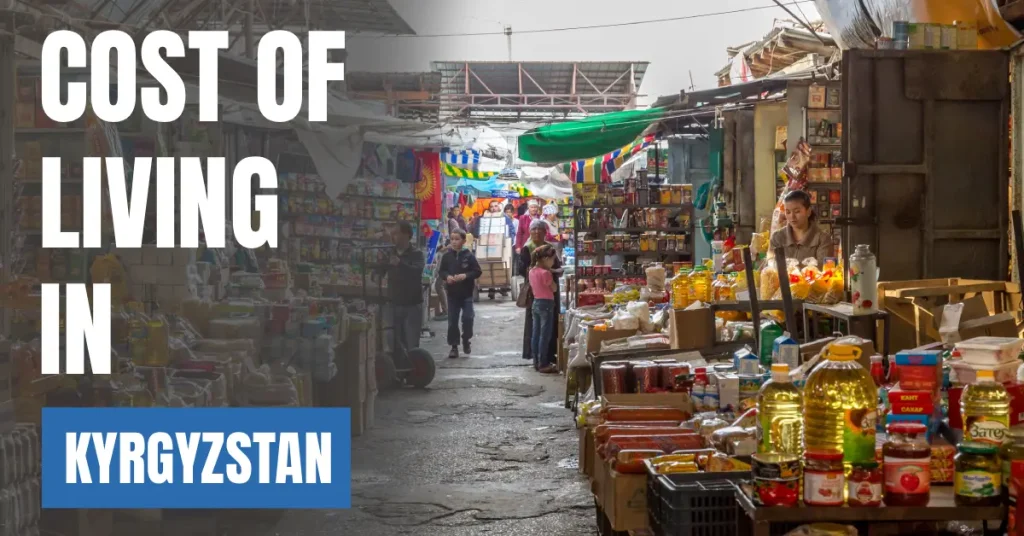
Cost of Living in Kyrgyzstan 2026: Rent, Prices, Salaries and Monthly Expenses
The cost of living in Kyrgyzstan in 2026 remains relatively affordable compared with many other international destinations, but housing costs in Bishkek can take up a substantial part of a monthly budget. A single person renting a private apartment in the capital should generally plan for approximately KGS 60,000 to 85,000 per month, including rent, groceries, utilities, transportation and everyday expenses. Someone sharing accommodation may spend considerably less.
On this pageTable of Content
Kyrgyzstan attracts international students, foreign workers and people interested in living in Central Asia. Cities such as Bishkek and Osh offer different combinations of housing costs, employment opportunities and services. Smaller destinations, including Karakol and Jalal-Abad, can be attractive for residents seeking a quieter lifestyle, although accommodation availability and infrastructure vary.
Recent price information also shows that some older estimates underestimate rent. Research using October 2026 market observations places a one-bedroom apartment in central Bishkek at approximately KGS 52,748 per month, while a similar apartment outside the centre averages around KGS 36,460.
This guide explains the latest available prices in Kyrgyzstani som (KGS), including housing, food, restaurants, utilities, internet, healthcare, education, salaries and realistic monthly budgets. It also explains how official wages, minimum-wage regulations and residency requirements affect affordability.
Also Explore: Cost of Living in LaosCost of Living in Kyrgyzstan at a Glance
Kyrgyzstan's national currency is the Kyrgyzstani som (KGS). The following estimates are primarily based on Bishkek market observations from October 2026, supplemented by national statistics and official government information.
| Expense or Indicator | Estimated Cost in KGS | Details |
|---|---|---|
| Single person, shared accommodation | 40,000 to 60,000/month | Including rent and basic living expenses |
| Single person, private apartment | 60,000 to 85,000/month | Including rent and regular expenses |
| Couple | 85,000 to 115,000/month | Including a private apartment |
| Family of four | 125,000 to 180,000/month | Including rent, excluding expensive international school tuition |
| One-bedroom, central Bishkek | 43,700 to 61,800/month | Observed rental range |
| One-bedroom, outside central Bishkek | 30,000 to 50,000/month | Observed rental range |
| Groceries, single person | 12,000 to 20,000/month | Illustrative planning range |
| Inexpensive restaurant meal | 400 to 1,000 | Bishkek price observations |
| Basic apartment utilities | 3,000 to 6,800/month | Electricity, heating, water and waste services |
| Home broadband internet | 800 to 1,300/month | Depending on provider and connection |
| Bishkek municipal bus | 17 per ride | Eligible cashless payments |
| Average formal-sector gross salary | 55,079/month | January to August 2026 |
| Statutory monthly minimum wage | 3,280 | Effective January 1, 2026 |
Budget clarification: The household totals include rent, but the individual price categories do not. These totals are illustrative planning estimates, not official national household expenditure averages. They assume ordinary urban living without major international school fees, expensive medical treatment or significant travel expenses.
Rental and consumer price references come from Numbeo's Bishkek database and the October 2026 ACLAS cost-of-living report. Wage figures come from October 2026 reporting on National Statistical Committee data.
How Much Does It Cost to Live in Kyrgyzstan Per Month?
A single person in Bishkek may spend approximately KGS 40,000 to 60,000 per month when sharing accommodation, or KGS 60,000 to 85,000 when renting a private apartment. Both estimates include housing and ordinary living expenses.
A couple renting a modest apartment might budget KGS 85,000 to 115,000 monthly, while a family of four could need KGS 125,000 to 180,000 or more, depending on childcare and education.
These estimates are not fixed national averages. Housing location, household size, rent-sharing arrangements and the frequency of restaurant meals can make a significant difference.
For a person who already owns a home or receives employer-provided accommodation, monthly expenses excluding rent may be substantially lower. A single adult might plan around KGS 20,000 to 35,000 excluding rent for groceries, utilities, public transportation, communication and modest personal spending.
For students, an October 2026 research report estimated that budget students sharing accommodation in Bishkek could spend approximately USD 386 monthly, while those renting their own apartment might spend around USD 697. Those estimates exclude university tuition.
Rent therefore deserves more attention than small differences in grocery or transportation costs.
Housing and Rent Prices in Kyrgyzstan
Housing is often the largest monthly expense for new residents, particularly in Bishkek. Rent is generally higher in central, well-connected neighborhoods and in furnished apartments suitable for immediate occupation.
How Much Is Rent in Bishkek in 2026?
According to price observations analyzed in October 2026, a one-bedroom apartment in central Bishkek averages approximately KGS 52,748 per month, compared with KGS 36,460 outside the city centre.
| Apartment Type | Approximate Monthly Average | Observed Range |
|---|---|---|
| One-bedroom, city centre | KGS 52,748 | KGS 43,725 to 61,827 |
| One-bedroom, outside centre | KGS 36,460 | KGS 30,000 to 50,000 |
| Three-bedroom, city centre | KGS 89,983 | KGS 80,000 to 157,410 |
| Three-bedroom, outside centre | KGS 62,417 | KGS 45,000 to 87,450 |
Source: ACLAS Research, October 17, 2026, based on Numbeo observations updated October 6, 2026.
These figures are crowdsourced estimates, not guaranteed available listings. Actual advertised rents may differ because of building quality, furnishings, location and lease terms.
Can You Save Money With Shared Accommodation?
Yes. Sharing a larger apartment can substantially reduce housing expenses. Dividing the estimated KGS 62,417 monthly cost of a three-bedroom apartment outside central Bishkek among three tenants gives an illustrative housing cost of approximately KGS 20,806 per person.
This calculation assumes three equal contributions and does not include utilities, deposits or other rental charges. A shared apartment may therefore be a useful option for students and budget-conscious workers.
Rent in Osh, Karakol and Smaller Cities
Osh and smaller regional centres may offer lower rents than Bishkek, especially for locally furnished accommodation. However, the quality and availability of rental housing differ significantly.
There is insufficient comparable October 2026 rental data to publish reliable citywide averages for Osh, Karakol or Jalal-Abad. Prospective residents should check current local listings rather than assume that national or Bishkek averages apply.
Buying Property in Kyrgyzstan
Apartment purchase prices are generally lower than in many Western capitals, but purchasing property involves legal due diligence. Foreign buyers must pay particular attention to the legal status of land, registration and any nationality-related restrictions.
Ownership of an apartment or building should not be confused with unrestricted ownership of the underlying land. Legal advice is especially important before purchasing houses, agricultural plots or property involving land rights.
Food and Grocery Prices in Kyrgyzstan
A single person cooking regularly at home can use approximately KGS 12,000 to 20,000 per month as an initial grocery budget. Imported products, frequent meat purchases and premium supermarkets can increase spending.
Local markets are important sources of fresh produce, bread, meat and dairy products. Prices can vary with seasons, imported supply and shopping location.
Typical Grocery Prices in Bishkek
| Grocery Item | Approximate Price (KGS) |
|---|---|
| Milk, 1 litre | 85 to 95 |
| White bread, 500 g | 30 to 40 |
| Rice, 1 kg | 140 to 160 |
| Eggs, 12 | 140 to 165 |
| Chicken fillets, 1 kg | 380 to 430 |
| Beef, 1 kg | 700 to 800 |
| Apples, 1 kg | 110 to 140 |
| Tomatoes, 1 kg | 120 to 160 |
| Potatoes, 1 kg | 45 to 60 |
| Onions, 1 kg | 35 to 50 |
These rounded prices are indicative of 2026 Bishkek consumer-market observations from Numbeo. They are not regulated retail prices, and seasonal variations can be significant.
A practical way to reduce grocery expenses is to buy seasonal vegetables and fruit, compare local markets with supermarkets, and reserve imported specialty products for occasional purchases.
Restaurant and Eating Out Costs
Eating out in Kyrgyzstan can be affordable by international standards, although restaurant spending varies considerably between local canteens, casual cafes and upscale establishments.
| Restaurant Expense | Typical Price (KGS) |
|---|---|
| Inexpensive restaurant meal | 400 to 1,000 |
| Meal for two, mid-range restaurant | 1,700 to 4,000 |
| Fast-food combination meal | 500 to 600 |
| Cappuccino | 120 to 280 |
These are observed Bishkek price ranges rather than fixed menus. A commonly reported inexpensive meal price is around KGS 600.
Residents who prepare most meals at home and eat out only occasionally can keep expenses well below those who regularly use restaurants or food delivery services.
Utilities: Electricity, Heating, Water and Waste
Monthly utility bills for an approximately 85-square-metre apartment in Bishkek are commonly estimated at KGS 3,000 to 6,800, including electricity, heating, water, cooling where applicable and waste services.
An October 2026 comparison placed the average monthly cost at approximately KGS 4,394.
Heating can have a major effect on winter costs, particularly in older properties. Apartment size, insulation, whether heating is centralized, and the payment method all influence the final bill.
Some rental agreements include individual utilities, while others require tenants to pay them separately. Confirm this before signing a lease.
Internet and Mobile Phone Costs
Home broadband and mobile communication are relatively inexpensive compared with rent. In Bishkek, an unlimited broadband connection advertised at 60 Mbps or higher averages approximately KGS 1,049 per month, while a mobile plan with calls and at least 10 GB of data averages around KGS 504.
| Service | Estimated Monthly Cost |
|---|---|
| Home broadband | KGS 800 to 1,300 |
| Mobile plan | KGS 300 to 850 |
| Combined typical planning allowance | KGS 1,100 to 2,150 |
Availability and reliability vary by neighborhood and provider. Remote workers should check the actual connection available in a property rather than relying only on advertised citywide speeds.
Transportation Costs in Kyrgyzstan
Public transportation is one of the more affordable everyday expenses in Bishkek. Under the municipal tariffs published following a June 30, 2026 city council decision, a qualifying cashless trip on a standard bus or electric bus costs KGS 17.
Small-class buses and minibuses have a listed fare of KGS 20. The city introduced a cashless-payment transition for municipal buses in July 2026, so visitors should prepare a supported card or QR payment method instead of assuming cash will be accepted.
The Bishkek municipal transport tariff page provides the official fare schedule. Some cash fare language remains in published tariff materials, even though operational payment rules have been changing, so the current accepted payment method should be checked locally.
How Much Does Monthly Transportation Cost?
For someone making two standard cashless bus journeys on 22 working days, the calculation is 44 trips multiplied by KGS 17, or KGS 748 per month.
A regular monthly public transportation pass is reported at approximately KGS 1,020 in 2026 market data, although pass eligibility and routes should be confirmed before purchasing.
Taxi trips and fuel add more expense. Crowdsourced Bishkek figures put taxi journeys at roughly KGS 40 per kilometre in a standard tariff model, while gasoline has been observed near KGS 78 per litre.
Residents relying primarily on buses can keep commuting costs low. Using taxis frequently or owning a vehicle can materially increase monthly spending.
Healthcare Costs in Kyrgyzstan: Is Healthcare Free?
Healthcare in Kyrgyzstan is not universally free for every treatment or resident. The country operates a State-Guaranteed Benefits Programme alongside mandatory health insurance arrangements, but eligibility, referrals, covered services and co-payments affect what patients pay.
According to the World Health Organization's Kyrgyzstan health-system assessment, publicly financed coverage has important limitations, and patients commonly face out-of-pocket payments, particularly for hospital care and medicines.
Some primary care and other services may be available without direct charges for eligible insured patients, while services outside the guaranteed package or without the required referral can be charged differently.
Foreign residents should not assume that their visa or residence status automatically provides the same healthcare coverage as an insured citizen. Insurance eligibility and registration should be confirmed through the appropriate insurer or health authority.
Private clinics in Bishkek may be useful for foreign residents seeking particular specialists, diagnostic testing or language support, but prices vary by provider. No single consultation rate represents all private healthcare services in 2026.
Plan separately for regular insurance costs, medicines, dental treatment and emergency expenses. A modest monthly healthcare allowance is useful for routine spending, but it does not substitute for comprehensive health insurance.
Education and Childcare Costs in Kyrgyzstan
Public education and private education have very different cost structures. State schooling can be considerably less expensive for eligible children, while international schools and private childcare can represent major household expenses.
Public Schools
Kyrgyzstan has a public education system, but foreign families must confirm enrollment requirements, residency documentation, language of instruction and school placement.
Families should also allow for school supplies, clothing, activities and other expenses that are not always included in basic school provision.
Private Schools and International Schools
In 2026, crowdsourced Bishkek observations place international primary school tuition at an approximate average of KGS 685,000 annually per child, with a broad observed range of roughly KGS 350,000 to KGS 1.75 million.
Dividing the average by twelve gives approximately KGS 57,000 per month per child for budgeting purposes, although tuition is not necessarily billed monthly.
These amounts are much higher than many ordinary household expense categories. Families should verify admission fees, transport, books, meals and other school-specific charges.
Childcare
Full-day private preschool or kindergarten in Bishkek averages approximately KGS 19,000 to 19,200 per month per child, according to 2026 market observations. Reported prices vary, and the availability of places can affect family planning.
Average Salary in Kyrgyzstan in 2026
The average monthly nominal gross salary in Kyrgyzstan was KGS 55,079 for January to August 2026, an increase of 28.7% from the corresponding period in 2025.
This latest reported figure, published by Kabar on October 22, 2026, is based on National Statistical Committee data for employees in the formal economy. It is an accrued wage figure before applicable taxes and deductions, not average take-home income.
Regional differences are important. Reported average monthly gross wages for January to August 2026 included approximately KGS 67,670 in Bishkek, KGS 44,934 in Osh city and KGS 37,468 in Osh Region.
The latest wage increases should also be considered alongside inflation. According to October reporting of national statistical data, consumer prices and tariffs increased by approximately 8.1% during the first nine months of 2026 relative to December 2025.
An average national salary should not be mistaken for the amount most workers necessarily earn. Formal-sector averages can be influenced by highly paid occupations, larger enterprises and regional employment differences.
What Is the Minimum Wage in Kyrgyzstan in 2026?
The statutory minimum monthly wage in Kyrgyzstan is KGS 3,280 for 2026, effective January 1, 2026.
This amount was established under Law No. 9 of January 27, 2026, concerning the national budget for 2026 and the planning period for 2027 to 2028. The law also sets planned minimum amounts of KGS 3,608 for 2027 and KGS 3,968.80 for 2028.
The 2026 rate is documented by WageIndicator and a legal summary of the budget law.
This statutory figure is far below a realistic independent living budget, especially in Bishkek. It should not be confused with the average salary or treated as a comfortable income level.
Taxes and Take-Home Pay
Kyrgyzstan generally applies a 10% personal income tax rate to many forms of employment income, but an employee's final take-home pay can also be affected by social insurance contributions, applicable exemptions and individual employment circumstances.
Tax treatment may differ for residents, nonresidents, foreign-sourced income and certain categories of employment. Employers may also have separate contribution obligations.
Anyone evaluating a job offer should request a written breakdown of gross salary, employee deductions, social contributions and net pay rather than assuming that the advertised salary is entirely available for living expenses.
Realistic Monthly Budgets for Kyrgyzstan
The following four examples show how different households might plan monthly spending in Bishkek. They use rounded 2026 market estimates and assumptions for personal expenditure. They are not measured nationwide household averages.
1. Budget-Conscious Single Person
This example assumes a shared apartment outside central Bishkek, mainly home-cooked meals and regular bus use.
| Expense | Monthly Cost (KGS) |
|---|---|
| Shared rent | 25,000 |
| Utilities | 3,500 |
| Groceries | 13,000 |
| Public transport | 1,020 |
| Internet and mobile | 1,400 |
| Healthcare and personal essentials | 2,000 |
| Dining and leisure | 4,500 |
| Total, including rent | 50,420 |
2. Moderate-Spending Single Person
This person rents a private one-bedroom apartment outside the centre and has a more flexible grocery, dining and entertainment budget.
| Expense | Monthly Cost (KGS) |
|---|---|
| Rent | 36,500 |
| Utilities | 4,400 |
| Groceries | 18,000 |
| Transport | 1,800 |
| Internet and mobile | 1,550 |
| Healthcare and personal essentials | 3,500 |
| Dining and leisure | 9,000 |
| Total, including rent | 74,750 |
3. Couple Living in Bishkek
The couple shares a private apartment and household utility bills. This example excludes childcare and private school expenses.
| Expense | Monthly Cost (KGS) |
|---|---|
| Rent | 45,000 |
| Utilities | 5,000 |
| Groceries | 26,000 |
| Transport | 3,000 |
| Internet and mobile | 2,400 |
| Healthcare and personal essentials | 5,000 |
| Dining and leisure | 11,000 |
| Total, including rent | 97,400 |
4. Family of Four
This example assumes two adults and two children in a three-bedroom apartment outside central Bishkek, with a KGS 20,000 monthly childcare allowance. It does not include international school tuition or major private medical treatment.
| Expense | Monthly Cost (KGS) |
|---|---|
| Rent | 65,000 |
| Utilities | 7,000 |
| Groceries | 42,000 |
| Transport | 4,500 |
| Internet and mobile | 3,000 |
| Healthcare and household essentials | 9,000 |
| Dining and leisure | 16,000 |
| Childcare | 20,000 |
| Total, including rent | 166,500 |
These budgets should be adjusted for the actual property, heating arrangements, insurance requirements and education choices. International school fees could increase the family budget by tens of thousands of som per month per child.
Cost Differences Between Bishkek, Osh, Karakol and Other Areas
Bishkek generally provides the widest range of commercial services, international education options, professional opportunities and rental properties. These conveniences can come with higher housing costs.
Osh offers a different urban market and lower reported average salaries. While some living expenses can be cheaper, accessible housing, preferred schools and employment should all be considered together.
Karakol is attractive for access to the Issyk-Kul region and mountain activities. However, tourism seasonality can affect short-term accommodation prices, while specialist services may require travel elsewhere.
Jalal-Abad, Naryn and smaller towns may offer lower everyday spending for some households, although transport connections, healthcare access and rental availability can be more limited.
A lower nominal cost does not automatically mean greater affordability if local wages are also lower.
Kyrgyzstan vs Kazakhstan and Uzbekistan: Which Is Cheaper?
Kyrgyzstan can be cheaper than Kazakhstan's largest cities for comparable living arrangements, but the difference with Uzbekistan is smaller and depends on the city and expense categories compared.
An October 2026 ACLAS comparison constructed a like-for-like monthly consumer basket covering an apartment outside the city centre, groceries, restaurant meals, transport, utilities and communications.
| City | Comparable Monthly Basket (USD) | Interpretation |
|---|---|---|
| Bishkek, Kyrgyzstan | 581 | Lowest in the surveyed comparison |
| Almaty, Kazakhstan | 775 | Approximately 33% higher than Bishkek |
| Tashkent, Uzbekistan | 588 | Very similar to Bishkek |
All figures come from the same October 2026 comparison methodology and are expressed in USD for cross-country comparability. The amounts are not nationwide averages.
Bishkek's basket was approximately 25% cheaper than Almaty's when calculated relative to Almaty. The difference between Bishkek and Tashkent was only around 1%, which is too small to support a strong claim that one is consistently cheaper.
Living Costs New Residents Often Overlook
People planning to move to Kyrgyzstan should consider more than rent and grocery prices.
- Rental deposits: Tenants may need to pay a deposit and rent before moving in.
- Agent fees: Some properties are advertised through intermediaries who charge additional fees.
- Winter heating: Older or poorly insulated properties can be more expensive to heat.
- Medical insurance: Eligibility for public services does not necessarily eliminate all healthcare expenses.
- Visa and registration costs: Immigration procedures depend on nationality, purpose of stay and legal status.
- Currency conversion: Foreign residents paid in another currency may face exchange-rate movements and bank fees.
- Education: International schools can be much more expensive than ordinary household services.
- Seasonal accommodation: Tourist destinations may have different prices during peak travel periods.
- Air travel and imported goods: International travel and specialist imports can consume a disproportionate share of a budget.
A practical relocation fund should cover initial housing payments, essential purchases and an emergency reserve in addition to expected monthly expenses.
Cost of Living vs Visa and Residency Financial Requirements
The amount needed to live in Kyrgyzstan is not the same as the amount, documentation or sponsorship required to obtain permission to stay.
Entry and residence rules depend on nationality, intended activity, length of stay and the immigration category used. Visa-free travel, where available, does not automatically authorize employment or permanent residence.
Kyrgyzstan also has a Digital Nomad status established under government regulations, including Cabinet of Ministers Resolution No. 241 of April 30, 2025. It is intended for eligible foreign specialists in information technology, software development and related fields.
This status should not be treated as a universal remote-work visa available to every foreign applicant. Specific nationality, professional and documentation requirements must be checked through the responsible authorities.
Likewise, student residence, employment authorization and family-based immigration procedures may have separate legal requirements.
No single monthly income figure in this article should be interpreted as a government-mandated residency threshold. Immigration eligibility must be verified independently of household affordability calculations.
Is Kyrgyzstan Affordable for Expats and Foreign Residents?
Kyrgyzstan can be an affordable place for foreign residents who have sufficient income, appropriate legal status and realistic expectations about housing and services.
For a single renter in Bishkek, a monthly take-home income of approximately KGS 75,000 to 100,000 can provide more flexibility than a budget close to the national average formal-sector salary. This is a planning judgment based on the example budgets, not an official income requirement.
Someone earning foreign-currency income may find everyday expenses manageable, particularly when sharing housing or living outside the capital. However, exchange rates, employer arrangements, healthcare, language needs and remote-work reliability should be considered.
Families with children should investigate school options before making a relocation decision, as private and international tuition can substantially change the overall budget.
Conclusion: How Much Money Do You Need to Live in Kyrgyzstan?
Kyrgyzstan remains a potentially affordable destination for students, foreign workers and residents seeking lower everyday spending, but the cost of housing in Bishkek should not be underestimated.
In 2026, a single person sharing accommodation can use approximately KGS 40,000 to 60,000 per month as an initial planning range, including rent. A single person renting privately may need KGS 60,000 to 85,000, while couples and families require larger budgets depending on their housing and education choices.
Public transportation is inexpensive, groceries can be manageable and broadband costs are relatively low. Nevertheless, the official average gross salary of KGS 55,079 highlights the affordability challenge faced by residents who must pay market rents in the capital.
The most effective way to budget is to start with a current rental quote, verify the cost of essential services and then calculate a household-specific monthly total.
Sources and Methodology
This article was reviewed on October 28, 2026. It compares the existing Visaboards guide with recent market observations, government transport information, official wage reporting, minimum-wage legislation, healthcare assessments and regional consumer cost comparisons.
Price ranges are primarily drawn from Numbeo and the ACLAS October 2026 research report. Numbeo is crowdsourced and does not represent a statistically complete national retail-price survey. Rental and consumer prices can change rapidly, and observations from Bishkek should not be applied automatically to the rest of Kyrgyzstan.
Monthly household budgets are illustrative calculations using rounded cost assumptions. Official wage figures represent gross earnings in the formal sector and are not directly equivalent to disposable household income.
Healthcare evidence includes established WHO analysis of the health system, which provides structural context rather than a verified 2026 fee schedule. Immigration and government tariff information should be checked again when making practical arrangements.
References
- Visaboards, Cost of Living in Kyrgyzstan, original article published March 24, 2026.
- ACLAS Research, Bishkek Student Cost of Living: Annual Report 2026, October 17, 2026.
- Numbeo, Cost of Living in Bishkek, 2026 consumer observations.
- Numbeo, Cost of Living in Kyrgyzstan, 2026 country observations.
- Kabar, October 22, 2026, National Statistical Committee wage statistics.
- Akchabar, October 2026, regional wage differences.
- WageIndicator, Kyrgyzstan Minimum Wage, 2026.
- PRG, Kyrgyz Republic 2026 Minimum Wage and Budget Law.
- Bishkek City Hall, Official Public Transportation Tariffs, 2026.
- World Health Organization, Health Systems in Action: Kyrgyzstan.
- United Nations, Kyrgyzstan Health System Review.
- Cabinet of Ministers of the Kyrgyz Republic, Digital Nomad Status Regulations.
Frequently Asked Questions
How much does it cost to live in Kyrgyzstan per month?
A single person in Bishkek may need approximately KGS 40,000 to 60,000 monthly with shared accommodation, or KGS 60,000 to 85,000 with a private apartment. These estimates include rent, groceries, utilities, transportation and ordinary personal spending. Actual expenses depend on housing location, lifestyle and whether the person has employer-provided accommodation. Smaller cities may cost less.
How much is rent in Bishkek in 2026?
October 2026 research places average monthly rent for a one-bedroom apartment at approximately KGS 52,748 in central Bishkek and KGS 36,460 outside the centre. Three-bedroom apartments cost more, with observed averages around KGS 89,983 centrally and KGS 62,417 outside the centre. These are crowdsourced market estimates, not guaranteed rental offers, and utilities may be charged separately.
What is the average salary in Kyrgyzstan in 2026?
The average monthly nominal gross salary was KGS 55,079 during January to August 2026, according to National Statistical Committee data reported in October. The figure represents formal-sector employment earnings before applicable deductions. Salaries differ significantly by region and industry, with Bishkek reporting higher average wages than many other areas. Actual household take-home income may be lower.
What is the minimum wage in Kyrgyzstan in 2026?
Kyrgyzstan's statutory minimum monthly wage is KGS 3,280 for 2026, effective January 1, 2026. The amount was established through the country's budget legislation. Planned statutory figures are KGS 3,608 for 2027 and KGS 3,968.80 for 2028. The minimum is considerably lower than the amount generally needed to rent a private apartment and cover ordinary living expenses independently.
Is Kyrgyzstan cheaper than Kazakhstan?
Kyrgyzstan can be cheaper than Kazakhstan when comparing Bishkek with Almaty. An October 2026 like-for-like consumer basket cost approximately USD 581 monthly in Bishkek and USD 775 in Almaty, making Bishkek about 25% cheaper relative to Almaty. These results describe specific cities and expense categories, not every region of either country. Rental choices and individual spending can change the comparison.
Is healthcare free in Kyrgyzstan?
Some healthcare services are available through Kyrgyzstan's State-Guaranteed Benefits Programme, but healthcare is not universally free for all treatments or residents. Mandatory insurance status, eligibility, referrals and co-payments affect what patients pay. Medicines and certain hospital services can create out-of-pocket expenses. Foreign residents should check their insurance eligibility and arrange suitable coverage before relying on public healthcare services.
How much does public transportation cost in Bishkek?
A standard cashless bus or electric bus journey in Bishkek costs KGS 17 under the city's 2026 tariff schedule. Small-class buses and minibuses have a listed fare of KGS 20. The city transitioned municipal buses toward cashless payment in July 2026, so passengers should confirm accepted payment methods. A regular monthly transport pass is reported at approximately KGS 1,020.
How much does a family of four need in Kyrgyzstan?
A family of four renting in Bishkek might plan approximately KGS 125,000 to 180,000 per month, including rent and everyday expenses but excluding expensive international school tuition. An illustrative family budget with a three-bedroom apartment, groceries, utilities, transport, healthcare, leisure and childcare totals KGS 166,500 monthly. Actual costs depend heavily on school selection, housing and healthcare requirements.
Is Bishkek expensive for students?
Bishkek can be manageable for students who share accommodation and cook regularly. An October 2026 student cost study estimated approximately USD 386 per month for a budget student and USD 697 for someone renting a private apartment with more moderate spending. These figures include ordinary living costs but exclude tuition fees. Housing choice is the main reason student budgets vary.
How much do groceries cost in Kyrgyzstan?
A single person cooking at home can use approximately KGS 12,000 to 20,000 monthly as a preliminary grocery allowance. In Bishkek, 2026 observations place a litre of milk near KGS 85 to 95, a kilogram of rice around KGS 140 to 160 and a dozen eggs around KGS 140 to 165. Actual spending varies with diet, season and store selection.
Can foreigners live and work in Kyrgyzstan?
Foreigners may live or work in Kyrgyzstan when they meet the appropriate immigration and employment requirements. Rules depend on nationality, visa status, length of stay and purpose of residence. Kyrgyzstan also has a Digital Nomad status for qualifying foreign specialists in technology-related fields. It is not an automatic option for every remote worker, and eligibility should be confirmed through official authorities.
What salary is needed to live comfortably in Kyrgyzstan?
For a single person renting a private apartment in Bishkek, a take-home income of approximately KGS 75,000 to 100,000 per month can provide room for regular living expenses and some discretionary spending. This is a practical planning estimate, not an official salary requirement. Shared housing can reduce costs, while dependants, private schooling, medical needs and frequent travel increase the amount required.
Join the conversation
Have thoughts on this topic? Share them with others.
Ask questions, share experience, and learn from the Visaboards Community.