
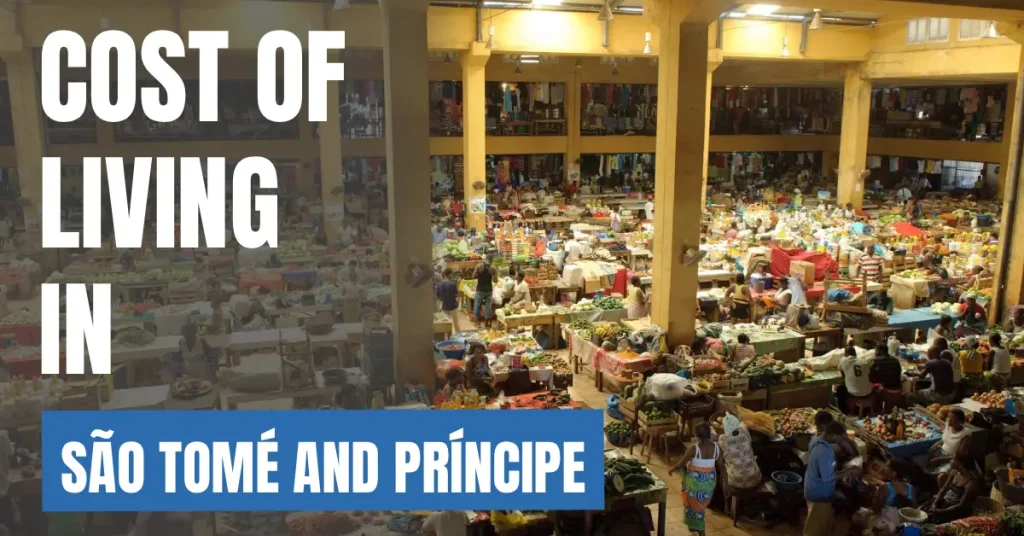
Cost of Living in São Tomé and Príncipe 2026: Rent, Food, Salaries and Monthly Expenses
The cost of living in São Tomé and Príncipe depends heavily on housing, imported products, electricity, transport and healthcare needs. Although modest local accommodation and fresh produce can be relatively affordable, the country is not automatically inexpensive for foreign residents expecting modern apartments, reliable internet, imported groceries and international-standard services.
On this pageTable of Content
For planning purposes in 2026, a budget-conscious single renter may need approximately STN 12,000 to STN 18,000 per month, while someone seeking more comfortable accommodation and services may need STN 20,000 to STN 35,000 or more. A family of four could require STN 35,000 to STN 65,000 or more, especially with private education, medical insurance and regular transport. These are indicative planning ranges, including rent, rather than verified national averages.
The main challenge is affordability relative to local earnings. São Tomé and Príncipe experienced 11% annual inflation in 2025, according to the World Bank, and continued facing high inflation and an electricity crisis in 2026. Imported goods and dependable utilities can make household costs more difficult to manage than headline prices suggest.
Also Explore: Cost of Living in San MarinoCost of Living in São Tomé and Príncipe at a Glance
São Tomé and Príncipe uses the dobra (STN). The Central Bank's exchange-rate information dated 6 November 2026 shows a fixed reference rate of EUR 1 = STN 24.50. All primary estimates below use local currency. Actual prices vary substantially according to property quality, availability, location and whether services are aimed at local residents or international visitors.
| Expense | Estimated Cost (STN) | Frequency |
|---|---|---|
| Budget-conscious single person, including rent | 12,000–18,000 | Monthly |
| Moderate single person, including rent | 20,000–35,000 | Monthly |
| Couple, including rent | 22,000–40,000 | Monthly |
| Family of four, including rent | 35,000–65,000+ | Monthly |
| One-bedroom apartment outside central São Tomé | 3,000–6,000 | Monthly rent |
| One-bedroom apartment in central São Tomé | 4,000–9,000 | Monthly rent |
| Three-bedroom apartment | 7,000–25,000+ | Monthly rent |
| Groceries for one adult | 3,000–7,000 | Monthly |
| Basic household utilities | 1,200–5,000+ | Monthly |
| Broadband internet | 1,300–1,600 | Monthly |
| Transport for a modest commuting routine | 500–2,000 | Monthly |
| Restaurant meal | 200–600+ | Per person |
| Statutory minimum monthly wage | 3,000 | Monthly |
Important: These household budget figures are illustrative estimates, not official consumer expenditure statistics. Rent and internet ranges are informed by small-sample market data, while expenditure totals are constructed from the spending categories discussed below. Private schooling, medical evacuation cover, frequent private taxis and imported goods can raise costs considerably.
How Much Does It Cost to Live in São Tomé and Príncipe Per Month?
A single adult living modestly in rented accommodation may plan around STN 12,000 to STN 18,000 per month including rent. A more comfortable lifestyle can require STN 20,000 to STN 35,000, while a family of four may need STN 35,000 to STN 65,000 or more.
Excluding rent, a single adult using mostly local groceries and shared transport might budget approximately STN 6,000 to STN 11,000 monthly. Someone using more imported products, restaurants, private transport and higher-level connectivity could spend STN 11,000 to STN 20,000 or more before rent.
There is an important distinction between the cost of maintaining a modest local lifestyle and that of maintaining an expatriate lifestyle. The latter may require backup electricity, reliable internet, appropriate insurance, more expensive housing and occasional overseas travel for medical treatment.
The country's continuing energy difficulties and elevated inflation mean that budgeting with a financial buffer is more sensible than relying on the lowest advertised prices.
Housing and Rent Prices in São Tomé and Príncipe
Rent is one of the largest expenses for newcomers. A basic one-bedroom home outside central São Tomé may cost approximately STN 3,000 to STN 6,000 monthly, while centrally located, better-equipped or furnished properties can cost substantially more.
Average Apartment Rent
| Property Type | Indicative Monthly Rent (STN) |
|---|---|
| One-bedroom, outside city centre | 3,000–6,000 |
| One-bedroom, city centre | 4,000–9,000 |
| Three-bedroom, outside city centre | 7,000–15,000 |
| Three-bedroom, city centre | 10,000–37,000+ |
These ranges reflect the broad spread in Numbeo's June 2026 São Tomé observations, rounded into practical local-currency planning bands. Numbeo reported an average central one-bedroom rent of approximately EUR 254, equivalent to around STN 6,200, and an average outside-centre one-bedroom rent of EUR 174, around STN 4,300.
However, the data contained only five contributors, making its averages unsuitable as definitive measures of the whole rental market. A small number of furnished, premium or unusually inexpensive properties can substantially affect the reported figures.
What Affects Rental Prices?
- Location: Properties close to the capital's main businesses, markets and services may command higher rents.
- Condition: Furnished homes with modern bathrooms, secure access and dependable water supplies may cost more.
- Electricity: Accommodation with generators, solar power or backup electricity can carry a premium.
- Internet: Homes with an established, reliable connection may be more attractive to remote workers.
- Rental terms: Deposits, advance payments and utility responsibilities should be confirmed before signing an agreement.
New arrivals should inspect a property, test its electricity and water supply, and establish whether maintenance, security, furniture and internet are included. People interested in buying property should obtain local legal advice about ownership, land tenure and foreign investment permissions instead of assuming the rules resemble those in their home country.
Grocery and Food Prices in São Tomé and Príncipe
Groceries for one adult may cost around STN 3,000 to STN 7,000 per month when meals are mainly prepared at home. Fresh local produce and seasonal foods can help control spending, while imported meat, dairy products and packaged goods can be expensive.
| Grocery Item | Indicative Price (STN) |
|---|---|
| Milk, 1 litre | 29–37 |
| Bread, 500 g | 14–46 |
| Rice, 1 kg | 23–61 |
| Eggs, 12 | 49–112 |
| Chicken fillets, 1 kg | 368–490 |
| Beef, 1 kg | 220–613 |
| Bananas, 1 kg | 25–30 |
| Apples, 1 kg | 50–123 |
| Potatoes, 1 kg | 49–80 |
| Bottled water, 1.5 litres | 20–74 |
The table converts the June 2026 Numbeo country-level observations from euros into dobras using the official peg. It is a market reference rather than a guaranteed price list. Local market prices, product quality and import availability can produce different results.
One important discrepancy with older cost guides concerns meat. Some older online estimates suggest substantially cheaper chicken and beef than the June 2026 crowdsourced observations. Because the country has a small and unevenly supplied market, shoppers should obtain current prices from local vendors rather than relying on either source as universally representative.
How to Save Money on Groceries
- Buy seasonal fruit, vegetables and locally available fish where suitable.
- Compare open-market prices with supermarket and imported-product prices.
- Plan meals around ingredients readily available on the islands.
- Allow flexibility when imported brands are unavailable.
- Reserve part of the grocery budget for unexpected price increases.
Restaurant Prices and Eating Out
Eating out can range from inexpensive local food to significantly more expensive tourist-oriented restaurants. A practical planning allowance for a restaurant meal is approximately STN 200 to STN 600 or more per person, depending on the venue.
| Food or Drink | Indicative Cost (STN) |
|---|---|
| Inexpensive restaurant meal | 196–613 |
| Mid-range three-course meal for two | 826–1,225 |
| Fast-food-style combo meal | 124–245 |
| Cappuccino | 49–55 |
| Soft drink, 330 ml | 35–49 |
These approximate figures reflect Numbeo's June 2026 observations, including restaurants that may serve visitors and higher-income customers. They should not be interpreted as the cost of every traditional local meal.
Cooking most meals at home is generally the more controllable option for long-term residents. Frequent dining at international hotels and tourist restaurants can create a much higher monthly food budget than eating primarily from local markets.
Electricity, Water and Utility Costs
Household utilities can require approximately STN 1,200 to STN 5,000 or more per month, depending on property size, consumption, cooling needs and backup power arrangements. Electricity reliability is as important as the amount shown on a monthly bill.
Numbeo's June 2026 dataset reported basic utilities for an 85-square-metre apartment at approximately EUR 204, equivalent to around STN 5,000. This is substantially higher than many older simplified estimates and should be treated cautiously because of the limited sample.
The World Bank's October 2026 economic assessment identifies the continuing electricity crisis as a major obstacle to economic activity and living standards. This makes backup power and the practical consequences of outages especially relevant for new residents.
Hidden Utility Expenses
- Generator fuel, servicing or replacement parts.
- Battery or solar backup systems.
- Additional drinking-water purchases.
- Water storage or pumping expenses where necessary.
- Damage or disruption caused by power interruptions.
Before renting, ask about recent outages, generator availability, electricity billing and water reliability. Remote workers and families relying on medical equipment should place particular importance on these questions.
Internet and Mobile Phone Costs
Broadband internet may cost roughly STN 1,300 to STN 1,600 per month for the type of higher-speed package represented in Numbeo's June 2026 dataset. Mobile plans with substantial data allowances were reported at approximately STN 450 to STN 860 monthly.
These figures do not guarantee that a connection of the advertised speed is available at every address. Installation charges, network congestion, connection quality and power interruptions can affect the service a household actually receives.
Remote workers should test upload speed, latency, connection stability and mobile backup coverage before committing to accommodation. Depending on the work involved, maintaining two connectivity options may be more important than selecting the cheapest package.
Transportation Costs in São Tomé and Príncipe
Public transport is not free, and São Tomé and Príncipe does not operate a conventional nationwide public bus or metro network. Shared taxis and motorcycle taxis are the principal forms of public transport, while private car hire and arranged drivers are common alternatives.
According to the UK Foreign, Commonwealth and Development Office and the Government of Canada, shared taxis and motorcycle taxis can present safety concerns. Visitors should confirm fares in advance and use suitable, reputable transport arrangements.
| Transport Expense | Indicative Cost (STN) |
|---|---|
| Local shared-transport journey | 23–30 |
| Private taxi, indicative starting charge | 37 |
| Private taxi, indicative per-kilometre rate | 40–74 |
| Petrol, 1 litre | 29–40 |
| Modest monthly transport allowance | 500–2,000 |
Journey-price indications are converted from the June 2026 Numbeo dataset. Private fares may be negotiated rather than metered, and published journey entries should not be mistaken for an official fare schedule.
Road conditions can deteriorate outside the capital, particularly in heavy rain. Residents who regularly travel between communities or work in rural locations should consider the cost and reliability of a vehicle, fuel, maintenance and occasional private transport.
Travel between São Tomé and Príncipe is an additional expense and should not be included in an ordinary local commuting allowance. Anyone who expects frequent island-to-island travel should price each trip separately.
Healthcare Costs and Medical Insurance
Healthcare is not universally free for all users in São Tomé and Príncipe. Public facilities exist, but patients may face charges, and access to specialised treatment, medicines and emergency services is limited.
The United States Department of State advises that patients can incur expenses even in public facilities, with cash payment often required. The UK government similarly warns that serious medical conditions may require evacuation abroad.
Older online cost guides sometimes suggest consultation charges of around STN 120 to STN 470 and insurance premiums below STN 1,000 per month. These should not be treated as verified nationwide tariffs or comprehensive insurance quotations.
Medical insurance costs depend on age, previous health conditions, coverage limits, exclusions and whether medical evacuation is included. A low-cost policy covering basic consultations may offer inadequate protection against the largest potential medical expense.
Healthcare Expenses to Consider
- Consultations, diagnostic tests and medicines.
- Private clinic appointments and specialist services.
- Routine dental and vision care.
- Travel to another country for treatment unavailable locally.
- Hospital deposits, emergency travel and medical evacuation.
Residents with ongoing health needs should assess local access to their required medicines and treatments before relocating. Expats should request written insurance quotations that clearly explain emergency care, overseas referral and evacuation coverage.
Education and Childcare Costs
São Tomé and Príncipe provides a legal framework for free basic education, but families may still face expenses for school supplies, uniforms, transport, meals and childcare.
UNESCO's 2026 country review notes that the 2018 education framework guarantees nine years of free and compulsory primary and lower secondary education, along with one year of free and compulsory pre-primary education. The legal framework principally addresses citizens, so foreign families should confirm admission rules and eligibility directly.
Private childcare and school options can be considerably more expensive. Numbeo's June 2026 observations report full-day private preschool fees at approximately EUR 204 per month, equivalent to around STN 5,000 per child. Its international-primary-school estimate is approximately EUR 1,960 per year, or around STN 48,000 annually.
These figures are based on a very small contributor pool and are not verified fees for particular institutions. International schooling options are limited, so parents should confirm curriculum, availability, language of instruction and actual tuition directly with schools.
Families should also distinguish education fees from childcare costs. A household requiring full-time childcare, private tuition and transport may spend far more than a family using accessible public education.
Average Salaries and Minimum Wage in São Tomé and Príncipe
The minimum monthly wage reported for both the private sector and civil servants is STN 3,000, based on the 2025 changes listed by WageIndicator and recorded as valid in June 2026.
| Employment Category | Minimum Monthly Wage | Effective Date |
|---|---|---|
| Private sector | STN 3,000 | 1 September 2025 |
| Civil servants | STN 3,000 | 1 October 2025 |
This is the latest sector-specific minimum-wage schedule verified in the sources reviewed for this article. It should be checked again against official labour notices before being used for payroll or legal compliance.
What Is the Average Salary?
Reliable nationwide average salary figures are difficult to establish from available public market surveys. Numbeo's June 2026 city-level dataset indicated an average net monthly salary of approximately EUR 232.50, or STN 5,700. However, the separate country-level dataset suggested approximately EUR 388.75, or STN 9,500.
This significant difference demonstrates why neither figure should be presented as a definitive national average. Both come from a very small self-reported sample, and the observations may not adequately represent informal workers, rural households or different employment sectors.
The World Bank's October 2026 economic assessment also highlights weak employment growth and an ongoing energy crisis. Finding a well-paid local job may therefore be more challenging than simply estimating the monthly cost of living.
What Salary Is Needed to Live Comfortably?
A single person renting independently may target approximately STN 20,000 to STN 35,000 in monthly take-home income for a more comfortable, internationally oriented lifestyle. A family of four could need STN 35,000 to STN 65,000 or more, depending on education, insurance and housing requirements.
These are lifestyle-based budget targets, not typical local salaries. The gap between the minimum wage and independently rented accommodation is substantial. Even the lower end of the illustrative single-person budget is four times the reported minimum monthly wage.
Taxes and Their Effect on Everyday Living Costs
São Tomé and Príncipe introduced value-added tax in June 2023. The International Monetary Fund documented a standard VAT rate of 15% and a reduced rate of 7.5% for qualifying basic food products, alongside exemptions and separate treatment for certain items.
VAT can affect the final consumer price of groceries, household goods and services. Imported items may also reflect customs duties, transport costs and distributor margins, meaning the retail price cannot be explained by VAT alone.
Employees and self-employed residents may have additional income-tax or social-contribution obligations depending on their legal and employment circumstances. Net income should therefore be used for household budgeting rather than assuming gross salary is entirely available to spend.
Before relocating or starting a business, obtain current guidance from a qualified local tax professional. Residency status, income source and international tax obligations can materially change a person's situation.
Realistic Monthly Budgets for São Tomé and Príncipe
The following examples show how monthly expenses can add up in practice. They are illustrative budgeting scenarios based on the price evidence above, not measured household averages. Every total includes rent, utilities, groceries, transport, communication, a routine healthcare allowance and miscellaneous spending.
| Monthly Expense (STN) | Budget Single | Moderate Single | Couple | Family of Four |
|---|---|---|---|---|
| Rent | 4,000 | 7,000 | 8,000 | 15,000 |
| Utilities | 1,200 | 3,000 | 3,500 | 5,000 |
| Groceries | 3,500 | 5,000 | 7,000 | 13,000 |
| Transport | 700 | 1,500 | 2,000 | 4,000 |
| Internet and mobile | 1,500 | 2,000 | 2,200 | 2,500 |
| Routine healthcare allowance | 500 | 1,000 | 1,500 | 2,500 |
| Dining and leisure | 800 | 2,500 | 3,000 | 5,000 |
| Other household expenses | 800 | 2,000 | 2,500 | 4,000 |
| Estimated Monthly Total | 13,000 | 24,000 | 29,700 | 51,000 |
Budget-Conscious Single Person: STN 13,000
This assumes an inexpensive one-bedroom property outside central São Tomé, mostly home-cooked meals, limited restaurant visits, shared transport and basic utility usage. It does not include major medical bills, international flights or the purchase of a vehicle.
Moderate Single Person: STN 24,000
This assumes better accommodation, a wider grocery selection, more frequent restaurant visits and greater spending on utilities and communications. It is suited to someone with a stable income above typical lower-wage earnings.
Couple: STN 29,700
Two adults share accommodation and certain utility costs while spending more on groceries, transport and personal needs. The example assumes no dependent children and no unusually expensive insurance or medical requirements.
Family of Four: STN 51,000
This represents two adults and two children renting a larger property. It assumes no substantial private-school tuition or full-time private childcare fees. Those costs, along with comprehensive international medical insurance, can increase the total considerably.
Budget limitation: The healthcare entries are routine spending allowances, not insurance quotations. These monthly examples also exclude initial deposits, school admission fees, major travel, vehicle purchases and medical evacuation. Households should maintain a separate emergency fund.
Cost Differences by City, District and Island
São Tomé city is the main reference point for available rental and consumer-price data. Costs elsewhere can differ because of accommodation availability, transport needs, local infrastructure and access to imported products.
São Tomé City
The capital has the country's principal commercial services, healthcare facilities and broader accommodation market. Some central properties cost more, but residents may benefit from shorter journeys to shops, offices and essential services.
Trindade and Nearby Residential Areas
Residential areas outside the capital may offer opportunities for less expensive accommodation, but commuting and utility reliability must be evaluated. An apparently cheaper property can become less economical if daily transport is difficult.
Rural São Tomé
Rural living may reduce access to some local goods or accommodation costs, but it can increase travel time, vehicle expenses and dependence on supplies brought from elsewhere. There is insufficient representative rental data to publish reliable district-wide price rankings.
Príncipe Island
Príncipe has a smaller market and fewer accommodation and retail options. Limited supply and the additional cost of moving goods and people between islands can make certain products and services expensive.
A lower population does not automatically mean lower living costs. Prospective residents should obtain property, grocery, internet and transport quotations specifically for Príncipe rather than applying São Tomé city averages.
How Does São Tomé and Príncipe Compare With Other Island Countries?
São Tomé and Príncipe can offer lower-cost local living than some better-developed island destinations, but reliable direct comparisons are difficult because available prices cover different types of accommodation and lifestyles.
São Tomé and Príncipe vs Cape Verde
Both countries are small island economies where imports, tourism and transport can influence living costs. However, housing markets, infrastructure, employment opportunities and island-to-island connections differ. A comparison should use equivalent cities, accommodation standards and spending categories rather than a single national cost-of-living index.
São Tomé and Príncipe vs Seychelles
Seychelles generally caters to a larger international tourism market, with different housing and service expectations. São Tomé and Príncipe may be less expensive for modest local living, but this should not be interpreted as a verified percentage saving across every expense.
São Tomé and Príncipe vs Mauritius
Mauritius has a larger economy and broader range of professional, educational and commercial services. São Tomé and Príncipe may offer lower entry-level accommodation costs in some circumstances, while infrastructure limitations and imported-product prices can reduce the apparent savings.
Because harmonised, representative 2026 household expenditure comparisons were not established for these countries, no precise national price ranking is claimed here.
Living Expenses That New Residents Often Overlook
Beyond everyday expenses, relocation to an island economy can involve additional costs that do not appear in standard consumer-price tables.
- Rental deposits and advance rent: Initial housing costs may exceed one month's rent.
- Electricity backup: Generators, batteries and fuel can become recurring expenses.
- Medical evacuation: Serious treatment abroad can create substantial financial exposure without appropriate insurance.
- Imported equipment: Electronics, replacement parts and specialist supplies may be costly or difficult to source.
- International travel: Flights and baggage costs can make visits home expensive.
- School arrangements: Private tuition, transport, uniforms and childcare require separate planning.
- Transport: Private vehicles, maintenance and negotiated taxi fares can exceed basic commuting estimates.
- Connectivity: Backup mobile data or additional internet solutions may be necessary for remote work.
- Currency and payments: Bank fees, cash access and foreign-currency payment arrangements should be checked.
- Inflation: A household budget should have capacity to absorb increases in food, fuel and service prices.
Cost of Living vs Residency Financial Requirements
A monthly living budget is not the same as the financial evidence required for legal residence in São Tomé and Príncipe. Immigration eligibility depends on nationality, entry purpose, length of stay and the applicable permit category.
The living-cost estimates in this article cannot establish whether an applicant satisfies any visa, residence permit or financial-support requirement. No single universal minimum monthly income threshold for all foreign residence applicants was verified in the reviewed sources.
Prospective residents should contact the relevant São Tomé and Príncipe immigration authority or diplomatic mission to confirm current documentation, permit fees, permitted activities, proof-of-income requirements and renewal conditions. Tourists should not assume that an ordinary visitor entry permission authorises long-term residence or employment.
Is São Tomé and Príncipe Affordable for Expats?
São Tomé and Príncipe can be affordable for expatriates with a stable foreign income, flexible accommodation expectations and modest consumption habits. However, it may be financially challenging for people relying on local wages or requiring frequent imported products and specialist services.
For remote workers, reliable electricity and internet are major considerations. For retirees, access to healthcare and suitable insurance may be more important than low rents. Families should evaluate school availability before focusing on headline accommodation prices.
The World Bank's 2026 assessment of weak employment conditions also suggests that securing local work should not be assumed. Anyone moving without an existing income source should investigate realistic job opportunities before committing to long-term housing.
Overall affordability depends less on whether individual items appear cheap and more on the relationship between reliable household income, housing standards, essential services and financial risk.
Final Verdict: Is São Tomé and Príncipe Expensive in 2026?
São Tomé and Príncipe can provide relatively affordable local living, but the overall cost of maintaining a comfortable home is higher than simple food-and-rent comparisons may suggest.
A single renter may plan around STN 12,000 to STN 18,000 monthly for a budget-conscious lifestyle, while a moderate single-person budget may rise to STN 20,000 to STN 35,000. A family of four may need STN 35,000 to STN 65,000 or more, particularly where private education and healthcare arrangements are necessary. These estimates include rent and remain sensitive to individual needs.
With a reported minimum monthly wage of STN 3,000, independent rental housing is difficult to afford on minimum earnings alone. Rising prices, electricity disruptions and limited specialised healthcare further affect financial security.
For prospective residents, the most practical approach is to obtain current housing quotations, verify utilities and internet, arrange suitable medical cover and compare the full monthly cost against dependable take-home income before relocating.
Sources and Methodology
Last reviewed: 7 November 2026.
This guide combines the existing Visaboards country article with international economic assessments, central-bank currency information, labour-market references, official travel and healthcare guidance, education documentation and limited crowdsourced consumer-price observations.
Local-currency conversions of euro-denominated market data use the fixed EUR 1 = STN 24.50 reference rate reported by the Central Bank on 6 November 2026. Individual prices and expenditure examples are rounded for readability.
Numbeo's June 2026 São Tomé observations contained only five contributors, making the dataset particularly sensitive to unusual transactions, property types and respondent characteristics. These figures are indicative, not a statistically representative national household survey. The budget tables are independently constructed scenarios and should not be attributed to an official statistical authority.
Different sources sometimes report substantially different rents, salaries, restaurant prices and grocery costs. These variations reflect limited samples, differences in market segments and possible price changes. The estimates in this guide should therefore be checked against current local quotations.
Sources Used
- Visaboards: Original Cost of Living in São Tomé and Príncipe Guide
- Central Bank of São Tomé and Príncipe: Exchange Rates
- World Bank: São Tomé and Príncipe Country Overview
- World Bank: October 2026 Macro Poverty Outlook
- Numbeo: São Tomé City Consumer Prices, June 2026
- Numbeo: São Tomé and Príncipe Country Prices, June 2026
- WageIndicator: Minimum Wage Information
- UK Government: Safety and Public Transport
- UK Government: Healthcare and Medical Evacuation
- Government of Canada: Transport and Medical Services
- US Department of State: Medical Payments and Insurance
- UNESCO: Education Framework Review, 2026
- International Monetary Fund: Country Report 25/1, VAT Framework
Frequently Asked Questions
How much does it cost to live in São Tomé and Príncipe per month?
A budget-conscious single renter may need approximately STN 12,000 to STN 18,000 monthly, including rent. A more comfortable single-person lifestyle can require STN 20,000 to STN 35,000. These are planning estimates rather than official national averages. Accommodation, imported groceries, internet, transport and healthcare needs are the main factors influencing the final total.
How much is monthly rent in São Tomé and Príncipe?
A one-bedroom apartment outside central São Tomé may cost around STN 3,000 to STN 6,000 monthly, while central properties may cost STN 4,000 to STN 9,000 or more. Larger homes can be substantially more expensive. These figures are broad market estimates informed by limited 2026 crowdsourced observations, so applicants should obtain current property quotations before budgeting.
What salary is needed to live comfortably in São Tomé and Príncipe?
For an independently renting single adult, approximately STN 20,000 to STN 35,000 in monthly take-home income may support a more comfortable lifestyle. Families may need STN 35,000 to STN 65,000 or more. These are household expenditure targets, not typical local salaries. Actual needs depend heavily on rent, dependants, insurance and private education.
What is the minimum wage in São Tomé and Príncipe in 2026?
The latest verified WageIndicator schedule lists a minimum monthly wage of STN 3,000 for both private-sector workers and civil servants. The private-sector rate became effective on 1 September 2025, and the civil-service rate on 1 October 2025. This amount is significantly below the illustrative monthly cost of independent rental accommodation and ordinary household expenses.
Is healthcare free in São Tomé and Príncipe?
No, healthcare should not be assumed to be universally free. Public services exist, but patients may incur treatment charges, and cash payment can be required. Specialised services and medicines may be unavailable, while serious conditions can require medical evacuation abroad. Foreign residents should investigate appropriate healthcare arrangements and obtain insurance that clearly addresses emergency treatment and evacuation.
Is public transportation free in São Tomé and Príncipe?
No. Public transport primarily consists of shared taxis and motorcycle taxis rather than a free public bus or metro system. Prices depend on the journey and the arrangement with the driver. Official foreign travel guidance raises safety concerns about some vehicles, so residents should agree fares in advance and choose appropriate transport arrangements.
How much does a family of four need in São Tomé and Príncipe?
A family of four may need approximately STN 35,000 to STN 65,000 or more each month including rent. An illustrative household budget totals STN 51,000 with accommodation, groceries, utilities, transport, communication and everyday personal spending. Private-school tuition, full-time childcare, comprehensive medical insurance and significant travel expenses are not included in that example.
Are groceries expensive in São Tomé and Príncipe?
Locally available produce can be relatively affordable, but imported groceries can be costly. A single adult preparing most meals at home may budget approximately STN 3,000 to STN 7,000 monthly. Prices vary with product availability, seasonal supply and retailer type. Meat, dairy products and imported packaged foods may have a particularly large effect on grocery spending.
Which areas are cheapest to live in São Tomé and Príncipe?
Residential areas outside central São Tomé may offer lower rents than some city-centre properties, but there is not enough representative data to identify a definitive cheapest district. Trindade and other nearby residential communities may be worth comparing. Transport requirements, utility reliability and access to shops should be considered alongside the rent. Príncipe should be evaluated separately because of its smaller market.
Is São Tomé and Príncipe cheaper than Seychelles or Mauritius?
São Tomé and Príncipe may be less expensive for some modest local living arrangements, particularly compared with higher-end tourist and expatriate housing in Seychelles or Mauritius. However, differences in infrastructure, imported-product costs and service availability can change the outcome. No reliable, fully comparable 2026 expenditure dataset was established to support a precise nationwide percentage difference.
Is São Tomé and Príncipe affordable for foreign residents and retirees?
It can be affordable for people with stable foreign income, flexible housing expectations and modest everyday spending. However, retirees should consider access to specialist healthcare, medicines and medical evacuation insurance. Remote workers should assess electricity and internet reliability, while families need to investigate school availability. The cost of maintaining these services can outweigh savings on basic housing or food.
How much money is required to obtain residency in São Tomé and Príncipe?
No universal minimum monthly income or bank-balance requirement for every foreign residence applicant was verified in the sources reviewed. Immigration requirements depend on nationality, residence category and intended activities. Monthly living-cost estimates do not establish immigration eligibility. Applicants should obtain current information about financial evidence, application fees and permits from the relevant São Tomé and Príncipe immigration authority or diplomatic mission.
Join the conversation
Have thoughts on this topic? Share them with others.
Ask questions, share experience, and learn from the Visaboards Community.