Cost of Living in Bhutan 2026 Guide for Expats and Travelers
Bhutan, the Land of the Thunder Dragon, is a Himalayan kingdom known for its breathtaking mountains, peaceful lifestyle, and focus on Gross National Happiness. With a strong cultural identity, environmentally conscious policies, and a slow-paced way of life, Bhutan attracts expats, students, remote workers, and families seeking a unique and balanced living experience. Understanding the cost of living in Bhutan helps newcomers prepare for a lifestyle that blends tradition with modern comforts.
Learn more about the country here: Bhutan.
Cost of Living in Bhutan: Summary Table
| Category | Estimated Cost (USD) | Estimated Cost (BTN) |
|---|---|---|
| Average Monthly Cost (Single Person) | $500 – $900 | BTN (varies) |
| Average Monthly Cost (Family of Four) | $1,200 – $2,200 | BTN |
| Rent Range | $200 – $600 | BTN |
| Food Cost (Monthly) | $150 – $250 | BTN |
| Transport Cost | $20 – $50 | BTN |
| Utilities | $40 – $80 | BTN |
| Healthcare | $5 – $20 per visit | BTN |
| Education | $300 – $1,200 annually | BTN |
| Miscellaneous Expenses | $20 – $60 | BTN |
Housing & Rent Prices in Bhutan
3.1 Apartment Rent (Monthly)
- 1-bedroom in city center: $300 – $450
- 1-bedroom outside center: $200 – $300
- 3-bedroom in city center: $450 – $700
- 3-bedroom outside center: $300 – $500
3.2 Buying Property
Foreigners are generally not allowed to buy property in Bhutan, preserving local ownership and cultural heritage. Long-term rentals remain the primary option for expats living in Bhutan.
Food & Grocery Costs
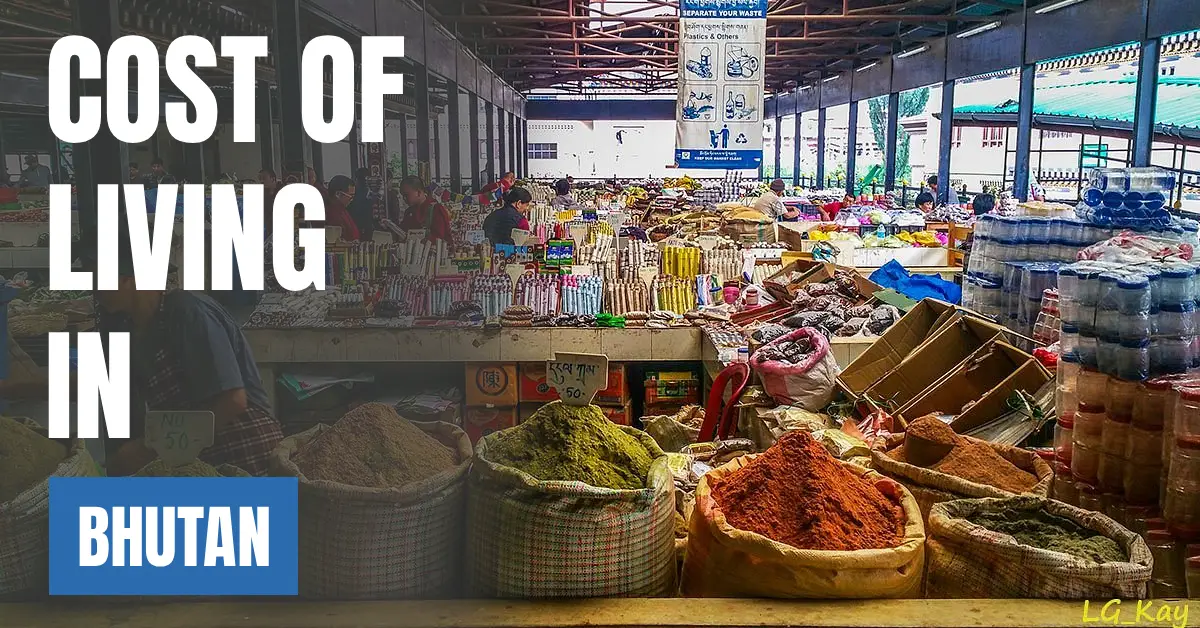
Groceries in Bhutan are moderately priced, especially local produce. Imported goods, dairy items, and packaged foods tend to be more expensive due to transportation costs.
- Milk (1 liter): $1.00 – $2.00
- Bread (loaf): $1.00 – $2.00
- Rice (1 kg): $0.80 – $2.00
- Eggs (12): $1.50 – $3.00
- Chicken (1 kg): $3.00 – $6.00
- Beef (1 kg): $5.00 – $10.00
- Apples (1 kg): $1.00 – $3.00
- Tomatoes (1 kg): $1.00 – $2.00
- Water (1.5 L): $0.50 – $1.50
- Soft drinks: $0.80 – $2.00
Estimated monthly grocery spend:
- Single person: $150 – $200
- Family of four: $250 – $350
Restaurant & Dining Costs
- Inexpensive restaurant meal: $2 – $5
- Mid-range restaurant meal (two people): $10 – $25
- Fast food combo: $3 – $5
- Coffee: $1 – $3
- Fresh juice: $1 – $2
Transportation Costs
- One-way local transport ticket: $0.20 – $0.40
- Monthly public transport pass: $10 – $20
- Taxi (per km): $0.30 – $0.70
- Fuel (per liter): $1.00 – $1.40
Optional vehicle-related costs:
- Car maintenance: $10 – $25
- Parking (monthly): $3 – $10
Utility Costs
- Electricity: $10 – $25
- Water: $3 – $7
- Gas: $5 – $10
- Internet: $20 – $40
- Mobile plan: $3 – $10
Healthcare Costs
Healthcare in Bhutan is subsidized, and public hospitals offer free basic services to locals. Foreigners may incur fees for some services, but costs remain affordable.
- General doctor visit: $5 – $10
- Specialist consultation: $10 – $20
- Medicines: $1 – $5
- Private clinic services: variable
Education Costs
- Public schools: free for Bhutanese citizens
- Private schools: $300 – $1,200 annually
- Higher education: varies by program and institution
Entertainment & Lifestyle Expenses
- Gym membership: $10 – $20
- Movie ticket: $2 – $5
- Hiking/trekking permits: $5 – $20
- Cultural events: $5 – $15
- Nightlife: limited but inexpensive
Cost of Living for Different Groups
11.1 Cost of Living for Singles
Singles typically need $500 – $900 monthly depending on lifestyle and housing.
11.2 Cost of Living for Couples
Couples can live comfortably on $800 – $1,500 per month.
11.3 Cost of Living for Families
A family of four generally spends $1,200 – $2,200 including food, rent, and schooling.
11.4 Cost of Living for Students
Students typically spend $300 – $500 per month when living modestly.
11.5 Cost of Living for Expats
Expats should expect to spend $800 – $1,600 depending on their city and lifestyle preferences.
Comparison With Other Countries
- Bhutan vs Nepal: Bhutan is more expensive overall.
- Bhutan vs India: India is cheaper for almost all living expenses.
- Bhutan vs Sri Lanka: Bhutan remains more affordable for healthcare and education.
Pros & Cons of Living in Bhutan
Pros
- Peaceful and safe environment
- Strong cultural identity
- Clean air and natural beauty
- Affordable food and utilities
- High level of community well-being
Cons
- Limited entertainment options
- Foreigners cannot buy property
- Higher cost for imported goods
- Restricted entry for long-term stays
Final Summary
Bhutan offers a peaceful, culturally rich, and affordable lifestyle for those seeking a slower pace and nature-focused living. With low crime rates, moderate living expenses, and strong social values, it is ideal for expats, retirees, and families who appreciate sustainability and simplicity.
Explore more Bhutan resources:
- Best Cities in Bhutan
- Best Places to Visit in Bhutan
- Top Universities in Bhutan
- Best Shopping Malls in Bhutan
- Best National Parks in Bhutan
- Best Hospitals in Bhutan
- Best Hotels in Bhutan
FAQs
Is Bhutan expensive to live in?
No, Bhutan is moderately affordable, especially for rent, food, and transportation.
How much salary is enough to live comfortably in Bhutan?
A monthly income of $700 – $1,200 is typically enough for a comfortable lifestyle.
What is the average rent in Bhutan?
Rent generally ranges from $200 to $600 depending on location and apartment type.
Is Bhutan good for expats?
Yes, Bhutan is peaceful, safe, and culturally rich, making it appealing for expats who value simplicity.
Is Bhutan cheaper than Nepal?
No, Bhutan is slightly more expensive than Nepal, especially for rent and groceries.