
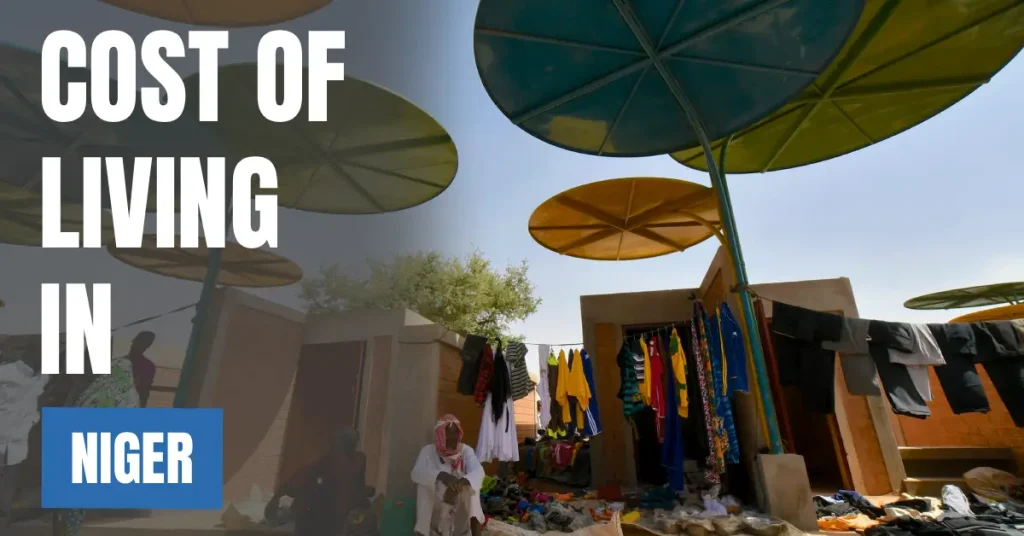
Cost of Living in Niger in 2026: Rent, Food, Salaries and Monthly Expenses
The cost of living in Niger in 2026 depends greatly on location, housing standards, household size and access to essential services. Niger has relatively inexpensive basic food and local transport, but private accommodation, reliable electricity, air conditioning, healthcare and security arrangements can make life in Niamey considerably more expensive than expected.
On this pageTable of Content
A budget-conscious single person renting modest accommodation might plan for approximately 220,000 to 400,000 West African CFA francs (XOF) per month, including rent. Someone requiring a furnished apartment, reliable utilities and privately arranged transport may need 450,000 to 800,000 XOF or more.
The distinction between local household spending and the cost of maintaining an expatriate lifestyle is particularly important. Niger's statutory minimum wage increased to 42,000 XOF per month from 1 January 2026, meaning even modest independent rental budgets can substantially exceed minimum-wage earnings.
There is also a major non-financial consideration. As of November 2026, the UK and US governments advise against travel to Niger because of terrorism, kidnapping and other security risks. These warnings apply to Niamey as well as other parts of the country. Low advertised living costs should not be interpreted as evidence that relocation is safe or practical.
Also Explore: Cost of Living in NepalCost of Living in Niger at a Glance
A single person renting privately may need approximately 220,000 to 800,000 XOF per month, depending on accommodation and lifestyle. Couples and families can share some housing costs, but childcare, education, healthcare and transport may increase their expenses significantly.
| Expense | Indicative Cost in XOF |
|---|---|
| Single person, monthly expenses excluding rent | 120,000 to 300,000 |
| Budget-conscious single person including rent | 220,000 to 400,000 per month |
| Moderate single person including rent | 450,000 to 800,000 per month |
| Couple including rent | 400,000 to 900,000 per month |
| Family of four including rent | 600,000 to 1,500,000 or more per month |
| Modest one-bedroom rental | 75,000 to 250,000 per month |
| Higher-standard Niamey one-bedroom rental | 300,000 to 800,000 per month |
| Groceries for one adult | 60,000 to 125,000 per month |
| Basic electricity and water allowance | 15,000 to 50,000 per month |
| Internet and mobile connectivity | 15,000 to 40,000 per month |
| Ordinary restaurant meal in Niamey | 1,500 to 6,000 |
| National minimum monthly wage | 42,000 |
| Official petrol reference price | 499 per litre |
Important: The household totals are illustrative planning ranges, not official national averages. The lower rental figures reflect modest accommodation assumptions, while higher figures reflect a limited sample of Niamey market observations. The monthly estimates do not automatically include international school tuition, major medical treatment, vehicle purchases or extensive security arrangements.
Sources include Numbeo's Niamey price observations, Livingcost's June 2026 estimates and government reporting on the national minimum wage.
How Much Does It Cost to Live in Niger Per Month?
For a single person, a practical monthly budget can range from approximately 220,000 XOF for a modest independent lifestyle to more than 800,000 XOF for higher-standard accommodation and services in Niamey.
These estimates differ substantially from the daily expenses of households living in shared accommodation, with family support or in rural communities. They should not be described as the amount every resident spends.
The biggest variable is housing. A person paying 100,000 XOF in monthly rent may have a manageable budget with locally purchased food and modest transport. Another person paying 500,000 XOF for an apartment will need much more income even before utilities and groceries are considered.
Independent data providers also report substantially different totals. Livingcost estimated Niamey's monthly spending for one person at approximately US$1,162 including rent in June 2026. CityCost reported approximately US$1,344 in November 2026. These figures reflect their own methods and lifestyle assumptions and should not be treated as representative household averages.
For someone planning a move, the most useful approach is to build a budget from actual rental offers, food purchases, healthcare arrangements and transport needs.
Housing and Rent Prices in Niger
Rental prices in Niger vary significantly. Modest apartments may be available for less than 150,000 XOF monthly, while selected higher-standard properties in Niamey can cost several times that amount.
Typical Monthly Rental Costs
| Accommodation | Indicative Monthly Rent |
|---|---|
| Modest one-bedroom outside central areas | 75,000 to 155,000 XOF |
| Modest one-bedroom in central areas | 125,000 to 250,000 XOF |
| Higher-standard Niamey one-bedroom outside centre | Approximately 300,000 XOF |
| Higher-standard Niamey one-bedroom in centre | 350,000 to 800,000 XOF |
| Three-bedroom outside central areas | 85,000 to 400,000 XOF |
| Three-bedroom in central Niamey | 150,000 to 800,000 XOF |
These figures come from different market observations and property categories, so they are not directly comparable averages. Numbeo's November 2025 Niamey dataset reported a central one-bedroom apartment around 550,000 XOF and an apartment outside the centre around 300,000 XOF. However, the dataset contained only 23 entries from two contributors during the preceding 12 months, making its figures especially uncertain.
Consequently, neither the inexpensive rental ranges nor the premium Niamey observations should be treated as guaranteed market prices.
Housing Costs in Niamey
Niamey has the greatest concentration of government offices, embassies, international organisations and commercial services. Accommodation with dependable power, water storage, air conditioning and additional security may command higher rents.
New residents should check whether electricity, maintenance, parking, security and backup power are included in the quoted rent.
Renting Outside Niamey
Housing in cities such as Maradi, Zinder and Tahoua may be less expensive for comparable local accommodation. However, reliable city-level rental data remains limited.
Lower rent must be considered alongside employment opportunities, local infrastructure and the current security situation. Travel to certain regions may be restricted or unsafe.
Buying Property
Property acquisition costs depend on location, building condition, land title and legal arrangements. Historic advertised price estimates are not reliable enough to establish a current nationwide cost per square metre.
Buyers should independently verify ownership records, legal fees, permitted ownership structures and property condition before proceeding.
Additional Housing Expenses
- Security deposits and advance rent.
- Agent or intermediary fees where applicable.
- Electricity connections and prepaid credit.
- Air conditioning, fans and backup power.
- Water storage and additional water deliveries.
- Internet installation and equipment.
- Building maintenance and security arrangements.
Food and Grocery Costs in Niger
A single adult may budget approximately 60,000 to 125,000 XOF monthly for groceries, depending on diet, shopping habits and access to local markets.
Staple foods can be relatively inexpensive, but imported products, packaged groceries and specialty ingredients may cost much more. Food prices also vary between cities, agricultural areas and locations affected by supply disruptions.
| Grocery Item | Indicative Price |
|---|---|
| Milk, 1 litre | 550 to 800 XOF |
| Bread, one loaf | 250 to 500 XOF |
| Rice, 1 kg | 500 to 900 XOF |
| Eggs, 12 | 750 to 1,250 XOF |
| Chicken, 1 kg | 1,500 to 2,500 XOF |
| Beef, 1 kg | 1,800 to 3,000 XOF |
| Onions, 1 kg | 350 to 600 XOF |
| Tomatoes, 1 kg | 400 to 750 XOF |
| Bottled water, 1.5 litres | 350 to 600 XOF |
These are approximate retail planning ranges carried forward from the existing Visaboards guide, rather than independently verified November 2026 shop prices. Actual prices can change with seasonality, transport conditions and product availability.
Food Inflation and Affordability
Niger's recent inflation pattern is not straightforward. In October 2026, the International Monetary Fund projected average inflation of approximately minus 2.5% for 2026, followed by 2.2% in 2027. Its outlook also noted pressure from higher transport costs, security challenges and climate shocks.
Lower average inflation does not mean all groceries have become cheaper or affordable for households. Seasonal food shortages and disruptions to supply routes can still affect particular markets.
See the IMF's October 2026 economic assessment.
Restaurant and Eating Out Costs
A casual meal in Niger may be inexpensive compared with restaurant prices in many wealthier countries. However, prices vary considerably between local eateries and restaurants serving international customers.
| Restaurant Expense | Indicative Price |
|---|---|
| Inexpensive restaurant meal in Niamey | 1,500 to 6,000 XOF |
| Mid-range meal for two | 18,000 to 30,000 XOF |
| Fast-food combination meal | 5,500 to 6,000 XOF |
| Cappuccino | 800 to 2,000 XOF |
| Soft drink at a restaurant | 500 to 1,000 XOF |
These ranges reflect the limited Niamey price observations available through Numbeo, updated in November 2025.
Someone buying a 3,000 XOF lunch on 20 working days would spend 60,000 XOF monthly on lunch alone. This highlights how regularly dining out can increase expenses relative to local income levels.
Utilities: Electricity, Water and Household Bills
Basic electricity and water expenses may be approximately 15,000 to 50,000 XOF monthly for a modest household, but larger properties and substantial air-conditioning use can cost considerably more.
Temperatures in Niger can be extremely high, making cooling an important household requirement. Power availability and reliability are also relevant, especially for home workers and people needing continuous refrigeration or medical equipment.
Households should account for:
- Electricity consumption and cooling.
- Water supply and storage.
- Generator fuel or backup-power equipment where needed.
- Waste collection and maintenance where charged separately.
Utility figures should always be checked against a particular property's equipment, supply arrangements and household occupancy.
Internet and Mobile Phone Costs
A basic internet and mobile connectivity allowance might be 15,000 to 40,000 XOF per month. Higher data usage, business connectivity requirements and equipment charges can increase this total.
The previous Visaboards guide reported monthly internet plans at approximately 12,000 to 25,000 XOF and mobile plans at 1,800 to 6,000 XOF. These are indicative historical estimates, not verified current offers from a telecommunications provider.
Internet access is particularly important for remote workers, humanitarian organisations and international businesses. Service coverage, actual speeds and power reliability should be checked at the intended address.
Someone requiring uninterrupted video calls or large file transfers should budget for backup connectivity as well as their primary internet connection.
Transportation Costs in Niger
Local transport can be relatively inexpensive, but vehicle reliability, road conditions and travel restrictions make transportation planning more complicated than comparing fares.
Taxis and Public Transportation
Traditional taxis, minibuses and other shared transport services operate in urban areas. Routes, fares and operating arrangements vary by city.
The earlier Visaboards guide estimated individual local trips at 120 to 300 XOF, but there is insufficient current evidence to confirm this as a standard national fare. Travellers should check prices locally rather than assuming a fixed nationwide public transport ticket or monthly pass exists.
For foreigners, safety considerations may make cheap public transportation unsuitable. The UK Foreign, Commonwealth and Development Office specifically advises avoiding buses and taxis where possible because of security and road-safety concerns.
Fuel Prices in Niger
The official reference price for petrol is 499 XOF per litre, while diesel is 618 XOF per litre. Niger's energy regulator publishes these prices, and the Nigerien Press Agency confirmed them again in October 2026.
| Fuel | Official Price Per Litre |
|---|---|
| Petrol, Super 91 | 499 XOF |
| Diesel | 618 XOF |
At 499 XOF per litre, 100 litres of petrol costs 49,900 XOF. This excludes maintenance, insurance, driver expenses and vehicle financing.
The government's fuel-price policy does not eliminate the possibility of shortages or additional costs arising from distribution disruptions.
Source: Niger's Energy Sector Regulatory Authority.
Intercity Travel and Security
Niger's large distances make intercity travel a significant logistical and financial consideration. Road conditions, security restrictions and fuel availability can all influence costs.
As of November 2026, the US State Department states that foreigners travelling outside Niamey require military escorts under Nigerien restrictions, and private travellers may need to pay for them. Such expenses are not reflected in ordinary transport-price databases.
See the US State Department's Niger travel advisory.
Healthcare Costs in Niger
Healthcare is not universally free in Niger. Certain maternal and child health services are covered by government exemption policies, but many patients still face direct payments for consultations, medicines, investigations and treatment.
Public Healthcare
Niger introduced a free healthcare policy in 2006 covering services for children younger than five and selected reproductive, maternal and other health services.
The World Health Organization explains that the programme has experienced financing and reimbursement difficulties, affecting the availability and delivery of services.
Its 2024 to 2025 country reporting also highlighted limited geographical access to healthcare and substantial direct household contributions to national health expenditure.
Therefore, the existence of a free healthcare policy does not guarantee that every eligible medicine or treatment will be immediately available without additional expense.
Private Healthcare
Private clinics may offer alternatives for routine consultations or specialist treatment, especially in Niamey. However, prices depend on the institution and type of care.
The earlier Visaboards article reported consultation estimates of 3,000 to 9,000 XOF for general practitioners and 6,000 to 15,000 XOF for specialists. These amounts should not be treated as verified 2026 tariffs.
More complicated investigations, hospital admissions and emergency treatment can cost considerably more.
Health Insurance
Health insurance should be evaluated based on actual benefits rather than low advertised premiums. International health plans may cover more than basic local insurance, particularly when medical evacuation is included.
Medical evacuation coverage is an important consideration because specialist treatment may not be available locally. Insurance policies may also exclude travel against official government warnings, making the policy's terms especially important.
Source: World Health Organization: Health Financing in Niger.
Education and Childcare Costs
Education costs depend on whether children attend public schools, private local schools or international institutions. These options have very different fee structures and availability.
Public Education
Niger's legal framework provides for free compulsory public education from approximately ages 6 to 16. However, families may still face expenses for uniforms, learning materials, transport and other necessities.
Access and quality differ significantly between areas. Some communities face shortages of schools, teachers and educational resources, while insecurity can disrupt attendance.
The legal right to free schooling should not be confused with guaranteed access to a conveniently located and fully resourced school.
See UNESCO's Niger education policy profile.
Private and International Schools
Private and international schools generally charge tuition, with substantial variation between institutions.
Numbeo's limited Niamey dataset reported international primary school tuition of approximately 1.7 million to 3.8 million XOF per child annually. This range is considerably higher than the 600,000 to 2.4 million XOF annual estimate in the original Visaboards article.
Because the underlying sample is small, neither range should be treated as a comprehensive current school-fee survey.
Parents should obtain quotations directly from schools, including registration, uniforms, meals, transport, examinations and additional activities.
Preschool and Childcare
Preschool is not covered by the same universal free-education guarantee as compulsory schooling.
Fees depend heavily on whether the service is local childcare, a private nursery or a higher-priced international preschool. The available market observations are insufficient to establish a dependable average monthly fee for Niger.
Salaries and Average Income in Niger
Salary levels vary substantially between agriculture, informal trading, public administration, private companies and international organisations.
There is no sufficiently representative current national average take-home salary available from the sources reviewed here to support a precise 2026 figure.
A small Numbeo sample previously reported average monthly net earnings around 226,667 XOF in Niamey, but this was based on very limited contributions and should not be presented as a national wage average.
Livingcost's June 2026 model estimated an after-tax salary equivalent to US$121 per month. The large difference between these datasets demonstrates the limitations of using crowdsourced figures to describe local earning power.
The World Bank identifies poverty and limited economic diversification as continuing challenges, even as oil production, agriculture and investment support growth.
Employment offers should be compared using actual take-home salary, housing benefits, insurance, transport arrangements and any allowances.
What Is the Minimum Wage in Niger in 2026?
Niger's statutory minimum wage, known as the Salaire Minimum Interprofessionnel Garanti (SMIG), is 42,000 XOF per month from 1 January 2026.
The government decided in October 2025 to raise the wage from 30,047 to 42,000 XOF, an increase of approximately 39.8%. An official explanation issued in November 2025 confirmed the implementation date of 1 January 2026.
| Minimum Wage Detail | Amount or Date |
|---|---|
| Previous monthly minimum wage | 30,047 XOF |
| New monthly minimum wage | 42,000 XOF |
| Increase | Approximately 39.8% |
| Effective date | 1 January 2026 |
At 42,000 XOF monthly, annual earnings at the minimum rate amount to 504,000 XOF before any applicable deductions.
Even relatively modest private accommodation costing 100,000 XOF monthly exceeds this minimum wage. Consequently, the statutory wage floor should not be interpreted as an amount sufficient to support independent rental accommodation and all ordinary household expenses.
Source: Agence Nigérienne de Presse, 21 November 2025.
Taxes and Take-Home Pay in Niger
Gross salary is not the same as disposable income. Employees may be subject to applicable employment income taxation and social-security contributions, depending on their status and earnings.
Niger should not be confused with Nigeria when researching tax rates. The countries have separate legal and taxation systems.
Current individual payroll-tax brackets could not be independently established with sufficient confidence from the sources reviewed for this update. It would therefore be misleading to publish a precise net-salary calculation based on unverified tax rates.
Employees should request an employer-issued payroll illustration showing gross salary, applicable deductions, benefits and expected net pay.
Foreign workers should also obtain advice on tax residence and the treatment of international employment income before relocating.
Realistic Monthly Budget Examples for Niger
The following estimates illustrate four household situations. They include rent and ordinary monthly spending but exclude major one-time relocation expenses, international school tuition and exceptional medical or security costs.
| Monthly Expense | Budget Single | Moderate Single | Couple | Family of Four |
|---|---|---|---|---|
| Rent | 100,000 | 300,000 | 350,000 | 450,000 |
| Utilities | 20,000 | 40,000 | 50,000 | 70,000 |
| Groceries | 65,000 | 100,000 | 160,000 | 250,000 |
| Transport | 15,000 | 45,000 | 65,000 | 100,000 |
| Internet and mobile | 15,000 | 30,000 | 35,000 | 45,000 |
| Healthcare provision | 10,000 | 30,000 | 45,000 | 80,000 |
| Dining, leisure and miscellaneous | 15,000 | 55,000 | 75,000 | 100,000 |
| Childcare provision | 0 | 0 | 0 | 60,000 |
| Total Monthly Budget | 240,000 XOF | 600,000 XOF | 780,000 XOF | 1,155,000 XOF |
Assumptions Behind the Budgets
Budget-conscious single person: Modest rental accommodation, local groceries, limited restaurant spending and inexpensive transportation. The healthcare provision is an illustrative reserve, not a confirmed insurance premium.
Moderate single person: Higher-standard accommodation in Niamey, more flexible transport, reliable connectivity and a larger healthcare allowance.
Couple: Shared accommodation, combined food expenses and increased transport, utility and personal-spending allowances.
Family of four: Larger accommodation, two adults, two children and a childcare provision. International tuition, comprehensive medical evacuation coverage and employer-required security services are excluded.
These are independently constructed planning calculations. They are not statistically representative surveys, and actual prices must be confirmed locally before making financial decisions.
Cost Differences Between Niamey, Maradi, Zinder and Agadez
Living costs vary across Niger, although credible and current city-by-city comparisons remain limited.
Niamey
Niamey provides a broader range of accommodation, commercial services, international organisations and private healthcare. Higher-standard housing can be particularly expensive relative to local wages.
Maradi
Maradi is an important commercial centre. Local housing and market shopping may cost less than equivalent premium accommodation in Niamey, but there is insufficient current evidence to quantify an average saving.
Zinder
Zinder has established commercial activity and traditional markets. Local expenses may differ from the capital, but infrastructure, healthcare access and housing quality remain important considerations.
Agadez
Agadez has a distinct desert environment and transport conditions. The cost and availability of goods, accommodation and services can be affected by distance and security arrangements.
The risks associated with travelling or living outside Niamey are especially relevant. Current official travel advice warns against travel throughout Niger, not simply selected border regions.
Is Niger Cheaper Than Nigeria, Ghana or Senegal?
Niger may offer lower prices for some basic goods and modest local accommodation, but it is not possible to conclude reliably that it is cheaper than Nigeria, Ghana or Senegal for every household.
Comparisons must account for specific cities, accommodation quality and household requirements. An inexpensive room in Zinder is not directly comparable with an apartment in central Lagos, Accra or Dakar.
Senegal and Niger both use the West African CFA franc, allowing direct currency comparisons without exchange-rate conversion. Nevertheless, local salary levels, infrastructure, services and housing choices differ.
Nigeria and Ghana use different currencies, so exchange-rate changes can influence comparisons made in US dollars.
Because Niger's available consumer-price samples are especially limited, current property quotations and comparable shopping baskets provide a better basis for evaluating costs than broad country rankings.
Expenses New Residents Often Overlook
Initial relocation expenses can be substantially higher than routine monthly living costs.
- Advance rent and deposits: Housing payments before moving into a property.
- Backup electricity: Generators, batteries, fuel and maintenance.
- Water arrangements: Storage equipment and emergency supply.
- Reliable connectivity: Backup mobile data or alternative internet services.
- Healthcare: Medicines, specialist consultations and emergency evacuation.
- Transport: Vehicle hire, drivers, servicing and insurance.
- Security: Property protection, movement restrictions and escorts where required.
- Education: Tuition, registration, uniforms and school transport.
- Immigration: Visa applications, document preparation and administrative charges.
- Emergency planning: Funds for urgent travel, temporary accommodation and unforeseen disruptions.
Cost of Living Versus Niger's Visa and Residency Requirements
A sufficient monthly budget does not automatically qualify a foreigner to live or work legally in Niger. Visa, residency and employment requirements depend on nationality, travel purpose and immigration category.
Niger's embassy in Turkey lists visa application documents including a valid passport, application form, photographs and supporting accommodation or invitation evidence.
For applications handled by that embassy, published fees effective from 15 September 2025 include EUR 60 for a one-month visa and EUR 120 for a three-month visa.
These are consular fees for a particular issuing post, not universal residency costs or national minimum-income requirements. Fees and exemptions may vary by nationality and consulate.
Applicants should obtain current rules from the relevant Nigerien embassy and confirm whether employment, residence or other authorisation is required.
Source: Embassy of Niger in Turkey: Visa Application Requirements.
Is Niger Affordable and Suitable for Expats?
Niger can offer relatively inexpensive basic goods and some modest local accommodation. However, cost alone is not a sufficient reason to recommend relocation.
Foreign residents may incur substantially higher expenses for suitable accommodation, reliable utilities, transport, healthcare, communications and security arrangements.
As of 4 November 2026, the UK government advises against all travel to Niger because of kidnapping, terrorism and political instability. The US State Department also maintains a Level 4 advisory, meaning do not travel.
People considering employment or humanitarian assignments should review the latest security assessments, insurance exclusions and their organisation's operational arrangements before accepting an assignment.
A monthly budget that appears affordable on paper may be unrealistic if essential services or safe transport cannot be secured.
See the UK government's travel advice and US State Department advisory.
Conclusion: How Much Money Do You Need to Live in Niger?
For budgeting purposes, a single person may plan around 220,000 to 400,000 XOF per month for modest independent living, while a higher-standard lifestyle in Niamey may require 450,000 to 800,000 XOF or more.
A couple may need approximately 400,000 to 900,000 XOF, and a family of four may require 600,000 to 1,500,000 XOF or more, particularly when private education, healthcare or secure accommodation is involved.
These estimates should be interpreted cautiously because available household-price datasets have small samples and use different assumptions. They are also far above Niger's new 42,000 XOF minimum monthly wage.
For anyone considering a move, the most important step is to confirm actual accommodation costs, essential services, income arrangements, insurance coverage and the current security situation. Niger's lower prices for some daily necessities do not necessarily translate into inexpensive or suitable living conditions for every household.
Sources and Methodology
This guide was reviewed on 4 November 2026. It uses the existing Visaboards cost-of-living article as a starting point, together with government announcements, international institutional publications, official travel advisories and independent consumer-price estimates.
Most prices are planning ranges, not audited market averages. The available Numbeo Niamey sample was especially small, containing 23 entries from two contributors in the 12 months preceding November 2025. Livingcost and CityCost use different models and may give materially different totals.
The latest national minimum wage and petrol reference prices were checked against Nigerien official reporting. Healthcare and education policies were assessed using WHO and UNESCO sources. The IMF's October 2026 economic assessment was used for inflation context.
Prices may change because of seasonal supply, inflation, fuel availability, exchange rates, local shortages or security-related disruptions. Household budgets were calculated as illustrative examples and should not be mistaken for government spending statistics.
- Visaboards: Existing Cost of Living in Niger Guide
- Numbeo: Cost of Living in Niamey
- Livingcost: Niamey Living Expenses, June 2026
- CityCost: Niamey Living Expenses, November 2026
- Agence Nigérienne de Presse: Minimum Wage Effective January 2026
- Niger Energy Sector Regulatory Authority: Fuel Prices
- IMF: October 2026 Niger Economic Assessment
- World Bank: Niger Country Overview
- WHO: Healthcare Financing and Coverage in Niger
- WHO: Niger Country Health Results
- UNESCO: Public Education and Preschool Policy in Niger
- Embassy of Niger in Turkey: Visa Requirements
- UK Foreign Office: Niger Travel Advice
- US State Department: Niger Travel Advisory
Frequently Asked Questions
How much does it cost to live in Niger per month?
A single person renting modest accommodation might need approximately 220,000 to 400,000 XOF monthly, including rent, food, utilities, connectivity and transport. Someone seeking higher-standard accommodation and services in Niamey may need 450,000 to 800,000 XOF or more. These are illustrative planning estimates, not official national averages, and do not necessarily include significant security, schooling or medical costs.
How much is rent in Niamey in 2026?
Modest one-bedroom accommodation may be budgeted at approximately 75,000 to 250,000 XOF monthly, while limited higher-standard Niamey observations report rents of 300,000 to 800,000 XOF. These ranges represent different accommodation categories and market sources. Reliable recent rental samples are limited, so prospective tenants should obtain actual quotations and confirm deposits, utility arrangements and property security.
What salary is needed to live comfortably in Niger?
A single person renting privately in Niamey may target 450,000 to 800,000 XOF in monthly take-home income for a moderate lifestyle, depending on accommodation, transport, healthcare and personal requirements. This is an illustrative affordability target, not an average local salary. Workers receiving housing, insurance or transport benefits may require less disposable income than people paying for everything independently.
What is the minimum wage in Niger in 2026?
Niger's statutory minimum wage increased to 42,000 XOF per month effective 1 January 2026. The government approved the increase in October 2025, raising the previous rate of 30,047 XOF by approximately 39.8%. This wage is substantially below many independent rental budgets in Niamey. Workers should verify applicable employment conditions and deductions when assessing their actual take-home pay.
Is healthcare free in Niger?
Healthcare is not universally free. Niger operates targeted healthcare exemptions covering children younger than five and selected maternal, reproductive and other services. Implementation has faced financing, medicine availability and reimbursement problems. Other patients may pay for consultations, medicines and treatment. Foreign residents should investigate health insurance, emergency treatment availability and medical evacuation coverage before considering relocation.
How much do groceries cost in Niger?
A single adult may budget approximately 60,000 to 125,000 XOF monthly for groceries, depending on diet, household habits and shopping location. Staples purchased in local markets may be comparatively inexpensive, while imported food can cost more. Prices also respond to seasons and supply disruptions. These estimates are planning ranges rather than verified November 2026 supermarket prices.
Is public transportation cheap in Niger?
Local shared transport can be inexpensive, but reliable current national fares are not available. Prices vary by city, operator and route. Security and road conditions are more important concerns for many foreign residents. Current UK travel advice recommends avoiding buses and taxis where possible. Those considering relocation should budget for suitable transportation rather than relying only on low advertised fares.
How much does a family of four need in Niger?
A family of four may need approximately 600,000 to 1,500,000 XOF or more monthly including housing and ordinary expenses. An illustrative budget of 1,155,000 XOF covers rent, utilities, groceries, transport, connectivity, healthcare provision, childcare and miscellaneous spending. International school tuition, emergency medical evacuation and substantial security arrangements could increase the total considerably.
Is Niger cheaper than Nigeria or Senegal?
Niger may be cheaper for certain basic foods and modest local housing, but reliable evidence is insufficient to establish that it is cheaper in every category. Costs depend on the cities and accommodation standards compared. Niamey, Lagos and Dakar have substantially different rental markets and living arrangements. Currency changes and income levels also affect the practical affordability of different countries.
Is Niger safe for expats in 2026?
Serious security risks remain throughout Niger, including Niamey. As of November 2026, both the UK and US governments advise against travel because of terrorism, kidnapping and other risks. Foreigners may face movement restrictions, and some journeys require official permission and security escorts. Anyone considering an assignment should consult current government travel advisories and review their employer's security arrangements.
Can foreigners live in Niger if they can afford the monthly expenses?
Being able to pay living expenses does not automatically qualify a foreigner for legal residence or employment in Niger. Visa and permit requirements depend on nationality, purpose and duration of stay. Applicants may need supporting documents, invitation letters and applicable consular fees. A personal monthly budget should not be confused with an official immigration financial threshold.
Join the conversation
Have thoughts on this topic? Share them with others.
Ask questions, share experience, and learn from the Visaboards Community.