
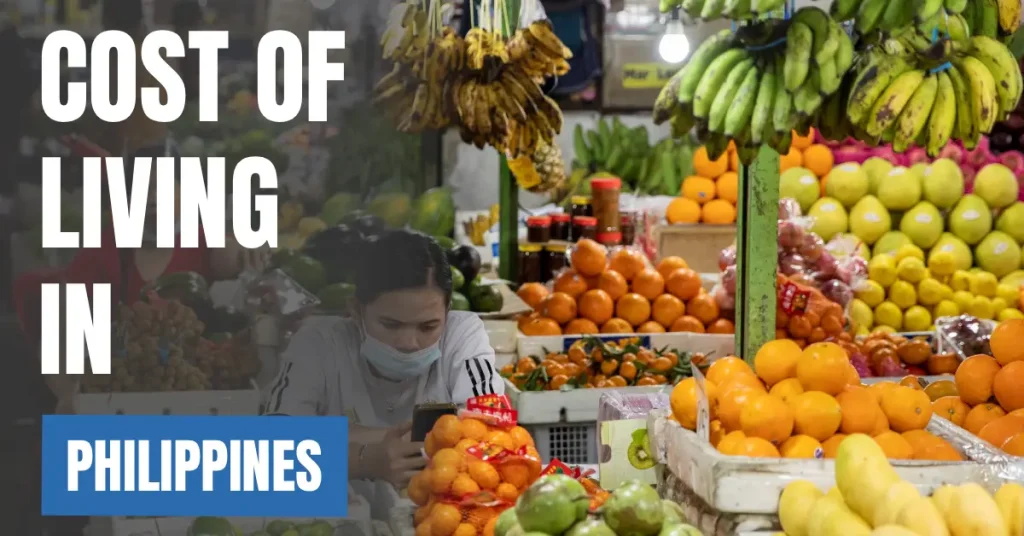
Cost of Living in the Philippines 2026: Rent, Salaries and Monthly Expenses
The cost of living in the Philippines in 2026 depends on your city, housing preferences, household size and lifestyle. A single person living economically may spend approximately PHP 25,000 to PHP 35,000 per month including rent, while someone renting a comfortable private apartment may need PHP 40,000 to PHP 65,000 or more. A family of four can require PHP 85,000 to PHP 150,000 or more, particularly when private education and higher housing costs are involved.
On this pageTable of Content
Living costs differ significantly between Metro Manila, Cebu, Davao, Baguio and smaller provincial cities. Premium neighborhoods in Makati, Bonifacio Global City (BGC) and central Manila can be considerably more expensive than residential areas outside major business districts.
Inflation is another important consideration. According to the Philippine Statistics Authority (PSA), national inflation reached 7.8% in October 2026, up from 7.2% in September. Transportation and housing-related costs were important contributors to the increase. This means households should avoid relying on outdated food, fuel and utility estimates.
This guide explains current living expenses in Philippine pesos (PHP), including accommodation, groceries, dining, utilities, internet, transportation, healthcare, education, wages and taxes. It also provides realistic monthly budget examples for individuals, couples and families considering living in the Philippines.
Also Explore: Cost of Living in PanamaCost of Living in the Philippines at a Glance
The following figures are broad planning ranges for 2026. They combine historical consumer-price observations, available market data and illustrative spending assumptions. They are not official nationwide minimum living-cost requirements.
| Expense | Estimated Cost (PHP) | Frequency |
|---|---|---|
| Budget-conscious single person, including rent | 25,000 to 35,000 | Monthly |
| Moderate single person, including rent | 40,000 to 65,000 | Monthly |
| Couple, including rent | 55,000 to 90,000 | Monthly |
| Family of four, including rent | 85,000 to 150,000+ | Monthly |
| One-bedroom apartment outside city center | 8,000 to 25,000 | Monthly |
| One-bedroom apartment in city center | 15,000 to 45,000+ | Monthly |
| Three-bedroom apartment | 22,000 to 60,000+ | Monthly |
| Groceries for one adult | 6,000 to 12,000 | Monthly |
| Electricity, water and basic utilities | 2,500 to 7,000 | Monthly |
| Home internet | 1,000 to 2,500 | Monthly |
| Basic local restaurant meal | 150 to 350 | Per meal |
| Private doctor consultation | 600 to 2,000+ | Per visit |
| Metro Manila non-agricultural minimum wage | 755 | Per working day |
Important: The minimum wage is a legally established regional daily rate, while the living-cost ranges are estimates. Actual household spending can fall outside these ranges, particularly in premium locations or households paying international school fees.
How Much Does It Cost to Live in the Philippines Per Month?
A single adult may need approximately PHP 25,000 to PHP 65,000 per month including rent, depending mainly on accommodation and location. A person sharing housing and cooking at home can spend substantially less than someone renting an independent condominium in Makati or central Manila.
Excluding rent, a single adult might use PHP 12,000 to PHP 25,000 as a preliminary monthly budget for groceries, utilities, communications, transportation, basic healthcare and personal spending. A person with frequent restaurant meals, private taxis, higher air-conditioning usage or additional medical needs may spend more.
Numbeo's June 2026 crowdsourced country data estimated an average monthly net salary of approximately PHP 20,278, illustrating the difference between many locally reported earnings and the cost of maintaining an independent urban household.
These figures should not be confused with national household spending averages. Crowdsourced databases tend to overrepresent particular urban locations and consumer lifestyles. They may not adequately reflect rural families, informal housing or households with significantly lower incomes.
For practical budgeting, calculate rent separately from other expenses, then add an emergency allowance for unexpected healthcare costs, family obligations, transportation changes and household repairs.
Housing and Rent Prices in the Philippines
Housing is often the largest monthly expense for individuals and families in major Philippine cities. Rent depends on location, apartment size, furnishing, building facilities, transportation access and whether the property is inside a gated subdivision or modern condominium complex.
How Much Is Rent in the Philippines?
A one-bedroom apartment outside a central business district may cost around PHP 8,000 to PHP 25,000 per month. In central or premium locations, similar accommodation can cost PHP 15,000 to PHP 45,000 or more.
| Property Type | Indicative Monthly Rent |
|---|---|
| Shared room or economical accommodation | PHP 4,000 to 10,000 |
| One-bedroom outside city center | PHP 8,000 to 25,000 |
| One-bedroom in city center | PHP 15,000 to 45,000+ |
| Three-bedroom outside city center | PHP 15,000 to 50,000 |
| Three-bedroom in central or premium location | PHP 35,000 to 100,000+ |
Numbeo's June 2026 country-level observations indicated approximately PHP 19,916 for a one-bedroom apartment in a city center and PHP 11,494 outside the center. Three-bedroom apartments averaged approximately PHP 40,400 centrally and PHP 22,017 outside central areas.
However, these national averages conceal large differences. Numbeo's earlier 2026 Manila data placed a central one-bedroom apartment at approximately PHP 34,411 and a three-bedroom central apartment at approximately PHP 119,667.
These figures demonstrate why housing should be researched at the neighborhood level rather than through a single national average.
Additional Rental Expenses
Before signing a rental agreement, tenants should ask about:
- Advance rent and security deposits.
- Condominium association or maintenance charges.
- Electricity and water billing arrangements.
- Internet installation and equipment fees.
- Parking and building facilities.
- Furniture, appliances and air-conditioning units.
- Maintenance responsibilities and repair costs.
Many rental arrangements require advance payments and security deposits, although exact terms vary. Tenants should confirm the contract terms and applicable legal protections rather than assuming the same payment structure applies everywhere.
Buying Property in the Philippines
Property purchase prices vary widely by city and development. Numbeo's June 2026 observations placed apartment purchase prices at approximately PHP 189,265 per square meter in central locations and PHP 88,368 outside city centers.
These are indicative market observations rather than verified transaction averages.
Foreign ownership restrictions are important. Foreign nationals generally cannot directly own land in the Philippines, although qualifying foreign buyers may acquire condominium units subject to applicable legal ownership limits. Anyone considering a purchase should obtain legal advice and verify the title, condominium corporation arrangements, taxes and transaction charges.
Food and Grocery Costs in the Philippines
Groceries for one adult may cost approximately PHP 6,000 to PHP 12,000 per month with mostly home-prepared meals. Imported goods, premium supermarkets, special diets and larger households can increase spending.
Traditional wet markets, locally grown vegetables, rice and seasonal produce may help reduce food expenses compared with imported supermarket products.
Typical Grocery Prices
| Grocery Item | Indicative Price (PHP) |
|---|---|
| Milk, 1 liter | 75 to 120 |
| Bread, one loaf | 55 to 120 |
| Rice, 1 kg | 45 to 85 |
| Eggs, 12 | 85 to 140 |
| Chicken, 1 kg | 150 to 250 |
| Beef, 1 kg | 350 to 650 |
| Apples, 1 kg | 120 to 220 |
| Bananas, 1 kg | 50 to 100 |
| Drinking water, 1.5 liters | 30 to 65 |
These prices are approximate retail ranges informed by the original Visaboards article and consumer-price datasets. They should not be treated as confirmed November 2026 prices at every supermarket or local market.
How Inflation Affects Food Budgets
The PSA reported that Philippine headline inflation increased to 7.8% year on year in October 2026, compared with 7.2% in September. The year-to-date average inflation rate reached 5.6%.
The October report showed that transport prices increased by 20.1% year on year, while the housing, water, electricity, gas and other fuels category increased by 9.3%.
Food and non-alcoholic beverage inflation was 4.0% in October 2026, lower than September's 4.8%. This indicates that food price growth moderated while transport and housing-related pressures remained substantial.
People moving to the Philippines should review their grocery budget regularly, especially when using imported foods or living in locations where transportation and distribution costs are high.
Restaurant and Dining Costs in the Philippines
Eating out can be relatively affordable when choosing local eateries, cafeterias and small restaurants. Dining at premium shopping malls, international restaurants and business districts generally costs more.
| Dining Expense | Indicative Price (PHP) |
|---|---|
| Simple local meal | 100 to 200 |
| Inexpensive restaurant meal | 150 to 350 |
| Fast-food combination meal | 180 to 300 |
| Mid-range restaurant meal for two | 900 to 1,800 |
| Cappuccino or specialty coffee | 120 to 250 |
| Soft drink | 35 to 75 |
Eating local food and cooking regularly can substantially reduce monthly expenses. For example, spending PHP 250 on lunch on 22 working days adds PHP 5,500 to a monthly budget before breakfast, dinner or drinks.
Delivery fees, platform charges and frequent cafe visits should also be included when estimating actual spending.
Electricity, Water and Utility Costs
Electricity, water and other basic household utilities may cost approximately PHP 2,500 to PHP 7,000 monthly for smaller households. Larger properties, frequent air-conditioning use and additional appliances can result in higher bills.
Electricity is particularly important in the Philippines because hot and humid weather can make cooling a regular necessity.
| Utility Expense | Illustrative Monthly Cost |
|---|---|
| Electricity | PHP 2,000 to 6,000+ |
| Water | PHP 300 to 1,000 |
| Cooking gas or other basic utilities | PHP 300 to 1,000 |
| Home internet | PHP 1,000 to 2,500 |
Home internet is listed separately because it is included in the communications category of the sample budgets rather than their utility category.
Power prices, local billing systems, air-conditioning efficiency and water consumption can create substantial differences between properties.
Before renting, ask whether the building has independent electricity meters, reliable water pressure and backup facilities during outages.
Internet and Mobile Phone Costs
Home broadband may cost approximately PHP 1,000 to PHP 2,500 monthly, depending on speed, provider and location. Mobile plans or prepaid data arrangements commonly add several hundred pesos per person.
Major providers include PLDT, Globe and Smart, alongside other fixed and mobile internet services.
Coverage and reliability vary, particularly between highly urbanized locations and remote islands. A plan advertised with high speeds does not guarantee identical performance at every address.
Remote workers should check service availability at the intended property, upload speeds, installation availability and backup mobile coverage. Some may also need a second connection or coworking access.
Transportation Costs in the Philippines
People relying mainly on local public transport may budget approximately PHP 1,500 to PHP 4,000 or more per month. Regular ride-hailing, taxis, toll roads or private vehicle ownership can increase this substantially.
Transportation options include jeepneys, buses, MRT and LRT rail lines, tricycles, taxis, ride-hailing services and inter-island ferries or flights.
| Transportation Expense | Indicative Cost (PHP) |
|---|---|
| Short jeepney or local bus trip | 12 to 30+ |
| MRT or LRT journey | 15 to 45+ |
| Monthly public transport allowance | 1,500 to 4,000+ |
| Regular monthly budget with ride-hailing | 5,000 to 12,000+ |
| Fuel, 1 liter | Variable; check current local pump price |
Individual fares vary by service, distance, route, discounts and fare adjustments. The figures above are planning ranges, not a verified nationwide fare schedule.
Public Transport Discounts
Eligible senior citizens, persons with disabilities and students may qualify for legally prescribed or program-specific transportation discounts. Eligibility and covered services differ.
These concessions do not mean that public transportation is free for everyone. Visitors and foreign residents should verify whether they qualify before including any discount in their budget.
Traffic and Commuting Costs
Traffic congestion can significantly affect daily life in Metro Manila and other large urban centers. A lower-rent apartment located far from employment may create higher transport costs and longer commuting times.
When choosing accommodation, compare the total cost of rent plus transport rather than rent alone.
Inter-island journeys create another expense. Domestic flights and ferries can become costly during holidays and busy travel periods, making frequent travel between islands an important budget consideration.
Healthcare Costs in the Philippines
Healthcare in the Philippines is not automatically free for every resident or foreign visitor. Public healthcare coverage, hospital charges and personal expenses depend on eligibility, PhilHealth membership, healthcare provider and the services required.
The country has government hospitals, private hospitals, clinics and specialist medical facilities. Private healthcare can offer additional convenience but may involve considerably higher costs.
Private Healthcare Expenses
| Healthcare Expense | Indicative Cost (PHP) |
|---|---|
| General private consultation | 600 to 1,500 |
| Specialist consultation | 1,000 to 2,500+ |
| Basic outpatient diagnostics | Depends on test and provider |
| Private hospital admission | Highly variable |
| Private health insurance | Depends on age, coverage and exclusions |
The consultation ranges are indicative estimates rather than official regulated medical fees. Hospital treatment, surgery, specialist testing and medication can be substantially more expensive.
PhilHealth Coverage and Contributions in 2026
The Philippine Health Insurance Corporation (PhilHealth) operates the country's national health insurance system. The Universal Health Care framework provides coverage mechanisms for Filipino citizens, while coverage and eligibility rules for foreign nationals require separate verification.
According to the Philippine Information Agency's May 2026 report, the PhilHealth premium contribution rate remains 5% of monthly basic income for 2026.
For monthly salaries from PHP 10,000.01 to PHP 99,999.99, the contribution is 5% of covered monthly income. The minimum monthly premium is PHP 500, and the maximum is PHP 5,000. For employed members, the premium is generally shared equally by employer and employee.
PhilHealth does not necessarily cover every medical expense. Members may still face out-of-pocket charges, depending on benefits, hospitals and treatments. Foreign residents should confirm their eligibility and consider private or international health insurance where appropriate.
Education and Childcare Costs
Education expenses depend on whether children attend public, private or international schools. Families should budget separately for tuition, transportation, school supplies, uniforms and extracurricular activities.
Public Schools
Public elementary and secondary education is generally tuition-free for eligible learners, although households may still need to cover personal supplies, transport and other incidental expenses.
Enrollment requirements and eligibility should be confirmed directly with the relevant school or Department of Education office, especially for foreign-national children.
Private Schools
Private school tuition varies widely by city, institution and grade level. A family may encounter monthly tuition-equivalent costs of several thousand pesos or significantly more, in addition to registration fees and other charges.
School-specific quotations are more reliable than a single national average.
International Schools
International schooling can be a major household expense. Numbeo's June 2026 country sample indicated average annual international primary school tuition of approximately PHP 353,752 per child, with reported observations varying very widely.
Its Manila data indicated an even higher average of approximately PHP 560,391 annually. These are crowdsourced estimates, not official tuition schedules.
Parents considering international schools should obtain full yearly fee lists, including admission charges, uniforms, transport, technology fees and extracurricular programs.
Childcare and Preschool
Numbeo's June 2026 country data estimated private full-day preschool or kindergarten at approximately PHP 8,750 monthly per child, with wide variation. Manila estimates were substantially higher.
Families requiring full-time daycare or private childcare should obtain actual local quotations rather than relying on average figures.
Salaries and Average Earnings in the Philippines
Salary levels vary by occupation, employer, location and experience. Professional roles in technology, international business and specialized services may pay considerably more than entry-level work or employment in smaller provincial markets.
Numbeo's June 2026 crowdsourced survey indicated average monthly net earnings of approximately PHP 20,278 nationally. Its Manila data indicated around PHP 30,160 monthly.
These are user-submitted estimates and should not be presented as official nationwide salary statistics. They also differ from gross salary surveys because they represent reported income after tax.
What Is the Minimum Wage in the Philippines in 2026?
The Philippines does not have one uniform national daily minimum wage. Regional wage boards set different rates according to location and employment category.
In Metro Manila, Wage Order NCR-28 took effect on 26 September 2026, increasing the non-agricultural daily minimum wage to PHP 755.
The daily minimum for agriculture and certain small retail, service and manufacturing establishments increased to PHP 718.
| Metro Manila Employment Category | Daily Minimum Wage |
|---|---|
| Non-agricultural workers | PHP 755 |
| Agriculture and specified small establishments | PHP 718 |
At an illustrative 26 paid workdays per month, PHP 755 per day equals PHP 19,630 in gross wages, while PHP 718 equals PHP 18,668. Actual monthly income depends on the number of paid days, employment terms and applicable deductions.
The National Wages and Productivity Commission also reports a PHP 7,800 monthly minimum wage for eligible domestic workers in Metro Manila, effective 7 February 2026.
Different wage rates apply in other Philippine regions. Workers and employers should verify the latest applicable regional wage order through the National Wages and Productivity Commission.
These wage levels demonstrate why housing affordability can be difficult for workers living alone in premium urban locations.
Income Tax and Take-Home Pay in the Philippines
Income tax affects the amount employees have available for everyday expenses. The Philippines applies progressive personal income tax rates, and the treatment of foreign nationals depends on residence classification and income source.
According to PwC's July 2026 review, the progressive annual compensation income tax schedule includes the following brackets:
| Annual Taxable Income (PHP) | Income Tax |
|---|---|
| Up to 250,000 | 0% |
| Over 250,000 to 400,000 | 15% of excess over 250,000 |
| Over 400,000 to 800,000 | 22,500 plus 20% of excess over 400,000 |
| Over 800,000 to 2,000,000 | 102,500 plus 25% of excess over 800,000 |
| Over 2,000,000 to 8,000,000 | 402,500 plus 30% of excess over 2,000,000 |
| Over 8,000,000 | 2,202,500 plus 35% of excess over 8,000,000 |
These rates apply to taxable income under the relevant rules and are not necessarily identical to tax on gross compensation. Other statutory contributions and allowable deductions can affect take-home pay.
For budgeting, employees should compare expenses against their actual net salary, not only their stated gross earnings.
Realistic Monthly Budgets for Living in the Philippines
The following examples illustrate potential monthly expenses for different households. Each includes rent and uses the same categories to make comparison easier.
| Expense | Budget Single | Moderate Single | Couple | Family of Four |
|---|---|---|---|---|
| Rent | PHP 10,000 | PHP 22,000 | PHP 28,000 | PHP 40,000 |
| Utilities | PHP 2,500 | PHP 4,500 | PHP 5,500 | PHP 8,000 |
| Groceries | PHP 6,500 | PHP 9,000 | PHP 14,000 | PHP 25,000 |
| Transport | PHP 2,000 | PHP 3,500 | PHP 5,000 | PHP 8,000 |
| Internet and mobile | PHP 1,500 | PHP 2,000 | PHP 2,500 | PHP 3,500 |
| Healthcare or insurance provision | PHP 1,000 | PHP 2,000 | PHP 3,000 | PHP 6,000 |
| Dining, leisure and personal expenses | PHP 2,500 | PHP 7,000 | PHP 8,000 | PHP 12,000 |
| Education and childcare provision | PHP 0 | PHP 0 | PHP 0 | PHP 12,000 |
| Total Including Rent | PHP 26,000 | PHP 50,000 | PHP 66,000 | PHP 114,500 |
| Total Excluding Rent | PHP 16,000 | PHP 28,000 | PHP 38,000 | PHP 74,500 |
Budget Assumptions
- Budget single person: Rents economical accommodation in a less expensive neighborhood, cooks regularly and uses public transport.
- Moderate single person: Rents an independent apartment, spends more on utilities and leisure, and maintains a larger healthcare allowance.
- Couple: Shares accommodation, utilities and household spending, without children or substantial private school expenses.
- Family of four: Assumes two adults and two children, larger accommodation, higher grocery and transport costs, and a limited education provision.
The healthcare amounts are planning allowances, not verified insurance premiums. Likewise, the education amounts are not confirmed school fees.
The examples exclude major medical emergencies, vehicle purchases, large relocation costs, significant international school tuition and other exceptional expenses.
Cost of Living by City in the Philippines
City selection can make a major difference to overall affordability. The most useful comparison combines housing costs, transportation, employment opportunities and access to healthcare or education.
Metro Manila
Metro Manila has extensive employment opportunities, hospitals, shopping centers, international schools and entertainment facilities. However, housing in premium districts and commuting costs can increase monthly spending substantially.
Central Manila and business districts may require larger budgets than suburban residential neighborhoods. People working in Metro Manila should also consider traffic and proximity to public transport.
Makati and Bonifacio Global City
Makati and BGC are popular with professionals and foreign residents seeking modern condominiums and convenient access to commercial services.
These premium areas can have considerably higher rent, restaurant and lifestyle costs than the national average.
Cebu City
Cebu City offers a major regional business center, urban services, educational institutions and access to nearby tourism destinations.
Housing costs can be lower than in selected premium Metro Manila areas, although modern apartments in desirable Cebu neighborhoods may still be expensive.
Davao City
Davao can offer comparatively lower accommodation expenses in some areas, although costs depend on location and housing standards.
Numbeo's June 2026 city index placed Davao below Manila and Makati in its combined cost-of-living-and-rent ranking. These indexes are comparative indicators, not household budget guarantees.
Baguio
Baguio attracts residents seeking a cooler climate, educational opportunities and a different lifestyle from coastal cities.
Accommodation prices vary by proximity to universities, central commercial areas and tourism locations. Housing availability can also change during busy travel periods.
Smaller Cities and Provincial Areas
Smaller cities may offer more economical housing and simpler lifestyles. However, some locations have fewer specialized healthcare services, reduced public transport coverage and less consistent internet connectivity.
A lower monthly rent does not always mean lower total living costs if residents must travel frequently to larger cities for essential services.
Is the Philippines Cheaper Than Nearby Countries?
The Philippines can be relatively affordable for some households compared with high-cost international cities, but broad country-wide comparisons with Thailand, Vietnam or Malaysia depend on location and lifestyle.
For example, a modest apartment in Davao should not be compared directly with a premium condominium in Bangkok or Kuala Lumpur.
The previous Visaboards article described the Philippines as generally cheaper than Thailand, Vietnam as slightly cheaper than the Philippines, and the United States as more expensive. Such statements are directional observations rather than universal findings.
Current comparative data should be assessed using equivalent household sizes, accommodation standards, exchange rates and consistent spending categories. Local purchasing power is also important because wages differ substantially between countries.
For someone earning income abroad, a lower-cost Philippine location may provide greater purchasing power. For someone relying on local minimum wages, even modest accommodation can be difficult to afford independently.
Costs New Residents Often Overlook
Moving to the Philippines involves expenses beyond monthly rent, groceries and transportation.
- Rental deposits and advance payments.
- Condominium maintenance and association charges.
- Air-conditioning and higher electricity consumption during hot weather.
- Home internet setup and backup connectivity for remote workers.
- Domestic flights, ferries and travel between islands.
- Private healthcare, dental treatment and prescription medicines.
- School registration, uniforms and annual tuition increases.
- Visa extensions, immigration documents and other administrative fees.
- Bank transfers, currency conversions and international payment charges.
- Flooding, typhoon-related disruption and emergency supplies.
Emergency savings are especially valuable for residents who depend on uninterrupted electricity, reliable internet or regular travel between islands.
Cost of Living Versus Visa and Residency Requirements
Being able to afford monthly expenses does not automatically qualify a foreign national to live or work legally in the Philippines. Immigration requirements depend on nationality, purpose of stay and visa category.
Tourists, employees, students and retirees have different legal routes. Applicants should confirm the current rules with the Philippine Bureau of Immigration, relevant consular authorities or other responsible agencies.
Tourist Visa Extensions
Some visitors may qualify to extend their authorized stay. The Bureau of Immigration publishes extension procedures and applicable fees, which vary by nationality, age and extension type.
Longer stays may involve registration requirements, additional documentation or other immigration charges. A tourist visa does not automatically provide permission to undertake local employment.
Special Resident Retiree's Visa
The Philippine Retirement Authority (PRA) administers the Special Resident Retiree's Visa (SRRV) program.
Under the PRA's published SRRV Classic options, qualifying applicants aged 50 or above may face a visa deposit of USD 15,000 as pensioners or USD 30,000 as non-pensioners. For applicants aged 40 to 49, the corresponding published amounts are USD 25,000 and USD 50,000.
Under the pensioner route, published pension requirements include at least USD 800 per month for a single applicant or USD 1,000 for an applicant with dependents.
Applicants must also satisfy eligibility, documentation, medical and other applicable program requirements. Special categories may follow different arrangements.
These are immigration deposits and qualifying conditions, not monthly living expenses. Applicants should verify the latest PRA rules before transferring funds or applying.
Is the Philippines Affordable for Expats, Students and Retirees?
The Philippines may be affordable for people with stable income, suitable accommodation and a lifestyle matched to local prices. However, affordability differs substantially between income groups and locations.
For Expats and Remote Workers
Foreign residents earning income from abroad may find some Philippine cities economical compared with expensive international locations. However, premium condominiums, imported goods, private healthcare and frequent travel can increase expenses.
Reliable internet, legal work arrangements, tax obligations and residence permissions should be considered before relocation.
For International Students
Students may reduce expenses through dormitories, shared accommodation, affordable meals and public transport. However, university tuition, immigration documentation, health insurance and transportation must be budgeted separately.
The most accurate student budget should be based on the university's location and current fee schedule.
For Retirees
Retirees may prefer areas with convenient healthcare, walkable neighborhoods and lower housing costs. A modest retirement budget can be workable in selected locations, but medical treatment, specialist access, insurance and retirement visa requirements are important considerations.
Conclusion: How Much Should You Budget for the Philippines?
The Philippines offers a range of living costs rather than one universally affordable lifestyle. For 2026 planning, an economical single-person budget may begin around PHP 26,000 monthly including rent, while a moderate independent lifestyle might require approximately PHP 50,000. A couple might plan around PHP 66,000 and a family of four around PHP 114,500 under the illustrative assumptions used in this article.
Actual costs depend particularly on the city, rent, transport, healthcare and education. Premium Metro Manila neighborhoods and international schools can raise spending far above these examples.
October 2026's elevated inflation also makes it important to review food, utility and transportation costs regularly.
Before relocating, compare current rental listings, calculate the expected after-tax income, verify healthcare and school expenses, and establish a reserve for unexpected costs. Choosing the right neighborhood and understanding local prices can be just as important as selecting the right city.
Sources and Methodology
This article was reviewed on 5 November 2026. The research used official Philippine government publications, consumer-price data, employment and wage information, immigration authorities, tax references and selected crowdsourced cost-of-living databases.
The Philippine Statistics Authority was prioritized for inflation information. The Department of Labor and Employment and National Wages and Productivity Commission were used for statutory wages. PhilHealth-related information was checked against Philippine government reporting, while the Bureau of Immigration and Philippine Retirement Authority were consulted for residency matters.
Rent, groceries and consumer-service estimates draw partly from Numbeo's June 2026 data and the earlier Visaboards article. These are indicative figures, not official market quotations. Prices may differ considerably across cities and change over time, particularly during periods of elevated inflation.
The sample household budgets were calculated from explicitly stated spending assumptions. They are planning scenarios rather than official Philippine household expenditure survey results. Sources were compared where suitable, but not every advertised consumer price or rental quotation could be verified as current on the review date.
Sources used:
- Philippine Statistics Authority, Consumer Price Index and October 2026 Inflation Report.
- National Wages and Productivity Commission, National Capital Region Minimum Wage Rates.
- Department of Labor and Employment, NCR Wage Increase Effective September 2026.
- Philippine Information Agency, PhilHealth Premium Contributions for 2026.
- Numbeo, Philippines Cost of Living, June 2026.
- Numbeo, Manila Cost of Living and Rental Prices.
- Philippine Bureau of Immigration, Temporary Visitor Visa Waiver and Extension Fees.
- Philippine Bureau of Immigration, Frequently Asked Questions.
- Philippine Retirement Authority, Special Resident Retiree's Visa.
- PwC Worldwide Tax Summaries, Philippines Individual Income Tax, July 2026.
- Visaboards, Original Cost of Living in the Philippines Article, March 2026.
Frequently Asked Questions
How much does it cost to live in the Philippines per month?
A single person may need approximately PHP 25,000 to PHP 65,000 monthly including rent, depending on location and lifestyle. A budget-conscious person sharing or renting economical accommodation may spend less, while someone living independently in a premium Metro Manila district may spend considerably more. An illustrative moderate single-person budget is PHP 50,000 per month. These are planning estimates rather than official national averages.
What is the average rent in the Philippines?
Numbeo's June 2026 country data estimated monthly rent at approximately PHP 19,916 for a central one-bedroom apartment and PHP 11,494 outside city centers. However, rent varies considerably between Manila, Makati, Cebu, Davao and provincial areas. Premium central apartments can exceed PHP 45,000 monthly, while some economical accommodation costs much less. Compare actual listings in the intended neighborhood before budgeting.
What salary is enough to live comfortably in the Philippines?
A single renter seeking a moderate urban lifestyle might use PHP 40,000 to PHP 65,000 in monthly take-home income as an initial target. Higher income may be necessary in premium Metro Manila locations. A couple or family will need a larger combined budget, particularly if private schooling is required. Comfort is subjective, and required income depends on rent, transport, savings and other commitments.
What is the minimum wage in the Philippines in 2026?
The Philippines has regional rather than uniform national minimum wage rates. In Metro Manila, the non-agricultural daily minimum increased to PHP 755 on 26 September 2026. The minimum for agriculture and certain small establishments became PHP 718 daily. Other regions have their own wage orders. Workers should check the National Wages and Productivity Commission for the currently applicable rate and employment category.
Is healthcare free in the Philippines?
Healthcare is not automatically free for all residents or visitors. PhilHealth provides national health insurance benefits for eligible members, although out-of-pocket expenses may remain. The 2026 contribution rate is 5% of covered monthly income, subject to minimum and maximum premiums, with contributions generally shared by employer and employee for employed members. Foreign residents should verify eligibility and consider additional private insurance where necessary.
How much does a family of four need in the Philippines?
A family of four may budget approximately PHP 85,000 to PHP 150,000 or more monthly, including rent, depending on city, accommodation and education. One illustrative family budget in this guide totals PHP 114,500, covering housing, utilities, groceries, transportation, communications, basic healthcare allowances, leisure and limited school-related expenses. Premium international school fees and major medical expenses would increase the amount.
Is Cebu cheaper than Manila?
Cebu can be cheaper than some parts of Metro Manila, particularly premium neighborhoods in Makati and BGC. Numbeo's June 2026 city indexes ranked Cebu below Manila in combined living costs and rent. However, central condominium prices and lifestyle expenses vary widely in both cities. The most useful comparison is the total cost of a similar apartment, commuting requirements and routine expenses in specific neighborhoods.
Is public transportation cheap in the Philippines?
Public transportation can be relatively economical for people using jeepneys, buses and rail services. A monthly budget of PHP 1,500 to PHP 4,000 or more may suit some commuters, depending on routes and frequency. Private taxis and ride-hailing services can increase costs substantially. Traffic congestion should also be considered, particularly in Metro Manila, where long commutes can make cheaper housing less convenient.
Is the Philippines cheaper than Thailand or Vietnam?
Living costs in the Philippines, Thailand and Vietnam depend heavily on the city, housing standard and lifestyle. Vietnam may be less expensive for certain expenses, while some Philippine locations can offer competitive accommodation and local food prices. A general country ranking does not accurately represent every household. Compare similar neighborhoods, rents, healthcare, transport and earning opportunities before choosing a destination.
How much money is needed to retire in the Philippines?
A retiree's monthly living budget depends on accommodation, healthcare, lifestyle and location. In addition to ordinary expenses, some applicants for the Special Resident Retiree's Visa must meet PRA deposit and pension requirements. Under published SRRV Classic rules, qualifying pensioners aged 50 or above face a USD 15,000 visa deposit and a minimum monthly pension threshold. Visa eligibility requirements are separate from monthly living costs.
Join the conversation
Have thoughts on this topic? Share them with others.
Ask questions, share experience, and learn from the Visaboards Community.