
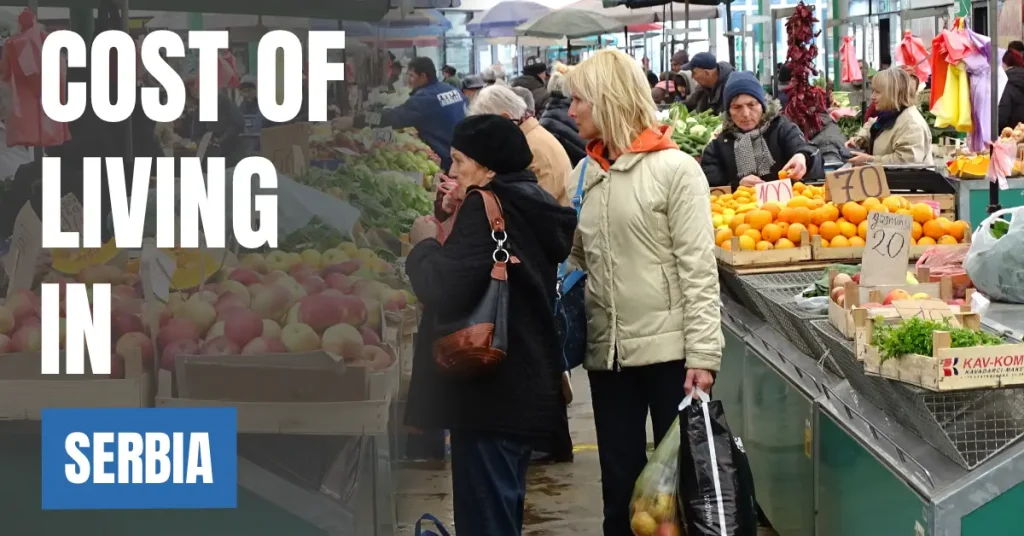
Cost of Living in Serbia 2026: Rent, Salaries and Monthly Expenses
The cost of living in Serbia in 2026 remains relatively affordable compared with much of Western Europe, but rising housing costs have made careful budgeting increasingly important. Belgrade is the country's most expensive major city, while Novi Sad and Niš generally offer lower rents. Serbia can be attractive to international students, professionals, remote workers and families, although affordability depends heavily on whether income comes from a local salary or an overseas source.
On this pageTable of Content
A single person renting an apartment may need approximately RSD 90,000 to RSD 180,000 per month, including rent, depending on location and lifestyle. A family of four may need RSD 200,000 to RSD 350,000 or more, especially when private childcare or international schooling is involved. These are illustrative planning ranges, not official household expenditure averages.
Two important developments affect the 2026 picture. Regular public transportation in Belgrade has been free since January 2025, and Serbia's net minimum hourly wage increased to RSD 371 from January 2026. Meanwhile, the Statistical Office reported annual consumer price inflation of 4.1% in September 2026, demonstrating why older estimates should be checked before planning a move.
Also Explore: Cost of Living in SenegalCost of Living in Serbia at a Glance
Serbia offers relatively moderate grocery, transport and service costs, but renting independently can consume a substantial share of local earnings. The following table combines approximate market prices with illustrative monthly household budgets.
| Expense | Estimated Cost in Serbian Dinars (RSD) |
|---|---|
| Single person, excluding rent | 45,000-85,000 per month |
| Single person, including rent | 90,000-180,000 per month |
| Couple, including rent | 145,000-260,000 per month |
| Family of four, excluding rent and private schooling | 110,000-190,000 per month |
| Family of four, including rent | 200,000-350,000+ per month |
| One-bedroom apartment outside city centre | 25,000-90,000 per month |
| One-bedroom apartment in city centre | 35,000-130,000 per month |
| Monthly groceries, one adult | 20,000-35,000 |
| Inexpensive restaurant meal | 800-1,500 |
| Household utilities | 10,000-25,000 per month |
| Home broadband internet | 2,000-5,000 per month |
| Regular Belgrade public transport | Free |
| Average monthly net salary, August 2026 | 117,282 |
| Minimum net hourly wage, 2026 | 371 |
All amounts use the Serbian dinar, abbreviated RSD. Consumer prices and rents are approximate ranges drawn from 2026 market observations. Household totals are budgeting examples rather than statistically measured averages. Private schooling, major medical expenses, loan repayments and relocation costs may require additional funds.
How Much Does It Cost to Live in Serbia Per Month?
A single renter in Serbia should generally plan for RSD 90,000 to RSD 180,000 per month, including housing. Living with roommates or choosing a smaller city can reduce the required amount, while central Belgrade apartments and frequent dining out can push spending above this range.
Without rent, approximately RSD 45,000 to RSD 85,000 can cover groceries, household expenses, communications, routine transport, personal items and moderate leisure spending for one adult. The lower end assumes careful shopping, limited paid entertainment and no substantial private healthcare costs.
Monthly affordability also depends on earnings. Serbia's August 2026 median net wage was RSD 93,325, meaning that half of employees earned no more than that amount. A typical independent renter in Belgrade may therefore face considerable financial pressure even with relatively inexpensive everyday services.
Housing and Rent Prices in Serbia
Rent is usually the largest variable in a Serbian household budget. Belgrade has the highest rents among the country's main urban destinations, while Novi Sad is generally more moderate and Niš is noticeably cheaper.
Average Apartment Rent by City
Approximate city-level market observations from 2026 provide the following comparison. Figures are rounded and describe typical asking-price environments rather than guaranteed rental offers.
| City | One Bedroom, Centre | One Bedroom, Outside Centre | Three Bedrooms, Outside Centre |
|---|---|---|---|
| Belgrade | 80,000-95,000 | 55,000-65,000 | 100,000-115,000 |
| Novi Sad | 48,000-58,000 | 40,000-48,000 | 70,000-85,000 |
| Niš | 37,000-45,000 | 27,000-33,000 | 40,000-50,000 |
These estimates are broadly consistent with city-level observations published by Numbeo for Belgrade, Novi Sad and Niš. Individual apartments can be considerably more expensive depending on building quality, furnishings and neighbourhood.
Additional Housing Costs
Tenants should budget for rental deposits, possible agency commissions, moving costs and household purchases. Verify whether advertised rent includes building maintenance, heating or other communal charges.
Winter heating can create a substantial difference between two otherwise similar apartments. Older properties may have poor insulation, while buildings using district heating or different electricity arrangements can have different billing structures.
Buying Property in Serbia
Property prices vary widely, but 2026 crowdsourced observations suggest that purchasing an apartment in central Belgrade can cost substantially more per square metre than in Niš. Buyers should investigate title registration, transfer taxes, legal fees and building condition before relying on an advertised purchase price.
Property ownership should not be confused with automatic residence rights. Foreign buyers should obtain legal advice about ownership eligibility and any immigration application based on property ownership.
Food and Grocery Costs in Serbia
One adult who regularly cooks at home may spend approximately RSD 20,000 to RSD 35,000 per month on groceries. A household of four may spend RSD 55,000 to RSD 90,000, depending on dietary preferences, children's ages and shopping habits.
| Grocery Item | Approximate Price (RSD) |
|---|---|
| Milk, 1 litre | 130-190 |
| Bread, one loaf | 70-150 |
| Rice, 1 kg | 180-320 |
| Eggs, 12 | 230-400 |
| Chicken, 1 kg | 500-900 |
| Beef, 1 kg | 1,000-1,800 |
| Apples, 1 kg | 100-230 |
| Bananas, 1 kg | 150-250 |
| Bottled water, 1.5 litres | 60-110 |
These are approximate retail planning ranges, not fixed nationwide prices. Supermarket promotions, local markets, seasonality and imported brands can make a meaningful difference.
Shopping at neighbourhood produce markets and preparing meals at home can help control expenditure. Imported specialty foods, dietary products and convenience meals may cost considerably more than traditional local ingredients.
Restaurants and Eating Out in Serbia
Restaurant dining in Serbia remains relatively accessible, although frequent meals in fashionable areas of Belgrade can quickly increase monthly spending.
| Dining Expense | Estimated Cost (RSD) |
|---|---|
| Budget restaurant meal | 800-1,500 |
| Mid-range meal for two | 3,500-7,000 |
| Fast-food combination meal | 800-1,200 |
| Cappuccino | 220-400 |
| Soft drink at a café | 200-350 |
Traditional bakeries, local grills and casual restaurants can offer more economical choices than tourist-oriented establishments. A person eating out several times weekly should budget separately for restaurant spending rather than treating it as part of basic groceries.
Utilities and Household Bills
Monthly electricity, heating, water, waste collection and building-related utility charges may total approximately RSD 10,000 to RSD 25,000 for a typical apartment, although larger properties and winter heating can cost more.
Billing arrangements differ by property. In some buildings, heating is included in communal charges or billed throughout the year, while other households pay for electricity or gas consumption directly.
Before signing a lease, ask to see recent summer and winter bills. This is especially important in Belgrade, where a lower advertised rent does not necessarily mean lower overall housing expenditure.
Internet and Mobile Phone Costs
Home broadband commonly costs around RSD 2,000 to RSD 5,000 per month, depending on connection speed, provider, contract and bundled television services.
Mobile costs vary between basic prepaid use and larger data packages. A practical allowance of RSD 700 to RSD 2,500 per adult per month may cover many ordinary plans, although premium packages can cost more.
Remote workers should check actual fibre availability at the intended address, network reliability and whether the contract imposes early termination fees. Advertising a high-speed connection in a neighbourhood does not guarantee that every apartment has access to it.
Transportation Costs in Serbia
Is Public Transport Free in Belgrade?
Yes. Regular public transportation within Belgrade's integrated fare system has been free for all passengers since January 1, 2025. The policy covers ordinary buses, trams, trolleybuses and applicable BG Train services, including regular city and suburban routes.
The policy is confirmed by the Belgrade Public Transport Secretariat and the Tourist Organisation of Belgrade.
Therefore, older guides quoting a regular Belgrade city bus ticket or monthly pass are outdated. Certain special services, including some airport and express routes, may still charge a fare. Intercity buses and trains are also separate from the free urban transport network.
Transport Outside Belgrade
Novi Sad, Niš and other Serbian cities operate their own public transportation arrangements. Travellers should check local fares instead of assuming that Belgrade's policy applies nationwide.
For residents who occasionally use paid transport outside Belgrade, an illustrative monthly budget of RSD 2,000 to RSD 5,000 may be reasonable, depending on frequency and local fare rules.
Taxis and Driving
Taxis can be useful, but fares vary by city, time of day, starting charge and distance. Use licensed operators and check estimates in advance.
Car owners should include petrol, insurance, registration, parking, servicing and possible road tolls. Owning a vehicle can substantially increase monthly expenses, especially in central Belgrade where parking may be difficult.
Healthcare Costs and Health Insurance in Serbia
Healthcare in Serbia is not automatically free for every foreign resident or visitor. Access to publicly funded services generally depends on valid insurance and eligibility, while private medical facilities charge separately or accept eligible private insurance policies.
Public Healthcare
Serbia operates a compulsory health insurance system administered through the Republic Health Insurance Fund, known as RFZO.
Legally employed foreign residents generally enter compulsory social insurance through their employment arrangements. Employers register eligible workers and handle the required contributions. Self-employed residents may need to register and pay contributions themselves.
Public insurance provides access to covered services at contracted medical institutions, subject to applicable rules, referrals, participation charges and coverage limitations. Some family members may also qualify for coverage through an insured household member.
The official Welcome to Serbia healthcare guide explains these arrangements. Visitors and uninsured foreigners should not assume that residence or physical presence alone gives them full public coverage.
Private Healthcare
Private clinics provide an alternative for routine appointments and specialist consultations. Fees vary considerably by provider and procedure.
For initial planning, ordinary private consultations may require several thousand dinars, with specialist tests, imaging, dentistry and hospital treatment costing considerably more. Insurance premiums depend on age, medical history, coverage limits and insurer.
Foreign residents should compare policies carefully and establish whether they cover chronic conditions, emergency care, hospitalisation and direct billing.
Education and Childcare Costs in Serbia
Public primary and secondary education in Serbia is generally free, while private and international education can become one of the largest expenses for relocating families.
Public Schools
Serbia provides compulsory, free primary education and free secondary education through its public school system. The official education and school enrolment guide explains admission arrangements.
Foreign families should investigate documentation requirements, local school availability, language support, school meals, transport and extracurricular expenses. Public instruction is generally delivered in Serbian or an applicable recognised minority language.
Private Schools and International Schools
Private and international schools charge tuition. Crowdsourced 2026 observations place annual international primary school costs in a broad range, frequently around RSD 500,000 to RSD 1,500,000 or more per child.
Belgrade tends to offer more international schooling options, but some institutions charge substantially above this range. Families should request a complete fee schedule including enrolment, transportation, meals, materials and activities.
Kindergarten and Childcare
Private full-day preschool fees commonly fall around RSD 25,000 to RSD 55,000 per child monthly, with higher prices possible in Belgrade.
Public preschool availability, subsidies and payment rules depend on the municipality, institutional eligibility and family circumstances. Do not assume that private childcare is universally free or that every household qualifies for the same subsidy.
University Education
University tuition depends on the institution, programme, language of instruction, citizenship and scholarship status. International students should verify fees directly with the university.
Some foreign students may qualify for government-supported scholarships, including programmes described on the official Serbian scholarship portal. Such schemes have eligibility conditions and should not be interpreted as free university education for every foreign applicant.
Average Salaries and Minimum Wage in Serbia
The average monthly net salary in Serbia was RSD 117,282 in August 2026, while the median net salary was RSD 93,325, according to the Statistical Office of the Republic of Serbia.
The median is particularly useful because it indicates the earnings midpoint rather than being influenced as strongly by high salaries. It highlights the challenge of renting independently in expensive urban neighbourhoods.
Minimum Wage in Serbia in 2026
Serbia's minimum net hourly wage is RSD 371 for 2026, effective January 1, 2026. Unlike a fixed monthly minimum, actual monthly earnings depend on the number of working hours.
| Monthly Working Hours | Minimum Net Monthly Earnings (RSD) |
|---|---|
| 160 hours | 59,360 |
| 168 hours | 62,328 |
| 176 hours | 65,296 |
| 184 hours | 68,264 |
The Serbian government described the annualised representative monthly minimum as approximately RSD 64,554. This should not be mistaken for the amount paid in every calendar month. Applicable employment supplements and other statutory entitlements must also be considered.
The government has additionally adopted a minimum net hourly rate of RSD 405 for 2027, with a representative monthly figure of approximately RSD 70,470. That increase takes effect in January 2027 and should not be applied to 2026 salaries.
Official announcements are available from the 2026 minimum wage decision and the 2027 minimum wage announcement.
What Salary Is Needed to Live Comfortably?
A single renter may need approximately RSD 120,000 to RSD 180,000 in monthly take-home income for a reasonably comfortable lifestyle, particularly in larger cities. Someone sharing accommodation or living in Niš may manage on less.
For a family of four renting a home, combined monthly take-home income of RSD 220,000 to RSD 350,000 or more may be appropriate, depending on housing and education arrangements.
These are lifestyle estimates rather than official living-wage thresholds. The standard 2026 minimum wage would generally be insufficient to comfortably support an individual renting a typical apartment alone in central Belgrade.
Taxes and Their Effect on Everyday Affordability
Serbian residents encounter taxes through purchases, wages, business activity and property-related transactions.
The standard value-added tax rate is 20%, while a reduced rate of 10% applies to certain qualifying products and services, including specified basic food items and medicines. The legal framework is available through the Serbian Tax Administration.
Employees should compare net rather than gross salary offers because payroll taxes and mandatory social contributions affect take-home income. Freelancers, entrepreneurs and remote workers may face different registration and tax obligations.
Foreign income does not automatically remain exempt from Serbian taxation. Tax residence, applicable treaties and the nature of work can all influence liability. Individual circumstances should be checked with a qualified local adviser.
Realistic Monthly Budgets in Serbia
The following examples show how monthly costs can add up. They are constructed spending plans, not survey averages. Each includes rent and routine living costs, but excludes major one-off relocation expenses, debt payments and private school tuition unless stated otherwise.
Budget-Conscious Single Person in Niš
| Expense | Monthly Cost (RSD) |
|---|---|
| Rent, modest apartment | 30,000 |
| Utilities | 10,000 |
| Groceries | 22,000 |
| Transport | 3,000 |
| Internet and mobile | 3,500 |
| Healthcare and personal care | 4,000 |
| Dining and leisure | 7,500 |
| Total Including Rent | 80,000 |
This budget assumes modest accommodation, home cooking and limited discretionary spending. It would be difficult to support independently on a standard minimum wage.
Moderate Single Person in Belgrade
| Expense | Monthly Cost (RSD) |
|---|---|
| Rent, one-bedroom apartment | 70,000 |
| Utilities | 15,000 |
| Groceries | 28,000 |
| Regular public transportation | 0 |
| Internet and mobile | 4,000 |
| Healthcare and personal care | 6,000 |
| Dining, entertainment and miscellaneous | 20,000 |
| Total Including Rent | 143,000 |
This example assumes regular free city transport, no car ownership, moderate restaurant spending and an apartment outside the most expensive central areas. It exceeds the national average net monthly wage recorded in August 2026.
Couple Living in Novi Sad
| Expense | Monthly Cost (RSD) |
|---|---|
| Rent | 55,000 |
| Utilities | 17,000 |
| Groceries | 45,000 |
| Transportation | 8,000 |
| Internet and mobile | 6,000 |
| Healthcare and personal care | 8,000 |
| Dining, entertainment and miscellaneous | 25,000 |
| Total Including Rent | 164,000 |
This scenario assumes two adults sharing a modest apartment and household services, without children or a privately owned car.
Family of Four in Belgrade
| Expense | Monthly Cost (RSD) |
|---|---|
| Three-bedroom apartment rent | 110,000 |
| Utilities | 25,000 |
| Groceries | 75,000 |
| Transportation | 10,000 |
| Internet and mobile | 7,000 |
| Healthcare and personal care | 12,000 |
| Dining, children's activities and miscellaneous | 35,000 |
| Total Including Rent | 274,000 |
This family budget assumes two adults and two children attending public schools, without private preschool or international school tuition. The transportation allocation allows for taxis and other travel, even though regular Belgrade public transport is free.
Private preschool could add tens of thousands of dinars monthly. International school tuition can raise the total substantially and must be calculated for each child separately.
Which Serbian Cities Are Cheapest to Live In?
Niš generally offers lower rental costs than Belgrade or Novi Sad, making it an attractive option for residents whose employment or study arrangements permit relocation.
Belgrade
Belgrade offers the country's largest concentration of international employers, services, cultural activities and some international schools. Its main disadvantage is relatively expensive housing. Free regular city transport partially offsets this burden for residents who do not own a car.
Novi Sad
Novi Sad combines urban amenities with rents that are generally below central Belgrade levels. It can suit students, couples and professionals seeking a smaller urban environment, although desirable areas are not necessarily inexpensive.
Niš
Niš is often a stronger choice for budget-conscious residents, with lower typical rents and less expensive everyday services. Job availability, sector-specific salaries and international schooling options may be more limited than in Belgrade.
Smaller Towns
Smaller Serbian towns can offer cheaper housing, but available properties, employment opportunities, public transport and specialised healthcare services vary significantly. A low advertised rent should not be the sole basis for choosing a location.
Is Serbia Cheaper Than Nearby European Countries?
Serbia is generally less expensive than many Western European destinations, and its housing and service costs can also be lower than those in popular Croatian cities. However, comparisons with Romania, Bulgaria, Hungary and other regional markets depend on the specific cities and spending categories involved.
Belgrade may be considerably more expensive than smaller cities elsewhere in the Balkans, while Niš may compare favourably with several regional urban centres.
For consistent comparisons, use the same household type, apartment size and rental location across countries. Crowdsourced country averages alone do not account for local salary levels, public services, taxation or differences in housing quality.
Serbia's relatively low nominal prices do not necessarily translate into greater purchasing power for workers earning local wages.
Costs New Residents Often Overlook
New residents should consider more than everyday groceries and rent. Commonly overlooked expenses include:
- Rental deposits and possible real estate agency commissions.
- Temporary accommodation while finding a long-term rental.
- Residence permits, administrative documents and translations.
- Heating and electricity fluctuations during winter.
- Banking fees, currency conversion and international transfers.
- Private medical care, medicines and insurance coverage gaps.
- School materials, childcare, extracurricular activities and uniforms where applicable.
- Vehicle registration, parking, insurance and maintenance.
- Home furnishings, appliances and unexpected repairs.
- International travel, emergency savings and family visits.
Households should maintain a financial reserve in addition to their monthly operating budget. The appropriate amount depends on job stability, residence status, health coverage and family responsibilities.
Cost of Living Versus Residency Financial Requirements
Living-cost estimates are not the same as Serbia's official immigration financial requirements. Immigration authorities assess eligibility under specific visa and residence rules rather than relying on a general monthly budget.
For short-term entry, Serbia's Ministry of Foreign Affairs states that sufficient funds are generally considered to be EUR 50 per day of stay. It also recommends medical insurance with coverage of at least EUR 20,000. The financial proof requirement should not be treated as a typical daily living expense.
For certain long-stay visa applications, the official Visa D documentation guidance identifies acceptable proof of financial means, including employment income, pensions, scholarships, bank funds linked to the prescribed minimum salary and qualifying guarantees.
Financial and health insurance documentation requirements vary according to the residence basis. Certain employment and immediate family applications benefit from specified documentary exceptions.
Temporary residence permissions may be issued for up to three years, depending on the approved grounds. Work rights also depend on the permit category. Applicants should review the current official temporary residence guidance before applying.
Meeting immigration documentation requirements does not guarantee that an applicant has enough money to comfortably rent an apartment and support a household.
Is Serbia Affordable for Expats and New Residents?
Serbia can be affordable for expats receiving stable foreign income, particularly those willing to live outside central Belgrade. For workers dependent on local wages, housing costs may present a greater challenge.
Remote workers should examine whether their activity requires local business registration, permits or tax reporting. International students should evaluate tuition and accommodation separately. Retirees should account for healthcare eligibility, insurance and currency conversion risks.
Inflation remains an important consideration. The Statistical Office's September 2026 inflation release recorded annual consumer inflation of 4.1%, with increases in several household spending categories.
For long-term planning, comparing estimated spending against reliable after-tax income is more useful than relying on Serbia's reputation as an inexpensive destination.
Final Verdict: Is Living in Serbia Worth the Cost in 2026?
Serbia remains a potentially attractive option for people seeking a relatively affordable European lifestyle, especially those with sufficient income, flexible location choices and realistic housing expectations.
Belgrade offers greater employment and lifestyle opportunities but generally requires a higher housing budget. Novi Sad provides a middle ground, while Niš can offer meaningful savings on rent.
For an individual living independently, RSD 90,000 to RSD 180,000 per month including rent is a useful starting range, but the upper end may still be insufficient for premium central Belgrade accommodation. Families should generally plan on significantly higher combined income, particularly if private education or childcare is required.
The most practical approach is to compare current apartments, check utility bills, confirm healthcare eligibility and calculate a complete after-tax monthly budget before making a long-term commitment.
Sources and Methodology
This guide was reviewed on November 7, 2026. It compares Serbia's original cost-of-living guide with official government announcements, labour and inflation statistics, immigration guidance, healthcare information, transport authorities and 2026 crowdsourced consumer-price observations.
Official sources are prioritised for legislation, wages, public transport, insurance and immigration rules. Market estimates are used for categories where no single authoritative nationwide retail price exists.
Numbeo is a crowdsourced database. Its estimates may vary according to contributor distribution, city representation, sample size and the period of data collection. Smaller markets and individual price categories may have limited observations. The guide therefore rounds prices and distinguishes illustrative budgets from official statistics.
Apartment rents, consumer prices, exchange rates and available services may change after publication. Readers should confirm quotations and eligibility rules directly before making financial decisions.
- Visaboards, original Serbia cost-of-living guide
- Statistical Office of Serbia, August 2026 salaries
- Statistical Office of Serbia, September 2026 consumer prices
- Government of Serbia, 2026 minimum wage
- Government of Serbia, 2027 minimum wage decision
- Belgrade Public Transport Secretariat, free transport rules
- Welcome to Serbia, healthcare and insurance
- Welcome to Serbia, education and school enrolment
- Welcome to Serbia, temporary residence
- Welcome to Serbia, Visa D documentation
- Ministry of Foreign Affairs, entry requirements
- Numbeo, Serbia consumer price observations
- Numbeo, Belgrade cost observations
- Numbeo, Novi Sad cost observations
- Numbeo, Niš cost observations
- Serbian Tax Administration, VAT legislation
Frequently Asked Questions
How much does it cost to live in Serbia per month in 2026?
A single person renting independently may need approximately RSD 90,000 to RSD 180,000 per month, including rent, utilities, groceries, communication and ordinary personal spending. Costs can be lower with shared housing or in smaller cities. Central Belgrade, car ownership and frequent dining out can increase the total. These figures are illustrative budgets rather than official national averages.
What is the average rent in Serbia?
Rent varies considerably by city and apartment size. In 2026, a one-bedroom apartment outside the centre may cost approximately RSD 55,000 to RSD 65,000 in Belgrade, RSD 40,000 to RSD 48,000 in Novi Sad or RSD 27,000 to RSD 33,000 in Niš. Premium buildings and central locations can cost substantially more. Utility bills are often additional.
What salary is enough to live comfortably in Serbia?
A single renter may need approximately RSD 120,000 to RSD 180,000 in monthly take-home income for a moderately comfortable lifestyle, depending on location. Shared accommodation or living in a less expensive city can reduce this requirement. Serbia's official average net salary was RSD 117,282 in August 2026, so comfortable independent renting in Belgrade may require above-average earnings.
What is Serbia's minimum wage in 2026?
Serbia's minimum net wage is RSD 371 per working hour from January 1, 2026. Monthly minimum earnings depend on working hours and range from RSD 59,360 for 160 hours to RSD 68,264 for 184 hours. The government's representative monthly figure is approximately RSD 64,554. A higher hourly rate of RSD 405 has been adopted for January 2027.
Is public transportation free in Belgrade?
Yes. Regular public transportation in Belgrade's integrated city system has been free for all passengers since January 1, 2025. This includes ordinary buses, trams, trolleybuses and applicable BG Train routes. Some special airport or express services may still charge fares. Free Belgrade transport does not mean that all transportation across Serbia is free.
Is healthcare free for foreigners in Serbia?
Healthcare is not automatically free for every foreign national. Legally employed foreign residents generally participate in Serbia's compulsory health insurance system through applicable contributions. Eligible insured individuals can access covered public services, although certain charges and restrictions may apply. Tourists and uninsured residents may need private insurance or pay directly. Coverage should be confirmed before receiving treatment.
How much does a family of four need to live in Serbia?
A family of four may need approximately RSD 200,000 to RSD 350,000 or more per month including rent, depending on city, housing size and spending habits. A sample Belgrade budget with public schooling totals RSD 274,000 monthly. International school tuition, private preschool, car ownership and higher medical expenses can push expenditure well above the general range.
Which city is cheapest to live in, Belgrade, Novi Sad or Niš?
Niš is generally the least expensive of these three cities, particularly for apartment rentals. Novi Sad usually costs more than Niš but less than Belgrade, while Belgrade has the highest typical rents and a broader range of international services and employment opportunities. Actual affordability also depends on earnings, available housing, household size and commuting requirements.
How much do groceries cost per month in Serbia?
One adult who mainly prepares meals at home may spend roughly RSD 20,000 to RSD 35,000 per month on groceries. A family of four may spend approximately RSD 55,000 to RSD 90,000. Imported food, special dietary products and convenience meals can increase spending. Local markets, seasonal produce and supermarket promotions may help keep expenses manageable.
How much money is required for residency in Serbia?
Residency financial documentation depends on the immigration category and should not be confused with actual monthly living costs. For certain Visa D applications, acceptable evidence includes employment income, pensions, scholarships, qualifying guarantees or bank funds linked to the prescribed minimum salary. Separately, the Ministry of Foreign Affairs identifies EUR 50 per day as sufficient funds for short-term entry. Applicants must check the requirements for their specific visa or residence basis.
Join the conversation
Have thoughts on this topic? Share them with others.
Ask questions, share experience, and learn from the Visaboards Community.