
INFORMATION
Cost of Living in Albania 2026 Guide for Expats and Travelers
Post Date · Modified · Country · Albania
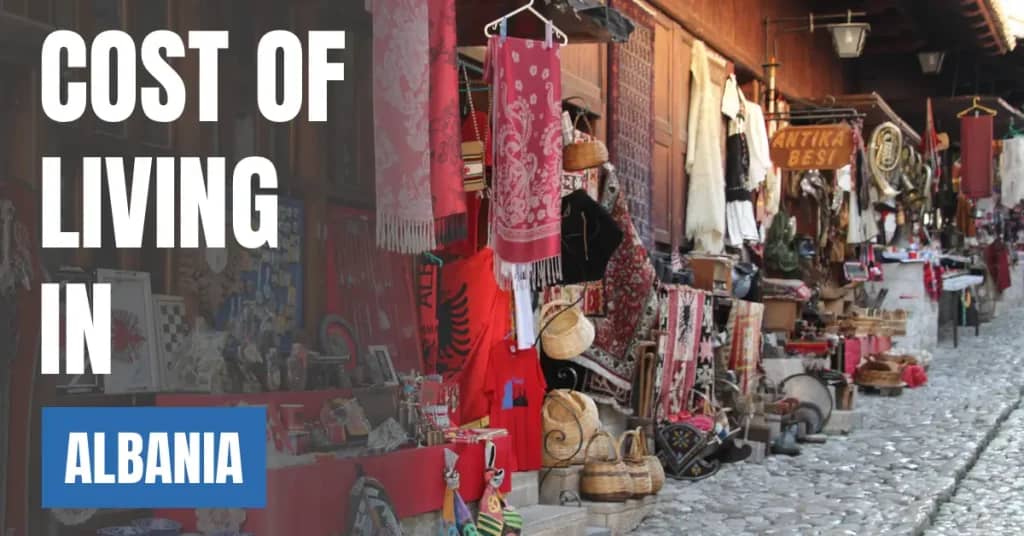
The cost of living in Albania in 2026 is still below the EU average, but housing has become a much bigger part of the budget, particularly in Tirana. A budget-conscious person renting outside the most expensive areas may manage on about 63,000 ALL per month, while a single person living alone more comfortably in Tirana may need around 105,000 ALL or more. Couples and families should budget considerably more, especially if they need a larger apartment, a car, private childcare or international schooling.
On this pageTable of Content
Albania should not simply be described as one of Europe’s cheapest countries. Eurostat-based comparative price data for 2025 put Albania’s household consumption price level at 72.6 when the EU average equals 100. That is below Greece at 87.4 and Croatia at 78.4, but above Montenegro at 66.1, Serbia at 68.0 and North Macedonia at 54.8.
Housing is the biggest reason newcomers can spend far more than national household averages suggest. INSTAT reported average monthly consumption expenditure of 93,042 ALL for a household of 3.1 people in 2024. However, the Household Budget Survey excludes imputed rent, and its average housing category, including rent, utilities and fuel, was only 8,944 ALL. A newcomer renting privately in Tirana can face rent alone of roughly 42,000 ALL outside the centre or 67,000 ALL in the centre.
To learn more about the country itself, you can explore the Albania country guide here: Albania.
Also Explore: Cost of Living in AlgeriaCost of Living in Albania at a Glance
| Expense | 2026 Planning Figure | What It Means |
|---|---|---|
| Single person, excluding rent | About 30,000 to 55,000 ALL per month | Illustrative range for groceries, utilities, communications, transport, basic healthcare costs and moderate leisure. |
| Single person, including rent | About 63,000 to 105,000+ ALL per month | Lower end assumes inexpensive housing; upper end is more realistic for a person living alone in Tirana. |
| Couple, including rent | About 110,000 to 150,000 ALL per month | Depends heavily on apartment location, dining habits and transport. |
| Family of four, including rent | About 170,000 to 220,000+ ALL per month | Assumes public education. Private or international schooling can increase the total sharply. |
| National average 1-bedroom rent, centre | 45,020 ALL | Crowdsourced Albania-wide average. |
| National average 1-bedroom rent, outside centre | 30,604 ALL | Crowdsourced Albania-wide average. |
| Tirana 1-bedroom rent, centre | 66,834 ALL | Tirana is substantially more expensive than the national average. |
| Tirana 1-bedroom rent, outside centre | 42,248 ALL | Still a major expense relative to typical Albanian earnings. |
| Basic utilities for an 85 m² home | About 7,759 ALL nationally | Electricity, heating, cooling, water and garbage in the crowdsourced benchmark. |
| Internet | About 1,557 ALL per month | Broadband connection of 60 Mbps or more. |
| Public transport pass | About 1,600 ALL per month | National crowdsourced benchmark, also consistent with Tirana’s general monthly bus tariff. |
Current nationwide market benchmarks are based largely on Numbeo data updated in June 2026. The database had 1,935 entries submitted by 178 contributors during the preceding 12 months. These figures are useful for current market direction, but they should be treated as estimates rather than official fixed prices.
How Much Does It Cost to Live in Albania Per Month?
A single renter should plan on roughly 63,000 ALL per month at the budget end and around 105,000 ALL or more for a moderate lifestyle in Tirana. A couple can reasonably plan around 130,000 ALL, while a family of four renting a larger home and using public education may need around 190,000 ALL per month.
These are planning budgets, not government statistics or legal minimums. The total changes most dramatically with rent. Someone sharing accommodation or living in a lower-cost city can spend much less than a person renting a central Tirana apartment alone.
INSTAT’s latest published Household Budget Survey currently available as of September 3, 2026 covers 2024 and puts average household consumption at 93,042 ALL per month. The survey used a nationwide sample of 10,452 households. It is valuable for understanding how resident households actually spend, but it should not be treated as a private-renter budget for a newly arrived expat.
Prices are also moving. Albania’s annual consumer inflation rate was 3.4% in July 2026, compared with 2.5% in July 2025. July was the latest official CPI release available at the time this guide was reviewed.
Housing and Rent in Albania
Rent is the most important variable in an Albania cost-of-living budget. Nationwide crowdsourced data from June 2026 put a one-bedroom apartment at about 45,020 ALL per month in a city centre and 30,604 ALL outside central areas. A three-bedroom apartment averaged about 80,225 ALL in a centre and 50,621 ALL outside.
How Much Is Rent in Tirana?
A one-bedroom apartment in Tirana averages about 66,834 ALL per month in the city centre and 42,248 ALL outside the centre. Three-bedroom apartments average about 122,845 ALL centrally and 78,260 ALL outside central areas. The reported ranges are wide, so neighbourhood, building age, furnishing and exact location can shift the price considerably.
| City | 1-Bedroom, Centre | 1-Bedroom, Outside Centre |
|---|---|---|
| Tirana | 66,834 ALL | 42,248 ALL |
| Durrës | 37,189 ALL | 27,217 ALL |
| Vlorë | 42,358 ALL | 34,643 ALL |
| Shkodër | 39,000 ALL | 25,333 ALL |
The Tirana figures were updated in June 2026. Durrës and Vlorë data were updated in May 2026. Shkodër appears cheaper, but its sample is much smaller, and Numbeo explicitly warns that some Shkodër data are estimated because of the low number of contributors.
Upfront Rental Costs
Do not budget only for the monthly rent. Current Tirana listings commonly request a deposit in addition to rent, and agency fees can equal around half of one month’s rent. Some listings require the first month plus one month’s deposit, while others request two months of rent or the first and last months before move-in. Terms vary by landlord and agency, but new residents should keep extra cash available for the initial move.
Grocery Costs in Albania
A single person who cooks most meals at home can reasonably plan around 18,000 to 25,000 ALL per month for groceries, although diet and imported products can push spending higher. Numbeo’s calculated minimum food basket ranges from roughly 16,910 ALL to 22,973 ALL per month depending on the assumed diet.
| Grocery Item | Average Price |
|---|---|
| Milk, 1 litre | 179 ALL |
| White bread, 500 g | 91 ALL |
| Rice, 1 kg | 187 ALL |
| Eggs, 12 | 304 ALL |
| Local cheese, 1 kg | 999 ALL |
| Chicken fillets, 1 kg | 685 ALL |
| Beef, 1 kg | 1,218 ALL |
| Apples, 1 kg | 134 ALL |
| Tomatoes, 1 kg | 135 ALL |
| Potatoes, 1 kg | 87 ALL |
| Water, 1.5 litres | 63 ALL |
These are June 2026 crowdsourced national averages. Market stalls, supermarkets, imported brands, seasonality and city can all produce different prices.
Restaurants and Eating Out
Eating out can remain relatively affordable, particularly at local restaurants. A meal at an inexpensive restaurant averages about 800 ALL nationally. A three-course meal for two at a mid-range restaurant averages around 3,805 ALL, while a regular cappuccino is about 168 ALL.
Tirana is slightly more expensive in some categories. A mid-range three-course meal for two averages about 4,500 ALL there, while an inexpensive restaurant meal remains around 800 ALL.
Utilities
Basic utilities for an 85 m² apartment average about 7,759 ALL per month nationally, with a reported range of roughly 5,667 to 15,000 ALL. The figure covers electricity, heating, cooling, water and garbage. Tirana’s average is higher at about 9,340 ALL.
Actual bills depend on apartment size, insulation and air-conditioning or heating use. A newcomer budgeting close to the lower average should keep some margin for hotter summer months or colder winter periods.
Internet and Mobile Costs
Home broadband of at least 60 Mbps averages around 1,557 ALL per month nationally, while a mobile plan with calls and at least 10 GB of data averages about 1,531 ALL.
Current Vodafone Albania prepaid pricing provides another useful real-world benchmark. From May 19, 2026, its 30-day prepaid packages include an app-priced 3 GB plan for 1,100 ALL and a 15 GB plan for 1,600 ALL, with slightly higher in-store prices. Other operators and promotions can differ.
Transportation Costs
Is Public Transport Free in Albania?
No. Ordinary public transport is not generally free. In Tirana, a standard urban bus trip costs 40 ALL. The city has more than 20 bus lines, with regular services operating from around 6:00 to 23:00 according to the current visitor transport guide.
The Tirana municipal tariff sets a one-line monthly pass at 1,200 ALL and the general all-lines monthly pass at 1,600 ALL. A student all-lines monthly pass is listed at 600 ALL. Some legally eligible categories can receive concessions, but visitors and ordinary residents should not assume that buses are free.
| Transport Item | Typical Cost |
|---|---|
| One-way local transport ticket | 40 ALL |
| Monthly public transport pass | About 1,600 ALL |
| Taxi starting fare | About 300 ALL |
| Taxi, 1 km | About 300 ALL |
| Petrol, 1 litre | About 183 ALL |
The national figures above are June 2026 crowdsourced averages. Owning a car can change the budget substantially because fuel, parking, maintenance, registration and insurance need to be added.
Healthcare Costs and Health Insurance
Is Healthcare Free in Albania for Expats?
Healthcare is not simply free for every foreign resident or visitor. Albania has a compulsory health insurance system covering eligible insured people, including economically active permanent residents. Foreign residents can use their residence permit or provisional residence permit number as their compulsory health insurance identification number.
For insured people using the public system and following referral procedures, the scheme finances services such as family-doctor care, specialist care and hospital services. The Health Insurance Fund also provides full or partial reimbursement for eligible medicines and services.
This does not mean every healthcare expense is zero. A World Bank report released in July 2026 estimated that out-of-pocket spending still accounted for about 27% of total health expenditure in Albania. A separate 2026 World Bank review of the Western Balkans identified medicines as the largest source of household out-of-pocket health spending in the region.
New residents should therefore check whether they qualify for the public scheme and whether private health insurance is required for their residence category. People who prefer private clinics should budget separately for consultations, tests and treatment rather than assuming public coverage will meet every need.
Education and Childcare
For families, the difference between public and private education can completely change the cost of living. Public education keeps direct schooling costs relatively low. In 2026, the Albanian government expanded free new textbooks to the fourth and fifth grades, extending the measure across primary education.
Private childcare and international schools are much more expensive. Nationwide crowdsourced data place full-day private preschool at about 23,914 ALL per month per child and international primary-school tuition at about 499,472 ALL per year.
In Tirana, private preschool averages about 27,862 ALL per month, while international primary-school tuition averages roughly 642,856 ALL per year, equivalent to about 53,571 ALL per month if spread evenly across 12 months. Schools may bill by term or year rather than monthly, so the monthly figure is only a budgeting equivalent.
Salaries in Albania
The latest official national wage release available on September 3, 2026 is for the first quarter of 2026. INSTAT reported an average gross monthly wage of 90,119 ALL, up 9.6% from the first quarter of 2025. The next official quarterly wage release is scheduled for September 10, 2026.
Higher-paying sectors can be well above the average. In Q1 2026, average gross monthly wages were 157,434 ALL in financial and insurance activities and 131,747 ALL in information and communication.
Crowdsourced net-salary data give a different perspective. Numbeo reported an average net monthly salary of about 61,756 ALL nationally and 75,595 ALL in Tirana in June 2026. These figures should not be treated as official salary statistics, but they are useful when comparing market rents with estimated take-home income.
What Is the Minimum Wage in Albania in 2026?
Albania’s mandatory national minimum base salary is 50,000 ALL per month in 2026. The Council of Ministers set the figure for 174 normal working hours per month, and the new level took effect from January 1, 2026. It replaced the previous 40,000 ALL level.
Employees also pay social and health contributions. PwC’s July 2026 Albania tax summary states that employee contributions total 11.2%, consisting of 9.5% social insurance and 1.7% health insurance. At a gross salary of exactly 50,000 ALL, the current employment income tax schedule applies a 0% personal income tax rate at that income level. A simple calculation after the 11.2% employee contribution gives about 44,400 ALL before any individual payroll adjustments.
Taxes and Everyday Affordability
Employment income is subject to Albania’s personal income tax rules, with rates increasing according to taxable income and applicable deductions. Employees must also account for the 11.2% social and health contribution described above. Employers separately contribute 16.7%.
This distinction matters when comparing an advertised gross salary with rent. A gross wage of 90,000 ALL is not the same as having 90,000 ALL available to spend each month. New residents considering Albanian employment should compare their expected net pay with housing, rather than comparing rent with gross salary.
How Affordable Is Rent Compared With Salaries?
Housing is challenging for lower-income residents, especially when living alone. A person earning the 50,000 ALL minimum wage would have about 44,400 ALL after the basic 11.2% employee social and health contribution in a simple illustration. The current national average one-bedroom rent outside the centre, about 30,604 ALL, would absorb roughly 69% of that amount. Tirana’s average outside-centre one-bedroom rent, about 42,248 ALL, would consume roughly 95%.
The same pressure appears in crowdsourced net-income comparisons. Tirana’s average central one-bedroom rent of about 66,834 ALL is roughly 88% of its reported average net salary of 75,595 ALL. This does not mean every renter pays that share because many households combine incomes, share accommodation or own their home, but it shows why a centrally located apartment can be difficult to support on one typical local salary.
Realistic Monthly Budget Examples
The following budgets are planning examples built from current rent, utility, food, transport and communications benchmarks. They are not official averages. They show what different household types might actually need when rent is included.
| Expense | Budget Single | Moderate Single in Tirana | Couple | Family of Four |
|---|---|---|---|---|
| Rent | 28,000 ALL | 50,000 ALL | 55,000 ALL | 78,000 ALL |
| Utilities | 6,000 ALL | 9,000 ALL | 10,000 ALL | 15,000 ALL |
| Groceries | 18,000 ALL | 25,000 ALL | 38,000 ALL | 55,000 ALL |
| Transport | 1,600 ALL | 2,400 ALL | 3,200 ALL | 5,000 ALL |
| Internet and mobile | 2,500 ALL | 3,200 ALL | 4,500 ALL | 6,000 ALL |
| Healthcare or insurance allowance | 2,000 ALL | 3,000 ALL | 5,000 ALL | 8,000 ALL |
| Dining and leisure | 5,000 ALL | 12,000 ALL | 15,000 ALL | 15,000 ALL |
| School and child incidentals | 0 ALL | 0 ALL | 0 ALL | 8,000 ALL |
| Estimated Total | 63,100 ALL | 104,600 ALL | 130,700 ALL | 190,000 ALL |
Budget-conscious single: Assumes a modest one-bedroom or similarly priced accommodation outside an expensive central area, frequent home cooking, public transport and limited leisure. A 28,000 ALL rent is realistic in portions of Durrës, Shkodër, Korçë and some outer urban areas, but it is below Tirana’s current outside-centre average.
Moderate single in Tirana: Assumes a modest apartment rather than a premium central property, normal utility use, a mixture of home cooking and eating out, and no car. Current Tirana rent averages support using a figure around 50,000 ALL as a reasonable planning assumption between the outside-centre and central averages.
Couple: Assumes two people sharing one apartment, cooking regularly and mainly using public transport. A car, frequent travel or premium housing would increase the total.
Family of four: Assumes a three-bedroom home outside central Tirana and public education. It does not include international-school tuition or full-time private preschool. Adding one average Tirana international-primary-school place can increase the budget by an equivalent of roughly 53,600 ALL per month.
Cost Differences Between Tirana and Other Albanian Cities
Tirana generally requires the largest housing budget. Durrës, Shkodër and Korçë can offer lower rent, although the amount of current market data is smaller outside the capital. Vlorë is not always dramatically cheaper than Tirana for small apartments, particularly in desirable locations.
For example, the current one-bedroom outside-centre benchmarks are approximately 42,248 ALL in Tirana, 27,217 ALL in Durrës, 34,643 ALL in Vlorë, 25,333 ALL in Shkodër and 24,483 ALL in Korçë. Smaller-city estimates should be interpreted cautiously because contributor counts can be low.
Is Albania Cheaper Than Nearby Countries?
Albania is cheaper than some nearby countries, but not all of them. Eurostat-sourced 2025 price-level indices, published in June 2026, put Albania at 72.6% of the EU average for household final consumption. Greece was 87.4 and Croatia 78.4, so their overall price levels were higher. Montenegro was 66.1, Serbia 68.0 and North Macedonia 54.8, all below Albania.
Country-level averages can also hide city-specific exceptions. For example, current crowdsourced data show a central one-bedroom apartment in Tirana at about 66,834 ALL, slightly more than the comparable Athens average in the same comparison dataset, although an outside-centre Tirana apartment remains cheaper than Athens.
Costs New Residents Often Overlook
- Rental deposit and agency fees: Current Tirana listings frequently require a deposit and an agency commission of around half a month’s rent, with some landlords also requesting more than one rent payment before move-in.
- Private healthcare: Access to the insured public system does not remove every out-of-pocket cost, particularly for medicines or private care.
- Schooling: International education can cost more than the family’s rent, making it one of the largest possible additions to an expat budget.
- Car ownership: Petrol alone averages about 183 ALL per litre, before insurance, maintenance and parking.
- Seasonal utility use: Heating and air-conditioning can push bills above the national average.
- Residence paperwork: Permit fees, health-insurance requirements, document translations and related administrative costs should be kept separate from ordinary monthly living expenses.
Cost of Living Versus Residence Permit Financial Requirements
Albania’s immigration financial-means requirements should not be interpreted as a realistic cost-of-living budget. For example, current Ministry of Interior guidance for family reunification specifies evidence such as a bank deposit of at least 300,000 ALL per person for one calendar year or monthly income of at least 32,000 ALL per person. Similar financial evidence appears for some other residence categories. Requirements vary by permit type.
The 32,000 ALL figure is a legal evidence threshold for relevant applications, not a recommendation for comfortable living. It is below the current average rent for a one-bedroom apartment in central Albania and substantially below a typical one-bedroom rent in Tirana. Applicants should therefore prepare a real household budget separately from the financial documentation required by immigration authorities.
Is Albania Affordable for Expats and New Residents?
Albania can be affordable for people with foreign income, remote-work earnings or salaries well above local averages, but affordability is much tighter for people relying on minimum or average local wages while renting alone. Housing is the main pressure point.
For a single person renting alone in Tirana, a practical comfort target is around 110,000 to 130,000 ALL in monthly net income if the goal is to cover a modest apartment, ordinary living expenses, some dining and a financial buffer. This is a planning estimate rather than an official salary requirement. Sharing accommodation or living in a lower-rent city can reduce the amount significantly.
Conclusion
Albania remains less expensive than the EU average in 2026, but the idea that every newcomer can live comfortably on a very small budget is increasingly unrealistic, especially in Tirana. Rent deserves more attention than any other expense. A budget-conscious single renter may manage at about 63,000 ALL per month, while a more moderate Tirana lifestyle can require around 105,000 ALL or more. Couples can plan around 130,000 ALL, and a family using public education may need around 190,000 ALL before major private-school or childcare costs.
The best way to budget is to choose the city and housing arrangement first, then add groceries, utilities, transport, communications, healthcare and education. Immigration financial thresholds should always be treated separately from the amount actually required to live comfortably.
Sources and Methodology
This guide was reviewed on September 3, 2026. The existing VisaBoards article was checked against current official statistics, government rules, health and education authorities, tax guidance, current rental data and crowdsourced consumer-price databases. The previous page contained broad USD estimates that did not adequately reflect current private rental costs or the distinction between official resident-household expenditure and a newcomer renting at market rates.
Official Albanian sources were prioritized for wages, inflation, minimum wage, residence requirements, education and healthcare. Market datasets were used mainly where official real-time consumer and rental prices are unavailable. Numbeo is crowdsourced, so its prices are estimates and can change quickly. This is particularly important for smaller cities with few contributors. Multiple sources were compared where possible.
- INSTAT, Wage Statistics Q1 2026.
- INSTAT, Household Budget Survey 2024 and methodology.
- INSTAT, Consumer Price Index, July 2026.
- Albanian Council of Ministers and Ministry of Finance, 2026 minimum wage.
- Albanian Ministry of Interior, residence permit documentation and financial means.
- Albanian Health Insurance Fund, compulsory insurance and insured benefits.
- World Bank, Albania health-sector and Western Balkans medicine-spending research, 2026.
- Ministry of Education, 2026 textbook policy.
- Municipality of Tirana and current Tirana transport information.
- PwC Albania, personal tax and social contribution guidance, reviewed July 2026.
- Eurostat-sourced European price-level comparison published by Statistics Norway in June 2026.
- Numbeo Albania and city datasets, primarily May and June 2026.
- Current Tirana rental listings used to check move-in conditions and agency fees.
Frequently Asked Questions
How much does it cost to live in Albania per month?
A single renter may need roughly 63,000 ALL per month on a budget, while a moderate single-person budget in Tirana is closer to 105,000 ALL or more. A couple can plan around 130,000 ALL, and a family of four using public education may need about 190,000 ALL. These figures include rent and are planning examples rather than official fixed averages.
How much is rent in Albania in 2026?
Nationwide, a one-bedroom apartment averages about 45,020 ALL per month in a city centre and 30,604 ALL outside the centre. Tirana is more expensive, at about 66,834 ALL centrally and 42,248 ALL outside the centre. Actual rents vary widely according to neighbourhood, furnishing, building quality and lease terms.
What salary do you need to live comfortably in Albania?
For a single person renting alone in Tirana, around 110,000 to 130,000 ALL net per month is a practical comfort target, rather than an official requirement. That allows more room for rent, utilities, groceries, transport, healthcare, leisure and savings. Someone sharing accommodation or living in a cheaper city may be comfortable on considerably less.
What is the minimum wage in Albania in 2026?
The national minimum base salary is 50,000 ALL per month in 2026 and applies to 174 normal working hours per month. It took effect from January 1, 2026. Employees also pay social and health contributions, so the amount available after payroll deductions is lower than the gross minimum salary.
Is healthcare free in Albania for expats?
Not automatically. Eligible insured residents can access publicly financed healthcare through Albania’s compulsory health insurance system, and foreigners can use their residence permit identification for the insurance system. Insured patients can receive covered public services and eligible medicine reimbursement, but private care and some out-of-pocket expenses remain important, so expats should confirm their exact insurance status.
Is public transport free in Albania?
No. Ordinary public transport is not generally free. A standard urban bus trip in Tirana costs 40 ALL, while the municipal general monthly pass for all lines is 1,600 ALL. Student and other eligible categories may receive reduced fares or concessions, but normal residents and visitors should include transport costs in their monthly budget.
How much does a family of four need to live in Albania?
A family of four renting a larger apartment and using public education can reasonably plan around 170,000 to 220,000 ALL per month, with the sample budget in this guide totalling 190,000 ALL. Private preschool or international schooling can raise the cost substantially. In Tirana, international primary-school tuition alone averages roughly 642,856 ALL per year in current crowdsourced data.
Is Albania cheaper than Greece?
Overall, yes, but not for every individual expense. Eurostat-sourced 2025 price-level data put Albania at 72.6% of the EU average for household consumption and Greece at 87.4%. However, specific Tirana housing costs can approach or even exceed comparable Athens prices in some central rental categories, so city-level comparisons are more useful than broad country labels.
Which Albanian cities are cheaper than Tirana?
Durrës, Shkodër and Korçë currently show substantially lower one-bedroom rents than Tirana in available crowdsourced data. Vlorë can also be cheaper, although its rental gap is smaller. Data for smaller cities come from fewer contributors, so individual listings should always be checked before choosing a location or setting a long-term budget.
How much money do you need for an Albanian residence permit?
The required financial evidence depends on the residence category. For example, current Ministry of Interior guidance for family reunification allows evidence such as a bank deposit of at least 300,000 ALL per person for one year or monthly income of at least 32,000 ALL per person. This is an immigration documentation threshold, not a realistic monthly living budget.
Still exploring?
Still not satisfied with the answer? Let’s discuss your future.
Ask follow-up questions, share your case, and get perspectives from others in the Visaboards Community.