
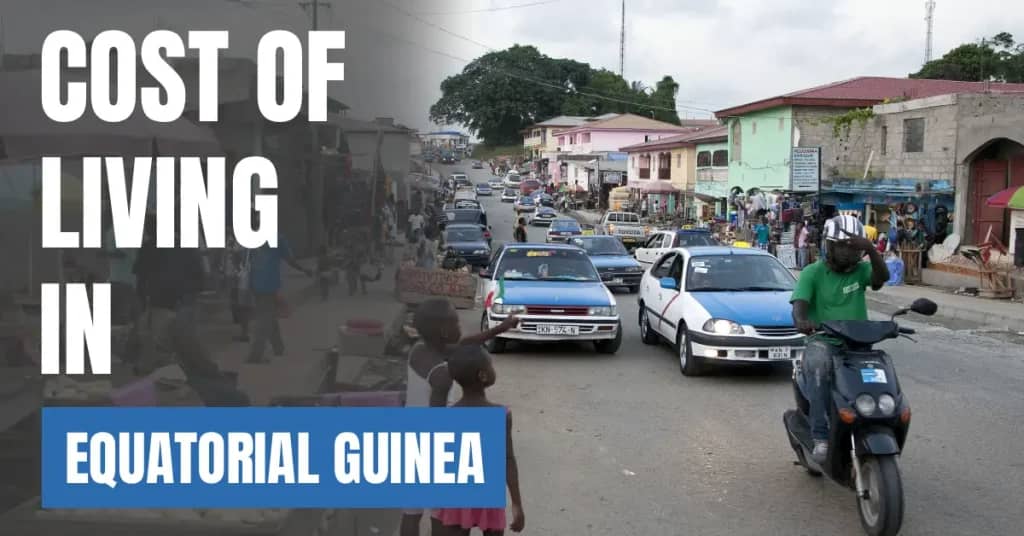
Cost of Living in Equatorial Guinea 2026: Rent, Food, Salaries and Monthly Expenses
The cost of living in Equatorial Guinea in 2026 varies significantly between local households and expatriates, particularly in Malabo and Bata. A single person renting modest accommodation can provisionally budget around XAF 350,000 to XAF 850,000 per month, including rent, groceries, utilities, transportation and basic personal expenses. Expatriates seeking furnished accommodation, international schooling or private healthcare may spend considerably more.
On this pageTable of Content
Equatorial Guinea's oil-dependent economy, imported consumer goods and uneven access to services can make everyday living expensive relative to local earnings. Although the country has developed substantial infrastructure, national wealth does not translate equally into household purchasing power.
Housing is particularly important for newcomers. Rental prices differ according to location, property quality, security, furnishing and whether the employer provides accommodation. Reliable local price data is limited, so published online estimates should be treated as planning references rather than guaranteed market prices.
This guide explains housing, groceries, restaurants, utilities, transportation, healthcare, education, salaries, taxes and immigration-related financial considerations. It also provides realistic illustrative household budgets and explains where available statistics are uncertain.
Cost of Living in Equatorial Guinea at a Glance
A single adult in Equatorial Guinea might plan for XAF 180,000 to XAF 350,000 per month excluding rent, depending on consumption habits and service requirements. Including rented accommodation, a broader planning range of XAF 350,000 to XAF 850,000 is useful for independent newcomers, although some local households spend considerably less.
| Expense Category | Estimated Cost in XAF | Period or Assumption |
|---|---|---|
| Single person excluding rent | 180,000 to 350,000 | Monthly |
| Single person including rent | 350,000 to 850,000 | Monthly |
| Modest one-bedroom apartment | 120,000 to 350,000 | Monthly, depending on location |
| Higher-end expatriate apartment | 350,000 to 800,000+ | Monthly |
| Groceries for one adult | 100,000 to 230,000 | Monthly |
| Groceries for four people | 250,000 to 500,000 | Monthly |
| Electricity, water and household utilities | 35,000 to 110,000 | Monthly |
| Internet and mobile services | 30,000 to 90,000 | Monthly |
| Local transportation | 15,000 to 60,000 | Monthly |
| Inexpensive restaurant meal | 3,000 to 8,000 | Per person |
| Couple including rent | 500,000 to 1,100,000 | Monthly |
| Family of four including rent | 750,000 to 1,700,000+ | Monthly, excluding expensive international schooling |
These are broad editorial planning ranges, not officially measured national averages. They combine available urban market observations with household expense assumptions and reflect considerable uncertainty in housing and consumer prices.
Equatorial Guinea uses the Central African CFA franc (XAF). The currency is fixed to the euro at EUR 1 = XAF 655.957. According to the Bank of Central African States, the indicative US dollar exchange rate on 20 October 2026 was approximately XAF 582 to XAF 587 per dollar, depending on the quotation.
Source: Bank of Central African States (BEAC).
How Much Does It Cost to Live in Equatorial Guinea Per Month?
A single renter should initially allow approximately XAF 350,000 to XAF 850,000 monthly, including housing. A household sharing accommodation, using local markets and avoiding imported products may need less, while expatriates requiring international-standard facilities can spend substantially more.
Living costs depend on three major factors: accommodation, the share of imported products in household purchases and the availability of employer-provided benefits.
Monthly Living Costs Without Rent
For one adult, a preliminary allowance of XAF 180,000 to XAF 350,000 may cover groceries, utilities, telecommunications, routine transport and limited discretionary expenses.
This is not a national subsistence figure. It represents a planning scenario for someone purchasing consumer services in an urban environment.
Monthly Living Costs Including Rent
Private accommodation introduces substantial variation. A modest apartment can keep overall expenses below those of an expatriate living in a secure, furnished property with backup electricity, air conditioning and imported household products.
For comparison, Livingcost's June 2026 model estimated approximately US$1,272 per month for one person in Malabo, including rent, and US$601 excluding rent. Converted using the October 2026 reference exchange rate, these amounts are approximately XAF 743,000 and XAF 351,000 respectively.
These are modeled estimates rather than a representative household expenditure survey. Other online datasets report substantially different estimates, particularly for Bata. This disagreement is one reason fixed national averages should be avoided.
Housing and Rent Prices in Equatorial Guinea
Rent is often the largest expense for expatriates and newly arriving professionals. Malabo and Bata have very different housing markets, and the cost of an apartment depends heavily on its condition, lease terms, neighbourhood and included services.
Rent in Malabo
Malabo, on Bioko Island, contains government offices, diplomatic facilities and businesses connected with the energy sector. Secure furnished accommodation can be expensive, especially where international employers compete for suitable properties.
| Accommodation Type | Indicative Monthly Rent (XAF) |
|---|---|
| Modest one-bedroom apartment | 150,000 to 350,000 |
| Furnished one-bedroom or higher-standard apartment | 350,000 to 750,000 |
| Larger family apartment | 500,000 to 1,200,000+ |
These ranges are broad accommodation scenarios, not a statistically verified rental index. Secure compounds and serviced apartments may exceed the amounts shown.
Ask whether electricity, water storage, security, air conditioning, internet and backup power are included before judging a rental quotation.
Rent in Bata
Bata is a major commercial centre on the mainland and can offer different housing options from Malabo. Some consumer-price datasets suggest lower apartment rents, but their estimates vary significantly.
For example, Wise's 2026 Bata cost-of-living page reports a one-bedroom apartment averaging approximately GBP 296 centrally and GBP 165 outside the centre. These observations suggest that some local rental accommodation costs substantially less than higher-end properties marketed to expatriates.
However, these figures should not be considered universally available rents. Property quality, contract length, security arrangements and the number of recorded observations affect comparisons.
Upfront Rental Expenses
New tenants should budget separately for deposits, advance rent, moving expenses and household equipment. Unlike some countries, there is insufficient verified nationwide evidence to specify a universal rental deposit requirement.
Always ask the landlord or agent for a written breakdown of the initial payment, including any agency fees, prepaid utilities and maintenance responsibilities.
Buying Property
Foreign nationals should obtain professional advice before buying land or residential property. Eligibility, land title documentation, registration procedures and applicable restrictions require legal verification.
Property purchasing should not be budgeted using rental information alone because transaction costs, title verification and ownership conditions can be substantial.
Food and Grocery Costs in Equatorial Guinea
A single adult may spend approximately XAF 100,000 to XAF 230,000 monthly on groceries, depending on whether purchases are primarily local produce or imported supermarket goods.
Imported packaged foods, dairy products and certain meats can cost considerably more than locally sourced staples. Shopping patterns have a major influence on the household food budget.
Typical Grocery Prices
| Product | Indicative Price (XAF) |
|---|---|
| Milk, 1 litre | 900 to 1,800 |
| Bread, one loaf | 500 to 2,000 |
| Rice, 1 kg | 700 to 1,800 |
| Eggs, 12 | 1,200 to 2,500 |
| Chicken, 1 kg | 2,800 to 5,500 |
| Beef, 1 kg | 4,000 to 7,500 |
| Bananas, 1 kg | 300 to 1,500 |
| Tomatoes, 1 kg | 700 to 2,300 |
| Potatoes, 1 kg | 600 to 1,800 |
| Bottled water, 1.5 litres | 350 to 1,200 |
These rounded figures represent indicative urban market-price ranges assembled from publicly available consumer-cost references. They have not been confirmed as October 2026 prices at individual retailers. Local availability, product origin and seasonal conditions can cause considerable differences.
How to Reduce Grocery Expenses
- Compare local markets with imported-goods supermarkets.
- Purchase seasonal fruits and vegetables when available.
- Prepare meals at home instead of relying on restaurant food.
- Limit purchases of premium imported products.
- Check food storage arrangements and the reliability of electricity.
A family of four may need XAF 250,000 to XAF 500,000 monthly for groceries, although imported diets and larger households can exceed this allowance.
Restaurant and Eating-Out Costs
An inexpensive meal may cost approximately XAF 3,000 to XAF 8,000 in an urban restaurant. Higher-end restaurants serving expatriates and business travellers can charge significantly more.
| Restaurant Expense | Estimated Price (XAF) |
|---|---|
| Inexpensive restaurant meal | 3,000 to 8,000 |
| Mid-range restaurant meal for two | 12,000 to 35,000 |
| Fast-food-style meal | 3,000 to 6,000 |
| Coffee | 1,000 to 2,500 |
| Soft drink | 500 to 1,800 |
Restaurant prices depend on location, imported ingredients, service standards and whether a venue caters primarily to local residents or international customers.
Someone eating outside the home several times a week should allocate a separate dining budget rather than including every meal within grocery spending.
Electricity, Water and Other Utility Costs
Monthly basic utilities may cost approximately XAF 35,000 to XAF 110,000 for an apartment, but the cost varies with air conditioning, electricity supply arrangements, property size and water requirements.
Utilities are particularly important because the apparent rental price may not reflect the complete expense of maintaining a comfortable home.
Electricity and Backup Power
Households should establish whether the property has reliable electricity, backup generation and arrangements for paying fuel and maintenance expenses.
Air conditioning can significantly increase electricity use in the country's tropical climate. Properties equipped with private backup systems may also have additional operating costs.
Water and Household Services
Water costs depend on whether the home uses a conventional supply, storage tanks or purchased deliveries. Prospective tenants should ask about both availability and billing.
Other expenses may include rubbish collection, security and communal maintenance. These should be confirmed before the lease is signed.
Internet and Mobile Phone Costs
Internet and mobile communications can represent a meaningful monthly expense, especially for remote workers and households requiring dependable connectivity.
| Service | Estimated Monthly Cost (XAF) |
|---|---|
| Home internet | 25,000 to 70,000 |
| Mobile phone and data | 5,000 to 20,000 |
| Combined planning allowance | 30,000 to 90,000 |
These figures are approximate allowances, not verified current provider tariffs. Coverage, speeds, installation fees and data limits differ between neighbourhoods and operators.
People working online should test the connection at the actual property and compare available backup options before committing to long-term accommodation.
Transportation Costs in Equatorial Guinea
Urban transportation relies heavily on taxis and road travel. A modest personal transportation budget may be approximately XAF 15,000 to XAF 60,000 per month, depending on trip frequency, distance and fares.
Unlike countries with extensive fixed-route public transport systems, residents should not assume that every neighbourhood is served by reliable scheduled transport.
Taxi and Local Transport Expenses
Taxis are an important everyday transport option, particularly for residents without private vehicles. Fares should be confirmed locally because availability and pricing arrangements differ between cities and routes.
Available online consumer-price estimates vary too widely to support a precise nationwide taxi fare per kilometre or a standard monthly pass price.
Free Public School Bus Travel
An important transport policy change was confirmed in the International Monetary Fund's 2026 country report. Equatorial Guinea eliminated fares for students using public school buses, with the measure completed by September 2025.
This policy is specifically about eligible students travelling on public school buses. It does not mean that all public transportation in Equatorial Guinea is free.
Fuel Prices and Transport Affordability
The IMF reported that the government postponed an originally planned fuel price increase of XAF 150 per litre in 2025 because of concerns about its impact on households and transport fares.
A smaller increase of XAF 75 per litre was subsequently proposed for early 2026 as part of a gradual fuel subsidy reform. The IMF report described the proposal, not confirmation that the increase had already taken effect.
Because fuel reforms may affect both driving and taxi expenses, travellers should check current local pump prices and transport fares rather than applying older estimates.
Source: IMF Country Report No. 26/028.
Car Ownership
Owning a vehicle can increase living expenses through purchase costs, insurance, fuel, maintenance and imported replacement parts.
For expatriate employees, a company-provided vehicle and driver allowance may substantially change the value of an employment package.
Healthcare Costs in Equatorial Guinea
Healthcare is not universally free at the point of use in Equatorial Guinea. Public healthcare facilities exist, but access, available equipment, medicines and specialist services vary. Many international residents therefore budget for private treatment or medical insurance.
It is important to distinguish consultation fees from the total cost of healthcare. Prescriptions, diagnostic tests, hospital admissions and emergency transport may create additional expenses.
Public Healthcare
The World Bank's 2025 Country Economic Memorandum reported low public spending on healthcare, equivalent to approximately 0.7% of GDP in 2022.
The report also highlighted weaknesses in maternal and child health outcomes and the need to strengthen human-capital services.
This means residents should investigate the capabilities of nearby facilities rather than assuming that being close to a hospital guarantees access to all necessary treatments.
Private Healthcare
The existing VisaBoards article lists private general practitioner consultations at approximately US$20 to US$40 and specialist visits at US$40 to US$70.
Converted at an indicative rate of XAF 584 per US dollar, these correspond to approximately XAF 12,000 to XAF 23,000 for a general consultation and XAF 23,000 to XAF 41,000 for a specialist visit.
These are historical planning estimates from the existing guide, not verified nationwide tariffs for October 2026. Hospitals may charge separately for laboratory tests, medication and procedures.
Health Insurance and Medical Evacuation
International workers should verify whether their employment package includes private health insurance, specialist treatment and emergency medical evacuation where necessary.
The cost of private insurance depends on age, medical history, covered benefits and insurer conditions. Without specific quotations, a reliable nationwide monthly premium cannot be established.
Source: World Bank Country Economic Memorandum 2025.
Education and Childcare Costs
Public, private and international education involve different financial considerations. Families should check current school fees, admission conditions, language of instruction and transport options before relocation.
Public Education
Public schooling offers a lower-cost option than private international education, but parents should not assume that all school-related expenses are eliminated.
The World Bank reported that education spending amounted to approximately 0.9% of GDP in 2022, compared with 2.6% among other CEMAC countries and 4.1% across Sub-Saharan Africa.
These differences highlight challenges affecting educational resources, quality and access.
The government's elimination of public school bus fares for students is a relevant household cost reduction. However, parents should verify school places, uniforms, supplies and other expenses separately.
Private and International Schools
Private and international school fees may be substantial. The earlier VisaBoards guide estimated annual tuition of US$1,000 to US$4,500 for private schools and US$4,000 to US$6,000 for international schools.
At an indicative exchange rate of XAF 584 per dollar, these amounts correspond to approximately XAF 584,000 to XAF 2.63 million and XAF 2.34 million to XAF 3.50 million respectively.
These estimates have not been independently confirmed against current 2026 fee schedules. Schools may also charge enrolment, transport, materials and examination fees.
Childcare
Childcare expenses depend on whether families use relatives, domestic assistance, private nurseries or employer-supported arrangements.
Reliable nationwide childcare fee data is unavailable, so families should obtain individual quotations instead of relying on an assumed national average.
Average Salaries in Equatorial Guinea
There is no sufficiently reliable, current and nationally representative 2026 average take-home salary available in the sources reviewed for this guide.
Some online cost-of-living databases report modeled earnings, but the estimates vary and cannot safely be presented as the official national average.
For example, Livingcost's June 2026 Malabo model reports approximately US$393 in monthly after-tax salary, equivalent to about XAF 230,000 using the October reference rate. This is a modeled city estimate, not a confirmed national wage statistic.
Equatorial Guinea also has substantial differences between formal and informal employment. A World Bank release from November 2025 reported that fewer than one in five workers held a formal job.
This limits the usefulness of assuming that formal-sector salaries represent the entire workforce.
Minimum Wage in Equatorial Guinea in 2026
Equatorial Guinea has a statutory minimum-wage framework. The country's 2025 statistical yearbook presents a monthly interprofessional minimum wage of XAF 117,304, citing Decree No. 121/2011 of 5 September.
However, the available research did not establish whether a subsequent legally effective decree changed this amount for 2026. Therefore, XAF 117,304 should be treated as the latest figure identified in the cited statistical reference, not an independently confirmed current 2026 minimum wage.
The same statistical tables describe occupational and industry wage classifications that use coefficients applied to the minimum-wage base. Workers may therefore be entitled to rates above the basic minimum depending on the applicable classification.
Anyone assessing an employment offer should verify the current legal wage requirements, applicable sector and contractual benefits with the employer or relevant labour authority.
What Salary Is Needed to Live Comfortably?
A single person independently renting urban accommodation may want a net monthly income of approximately XAF 500,000 to XAF 900,000 to cover ordinary expenses and maintain some flexibility.
For families, a significantly higher household income may be necessary, particularly when international education, private insurance and a vehicle are required.
These figures are budgeting targets, not official wage standards. Employer-provided housing, medical coverage, transport and school fees can be more valuable than comparing gross salaries alone.
Taxes and Their Effect on Affordability
Equatorial Guinea applies progressive personal income taxation, meaning higher portions of taxable income may fall into higher tax brackets.
According to PwC's country tax summary, last reviewed in November 2025, the reported annual taxable income brackets were:
| Annual Taxable Income (XAF) | Marginal Tax Rate |
|---|---|
| 0 to 1,400,000 | 0% |
| Above 1,400,000 to 5,000,000 | 10% |
| Above 5,000,000 to 10,000,000 | 15% |
| Above 10,000,000 to 15,000,000 | 20% |
| Above 15,000,000 | 25% |
These are marginal rates applied to taxable income, not flat percentages charged against an employee's entire gross salary.
The same tax reference reports a standard VAT rate of 15%, although the actual treatment of particular products and services may differ.
Tax residency, deductions, payroll contributions and individual employment conditions can affect final disposable income. Residents should obtain a current payroll calculation rather than estimating take-home salary using only the headline tax rate.
Source: PwC: Equatorial Guinea Personal Income Tax.
Realistic Monthly Budget Examples
The following four budgets illustrate possible household spending in Equatorial Guinea in 2026. These are constructed planning scenarios, not statistically measured national averages.
Each budget includes rent and recurring expenses. Income taxes are excluded because the budgets represent spending from disposable income. Rental deposits, relocation costs, large medical expenses and savings are not included.
Budget 1: Budget-Conscious Single Person
This example assumes basic accommodation, local groceries, modest transportation and limited discretionary spending.
| Expense | Monthly Cost (XAF) |
|---|---|
| Rent | 120,000 |
| Utilities | 25,000 |
| Groceries | 100,000 |
| Transportation | 20,000 |
| Internet and mobile | 30,000 |
| Healthcare allowance | 10,000 |
| Dining and leisure | 20,000 |
| Miscellaneous expenses | 20,000 |
| Total Monthly Budget | 345,000 |
Budget 2: Moderate Single Person
This example assumes a privately rented urban apartment, regular internet access and moderate spending on food and personal activities.
| Expense | Monthly Cost (XAF) |
|---|---|
| Rent | 280,000 |
| Utilities | 50,000 |
| Groceries | 160,000 |
| Transportation | 35,000 |
| Internet and mobile | 45,000 |
| Healthcare allowance | 20,000 |
| Dining and leisure | 55,000 |
| Miscellaneous expenses | 40,000 |
| Total Monthly Budget | 685,000 |
Budget 3: Couple
This example assumes two adults sharing accommodation, using local transportation and maintaining moderate discretionary spending.
| Expense | Monthly Cost (XAF) |
|---|---|
| Rent | 350,000 |
| Utilities | 65,000 |
| Groceries | 240,000 |
| Transportation | 60,000 |
| Internet and mobile | 55,000 |
| Healthcare allowance | 35,000 |
| Dining and leisure | 80,000 |
| Miscellaneous expenses | 65,000 |
| Total Monthly Budget | 950,000 |
Budget 4: Family of Four
This budget assumes two adults and two children, a family-sized rental property, ordinary grocery spending and an allowance for school-related expenses. It does not assume premium international school tuition.
| Expense | Monthly Cost (XAF) |
|---|---|
| Family apartment rent | 500,000 |
| Utilities | 90,000 |
| Groceries | 380,000 |
| Transportation | 90,000 |
| Internet and mobile | 65,000 |
| Healthcare allowance | 55,000 |
| Education and childcare allowance | 120,000 |
| Dining and family leisure | 90,000 |
| Clothing and miscellaneous expenses | 90,000 |
| Total Monthly Budget | 1,480,000 |
International-school tuition, private medical insurance and employer-specific accommodation standards may push family expenses well above these estimates. A relocation budget should also include a financial reserve for unexpected costs.
Cost of Living in Malabo Versus Bata
Malabo and Bata are the country's main cities for many relocation decisions, but no consistently representative 2026 dataset establishes a reliable universal percentage difference between their living costs.
| Factor | Malabo | Bata |
|---|---|---|
| Housing | High-end expatriate rentals can be expensive | Some local accommodation may cost less |
| Employment | Government, diplomatic and energy-related activities | Commercial, service and mainland economic activities |
| Groceries | Imported products can increase costs | Local purchasing patterns may reduce some expenses |
| Transportation | Taxi and private vehicle travel are important | Taxi and private vehicle travel are important |
| Healthcare and schools | Check availability and private-service requirements | Check availability and private-service requirements |
Online estimates conflict. Livingcost's June 2026 model reports relatively high monthly costs in Malabo, while another October 2026 database presents different relative costs between Bata and Malabo.
Such discrepancies arise partly from differing methodologies, housing assumptions and limited observations. Readers should obtain current rental quotations and household-specific expenses before deciding which city is cheaper.
How Does Equatorial Guinea Compare With Nearby Countries?
Equatorial Guinea's cost of living should be compared cautiously with Gabon, Cameroon and the Republic of the Congo. All four countries use the Central African CFA franc, removing ordinary euro-to-CFA exchange-rate differences between them.
However, sharing a currency does not mean consumer prices are identical. Imported goods, housing demand, transport infrastructure, taxation and local wages all influence affordability.
The World Bank has highlighted Equatorial Guinea's dependence on hydrocarbons and the need for broader economic diversification. These structural factors can affect employment opportunities and household spending power.
Reliable, matched 2026 consumer-price observations are insufficient to claim that Equatorial Guinea is a particular percentage more expensive than every neighbouring country.
For a meaningful comparison, examine specific rental properties, food baskets, school fees and net salaries in comparable cities rather than relying on national averages.
Costs New Residents Often Overlook
Monthly living-cost estimates do not capture every expense involved in moving to Equatorial Guinea.
- Advance rent and deposits: Initial housing payments can be much higher than one month's rent.
- Backup electricity: Generators, fuel and maintenance may increase housing costs.
- Water storage and delivery: Some properties may require additional arrangements.
- Imported household equipment: Furniture and appliances can be costly.
- Medical insurance: Private treatment and emergency evacuation coverage may be important.
- School admission: Registration and additional fees may be charged separately from tuition.
- Vehicle expenses: Repairs and imported parts can increase transport spending.
- Banking and money transfers: International transfers, conversion fees and access to foreign currency can affect the real cost of relocation.
- Immigration administration: Residence and employment applications may involve fees and documentation expenses.
- Temporary accommodation: Hotels or serviced properties can add substantial initial costs.
Cost of Living Versus Residency Financial Requirements
A monthly living budget is not the same as the financial or employment conditions required for lawful residence in Equatorial Guinea.
Foreign nationals should confirm the immigration permission appropriate to their nationality, employment arrangement, intended duration of stay and other circumstances.
The sources reviewed did not establish a single official 2026 monthly financial threshold applicable to every foreign resident, student or worker. It would therefore be misleading to present the estimated cost of living as an immigration requirement.
Employees should verify who is responsible for work authorization, residence documentation, fees, insurance and any employer sponsorship obligations.
Students and accompanying family members should independently verify their applicable residence requirements and educational arrangements.
Is Equatorial Guinea Affordable for Expats?
Equatorial Guinea can be financially manageable for expatriates receiving competitive salaries and employer-provided benefits. Without housing, transportation or health coverage, the same location can become significantly more expensive.
The most valuable employment benefits may include accommodation, medical insurance, transport, home-leave flights and school-fee support.
However, high-paying international jobs should not be confused with typical local employment conditions. The World Bank has documented substantial structural labour-market challenges, including limited formal employment and low public social spending.
Practical Ways to Manage Living Costs
- Negotiate accommodation benefits before accepting employment.
- Request written confirmation of medical insurance coverage.
- Compare actual rental properties rather than generic city averages.
- Ask about electricity, water and security arrangements.
- Use local markets where suitable and available.
- Check school fees before relocating with children.
- Estimate take-home earnings after applicable taxes.
- Maintain emergency funds for unexpected medical, housing and transport costs.
Conclusion: How Much Money Do You Need in Equatorial Guinea?
A single person renting accommodation in Equatorial Guinea may provisionally budget XAF 350,000 to XAF 850,000 monthly, including routine household expenses. A couple may require approximately XAF 500,000 to XAF 1,100,000, while a family of four may need XAF 750,000 to XAF 1,700,000 or more, especially when education and healthcare requirements increase costs.
The central affordability issue is the gap between local earnings and the price of housing and services expected by some expatriates. International employment benefits can substantially change that calculation.
Equatorial Guinea's public school bus fare policy offers a documented benefit to eligible students, but significant challenges remain in healthcare access, education funding and household purchasing power.
Because 2026 consumer-price information is limited and often inconsistent, residents should confirm actual rents, service costs, taxes and employment conditions before relocating. A financial reserve is particularly important for households paying their own housing and medical expenses.
Sources and Methodology
Information was reviewed on 21 October 2026. The article draws on the original VisaBoards guide, international financial institutions, regional monetary authorities, tax reference materials, historical official wage tables and commercial consumer-cost databases.
Official and institutional sources were prioritized for economic conditions, education, healthcare investment, public transport policy, taxation and currency information.
Housing, grocery and other consumer costs rely partly on estimates from privately maintained databases. These sources differ significantly in their observations and methodologies, and the available samples are insufficient to construct a reliable nationwide 2026 average.
The four household budgets are illustrative editorial calculations, not official household expenditure survey results. Some consumer-price ranges and school-fee references are preliminary and require direct quotation before financial decisions.
For conversion purposes, approximately XAF 584 per US dollar was used where historical USD estimates were translated into local currency. The exact euro peg is XAF 655.957 per euro. Currency quotations and consumer prices can change.
References
- VisaBoards: Original Cost of Living in Equatorial Guinea Guide
- Bank of Central African States: Currency and Exchange Rates
- IMF: Equatorial Guinea Third Review Under the Staff-Monitored Program, 2026
- World Bank: Country Economic Memorandum 2025
- World Bank: Equatorial Guinea Economic Update 2025
- World Bank: Poverty Reduction and Middle-Class Expansion, November 2025
- PwC: Individual Income Tax in Equatorial Guinea
- PwC: Equatorial Guinea Tax Overview
- Livingcost: Malabo Living Expenses, June 2026
- Wise: Cost of Living in Bata
- CityCost: Equatorial Guinea Consumer Cost Estimates
- Equatorial Guinea Statistical Yearbook 2025: Reproduced Wage Tables
Frequently Asked Questions
How much does it cost to live in Equatorial Guinea per month in 2026?
A single person renting modest accommodation may need approximately XAF 350,000 to XAF 850,000 monthly, including rent, food, utilities, transportation and routine expenses. People sharing housing or consuming mainly local products may spend less. Expatriates requiring furnished accommodation and imported goods may spend more. These are planning ranges because reliable nationwide 2026 consumer-price statistics are limited.
Is Equatorial Guinea expensive to live in?
Equatorial Guinea can be expensive, especially for people renting higher-standard accommodation or purchasing imported products in Malabo and Bata. Living expenses are particularly challenging when compared with typical local earnings rather than international expatriate salaries. The overall cost depends heavily on housing arrangements, employer-provided benefits, food choices and access to public or private services.
How much is rent in Malabo in 2026?
Modest one-bedroom accommodation in Malabo may fall within an indicative range of XAF 150,000 to XAF 350,000 monthly, while furnished or higher-standard properties can cost XAF 350,000 to XAF 750,000 or more. These are broad planning scenarios rather than verified market averages. Security, furnishings, backup electricity and included utilities can substantially affect the actual quotation.
What is the minimum wage in Equatorial Guinea in 2026?
Equatorial Guinea has a statutory minimum-wage framework. Its 2025 statistical yearbook references an interprofessional minimum wage of XAF 117,304 monthly under a 2011 decree. However, the available sources do not independently confirm that this remains the legally effective amount in October 2026. Employees should verify the current decree and applicable sector wage classifications before relying on this figure.
What salary is needed to live comfortably in Equatorial Guinea?
A single renter may provisionally target XAF 500,000 to XAF 900,000 in monthly take-home income, depending on accommodation and lifestyle. A family may require considerably more, particularly with private schooling or medical insurance. These are household planning targets rather than official salary recommendations. Employer-provided housing, transport and healthcare can significantly reduce personal monthly expenses.
Is healthcare free in Equatorial Guinea?
Healthcare is not universally free at the point of use. Public facilities exist, but access, resources and services vary. Some treatments, medicines and diagnostic procedures may require payment. Many expatriates use private healthcare or employer-provided medical insurance. Anyone relocating should verify local treatment options, applicable charges and whether their insurance includes hospital treatment and emergency evacuation.
Is public transportation free in Equatorial Guinea?
Public transportation is not generally free for everyone. However, the IMF confirmed that Equatorial Guinea eliminated fares for students using public school buses by September 2025. This specific benefit should not be confused with free taxi services or universal free transport. Most other commuters should budget for taxis, road transport or private vehicles.
How much does a family of four need in Equatorial Guinea?
A family of four may need approximately XAF 750,000 to XAF 1,700,000 or more monthly, including accommodation and ordinary household costs. The illustrative family budget in this guide totals XAF 1,480,000. Families requiring expensive international schools, premium accommodation, private medical coverage or regular vehicle use may spend substantially more. Actual costs should be calculated from local quotations.
Is Malabo more expensive than Bata?
Malabo can be expensive for expatriate accommodation, particularly furnished properties serving international employers. Some data suggests lower local rental costs in Bata, but published consumer-price estimates disagree and are based on limited observations. There is insufficient reliable evidence to establish a universal citywide cost difference. Compare equivalent properties, school fees, transportation and utilities before selecting either city.
How much do international schools cost in Equatorial Guinea?
The earlier VisaBoards guide estimated international school fees at US$4,000 to US$6,000 annually, approximately XAF 2.34 million to XAF 3.50 million at the reference exchange rate. These amounts are not verified current tuition quotations. Fees vary by school, grade and additional services. Parents should obtain written schedules covering tuition, registration, transportation, uniforms and examinations.
Are there financial requirements for residency in Equatorial Guinea?
Financial and documentation requirements depend on the applicant's nationality, immigration category, employment and intended stay. No single verified 2026 monthly financial threshold applicable to all foreign residents was identified. Living-cost estimates are not immigration eligibility rules. Applicants should confirm current requirements, application fees, work authorization and supporting documents with the appropriate authorities before relocating.
Join the conversation
Have thoughts on this topic? Share them with others.
Ask questions, share experience, and learn from the Visaboards Community.