
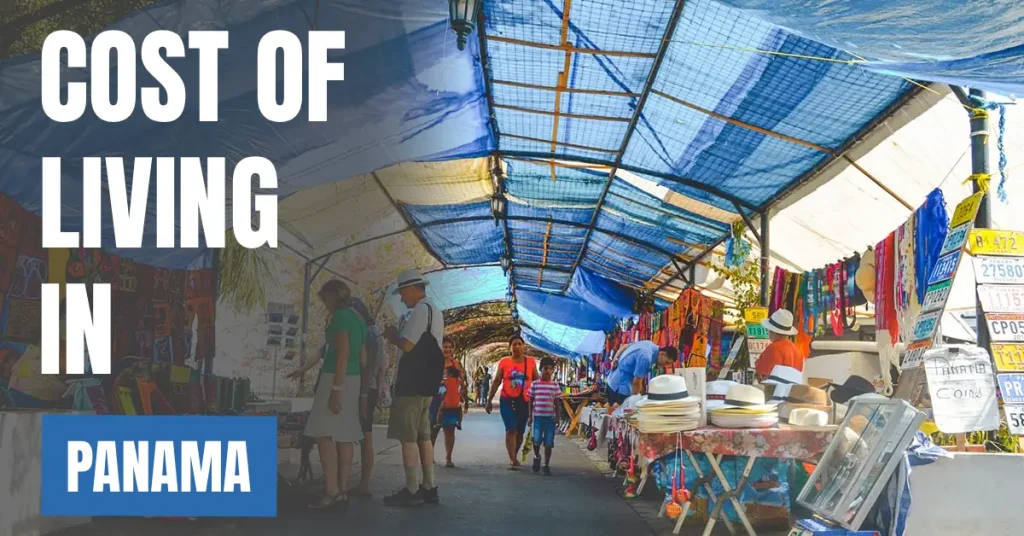
Cost of Living in Panama in 2026: Rent, Salaries and Monthly Expenses
Panama offers a combination of modern city living, tropical weather, established expat communities and comparatively affordable public transportation. However, the cost of living in Panama varies considerably between Panama City, smaller provincial cities and rural communities.
On this pageTable of Content
In 2026, a single adult renting independently should consider an estimated monthly budget of $1,100 to $2,000, including rent. A couple may need approximately $1,700 to $3,000, while a family of four can spend $2,600 to $4,500 or more. These are practical planning ranges rather than official household spending averages. The final cost depends on location, housing, healthcare, schooling and lifestyle.
Panama uses the Panamanian balboa (PAB), which is maintained at parity with the United States dollar. US dollar banknotes circulate throughout the country, alongside Panamanian coins. As a result, prices are commonly quoted in USD, and B/.1 equals US$1.
Housing is the biggest variable for many newcomers. Panama City offers modern apartments, established residential neighbourhoods and extensive commercial services, but rents are considerably higher than in many provincial communities. Air conditioning, private healthcare and international education can also add significant expenses.
This guide examines housing, groceries, transportation, utilities, healthcare, education, salaries, taxes, retirement and immigration financial requirements using available 2026 information.
Also Explore: Cost of Living in OmanCost of Living in Panama at a Glance
A single person may spend approximately $500 to $850 monthly on ordinary living expenses excluding accommodation. With an independent rental, a planning budget of $1,100 to $2,000 is more realistic. Living in desirable areas of Panama City can cost considerably more.
| Expense | Estimated Cost (USD) | Period or Basis |
|---|---|---|
| Single adult, excluding rent | $500-$850 | Monthly estimate |
| Single adult, including rent | $1,100-$2,000 | Monthly estimate |
| Couple, including rent | $1,700-$3,000 | Monthly estimate |
| Family of four, including rent | $2,600-$4,500+ | Monthly estimate |
| One-bedroom rent, Panama nationwide, outside centre | About $723 | May 2026 crowd-reported average |
| One-bedroom rent, Panama City centre | About $1,265 | May 2026 crowd-reported average |
| Groceries, single adult | $200-$350 | Monthly planning range |
| Groceries, family of four | $550-$900 | Monthly planning range |
| Household utilities | $80-$220 | Monthly estimate |
| Home internet | $30-$65 | Monthly estimate |
| Mobile service | $8-$30 | Monthly estimate |
| Average net salary, Panama City | About $965 | May 2026 crowd-reported figure |
The household budgets are illustrative estimates, not official statistics. The reported rental and salary averages come from consumer-contributed market data and should be treated as approximate benchmarks rather than guaranteed current prices.
Importantly, a local average salary may not cover the same lifestyle that an expat earning a higher foreign income can afford. Comparing monthly spending with actual disposable income is essential.
How Much Does It Cost to Live in Panama Per Month?
A budget-conscious single person sharing accommodation may manage on approximately $750 to $1,100 monthly. Someone renting a one-bedroom apartment independently should plan around $1,100 to $2,000, while a couple or family generally needs more.
These amounts assume a mixture of home cooking, ordinary utilities, public transportation or limited taxi use and moderate leisure spending. They do not include major relocation expenses, international school tuition, vehicle finance or unusually high medical costs.
Panama City is relatively expensive by regional standards in some categories, particularly desirable apartment rentals. Smaller cities may allow a lower housing budget, although imported groceries, electricity, healthcare and private transport are not necessarily much cheaper.
Housing and Rent Prices in Panama
Rent varies sharply by city, neighbourhood, apartment size, furnishings and building facilities. A property with a swimming pool, security, parking and a gym may carry higher rent or additional building charges.
Average Monthly Apartment Rent
The following figures are approximate consumer-reported averages recorded during May 2026. They provide useful market comparisons but should not be mistaken for government rental statistics or current advertised prices.
| Apartment Type | Panama Nationwide | Panama City |
|---|---|---|
| One bedroom, city centre | $946 | $1,265 |
| One bedroom, outside centre | $723 | $960 |
| Three bedrooms, city centre | $1,674 | $2,151 |
| Three bedrooms, outside centre | $1,251 | $1,509 |
Source: Numbeo's Panama cost database and Panama City price data.
These figures show that a typical central Panama City apartment can cost considerably more than the general $400-$700 rental range sometimes quoted for Panama. Lower rents may still be found in certain smaller towns, shared housing or less central properties, but availability must be checked individually.
Renting in Different Parts of Panama
Panama City offers the widest selection of modern apartment buildings, but premium neighbourhoods such as Punta Pacifica, Costa del Este and parts of San Francisco can command higher prices.
El Cangrejo and other established residential areas may offer alternatives, although pricing still depends on the property. In David and Santiago, housing is often more affordable than in the capital. Boquete attracts retirees and foreign residents, so desirable properties can be expensive despite the smaller-town setting.
Coronado and coastal communities may have seasonal or lifestyle-related rental premiums. Touristic areas of Bocas del Toro can also be expensive, particularly where housing supply is limited.
Rental Deposits and Upfront Costs
New residents should plan for an initial rental deposit, the first month's rent, moving expenses and potentially furniture or utility connection charges. Deposit requirements depend on the contract and applicable rental regulations, so tenants should verify the legal procedure and request written documentation.
For example, if a rental requires a deposit equal to one month's $900 rent, the first month and deposit together would require $1,800. This is an illustration, not a universal legal deposit rule.
Always verify who pays condominium maintenance fees, utilities, parking and internet charges before signing a lease.
Buying Property in Panama
May 2026 consumer-reported figures suggested an average city-centre apartment purchase price of about $3,008 per square metre nationally and $3,128 in central Panama City. Outside central areas, the reported averages were approximately $1,699 and $1,730 respectively.
Actual sale prices vary greatly by building age, neighbourhood, ocean views, property condition and financing arrangements. Buyers should also consider legal fees, maintenance charges, property taxes where applicable and mortgage costs.
Cost of Living by City and Region
Panama City is generally the most expensive choice for an urban expat lifestyle, especially when renting a modern apartment. David and Santiago can offer lower housing costs, while Boquete, Coronado and tourist-oriented areas may be expensive for particular property types.
| Location | General Cost Pattern | Important Consideration |
|---|---|---|
| Panama City | Higher housing costs | Modern services, employment and public transport |
| David | Often lower rent | Transport and air-conditioning needs |
| Santiago | Generally more budget-friendly | Smaller rental and employment markets |
| Boquete | Highly variable | Expats and retirees increase demand in some areas |
| Coronado | Variable, often lifestyle-driven | Car dependence and gated-community fees |
| Bocas del Toro | Variable, potentially high | Tourism, transport and imported supplies |
These are qualitative comparisons rather than verified average rents for every location. Reliable, consistently sampled 2026 city-level housing data are limited outside the capital, and listings should be checked before relocation.
Food and Grocery Costs in Panama
One adult preparing most meals at home may budget approximately $200 to $350 per month for groceries. A family of four might allow $550 to $900. These are planning allowances that vary according to diet, shopping location and the consumption of imported products.
Locally produced staples, seasonal fruit and vegetables can be relatively affordable. Imported specialty foods, branded products and shopping exclusively at premium supermarkets can make the food budget considerably higher.
Typical Grocery Prices in 2026
| Product | Approximate Price (USD) |
|---|---|
| Milk, 1 litre | $1.85 |
| Bread, 500 g | $2.57 |
| Rice, 1 kg | $2.73 |
| Eggs, 12 | $2.76 |
| Chicken fillets, 1 kg | $6.08 |
| Beef, 1 kg | $10.34 |
| Apples, 1 kg | $4.23 |
| Bananas, 1 kg | $1.55 |
| Tomatoes, 1 kg | $3.98 |
| Potatoes, 1 kg | $2.90 |
These are rounded Panama City crowd-reported average prices from May 2026, not a government-regulated grocery basket. Individual supermarkets, traditional markets and seasonal promotions may offer different prices.
Shopping at produce markets, comparing supermarket promotions and choosing local products instead of imported equivalents can help households control costs.
Restaurant and Eating Out Costs
A casual restaurant meal in Panama City commonly costs around $10, while a mid-range dinner for two may cost approximately $50 before additional drinks or optional expenses.
| Expense | Indicative Cost |
|---|---|
| Inexpensive restaurant meal | $5-$20 |
| Mid-range meal for two | $40-$100 |
| Fast-food combo | $7-$8 |
| Cappuccino | $2-$5 |
| Soft drink at restaurant | $1-$2.50 |
| Small bottled water at restaurant | $1-$2 |
These figures represent observed market ranges, not fixed prices. Local cafeterias, neighbourhood restaurants and simple lunch options can cost less than tourist-oriented establishments, international chains and premium restaurants.
People who regularly eat at restaurants should create a separate dining budget rather than assuming their grocery allowance covers eating out.
Utilities and Electricity Costs in Panama
Electricity, water and other household utility expenses may cost approximately $80 to $220 per month for a typical rented household, but air-conditioning use can substantially change the bill.
Panama's tropical climate means many households depend on fans or air conditioning throughout the year. Electricity consumption varies with the size of the apartment, cooling equipment, insulation and number of residents.
A smaller home with efficient air conditioning may have much lower electricity costs than a large condominium where cooling is used continuously.
When comparing rentals, ask for recent electricity bills rather than relying on the landlord's verbal estimate. Check whether water, waste collection, gas or building maintenance is included in the rent.
Internet and Mobile Phone Costs
Home internet may cost approximately $30 to $65 per month, while ordinary mobile plans or prepaid arrangements may cost around $8 to $30 monthly, depending on data allowances and provider.
Internet coverage and service quality are generally easier to assess in major urban areas than in remote communities. Connection speeds and reliability can vary by building and neighbourhood.
Remote workers should verify actual broadband installation options, upload speeds and backup mobile coverage before choosing accommodation. A cheaper rental may not be suitable if dependable connectivity is essential.
Transportation Costs in Panama
Public transportation is one of Panama's more affordable everyday services, particularly in Panama City. The metro and bus network can help residents avoid the larger costs associated with owning and operating a car.
Metro and Public Bus Costs
Common Panama City transit fares are approximately $0.35 for Metro Line 1 and $0.50 for Metro Line 2, while standard urban bus fares can begin at around $0.25. Other routes and services can cost more.
A commuter making two $0.35 metro journeys per working day over 22 days would spend $15.40 in basic fares before additional journeys or transfers. This illustrates why a $20-$40 monthly transit allowance can be achievable for some commuters, although actual costs vary.
Panama does not provide universally free metro or bus travel to all residents. Passengers should confirm current ticket prices, transfer conditions and concessions with their transport operator.
Taxi, Ride-Hailing and Car Ownership
Taxi and app-based transport costs vary with distance, location, demand and traffic. Regular rides can become a substantial expense even when individual fares seem inexpensive.
Car owners must account for fuel, insurance, parking, repairs and maintenance. Panama City congestion can increase commuting time, while residents of rural or beach communities may need vehicles because public transportation is less convenient.
A household considering cheaper housing outside the capital should include fuel and vehicle costs before deciding that the location is more affordable.
Healthcare Costs in Panama
Panama has both public and private healthcare systems. Healthcare is not automatically free for every resident or foreign national. Access, patient charges and insurance arrangements depend on eligibility and the provider.
Public Healthcare and Social Security
The Caja de Seguro Social (CSS) provides healthcare and social security services to eligible insured workers, pensioners and other qualifying beneficiaries. Separately, the Ministry of Health operates public healthcare facilities with their own arrangements and patient charges.
Coverage through CSS depends on registration, contribution history and applicable beneficiary rules. New arrivals without qualifying coverage should not assume they will receive the same benefits as insured employees.
An important administrative change took effect on 1 May 2026. Panamanian insured citizens can generally access CSS services using their national identity card, while insured foreign nationals must continue presenting the physical CSS insurance card under the published rules.
See the CSS announcement dated April 2026.
Private Healthcare and Insurance
Private medical services can offer additional provider choices and different appointment arrangements, but costs vary significantly among clinics, hospitals and specialists.
Basic outpatient consultations may cost tens of dollars, while specialist treatment, diagnostic procedures, hospital admission and surgery can cost much more. An old estimate such as $20-$60 per visit does not adequately represent the full cost of private healthcare.
Private insurance premiums depend on age, medical history, deductibles, coverage limits and provider networks. Expats, retirees and residents who are not covered by CSS should obtain individual insurance quotations and review exclusions carefully.
Healthcare budgets should include prescription medication, dental care and potential out-of-pocket expenses, not just consultation fees.
Education and Childcare Costs in Panama
Public schooling is generally available without ordinary tuition charges at the compulsory education levels, subject to enrollment and eligibility requirements. Families may still pay for uniforms, books, transportation, meals and school supplies.
Private and international schools can charge substantially more, particularly in Panama City.
| Education Type | Cost Considerations |
|---|---|
| Public schooling | No ordinary public-school tuition, but related expenses may apply |
| Private local schooling | Tuition and other charges depend on institution |
| International primary schooling | About $8,688 per year, reported national market average |
| International primary schooling in Panama City | About $10,693 per year, reported market average |
| Private childcare | Varies by age, hours, location and provider |
The international school averages are from May 2026 consumer reports. The city-level reported range was approximately $6,850 to $20,000 annually, demonstrating why a single monthly education estimate is unreliable.
Families should also ask about admission charges, registration fees, uniforms, transportation and any additional school programmes. University fees vary by institution, programme and enrollment status.
Salaries and Average Earnings in Panama
Average earnings in Panama vary widely across occupations, formal and informal employment, industries and geographic areas. It is especially important to distinguish locally earned income from the salaries or pensions received by foreign residents.
May 2026 consumer-contributed data reported an average monthly net salary of approximately $824 nationwide and $965 in Panama City. These figures are not official government salary statistics and should not be interpreted as a representative wage for every worker.
| Reported Measure | Monthly Amount |
|---|---|
| Panama national average net salary, crowdsourced | Approximately $824 |
| Panama City average net salary, crowdsourced | Approximately $965 |
The difference between local earnings and rents in desirable urban areas creates genuine affordability concerns. A person earning approximately $965 after tax would struggle to rent a typical central Panama City one-bedroom apartment independently at a reported average of about $1,265.
This mismatch explains why roommates, multi-earner households, lower-cost neighbourhoods and employer-supported housing can be important.
Minimum Wage in Panama in 2026
Panama does not have one universal monthly minimum wage covering every employee. Minimum rates differ by economic activity, occupation, business size and designated region.
Decree No. 13, dated 31 December 2025 and published in the Official Gazette on 6 January 2026, introduced updated minimum wage rates effective 16 January 2026.
The Ministry of Labour and Workforce Development (MITRADEL) explained that the changes cover 59 rates across 74 economic activities and affect more than 400,000 workers.
For example, the ministry described agreed increases of $10 per month for domestic workers in Region 1, $12 for security personnel in both regions and $9.50 for certain restaurant, hotel and freight transport categories. These amounts are increases, not the workers' complete minimum salaries.
Workers must identify the correct economic activity, occupation and region before determining their lawful hourly or monthly minimum.
Check MITRADEL's minimum wage guidance and the official 2026 wage decree.
Income Tax and Take-Home Pay in Panama
Panama's personal income tax rules can significantly affect disposable earnings. According to the Dirección General de Ingresos (DGI), the general progressive rates for taxable net income are:
| Annual Taxable Net Income | Income Tax Treatment |
|---|---|
| Up to $11,000 | 0% |
| Above $11,000 up to $50,000 | 15% on the amount exceeding $11,000 |
| Above $50,000 | $5,850 plus 25% on the amount exceeding $50,000 |
These are marginal income-tax bands. They do not mean that all income is taxed at the highest applicable rate. Social security and other applicable payroll contributions can also affect take-home pay.
Panama generally operates a territorial approach to income taxation, but the treatment of foreign-source income, employment performed in Panama and cross-border business arrangements requires careful legal and tax analysis. Residents should not assume all remote-work income is automatically exempt.
See the DGI personal income tax rates.
What Salary Is Needed to Live Comfortably in Panama?
A single adult renting independently may aim for approximately $1,500 to $2,200 in monthly disposable income for a moderate lifestyle. In central Panama City, a more comfortable budget may require $2,000 or more, depending on rent and spending habits.
For couples sharing accommodation, combined take-home earnings of roughly $2,000 to $3,000 may support a moderate lifestyle. Families may need $3,000 to $4,500 or more, particularly where private schooling, insurance and car ownership are involved.
These amounts are affordability targets rather than official income standards. Someone earning an overseas salary or pension may find certain areas more manageable than a worker relying on local entry-level wages.
Realistic Monthly Budget Examples
The following four examples show how different households might allocate their monthly spending. Every total includes rent, but excludes major one-time moving expenses and exceptional costs. They are illustrative calculations rather than observed national averages.
Budget-Conscious Single Person
This example assumes shared housing, limited entertainment and primarily home-prepared meals.
| Expense | Monthly Cost |
|---|---|
| Shared accommodation | $350 |
| Utilities | $45 |
| Groceries | $200 |
| Transport | $35 |
| Internet and mobile | $30 |
| Healthcare allowance | $40 |
| Dining and leisure | $70 |
| Other personal expenses | $80 |
| Total Including Rent | $850 |
This budget is relatively restrictive and depends on finding genuinely affordable shared accommodation. It does not represent a comfortable independent apartment lifestyle.
Moderate Single Person
This example assumes an independent rental in a reasonably priced location, home cooking and modest discretionary spending.
| Expense | Monthly Cost |
|---|---|
| Rent | $800 |
| Utilities | $100 |
| Groceries | $280 |
| Transport | $60 |
| Internet and mobile | $55 |
| Healthcare allowance | $80 |
| Dining and leisure | $150 |
| Other personal expenses | $125 |
| Total Including Rent | $1,650 |
Couple Sharing an Apartment
This example assumes two adults with shared household costs and no private-school or dependent-child expenses.
| Expense | Monthly Cost |
|---|---|
| Rent | $1,000 |
| Utilities | $150 |
| Groceries | $450 |
| Transport | $120 |
| Internet and mobile | $80 |
| Healthcare allowance | $150 |
| Dining and leisure | $200 |
| Other personal expenses | $200 |
| Total Including Rent | $2,350 |
Family of Four
This example assumes two adults and two children, a family-sized home, ordinary grocery shopping, modest leisure spending and a limited education allowance. It does not include expensive international school tuition.
| Expense | Monthly Cost |
|---|---|
| Rent | $1,300 |
| Utilities | $220 |
| Groceries | $750 |
| Transportation | $220 |
| Internet and mobile | $100 |
| Healthcare allowance | $200 |
| School and childcare expenses | $250 |
| Dining and leisure | $250 |
| Other personal expenses | $300 |
| Total Including Rent | $3,590 |
These healthcare allowances are reserved amounts, not quotations for comprehensive private insurance. A family with two children attending international schools could face thousands of additional dollars in yearly education costs.
Entertainment and Lifestyle Expenses
Leisure spending depends on how frequently residents visit restaurants, gyms, cinemas, beaches and tourist attractions.
A basic gym membership might cost approximately $20 to $50 per month, while cinema tickets may cost around $5 to $10. Premium clubs, organised activities and frequent trips to tourist destinations can increase spending considerably.
Some outdoor activities are inexpensive, but transportation and accommodation can make weekend excursions costly. Families should include children's activities and school-holiday spending in their budgets.
Living Costs for Students, Retirees and Expats
Students
Students can reduce expenses by sharing accommodation, shopping locally and using public transport. However, tuition fees, supplies and university-related charges vary by institution, and foreign students should verify their immigration and enrollment conditions.
Retirees
Retirees receiving reliable foreign pensions may find Panama attractive, particularly outside expensive parts of Panama City. Nevertheless, healthcare coverage, age-related insurance premiums, medication and accessibility requirements deserve careful attention.
Remote Workers and Expats
Foreign residents earning in US dollars or receiving international income may find local consumer expenses manageable. However, remote workers should consider their legal permission to remain and work, applicable taxes, health insurance and reliable internet connectivity.
Cost of Living Versus Residency Financial Requirements
Panama's immigration financial thresholds are separate from actual household living costs. Meeting a residence permit's minimum income requirement does not guarantee that the applicant can afford a comfortable lifestyle.
Pensionado Residency Requirements
Panama's Pensionado programme generally requires a qualifying lifetime pension of at least $1,000 per month. Official immigration guidance provides a possible $750 monthly pension threshold for applicants who personally own qualifying Panamanian property valued above $100,000.
Additional conditions and documentation apply. Applicants may also need to demonstrate further financial capacity for dependants under applicable immigration rules.
The $1,000 qualifying pension is an immigration eligibility threshold, not a recommended retirement budget. In many Panama City neighbourhoods, it may not cover rent and all basic expenses for an independent retiree.
See the official Pensionado residency procedure.
Other Residency Categories
Investor, employment, family-related and other immigration categories have different financial and documentary requirements. Applicants should verify the current rules for their intended pathway with Panama's National Immigration Service.
No single monthly living-cost estimate can substitute for the legal financial conditions of a specific immigration category.
Hidden Expenses New Residents Often Overlook
- Rental deposits and moving costs: Upfront housing expenses may require several payments before move-in.
- Air conditioning: Continuous cooling can noticeably increase electricity consumption.
- Building maintenance: Condominium fees and shared amenities may be charged separately.
- Private healthcare: Insurance exclusions, hospitalisation and specialist treatment can be expensive.
- International schooling: Tuition, enrollment fees and transportation may exceed initial estimates.
- Vehicle ownership: Fuel, insurance, registration, repairs and parking add to monthly costs.
- Imported goods: Specialty groceries, electronics and branded products may cost more than expected.
- Immigration and legal expenses: Applications, legal representation, certified documents and renewals can involve substantial fees.
- Internet reliability: Remote workers may require backup connections.
- Travel: Trips between provinces, islands and international destinations can affect annual spending.
Is Panama Cheaper Than Costa Rica, Mexico and Colombia?
Panama generally has a lower overall consumer price index than Costa Rica, but higher costs than Mexico and several other Central American countries. Individual rental markets can tell a different story.
Numbeo's 2026 Central America comparison provides the following indicative indices:
| Country | Cost of Living Index | Rent Index | Cost Plus Rent Index |
|---|---|---|---|
| Costa Rica | 52.9 | 20.3 | 38.3 |
| Panama | 45.5 | 23.2 | 35.6 |
| Mexico | 42.6 | 17.8 | 31.5 |
| Guatemala | 40.4 | 16.0 | 29.5 |
| El Salvador | 39.6 | 16.6 | 29.4 |
The indices show that Panama's rent index exceeds Costa Rica's even though Panama's overall consumer price index is lower. This is why claiming that every aspect of life in Panama is cheaper than Costa Rica would be inaccurate.
Mexico generally has lower reported overall and rental indices, although Mexico City and premium resort locations can be expensive. Colombia may offer lower costs in many categories, but the outcome depends on the selected city and exchange-rate conditions.
These are crowdsourced comparative indicators, not official government price-level statistics. Differences in samples, housing quality and consumer spending patterns limit direct comparisons.
See Numbeo's 2026 Central America rankings.
Is Panama Affordable for Foreign Residents?
Panama can be affordable for people with sufficient disposable income and flexible housing preferences. It is less affordable for residents whose wages are low relative to central Panama City rent or who require expensive private services.
For a retiree with $2,000 to $3,000 in dependable monthly income, many areas may offer a reasonable lifestyle, depending on health needs and accommodation. A $1,000 pension may satisfy one immigration requirement without providing the same financial comfort.
For families, the choice between public and international education can transform the budget. For working adults, the key question is whether take-home pay can cover rent, utilities, food, transport and medical expenses with enough savings left over for emergencies.
How to Save Money While Living in Panama
- Compare rental costs across multiple neighbourhoods and cities rather than focusing exclusively on central Panama City.
- Consider shared housing or smaller apartments when starting out.
- Use the metro and regular public transportation where practical.
- Choose local seasonal groceries instead of relying on imported brands.
- Ask landlords for actual electricity bills and information about condominium fees.
- Compare insurance coverage rather than choosing policies on premiums alone.
- Review all school fees, including annual enrollment charges.
- Keep an emergency fund for healthcare, repairs and unexpected relocation costs.
- Verify visa and residency financial requirements separately from daily living expenses.
Conclusion: Is Panama Worth the Cost?
Panama offers a wide range of living arrangements, from relatively economical provincial communities to expensive modern apartments in the capital. The use of US dollars, accessible public transportation and a range of healthcare options make the country attractive to some expats and retirees.
However, affordability depends strongly on income. A single renter may need around $1,100 to $2,000 monthly, while a family of four may require $2,600 to $4,500 or more. Premium housing, international education and private healthcare can increase these figures significantly.
Before relocating, compare actual property listings, calculate after-tax income, confirm healthcare eligibility and understand your immigration conditions. A carefully prepared household budget will provide a more reliable picture than a national average alone.
Sources and Methodology
This guide was reviewed on 5 November 2026. It combines Panama government guidance, published regulations, consumer-contributed cost databases and clearly labelled illustrative household budgets.
Official sources were prioritised for minimum wage rules, income tax, social security administration and immigration requirements. Rent, consumer prices and net salary indicators were drawn from May 2026 market datasets because a directly comparable official national dataset was not established for every category.
Consumer-contributed databases may contain small or uneven samples. For example, Numbeo's May 2026 country dataset reported 844 entries from 76 contributors over the preceding 12 months, while its Panama City dataset reported 598 entries from 55 contributors. These prices are indicative rather than definitive national averages.
Rental advertisements, insurance premiums, school fees and grocery prices can change. Household budget examples are constructed estimates, not official expenditure survey findings. Multiple sources were compared where appropriate, especially for cost differences between regions and countries.
- Panama Official Gazette: Executive Decree No. 13 of 2025, Minimum Wage Rates Effective 2026
- MITRADEL: Minimum Wage Information
- MITRADEL: 2026 Wage Agreement Announcement
- Dirección General de Ingresos: Income Tax Rates
- Caja de Seguro Social: May 2026 Identity and Coverage Procedure
- Panamá Digital: Pensionado Residency Requirements
- Numbeo: Panama Living Cost Data
- Numbeo: Panama City Living Cost Data
- Numbeo: Central America Cost of Living Rankings 2026
- Visaboards: Original Cost of Living in Panama Guide
Frequently Asked Questions
How much does it cost to live in Panama per month in 2026?
A single adult renting independently may need approximately $1,100 to $2,000 per month, including housing, groceries, utilities, transportation and personal expenses. Excluding rent, an illustrative budget is around $500 to $850. Sharing accommodation can reduce costs, while premium Panama City apartments and frequent dining out can increase spending considerably.
Is Panama expensive to live in?
Panama has moderate to relatively high costs compared with several other Central American countries. Public transportation can be inexpensive, but desirable housing in Panama City, imported products, private healthcare and international schooling can be costly. The country can be affordable for people earning higher international incomes, but residents relying on modest local salaries may face financial pressure.
What is the average rent in Panama?
May 2026 consumer-reported data put the average monthly rent for a one-bedroom apartment outside central areas at approximately $723 nationwide and $960 in Panama City. A central Panama City one-bedroom averaged about $1,265. Actual rents vary widely, and less expensive accommodation may be found in provincial towns or shared housing.
What salary is enough to live comfortably in Panama?
A single person renting independently may aim for approximately $1,500 to $2,200 in monthly take-home income, depending on location and lifestyle. A family with children may need $3,000 to $4,500 or more. These are practical planning targets, not official salary requirements. Housing, healthcare, schooling and car ownership are major factors.
What is the minimum wage in Panama in 2026?
Panama has multiple minimum wage rates rather than one universal monthly amount. Executive Decree No. 13 introduced new rates effective 16 January 2026. The applicable minimum depends on occupation, industry, employer size and region. Employees should consult MITRADEL's official wage tables to identify the correct legal rate for their employment category.
Is healthcare free in Panama for expats?
No. Healthcare is not automatically free for all expats. Eligible workers and beneficiaries may access services through Panama's Social Security Fund, while the public Ministry of Health network operates under separate arrangements. Uninsured residents and people using private providers may face consultation, treatment, hospital and medication expenses. Foreign residents should verify eligibility and insurance coverage before relocating.
How much does public transportation cost in Panama City?
Common Panama City metro fares are approximately $0.35 on Line 1 and $0.50 on Line 2, while standard urban bus fares can start around $0.25. A regular commuter may spend relatively little on basic transit compared with maintaining a vehicle. Actual spending depends on routes, transfers and frequency, and transportation is not universally free.
Is Panama cheaper than Costa Rica?
Panama has a lower overall consumer price index than Costa Rica in Numbeo's 2026 comparison, with scores of 45.5 and 52.9 respectively. However, Panama's rent index is higher at 23.2 compared with Costa Rica's 20.3. Actual affordability depends on the city, property type, household spending and income rather than a national index alone.
What is the cheapest place to live in Panama?
Smaller cities such as David and Santiago can offer lower housing costs than many central Panama City neighbourhoods. However, no single location is guaranteed to be cheapest for every household. Transport needs, employment opportunities, healthcare access and local rental availability matter. Popular retirement and beach communities can have higher prices than their size suggests.
How much does a family of four need in Panama?
A family of four may require approximately $2,600 to $4,500 or more per month, including rent, food, utilities, transport and routine household spending. The worked moderate family budget in this guide totals $3,590. International school tuition, private insurance and car ownership can raise expenses substantially, especially in Panama City.
How much pension is required for Panama's Pensionado visa?
The standard Pensionado residency pathway generally requires a qualifying lifetime pension of at least $1,000 per month. An alternative $750 monthly minimum may apply when the applicant personally owns qualifying Panamanian property worth more than $100,000, subject to official conditions. This is an immigration threshold, not a recommended retirement budget, and dependent-related requirements may also apply.
Can foreigners live comfortably in Panama on $1,500 a month?
A single foreign resident may be able to live on $1,500 per month in a lower-cost area with modest accommodation, home cooking and careful spending. It can be difficult in premium Panama City neighbourhoods or when private healthcare costs are high. Couples, families and people requiring international schooling generally need larger budgets.
Join the conversation
Have thoughts on this topic? Share them with others.
Ask questions, share experience, and learn from the Visaboards Community.