
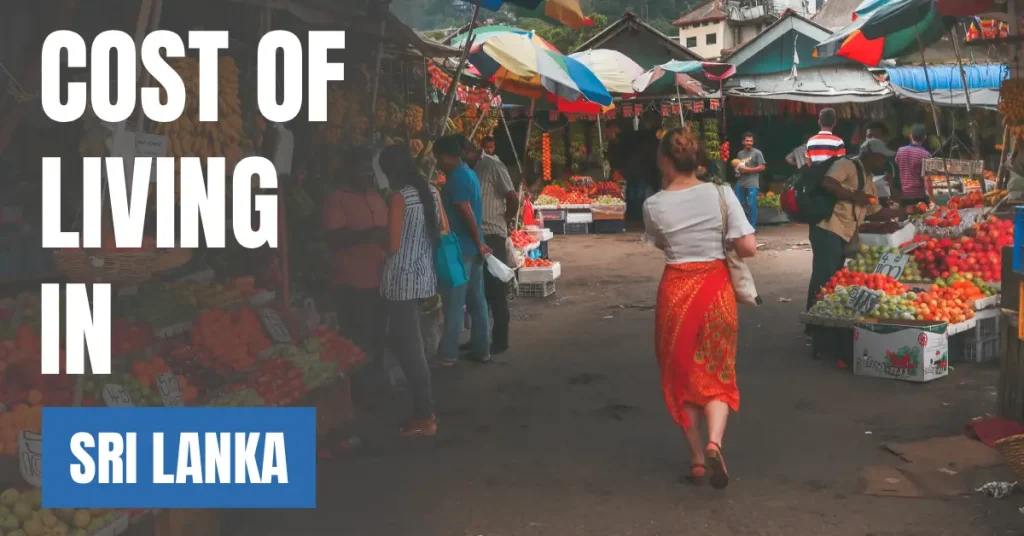
Cost of Living in Sri Lanka 2026: Rent, Salaries and Monthly Expenses
The cost of living in Sri Lanka in 2026 depends on where you live, whether you rent independently, and how much you spend on imported products, transport and private services. A single person renting modest accommodation may need approximately LKR 110,000 to LKR 220,000 per month, while someone choosing a modern apartment in central Colombo may spend LKR 250,000 to LKR 450,000 or more.
On this pageTable of Content
A family of four renting an ordinary home may need approximately LKR 250,000 to LKR 500,000 monthly before expensive private or international education. These are practical planning estimates, not official household averages.
Sri Lanka offers comparatively affordable local food, public transportation and housing outside premium districts. However, inflation, electricity costs, imported goods and the difference between local salaries and expatriate rental prices can make affordability more complicated than it first appears.
According to the Department of Census and Statistics, the preliminary Household Income and Expenditure Survey for January to March 2025 estimated average monthly household income at LKR 120,266 and average expenditure at LKR 116,191. These historical national figures should not be confused with the budget a foreign resident might need to rent a privately advertised property in Colombo.
This guide uses Sri Lankan rupees (LKR) as the primary currency and examines housing, groceries, restaurants, utilities, healthcare, education, wages, taxes and immigration-related financial requirements using information reviewed in November 2026.
Cost of Living in Sri Lanka at a Glance
A single renter may need approximately LKR 110,000 to LKR 220,000 monthly for a relatively economical lifestyle including accommodation. Costs rise significantly for premium properties, frequent private transport and international education.
| Expense | Estimated Monthly Cost (LKR) | Details |
|---|---|---|
| Single person, excluding rent | 55,000–110,000 | Routine living expenses |
| Single person, including modest rent | 110,000–220,000 | Economical to moderate lifestyle |
| Single person, private central Colombo apartment | 250,000–450,000+ | Including rent and daily expenses |
| Couple, excluding rent | 90,000–170,000 | Shared household expenses |
| Family of four, including rent | 250,000–500,000+ | Before substantial private school fees |
| One-bedroom apartment outside central Colombo | 40,000–120,000 | Monthly rental estimate |
| One-bedroom apartment in central Colombo | 100,000–250,000+ | Monthly rental estimate |
| Groceries, one person | 25,000–45,000 | Mostly home-prepared meals |
| Public transportation, one person | 3,000–10,000 | Depends on journey frequency |
| Electricity, water and household utilities | 8,000–25,000+ | Entire small household |
| Home internet | 2,500–6,000+ | Depending on speed and data allowance |
| Mobile phone service | 800–2,500+ | Monthly plan estimate |
The figures above are rounded planning ranges, not guaranteed prices or government-published averages. Market data from Numbeo's Sri Lanka cost database and its Colombo comparison show large rental differences between national estimates and premium capital-city accommodation.
Prices may also change quickly. Sri Lanka's Colombo Consumer Price Index reached 209.9 in October 2026, with annual Colombo inflation of approximately 8.3%. The national inflation measure for September 2026 reported annual inflation of 8.1%. These are different geographic price indices and should not be treated as interchangeable.
How Much Does It Cost to Live in Sri Lanka Per Month?
A single person may need LKR 110,000 to LKR 220,000 per month including modest rent, food, utilities, transport and personal expenses. Living independently in a premium Colombo apartment can require LKR 250,000 to LKR 450,000 or more.
Without rent, a relatively economical adult budget may be approximately LKR 55,000 to LKR 110,000 monthly. Cooking at home, using buses or trains and limiting imported products can help keep spending toward the lower end.
For a couple sharing accommodation, the cost per person can fall because rent, utilities and household purchases are shared. Families face higher spending on food, medical needs, transport and education.
One important limitation is that national household expenditure statistics reflect existing Sri Lankan households with different property arrangements and consumption patterns. A local family living in an owned home may spend considerably less cash each month than a newly arrived expatriate renting a furnished apartment.
Housing and Rent Prices in Sri Lanka
Rental accommodation can cost approximately LKR 35,000 per month for some modest properties outside expensive areas, while modern central Colombo apartments can exceed LKR 250,000 monthly. Location, furnishing, property condition and rental duration are major factors.
Average Apartment Rental Estimates
| Accommodation Type | Estimated Monthly Rent (LKR) |
|---|---|
| Basic room or shared accommodation | 20,000–50,000 |
| One-bedroom apartment in a less expensive town | 35,000–75,000 |
| One-bedroom apartment outside central Colombo | 40,000–120,000 |
| One-bedroom apartment in central Colombo | 100,000–250,000+ |
| Three-bedroom apartment outside central Colombo | 70,000–180,000+ |
| Three-bedroom apartment in central Colombo | 200,000–500,000+ |
The differences between national and city-level estimates are substantial. Numbeo's June 2026 country-level data placed a one-bedroom city-centre apartment at approximately LKR 113,047, while its Colombo-specific estimate was around LKR 181,461. Both figures are crowdsourced and depend on their reporting samples.
Therefore, a single national rental average should not be used to calculate a newcomer budget in Colombo.
Renting in Colombo
Colombo generally has higher rents because it concentrates commercial offices, international schools, hospitals, shopping areas and demand for professionally managed accommodation.
Neighbourhoods such as Colombo 3, Colombo 5 and Colombo 7 can command premium rents, particularly for furnished apartments with security, parking, backup power and other facilities.
Properties in suburbs such as Dehiwala, Nugegoda, Maharagama and parts of the wider metropolitan area may provide lower-cost alternatives, although commuting time and property standards must be considered.
Renting Outside Colombo
Kandy, Galle, Matara, Jaffna and many smaller towns can offer comparatively economical accommodation, especially away from tourist-heavy neighbourhoods.
However, furnished coastal villas, properties aimed at digital nomads and accommodation close to popular beaches may be priced differently from ordinary local housing.
Rental Deposits and Upfront Expenses
Renters should budget for deposits, advance rent, utility connections and furnishing expenses. Some landlords may request several months of rent upfront or significant security deposits, but terms are negotiable and vary by property.
Foreign renters should confirm the lease duration, currency of payment, deposit refund conditions, repair responsibilities and any restrictions on the intended residential use.
Buying Property
Property purchase costs vary widely between Colombo apartments, suburban houses and properties in regional towns.
Foreign buyers face legal restrictions on certain forms of property ownership, including land ownership rules. Condominium purchases and lease structures may be treated differently. Buyers should obtain current legal advice before making a deposit, particularly where ownership, registration or foreign exchange regulations apply.
Food and Grocery Costs in Sri Lanka
A single person who mainly cooks at home may spend approximately LKR 25,000 to LKR 45,000 per month on groceries. Families usually spend more, while imported food products and premium supermarkets can substantially increase the bill.
Typical Grocery Prices in 2026
| Grocery Item | Estimated Price (LKR) |
|---|---|
| Milk, 1 litre | 450–700 |
| Bread, one loaf | 150–300 |
| Rice, 1 kg | 200–350 |
| Eggs, 12 | 400–700 |
| Chicken, 1 kg | 1,000–1,700 |
| Beef, 1 kg | 2,000–3,500+ |
| Bananas, 1 kg | 200–500 |
| Apples, 1 kg | 700–1,400 |
| Potatoes, 1 kg | 250–500 |
| Tomatoes, 1 kg | 200–600 |
| Bottled water, 1.5 litres | 120–250 |
These are approximate shopping ranges rather than a verified single-day price survey. Seasonal availability, product origin, market location and inflation affect actual prices.
The Department of Census and Statistics publishes weekly retail prices for selected food items in Colombo markets. Those releases are more appropriate for checking short-term price changes than relying on older fixed grocery tables.
How to Save Money on Groceries
Buying locally grown vegetables, seasonal fruit, rice and commonly available ingredients can help households manage food spending. Neighbourhood markets may offer different prices from supermarkets, although freshness, quality and availability still matter.
Imported dairy products, branded snacks, specialty ingredients and premium meat products can be expensive relative to local earnings.
Restaurant and Eating Out Costs
A basic meal at a local restaurant may cost around LKR 600 to LKR 1,500, while dining at a mid-range restaurant or tourist-oriented venue can be considerably more expensive.
| Meal or Drink | Estimated Price (LKR) |
|---|---|
| Simple local meal | 500–1,000 |
| Inexpensive restaurant meal | 600–1,500 |
| Fast-food combination meal | 1,200–2,200 |
| Mid-range meal for two | 5,000–10,000+ |
| Cafe coffee | 500–1,200 |
| Local tea | 100–350 |
Local rice-and-curry meals, short eats and modest neighbourhood restaurants are generally more affordable than restaurants targeting international visitors.
In tourist areas, prices may be higher because of location, ambience and demand. Restaurant service charges and applicable taxes can also affect the final bill.
Electricity, Water and Utility Costs
A modest household may budget approximately LKR 8,000 to LKR 25,000 per month for electricity, water and basic utilities. Large air-conditioned properties can cost significantly more.
Sri Lanka's electricity costs depend on consumption bands, tariff categories and revisions by the relevant authorities. Two otherwise similar homes may have very different bills if one uses air-conditioning frequently.
Water charges, cooking gas and building maintenance fees should be considered separately when they are not included in rent.
Residents planning to work from home should also ask whether their property has reliable electricity and what backup arrangements are available.
Internet and Mobile Phone Costs
Home internet plans may cost approximately LKR 2,500 to LKR 6,000 or more per month, while mobile plans often require approximately LKR 800 to LKR 2,500 or more depending on data usage and service terms.
Fibre internet is available in selected locations, but connectivity, advertised speeds and installation arrangements vary. Rural and remote coastal properties may have fewer options than major urban neighbourhoods.
When comparing packages, residents should check data limits, speed restrictions, taxes, equipment charges and whether the property already has an active connection.
For digital nomads and remote workers, reliable broadband and mobile backup may be more important than finding the lowest monthly internet price.
Transportation Costs in Sri Lanka
A person regularly using ordinary public buses and trains may budget approximately LKR 3,000 to LKR 10,000 monthly. Private taxis, ride-hailing, motorbikes and cars can substantially increase transportation expenses.
Public Bus Fares
Ordinary buses remain among the least expensive ways to travel in Sri Lanka. Fares depend on the route, distance and service category.
Bus fares were revised during 2026. The National Transport Commission published an interim revision effective 24 March 2026, and Sri Lanka Transport Board information records a further bus fare revision on 6 July 2026.
Consequently, older fare estimates should not automatically be presented as current ticket prices.
Official information: Sri Lanka Transport Board Bus Fares and National Transport Commission Fare Schedules.
Train Travel
Railways connect Colombo with destinations including Kandy, Galle, Matara, Jaffna and parts of the hill country. Ticket prices vary by distance, train category, seat class and reservation requirements.
Commuter trains may be economical, while reserved seats and special tourist-oriented rail experiences cost more.
Taxis and Ride-Hailing
Ride-hailing services and local taxis are widely used in urban areas. Actual fares depend on traffic, trip length, demand and vehicle type.
For someone commuting twice daily by car, monthly costs can easily exceed a public transport budget by several times.
Fuel and Private Vehicles
Fuel prices can change with government pricing decisions, international energy markets and exchange rates. Motorbike ownership may be less expensive than maintaining a car, but insurance, licensing, repairs, parking and safety remain important considerations.
Import duties and vehicle availability can make car ownership relatively expensive compared with ordinary local salaries.
Healthcare Costs in Sri Lanka
Sri Lanka provides free state-funded healthcare services to citizens through its public health system. However, foreign residents should verify applicable charges and eligibility, while private consultations, hospitals and insurance can create additional expenses.
Public Healthcare
The country has an extensive network of government hospitals and primary healthcare facilities. These provide outpatient, inpatient, preventive and specialist services.
Public healthcare is financed by the state and is generally free for Sri Lankan citizens. This does not mean that every service, every room category or every foreign patient's treatment is universally free.
The Ministry of Health also publishes rules relating to paying wards and charges for services provided to citizens and non-citizens.
Source: Ministry of Health, Health Institutions in Sri Lanka.
Private Healthcare Costs
| Service | Illustrative Cost (LKR) |
|---|---|
| Private general consultation | 2,000–5,000+ |
| Specialist consultation | 3,000–8,000+ |
| Basic laboratory tests | 1,000–5,000+ |
| Private diagnostic or health screening package | 9,500–20,000+ |
Prices vary with hospital, doctor, complexity and tests. As a published example, Sri Jayawardenepura General Hospital lists a basic medical check-up package at LKR 9,500 and a comprehensive medical check-up at LKR 14,000. These packages are not equivalent to ordinary consultation fees.
Healthcare for Expats
Foreign residents should consider private insurance covering inpatient treatment, medical emergencies, diagnostics and, where needed, medical evacuation.
Coverage may vary significantly between policies, and some immigration categories require evidence of suitable insurance. Expatriates should not assume they have the same access to publicly funded treatment as Sri Lankan citizens.
Education and Childcare Costs
Government education in Sri Lanka is provided under the country's free education system, while private and international schools charge varying tuition and associated fees.
Government Schools
Sri Lanka operates a public education system with free schooling for eligible students. The government's commitment to free education also includes the provision of selected official learning materials through education authorities.
However, uniforms, transport, additional learning materials and other related expenses may still affect household budgets.
Foreign families should confirm admission eligibility and procedures with the relevant education authorities rather than assuming that all government school places are available without restriction.
Source: Ministry of Education, Education Reform FAQs.
Private and International Schools
Private school fees may range from relatively moderate monthly amounts to significantly higher charges at premium institutions. International schools can cost several hundred thousand or more than one million rupees annually per child, depending on grade level and institution.
Application charges, registration, transport, examinations, activities and school supplies may be billed separately.
Families should request current fee schedules directly from shortlisted schools because national crowdsourced school-fee estimates are highly variable and often based on small samples.
Childcare and Preschool
Private preschool and childcare costs depend on location, opening hours, programme quality and additional services. Families should plan for monthly fees plus transport, meals and registration where applicable.
Salaries and Household Income in Sri Lanka
Salaries in Sri Lanka vary widely by occupation, sector, qualifications and geographic location. The country's relatively low local wages are important when evaluating whether housing and daily expenses are genuinely affordable.
The Department of Census and Statistics' preliminary 2025 household survey reported mean monthly household income of LKR 120,266, compared with mean expenditure of LKR 116,191. These are household measures, not individual salaries or 2026 take-home earnings.
The same preliminary survey estimated that 16.0% of the population lived below the official poverty line. The official national poverty line for September 2026 was LKR 17,742 per person per month.
A poverty threshold measures minimum assessed consumption needs. It should never be presented as an income sufficient for comfortable independent living.
Source: Department of Census and Statistics.
What Salary Is Needed to Live Comfortably in Sri Lanka?
A single person renting independently may target approximately LKR 150,000 to LKR 250,000 monthly in available income for a moderate lifestyle. In premium central Colombo accommodation, LKR 300,000 or more may be more appropriate.
For a couple, combined available income of approximately LKR 220,000 to LKR 350,000 may support a moderate lifestyle outside premium housing locations.
A family of four renting a home might need LKR 300,000 to LKR 550,000 or more, particularly when private healthcare, school fees and personal transportation are included.
These are indicative affordability benchmarks, not official wage averages or immigration thresholds.
Minimum Wage in Sri Lanka in 2026
Sri Lanka's national minimum monthly wage is LKR 30,000 from 1 January 2026, with a national minimum daily wage of LKR 1,200.
The National Minimum Wage for Workers (Amendment) Act, No. 11 of 2025 provided for increases in two stages:
| Effective Period | Monthly Minimum Wage | Daily Minimum Wage |
|---|---|---|
| 1 April to 31 December 2025 | LKR 27,000 | LKR 1,080 |
| From 1 January 2026 | LKR 30,000 | LKR 1,200 |
Earlier budgetary relief allowances were incorporated into the statutory wage framework under the related amendments.
The minimum wage is far below many independently rented urban household budgets. For example, an individual paying LKR 60,000 in rent would already need twice the national minimum monthly wage just for accommodation.
Source: Ministry of Labour, National Minimum Wage Amendments.
Taxes and Take-Home Pay in Sri Lanka
Income taxes and consumption taxes affect how much income residents have available after paying compulsory deductions and purchasing everyday goods.
Personal Income Tax
For the 2025/2026 year of assessment, Sri Lanka's Inland Revenue Department lists annual personal relief of LKR 1,800,000 for eligible resident individuals and non-resident citizens.
For eligible employment income, this corresponds to LKR 150,000 per month before tax becomes applicable, subject to the relevant tax rules and calculations.
Taxable income above the applicable relief is subject to progressive rates beginning at 6% and increasing through 18%, 24% and 30% to 36%.
Tax residency and the nature of income can affect an individual's treatment. Foreign residents should obtain advice on their particular tax position, including overseas income where relevant.
Source: Inland Revenue Department, 2025/2026 Tax Chart.
Value Added Tax
Sri Lanka's standard Value Added Tax rate is 18% for taxable supplies, although exemptions and special treatment may apply to particular goods and services.
This can affect retail prices, imported goods and service charges. Consumers should check whether the displayed price includes applicable taxes.
Source: Inland Revenue Department, VAT.
Realistic Monthly Living Budgets in Sri Lanka
The following examples are illustrative household budgets rather than official averages. Each total includes rent and the stated recurring expenses. Housing assumptions differ between cases to reflect different lifestyle choices.
1. Budget-Conscious Single Person
This example assumes a modest rented room or small accommodation outside premium Colombo districts, local meals, economical transport and limited discretionary spending.
| Expense | Monthly Cost (LKR) |
|---|---|
| Rent | 40,000 |
| Utilities | 6,000 |
| Groceries and local meals | 30,000 |
| Public transport | 5,000 |
| Internet and mobile | 4,000 |
| Healthcare allowance | 5,000 |
| Personal expenses and leisure | 10,000 |
| Total Monthly Cost | 100,000 |
2. Moderate Single Person
This example assumes a rented one-bedroom apartment outside central Colombo, regular home cooking and occasional private transport or dining.
| Expense | Monthly Cost (LKR) |
|---|---|
| Rent | 90,000 |
| Utilities | 12,000 |
| Groceries and meals | 40,000 |
| Transportation | 12,000 |
| Internet and mobile | 5,000 |
| Healthcare or insurance allowance | 10,000 |
| Dining, leisure and personal spending | 25,000 |
| Total Monthly Cost | 194,000 |
3. Couple Living in Sri Lanka
This budget assumes two adults sharing a modest apartment, with no dependants and moderate combined spending.
| Expense | Monthly Cost (LKR) |
|---|---|
| Rent | 100,000 |
| Utilities | 15,000 |
| Groceries and meals | 65,000 |
| Transportation | 20,000 |
| Internet and mobile | 7,000 |
| Healthcare or insurance allowance | 18,000 |
| Personal spending and leisure | 35,000 |
| Total Monthly Cost | 260,000 |
4. Family of Four
This example assumes two adults and two children, a rented family home, moderate transportation use and no premium international school fees.
| Expense | Monthly Cost (LKR) |
|---|---|
| Family accommodation rent | 140,000 |
| Utilities | 22,000 |
| Groceries and meals | 100,000 |
| Transportation | 35,000 |
| Internet and mobile | 8,000 |
| Healthcare or insurance allowance | 30,000 |
| School supplies and routine education expenses | 20,000 |
| Clothing, leisure and miscellaneous | 45,000 |
| Total Monthly Cost | 400,000 |
These budgets exclude large medical emergencies, relocation expenses, savings, loan repayments and substantial school tuition.
Families paying international school fees may need significantly more than the illustrated LKR 400,000 monthly total. Likewise, someone living in an owned home could require much less cash each month because rent would not apply.
Cost of Living in Colombo, Kandy, Galle and Other Areas
Colombo generally requires a higher housing budget than smaller inland towns, but housing near popular beaches and tourism centres can also be expensive.
Colombo
Colombo offers employment opportunities, international services, hospitals, shopping and a broad rental market. Premium apartment rents, private schooling and transportation can make it the most expensive option for many newcomers.
Kandy
Kandy may be more economical than central Colombo for ordinary residential accommodation. However, desirable central neighbourhoods and furnished tourist-oriented properties can cost more than basic local housing.
Galle and Unawatuna
Galle combines local residential neighbourhoods with premium coastal and historic areas. Properties around Galle Fort, Unawatuna and other visitor-focused locations may command higher rents than ordinary homes.
Matara and Other Southern Towns
Matara and smaller southern towns can offer lower-cost everyday living, especially where residents shop and rent through the local market rather than the international holiday market.
Some coastal areas popular with digital nomads have seasonal accommodation demand, which can increase furnished property prices.
Jaffna and Northern Sri Lanka
Jaffna and other northern towns may offer comparatively modest local accommodation costs, although housing availability, specialist healthcare and international services can differ from Colombo.
Smaller Inland Towns
Living in less tourist-oriented inland towns can reduce rent and some service expenses. However, transport access, employment opportunities, internet reliability and proximity to specialist facilities should be included in the decision.
Sri Lanka Compared With India, Thailand and Malaysia
Sri Lanka can provide relatively economical local food and housing compared with premium neighbourhoods in major Asian cities. However, differences in rental quality, salaries, imported goods and exchange rates prevent a universal claim that it is cheaper than every nearby country.
| Comparison | Practical Difference |
|---|---|
| Sri Lanka vs India | Both offer economical local food and transport. Costs vary substantially between cities such as Colombo, Chennai, Bengaluru and Mumbai. |
| Sri Lanka vs Thailand | Thailand has a broader range of internationally oriented rental markets. Phuket and central Bangkok can be expensive, while smaller Thai cities may be more affordable. |
| Sri Lanka vs Malaysia | Malaysia offers different housing, transport and salary conditions. Kuala Lumpur rents should be compared with Colombo using equivalent property standards. |
Country-wide living cost comparisons can be misleading when the underlying data includes different urban and rural samples. Cross-country estimates should use the same reference period, household composition and spending categories.
Hidden Costs New Residents Should Consider
- Rental advances and deposits: Landlords may request substantial upfront payments.
- Imported goods: Foreign-brand groceries, electronics and specialist products may cost more than expected.
- Electricity: Air-conditioning and high usage can increase household bills.
- Medical treatment: Private hospitals, specialist care and insurance can be significant costs for foreigners.
- International schooling: Tuition and associated fees can materially change a family's budget.
- Transport: Frequent car or ride-hailing use can be expensive relative to public buses.
- Visa and documentation: Application fees, renewals, insurance and required medical or police documents should be included in relocation planning.
- Currency fluctuations: Foreign residents receiving income in another currency may experience changing spending power.
- Seasonal rent: Furnished coastal accommodation may become more expensive during high-demand tourism periods.
Cost of Living Versus Residency Financial Requirements
The monthly amount required to live in Sri Lanka is not the same as the income or documentation required for a residence visa. Immigration eligibility depends on the specific visa category.
Digital Nomad Visa
Sri Lanka's Digital Nomad Visa is designed for foreign professionals undertaking remote work for businesses or clients outside Sri Lanka.
The official immigration guidance specifies a minimum monthly income remittance of USD 2,000 for the principal applicant. Where the number of dependants exceeds two, an additional USD 500 per month is required for each dependant beyond that threshold.
Applicants must meet other conditions, including documentation and international health insurance covering medical care in Sri Lanka.
The visa is generally issued for one year, subject to the applicable approval and renewal rules.
This USD 2,000 income requirement is a visa condition, not a government estimate of necessary monthly living expenses.
The Department of Immigration's published fee schedule also lists a USD 500 fee for the Digital Nomad residence visa category. Applicants should verify fee applicability and updated requirements before submitting an application.
Sources: Department of Immigration, Digital Nomad Visa and Official Visa Fees.
Employment and Other Residence Visas
Employment, investor, educational, family and other residence visa categories have different eligibility rules.
A foreign national should not assume that earning enough to cover personal expenses gives permission to work or reside indefinitely in Sri Lanka.
Applicants should confirm the appropriate residence category, sponsor requirements, permitted activities and fees with the Department of Immigration and Emigration.
Is Sri Lanka Affordable for Expats, Students and Retirees?
Sri Lanka may be affordable for foreign residents earning a stable income in a stronger currency, especially when choosing modest accommodation and locally available goods. However, expatriate housing, private healthcare and international schooling can reduce that advantage.
For Students
Students sharing accommodation and using public transport may keep monthly living expenses relatively low. Tuition, accommodation standards, university location and foreign-student fees must be calculated separately.
For Remote Workers
Remote workers may benefit from affordable local food and a range of accommodation options. However, consistent electricity, dependable internet, health insurance and visa compliance should take priority over the cheapest possible rental price.
For Retirees
Retirees should focus on healthcare access, proximity to hospitals, accessibility, insurance and appropriate residence permission. A low-cost property far from specialist services may not be the most practical choice.
For Families
Families should compare accommodation, school admission options, medical coverage and commuting patterns. For households choosing international schools or extensive private medical services, costs can be far above ordinary national household expenditure levels.
Ways to Reduce Living Expenses in Sri Lanka
- Compare actual rental properties rather than relying on country-wide average prices.
- Consider residential neighbourhoods outside premium Colombo and coastal tourism areas.
- Buy local seasonal groceries and prepare more meals at home.
- Use buses or trains where practical and safe for the journey.
- Compare mobile and internet packages before signing long-term contracts.
- Clarify utility bills, deposits and furnishing requirements before renting.
- Budget for health insurance and school fees separately.
- Review spending regularly because inflation can change household expenses.
Conclusion: Is Sri Lanka Expensive to Live In?
Sri Lanka can offer relatively affordable daily living, particularly for people renting modest homes, purchasing local food and using public transport. However, affordability is not uniform across the country and depends heavily on individual earning power.
A single renter may need approximately LKR 110,000 to LKR 220,000 monthly for a modest lifestyle, while premium Colombo accommodation can push expenses substantially higher. A family of four may require LKR 250,000 to LKR 500,000 or more before costly private schooling.
The national minimum wage of LKR 30,000 illustrates why accommodation and household expenses can be challenging for low-income workers. People relocating from overseas should evaluate realistic rental quotations, taxes, healthcare, education and visa requirements before deciding what income will be sufficient.
Sources and Methodology
This guide was reviewed in November 2026 using official Sri Lankan government publications, labour and tax regulations, immigration information, statistical releases and publicly accessible cost-of-living databases.
Official figures are used for the national minimum wage, poverty thresholds, preliminary household expenditure statistics, taxation rules and immigration requirements. General consumer price and rental ranges are planning estimates informed by published market data, including crowdsourced sources.
Numbeo and similar databases can contain limited or uneven samples, particularly outside major cities. Figures from different sources may refer to different property qualities, periods or household compositions. For that reason, prices are given as ranges and illustrative budgets are not represented as official national averages.
Rental prices, food costs, fuel prices, utility tariffs and currency exchange rates can change. Readers should obtain current local quotations before making financial commitments.
References
- Department of Census and Statistics: Household Income, Expenditure and Economic Statistics
- Department of Census and Statistics: Colombo Consumer Price Index
- Ministry of Labour: National Minimum Wage Amendments
- Inland Revenue Department: Income Tax Chart 2025/2026
- Inland Revenue Department: Value Added Tax
- Sri Lanka Transport Board: 2026 Bus Fares
- National Transport Commission: Bus Fare Information
- Ministry of Health: Public Healthcare Institutions
- Ministry of Health: Healthcare Charges and Circulars
- Sri Jayawardenepura General Hospital: Published Medical Prices
- Ministry of Education: Free Education and Reform Information
- Department of Immigration and Emigration: Digital Nomad Visa
- Department of Immigration and Emigration: Visa Fee Schedule
- Numbeo: Sri Lanka Cost of Living Data
- Numbeo: Colombo Cost of Living Data
Frequently Asked Questions
How much does it cost to live in Sri Lanka per month in 2026?
A single person renting modest accommodation in Sri Lanka may need approximately LKR 110,000 to LKR 220,000 monthly, including rent, food, utilities, transport and other routine expenses. A premium apartment in central Colombo can raise the total to LKR 250,000 to LKR 450,000 or more. Actual spending depends on housing, lifestyle, location and whether private healthcare or other expensive services are required.
How much is monthly rent in Sri Lanka?
Modest rooms may cost approximately LKR 20,000 to LKR 50,000 monthly, while one-bedroom apartments outside central Colombo may cost LKR 40,000 to LKR 120,000. Central Colombo apartments can require LKR 100,000 to LKR 250,000 or more. Rental prices depend on furnishing, property size, condition and neighbourhood. Premium coastal properties may also be expensive during popular tourism seasons.
What salary is enough to live comfortably in Sri Lanka?
A single person renting independently may target available monthly income of approximately LKR 150,000 to LKR 250,000 for a moderate lifestyle. Living in a premium Colombo apartment may require LKR 300,000 or more. Families generally need substantially higher combined income, particularly with children attending private schools. These figures are affordability estimates, not official salary requirements or national wage averages.
What is the minimum wage in Sri Lanka in 2026?
The national minimum monthly wage in Sri Lanka is LKR 30,000 from 1 January 2026, while the national minimum daily wage is LKR 1,200. The increase followed legislation introduced in 2025. The statutory minimum is considerably below the budget needed to rent many independent urban apartments, so it should not be treated as an estimate of a comfortable monthly income.
Is healthcare free in Sri Lanka for foreigners?
Sri Lanka's public healthcare system is state-funded and provides free services to citizens. Foreigners should not assume that every government hospital service is automatically free. Charges can apply to particular services and paying facilities. Foreign residents should verify their eligibility and consider appropriate medical insurance, especially if they expect to use private hospitals or need specialist treatment.
How much does a family of four need in Sri Lanka?
A family of four may require approximately LKR 250,000 to LKR 500,000 or more each month when renting a family home and paying for ordinary household expenses. A sample family budget of LKR 400,000 includes rent, groceries, utilities, transportation, healthcare allowances and basic education-related expenses, but excludes substantial private or international school tuition. Housing and education choices have a major effect on the final amount.
Is public transportation affordable in Sri Lanka?
Yes, public buses and many train services can be relatively economical. Someone regularly using ordinary public transport may budget approximately LKR 3,000 to LKR 10,000 monthly, depending on distance and commuting frequency. Bus fares were revised during 2026, including a revision recorded in July. Private taxis and regular ride-hailing trips can increase monthly transport costs significantly.
Which cities are cheapest to live in Sri Lanka?
Smaller inland towns and residential areas away from central Colombo and premium tourist destinations can offer lower rental costs. Parts of Kandy, Jaffna, Matara and less tourist-oriented districts may be more economical, depending on the particular property. The cheapest rent is not always the most practical option because access to employment, transport, healthcare and internet services also matters.
Is Sri Lanka cheaper than India or Thailand?
Sri Lanka can be affordable compared with expensive neighbourhoods in major Indian and Thai cities, but there is no universal ranking that applies to all lifestyles. Smaller cities in India or Thailand may cost less than Colombo, while prime international housing markets may cost more. Meaningful comparisons should use equivalent housing standards, household sizes, transport needs and the same price reference period.
How much income is required for Sri Lanka's Digital Nomad Visa?
Sri Lanka's Digital Nomad Visa requires the main applicant to meet a minimum monthly income remittance of USD 2,000 under the published immigration guidance. Where the dependant count exceeds two, an additional USD 500 monthly is required for each further dependant. Applicants must meet other documentation and insurance conditions. This is an immigration eligibility requirement, not an estimate of ordinary monthly living expenses.
Join the conversation
Have thoughts on this topic? Share them with others.
Ask questions, share experience, and learn from the Visaboards Community.